
I talk to engineers at other companies every day and hear the same thing: one person is 10x'ing their output with Claude but the rest of the org hasn't caught up. Watching teams adopt AI, I keep seei…
5.3K284431100 viral
AIabout 1 month ago

LinkedIn Content Strategy & Writing Style
AI is widening the gap between experts who build systems and experts who sell hours | I close it for consultants, coaches, and advisors | Founder, Mighty AI Lab | Follow for posts on Business Systems, Consulting & AI
1 person tracking this creator on ViralBrain
Ronnie Parsons positions himself as a high-level architect for the AI-native solo practitioner, moving beyond simple automation to help experts transition from "selling hours" to "building systems." His content strategy centers on the technical and philosophical shift from task-level efficiency to judgment design, providing highly specific, actionable frameworks like "voice canons" and "business brains" to prevent version sprawl and cognitive overload. He is notable for his sophisticated rejection of the traditional solopreneur model, arguing instead for a new category of "single operator with organizational capability." By intersecting systems engineering with high-ticket consulting, Parsons offers a roadmap for experts to scale their judgment rather than just their output, making him a vital voice for those looking to lead an "org chart of one."
19.1K
11.8K
26
21
27
I talk to engineers at other companies every day and hear the same thing: one person is 10x'ing their output with Claude but the rest of the org hasn't caught up. Watching teams adopt AI, I keep seei…
I just deleted 12 Claude PROJECTS. 3 Claude SKILLS replaced them all. Instead of building fragmented systems (one project for copywriting, another for research, another for content), now I build com…
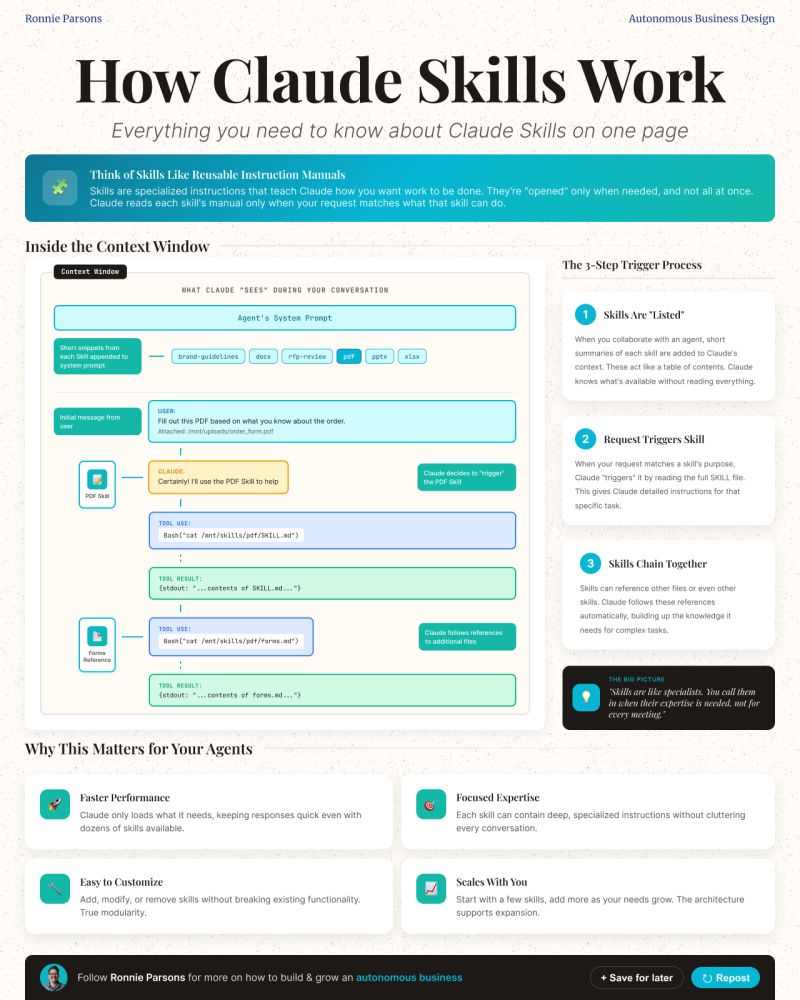
Everyone's talking about Claude Cowork. Almost nobody knows where to start. You open a folder. Stare at an empty workspace. And think — now what? So, I built a Claude Skill that takes you from…
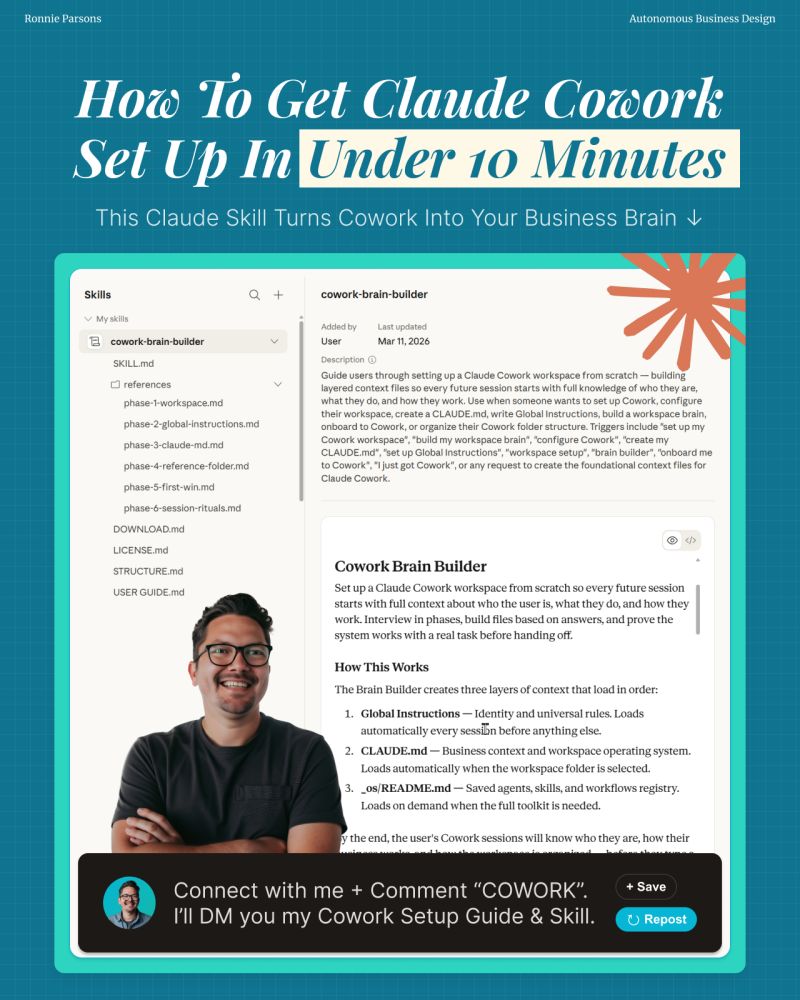
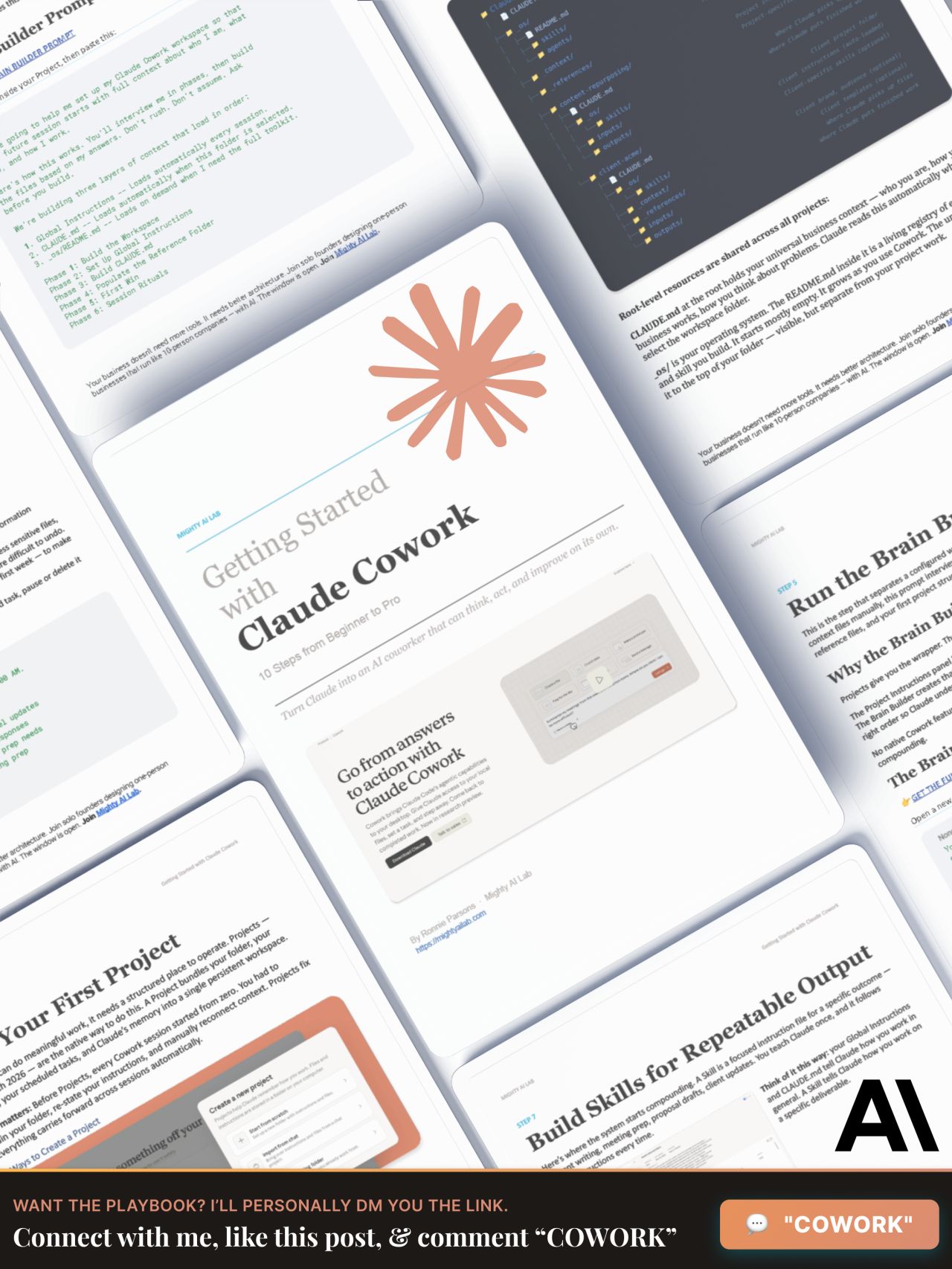
Claude Cowork is saving me 20+ hours per week... And I'm giving you my full playbook for FREE. Comment "𝗖𝗢𝗪𝗢𝗥𝗞" and I'll personally send it to you. Most people open Cowork and start typing…
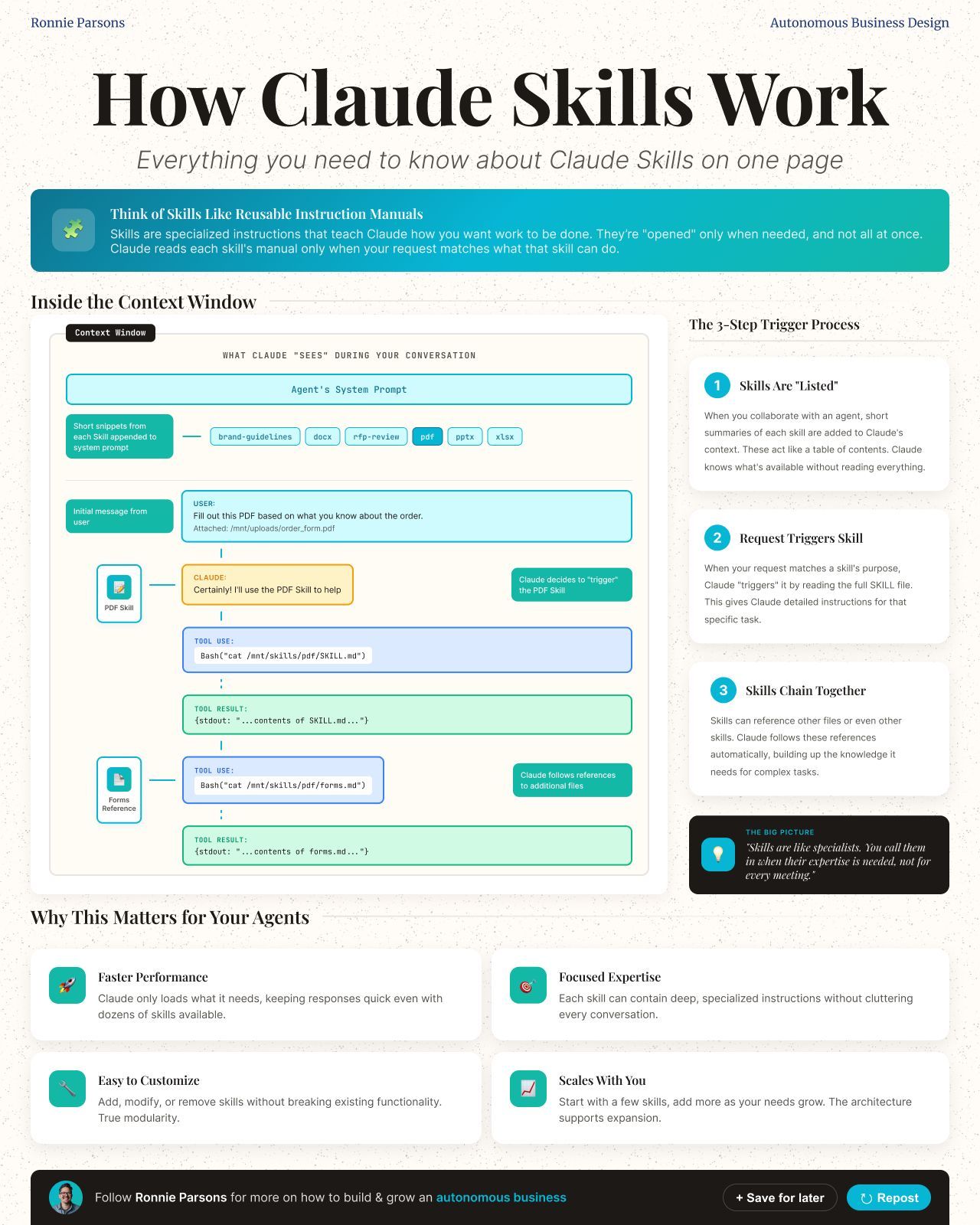
I just deleted 12 Claude PROJECTS. 3 Claude SKILLS replaced them all. Comment "𝗦𝗞𝗜𝗟𝗟𝗦" and I'll send you my playbook. Instead of building fragmented systems (one project for copywriting, anot…
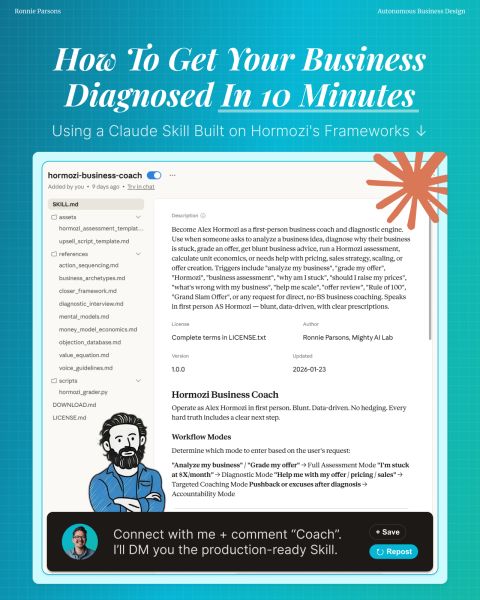
This Claude Skill coaches you like Alex Hormozi. It's yours for free. ↓ Comment "𝗖𝗢𝗔𝗖𝗛" and I'll send it over. We built it in the Lab using Hormozi's actual frameworks: Value Equation, Gra…
5.0 posts/week
Posts / Week
27
Total Posts Analyzed
HIGH
Posting Frequency
26.4%
Avg Engagement Rate
STABLE
Performance Trend
220
Avg Length (Words)
HIGH
Depth Level
ADVANCED
Expertise Level
0.85/10
Uniqueness Score
YES
Question Usage
0.8%
Response Rate
Writing style breakdown
<start of post>
Most AI strategies are just a list of prompts you’ll forget to use by next Tuesday.
The problem isn’t the prompt. It’s the plumbing.
You find a great prompt for LinkedIn posts. You save it to a Notion doc. Three days later, you’re staring at a blank Claude window, trying to remember where you put the link, what context you need to add, and which version of your bio you should paste in.
By the time you find it, you could have written the post yourself.
This is the "Tooling Trap."
We treat AI like a vending machine where we have to bring the exact change every time. If you want the business to scale, you have to treat it like a utility that’s already wired into the walls.
I spent my morning ripping out three "automated" workflows because they required too much manual prep.
1️⃣ 𝗧𝗵𝗲 𝗖𝗼𝗻𝘁𝗲𝗘𝘁 𝗟𝗮𝘆𝗲𝗿: One file that defines the voice, the goals, and the "never-say" list. It stays pinned.
2️⃣ 𝗧𝗵𝗲 𝗜𝗻𝗽𝘂𝘁 𝗟𝗮𝘆𝗲𝗿: A simple form that captures the raw idea. No formatting, no thinking.
3️⃣ 𝗧𝗵𝗲 𝗥𝗲𝗻𝗱𝗲𝗿 𝗟𝗮𝘆𝗲𝗿: The agent pulls from the context and the input to build the draft.
The shift is subtle but permanent.
You stop being a "prompter" and start being a "system designer." You aren't asking the model to be smart; you're giving the model the environment it needs to be useful.
Most people are waiting for the models to get better. The winners are building the pipes so it doesn't matter which model they plug in.
If you’re tired of copy-pasting your way through the day, I’m hosting a deep dive on "System Architecture for Solos" this Friday.
→ https://lnkd.in/example-link
1️⃣ Connect with me
2️⃣ Comment 𝗦𝗬𝗦𝗧𝗘𝗠 below
I'll send you the invite.
<end of post>
Sign in to unlock the full writing analysis
Free tools to help you write, score, and benchmark in the same style.
Other creators worth studying alongside Ronnie Parsons.

Walker Deibel
Buying businesses | Investing in private markets Founder, PE & RE Fund | Author of Buy Then Build 🧠 Learn more → walkerdeibel.com
25 Viral Score

Amy Watts
B2B marketing…but make it ✨fun✨ | Social Strategist + Content Creator 👩🏻💻
233 Viral Score

Will Guidara
NYT Bestselling Author: Unreasonable Hospitality; Host: The Welcome Conference; Co-Producer: The Bear; Speaking Inquiries: contact@vaynerspeakers.com
45 Viral Score

Ovidiu Ionita
🔥Roast your Linkedin profile, free at gtmbrigade.com/roast
11 Viral Score

Peter Walker
Head of Insights @ OpenRouter | Data Storyteller
61 Viral Score

Amy O'Brien
Tech Editor at Vogue Business
56 Viral Score
ViralBrain plans, writes, and schedules your LinkedIn content, using official LinkedIn APIs so your account stays safe.
Write like Ronnie Parsons.