
5+ AI Engineers at my agency worked to build this "Ultimate AI Agent Course for 2026" - Giving it away for free. At zenik.co, we've deployed 75+ AI Agents for enterprises and we decided to make our…

6231.8K957 viral
AI11 months ago

LinkedIn Content Strategy & Writing Style
I teach devs how to build & use AI Agents | CS @ IIIT
1 person tracking this creator on ViralBrain
Om Nalinde positions himself as a high-authority bridge between academic computer science and the pragmatic world of enterprise AI deployment. His content strategy centers on demystifying agentic workflows, moving beyond simple LLM wrappers to advocate for production-ready architectures like Agentic RAG and multi-agent orchestration. He is notable for his "no-nonsense" technical realism, often critiquing industry hype by providing clear taxonomies that distinguish between basic automation and true autonomous agents. By intersecting hands-on engineering playbooks with strategic tool selection—such as his nuanced comparison of n8n versus LangGraph—Om provides a roadmap for developers to transition from "vibe coding" experimental apps to shipping reliable, enterprise-grade AI systems.
138.7K
6.6K
853
7.0
69
2
5+ AI Engineers at my agency worked to build this "Ultimate AI Agent Course for 2026" - Giving it away for free. At zenik.co, we've deployed 75+ AI Agents for enterprises and we decided to make our…
RAG was supposed to make LLMs smarter. Give them memory. Ground them in facts. But here's what nobody talks about... Most RAG systems are basically glorified search engines. They fetch. They paste.…

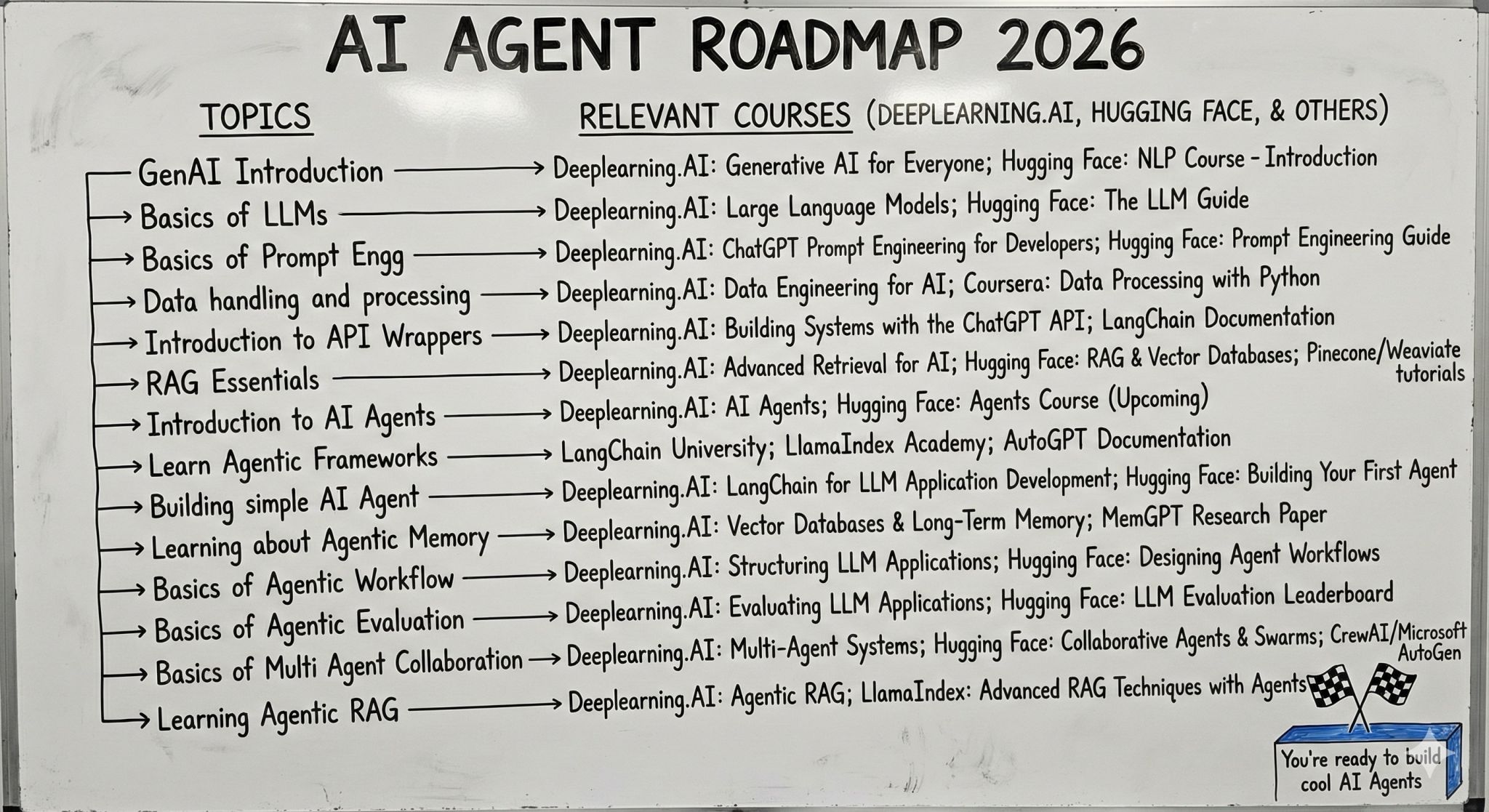
My agency ( zenik.co) deployed 75+ enterprise AI Agents in 2025. Sharing detailed roadmap here: Level 1: Gen AI and RAG Foundations 1. Introduction to Generative AI - Generative AI for Everyone b…
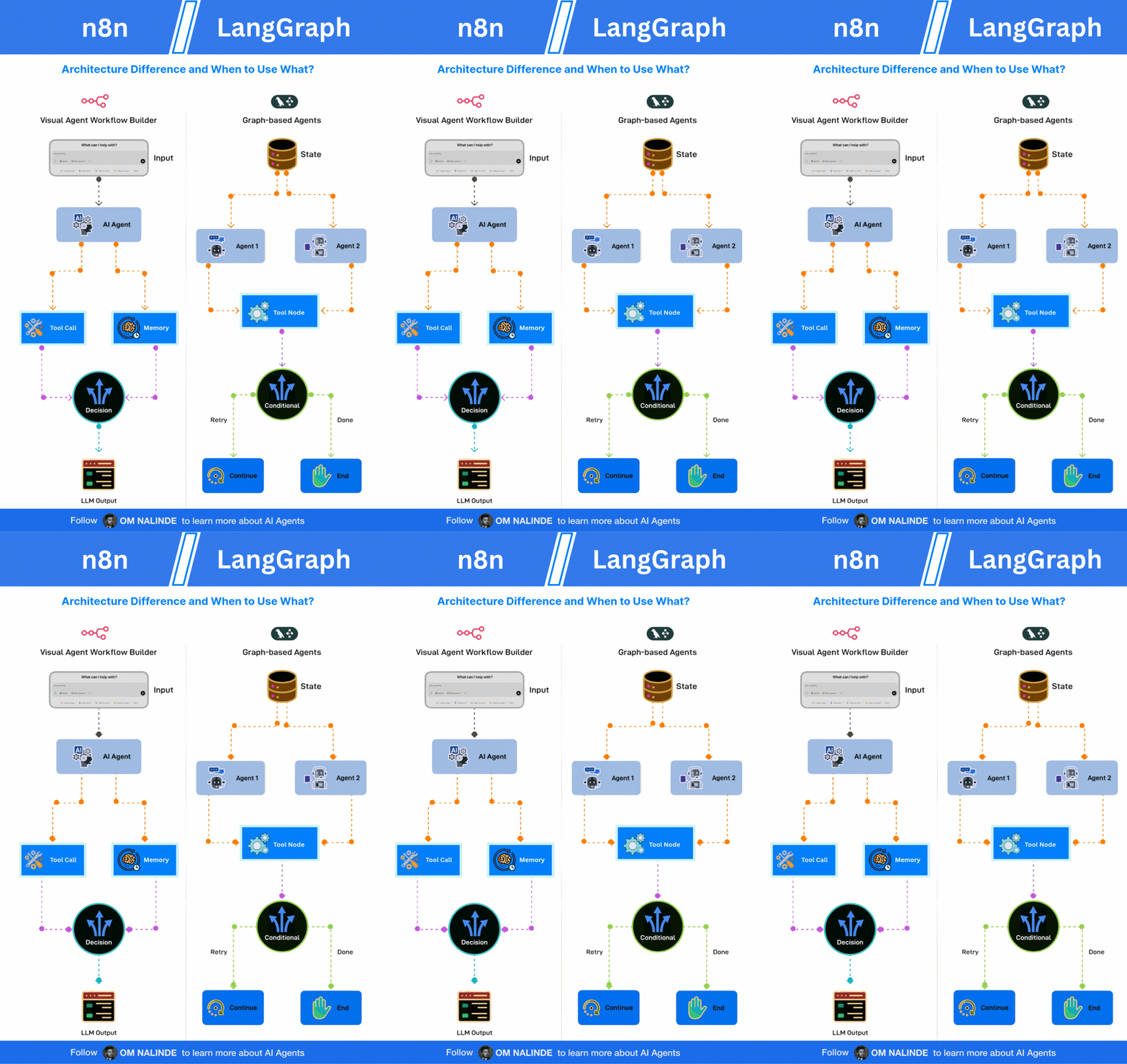
I've deployed 75+ AI Agents for enterprises. Here's my take on n8n and LangGraph Stop asking "which is better?" Start asking "which will still work at 3am when everything breaks?" 📌 Here's the bru…
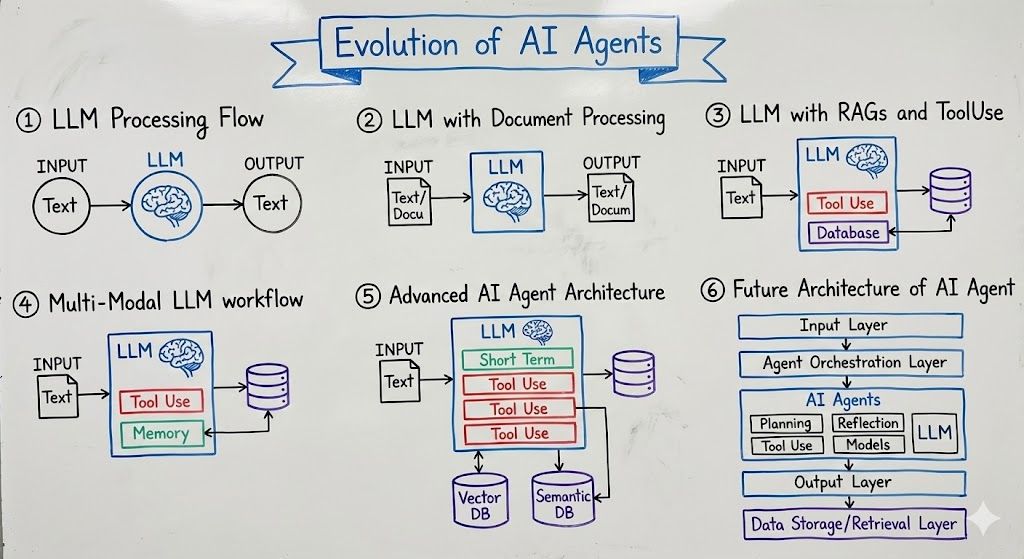
I've spent 2000+ hours learning and building AI Agents Here's how AI Agents evolved over time 👇 Phase 1: The Foundation - Basic LLM - Simple workflow: Input (Text) → LLM → Output (Text) - Transfor…
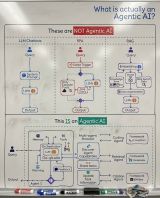
Not everything using an LLM is an AI agent. There's major confusion right now. People call almost any workflow "agentic," making it tough for beginners to understand what agents actually are. What'…
7.0 posts/week
Posts / Week
1.1 days
Days Between Posts
2
Total Posts Analyzed
HIGH
Posting Frequency
0%
Avg Engagement Rate
STABLE
Performance Trend
250
Avg Length (Words)
HIGH
Depth Level
ADVANCED
Expertise Level
0.85/10
Uniqueness Score
YES
Question Usage
0.5%
Response Rate
Writing style breakdown
Tone is expert, confident, and conversational with a strong educational/analytical focus.
Feels like a practitioner explaining things to smart peers or ambitious beginners.
Professional and informative (clear explanations, domain detail, structure).
Conversational and internet-native (slang, rhetorical questions, casual phrasing).
Persuasive and slightly promotional (for tools, frameworks, or templates) but never hard-sell.
Semi-formal: precise terminology (RAG, agentic AI, context, benchmarks, workflows) mixed with casual language (“bro literally built,” “your agents aren’t that special,” “that's a disaster waiting to happen”).
Grammar is mostly correct, but intentionally relaxed for effect. Occasional slang or minor “errors” are stylistic, not accidental.
Medium-to-high energy, but controlled.
Short paragraphs.
Punchy one-liners.
Rapid alternation between concept and implication.
The hook.
The “reframe” (e.g., “That’s not intelligence. That’s copy-paste with extra steps.”).
The CTA or closing punchline.
Rhetorical contrasts: “It’s not X. It’s Y.” / “The future finance department isn’t bigger. It’s smarter.”
Reframes and “truth bombs”: “Most RAG systems are basically glorified search engines.”
Mini-punchlines: “That’s a leap.” “That’s your edge.” “Bottom line:”
Enumeration and structured breakdowns (1., 2., 3., with subpoints).
Now, I know what you’re thinking.
Why do 80% of AI projects never make it to production?
Can you afford to be wrong?
Old vs new, simple vs complex, naive vs real, tool A vs tool B.
Statement → Clarification → Consequence.
Example: “Most RAG systems are basically glorified search engines. They fetch. They paste. They hope the LLM figures it out.”
2nd person is primary (“you”, “your”), especially in CTAs and implications.
Authority: “I’ve deployed 80+ AI Agents…”
Narrative: “I generated the same concept…”
Opinion framing: “My take:”
1st person plural “we” occasionally used to generalize shared experience: “We laughed… but also wondered…”
Direct commands appear and are decisive: “Try it here –”, “Stop asking ‘which is better?’”, “Check this for free tutorials:”
Suggestions are framed as confident recommendations, not timid proposals.
Authoritative, practical, and explanatory.
Feels like someone who builds things, has scars, and is now simplifying reality for others.
Balances clarity and hype: grounded technical detail with exciting framing of implications.
Sign in to unlock the full writing analysis
Free tools to help you write, score, and benchmark in the same style.
Other creators worth studying alongside Om Nalinde.

Onur KARAPINAR
L’IA vous dépasse ? Je la rends simple et actionnable. Formations, ateliers, conférences & coaching IA pour entreprises et dirigeants. Auteur best-seller Eyrolles | +12 000 lecteurs sur Apprendre l’IA ↓
37 Viral Score

Emma-Isadora Hagen
SPIEGEL-Bestsellerautorin | Führungskraft mit 22 Jahren | Ex-Allgäuerin | Gastautorin FOCUS online | Mentorin | Leadership & Karriere
87 Viral Score

Debbie Fraser
Head of Talent Acquisition EMEA & APJ @ Boomi | AI & Data Innovation for The Enterprise | Global TA Leader | Building World Class GTM and Product Teams
34 Viral Score

Samantha Boatwright
Head of People Practice at AJ | 30k+ followers | Specialising in CPO, Director & VP People for VC/PE-Backed Startups | Connecting Leaders with Growth Opportunities 🚀
11 Viral Score

Bart Boonstra
Laat je bedrijf slimmer werken: +30% omzet, -10 uur werk per week. AI en automatisering zonder gedoe. Stuur ‘slimwerken’ om te starten.
106 Viral Score

Ashraf Malik
Brand Strategist | Personal Branding Consultant | SEO & PR Expert | Helping Professionals Build Authority, Rank on Google & Get Recognized
31 Viral Score
ViralBrain plans, writes, and schedules your LinkedIn content, using official LinkedIn APIs so your account stays safe.
Write like Om Nalinde.