
I look forward to Benedict Evans’ “AI Eats the World” deck. It’s a reality check on how fast (and how slowly) AI is actually changing the way we work, build, and compete. This time, one question jump…
783521 viral
AI in Business10 months ago

LinkedIn Content Strategy & Writing Style
Head of Global Innovation, ServiceNow | 9x Best-Selling Author | Keynote Speaker | Digital Futurist | Ex Salesforce Exec | Ex Google Advisor
1 person tracking this creator on ViralBrain
Brian Solis positions himself as a visionary bridge between legacy leadership and the future of technology, moving beyond the role of a typical futurist to act as a strategic architect for organizational evolution. His content strategy centers on the critical distinction between iteration and innovation, frequently using the metaphor of "perfecting candles" versus "inventing light bulbs" to challenge executives to move past mere efficiency. He is notable for his ability to translate high-level AI shifts into actionable frameworks for the C-suite, emphasizing that the real leadership gap is one of permission and curiosity rather than technical skill. By intersecting deep corporate experience with a philosophy of "Mindshift," he provides a unique value proposition that combines rigorous trend analysis with a human-centric approach to digital transformation.
366.1K
16.2K
57
4.4
2
1
I look forward to Benedict Evans’ “AI Eats the World” deck. It’s a reality check on how fast (and how slowly) AI is actually changing the way we work, build, and compete. This time, one question jump…
Most companies are “doing AI.” Very few are actually leading with it. A new report from Menlo Ventures made me think about AI adoption vs. AI leadership. The research shows strong adoption and an ev…
A warning for the next 10 years by Vinod Khosla: the rules of engagement are about to change, and most businesses don’t yet realize the game has changed. When he says “rules of engagement,” he means…
Hello friends! I usually have a hard time posting things like this. Amazon is offering Mindshift at a special price of $13 bucks (53% off!) If you'd like to unlock curiosity and stoke imagination, op…

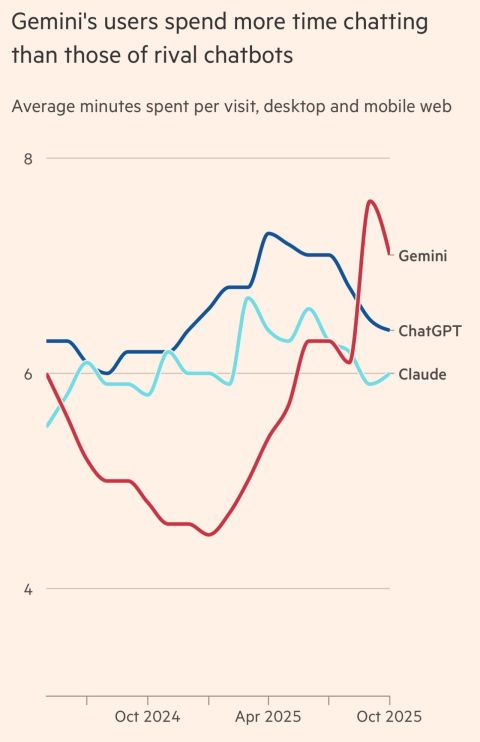
With the release of Gemini 3 Pro, Google is gaining ground on OpenAI in downloads and surpassing it in time spent in app according to Financial Times. The AI race has shifted from “who has the best m…
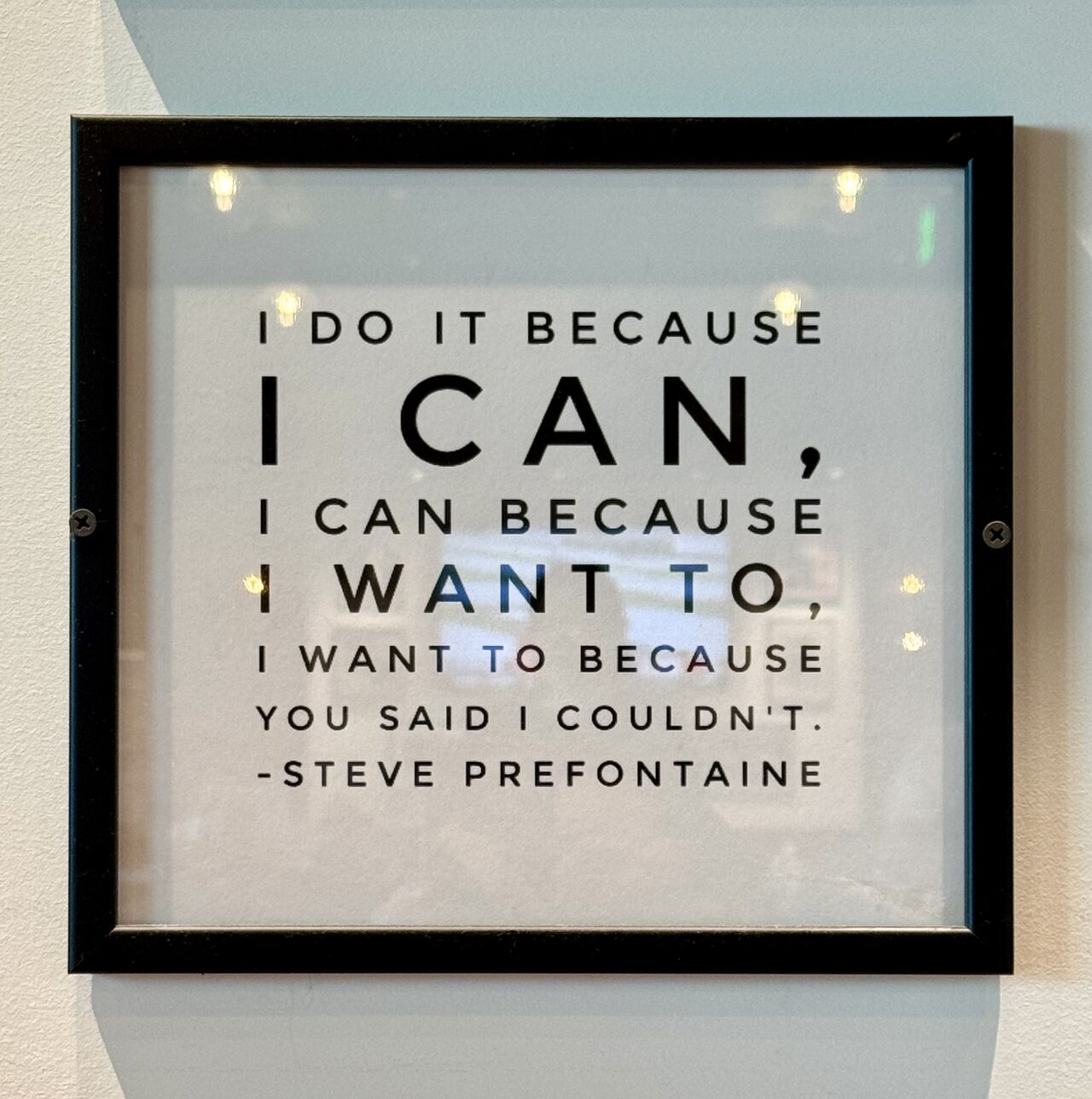
I do it because I can. I can because I want to. I want to because you said I couldn’t. - Steve Prefontaine
4.4 posts/week
Posts / Week
1.8 days
Days Between Posts
1
Total Posts Analyzed
HIGH
Posting Frequency
1%
Avg Engagement Rate
STABLE
Performance Trend
220
Avg Length (Words)
HIGH
Depth Level
ADVANCED
Expertise Level
8.5/10
Uniqueness Score
YES
Question Usage
0.6%
Response Rate
Writing style breakdown
Professional, thoughtful, and advisory, but written in a warm, accessible, conversational tone.
Leans heavily toward informative and persuasive, with motivational undertones aimed at leaders and executives.
Not academic or jargon-heavy; instead, uses plain language to explain strategic and complex topics.
Style is structured and methodical in logic, but delivered in a way that feels like a direct conversation or keynote excerpt, not a formal report.
Medium-to-high energy, but controlled. It’s not hyped-up; it’s urgent in a calm, grounded way.
Often reflective and future-oriented, with a slightly provocative edge: “the rules of engagement are about to change,” “The leaders we’re waiting for aren’t coming. It’s us.”
Uses curiosity, possibility, and constructive warning as emotional drivers. Less “doom,” more “wake-up call + invitation.”
Frequent use of rhetorical contrasts: past vs future, iteration vs innovation, candles vs light bulbs, experimenting vs leading.
Recurrent device: identifying a “trap” or mistake leaders make, then reframing the question (“Stop asking X, start asking Y”).
Uses metaphor and analogy often (candles/light bulbs, AI “wicks,” waves, curves, gameboard, being “on the menu,” “pilot purgatory”).
Strategic use of short, standalone lines for impact: “That's the moment we’re in now.” / “It’s us. 👈”
Regular direct engagement with the reader, explicitly inviting reflection: “What are you seeing?”, “Where are you in this story?”
Mix of external authority and personal perspective: quotes (Steve Jobs, Vinod Khosla, Prefontaine), references to Bain, Menlo, Benedict Evans, paired with “In my latest newsletter,” “In a recent keynote, I shared…”
Primarily second-person “you,” directly addressing leaders, executives, teams: “Here’s where you come in…”, “If you’re waiting…”
Introduce content created by the author (newsletter, keynote, book).
Express personal gratitude or feelings in more intimate posts (about a friend, holiday, or book).
We” is used inclusively to create a shared sense of responsibility: “We’re optimizing candles…”, “The leaders we’re waiting for aren’t coming. It’s us.
Commands are generally direct but not harsh: “Stop asking… Start asking…”, “Own the AI agenda. Don’t delegate it.” This is balanced by softer prompts: “Ask: Where could AI…?”, “Please read and share.”
The voice positions the reader as a capable but under-challenged leader who needs to think bigger, not as someone incompetent.
Sign in to unlock the full writing analysis
Free tools to help you write, score, and benchmark in the same style.
Other creators worth studying alongside Brian Solis.

Jason Knight
B2B Product Consultant - Check out “The State of B2B Product Management” report, download it now!
12 Viral Score

Carmelo Aleman Santana
Verified On-Chain Analyst at CryptoQuant
165 Viral Score

Deepak Panchal
SEO Expert | SMO Executive | Digital Marketing
62 Viral Score

Huma Rajput
Dubai Luxury waterfront Real Estate Advisor | Helping Investors Multiply Capital through Waterfront Assets and off plan investment | Off plan specialist
5 Viral Score

Svitlana Melnyk
Senior Global Talent Acquisition Specialist |GTM| Building great teams & careers in B2B SaaS 💼
148 Viral Score
Unknown
Unknown
ViralBrain plans, writes, and schedules your LinkedIn content, using official LinkedIn APIs so your account stays safe.
Write like Brian Solis.