
Gratitude rewires your brain for resilience. New research published in Frontiers in Psychology confirms what many ancient traditions and modern healing practices have long known: Gratitude has a prof…

2.1K13632413 viral
Mental Health11 months ago

LinkedIn Content Strategy & Writing Style
Co-Founder & Chief Medical Officer of Function Health
1 person tracking this creator on ViralBrain
Mark Hyman positions himself as a medical visionary who bridges the gap between complex clinical science and daily lifestyle choices. His content strategy centers on the concept of food as information, where he translates dense research on psychoneuroimmunology and metabolic health into actionable protocols for systemic healing. He is notable for his ability to synthesize high-level physiological data with a compassionate, mindset-driven approach, often intersecting biological biohacking with emotional resilience. By framing everything from gratitude to ultra-processed food through the lens of cellular signaling, he successfully moves his audience from passive consumption to active participation in their own longevity.
401.0K
26.3K
875
4.7
22
1
Gratitude rewires your brain for resilience. New research published in Frontiers in Psychology confirms what many ancient traditions and modern healing practices have long known: Gratitude has a prof…
We often forget that what you say to yourself has real biological effects. Your thoughts don’t float in the background. They send signals through your nervous system that can raise stress hormones, dr…
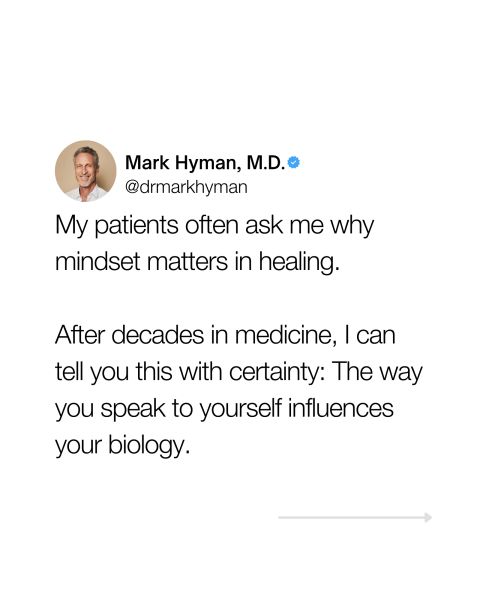
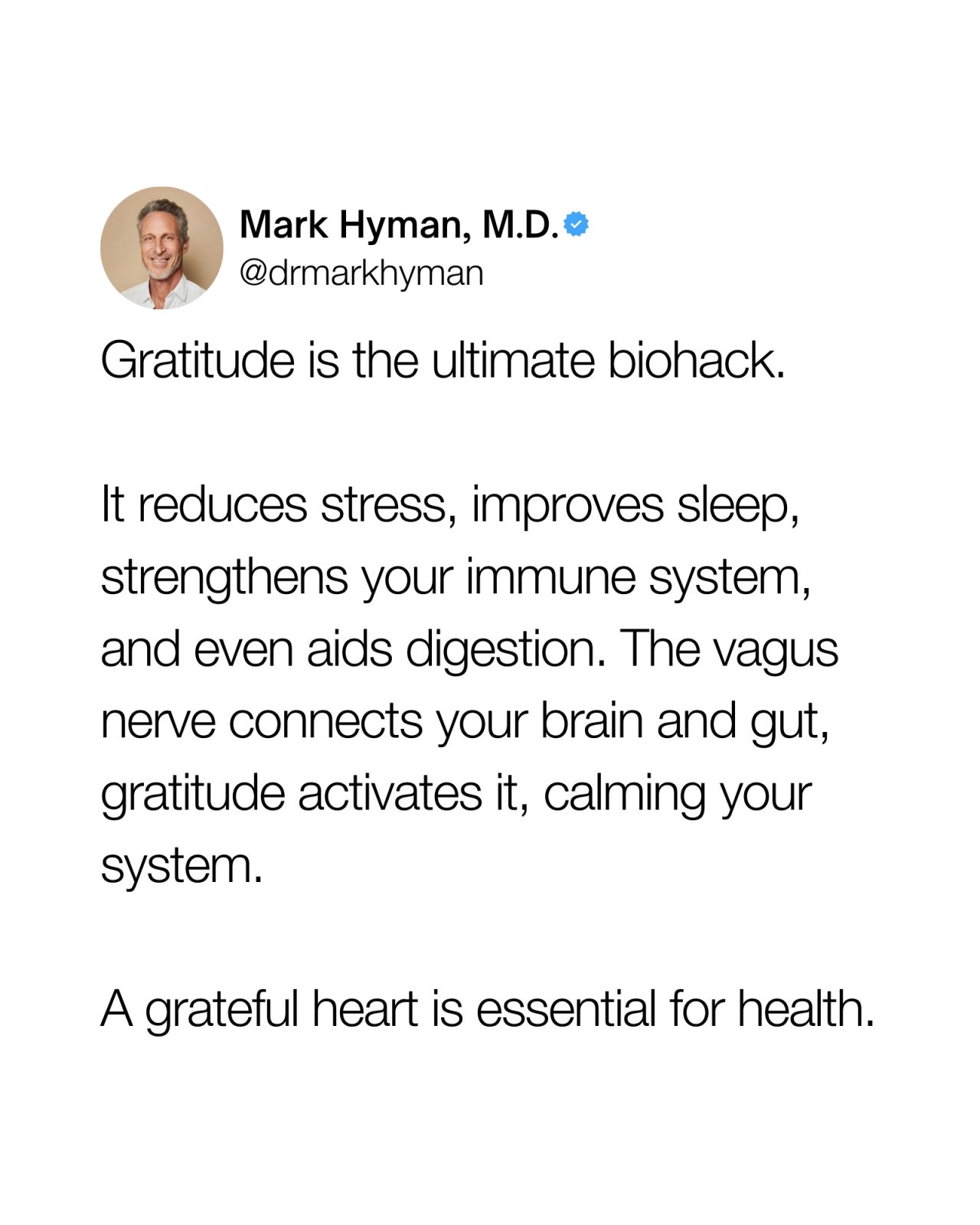
What are you grateful for today? This Thanksgiving, remember that gratitude is more than just a nice tradition, it’s a physiological superpower. -Gratitude activates the vagus nerve, the key communi…
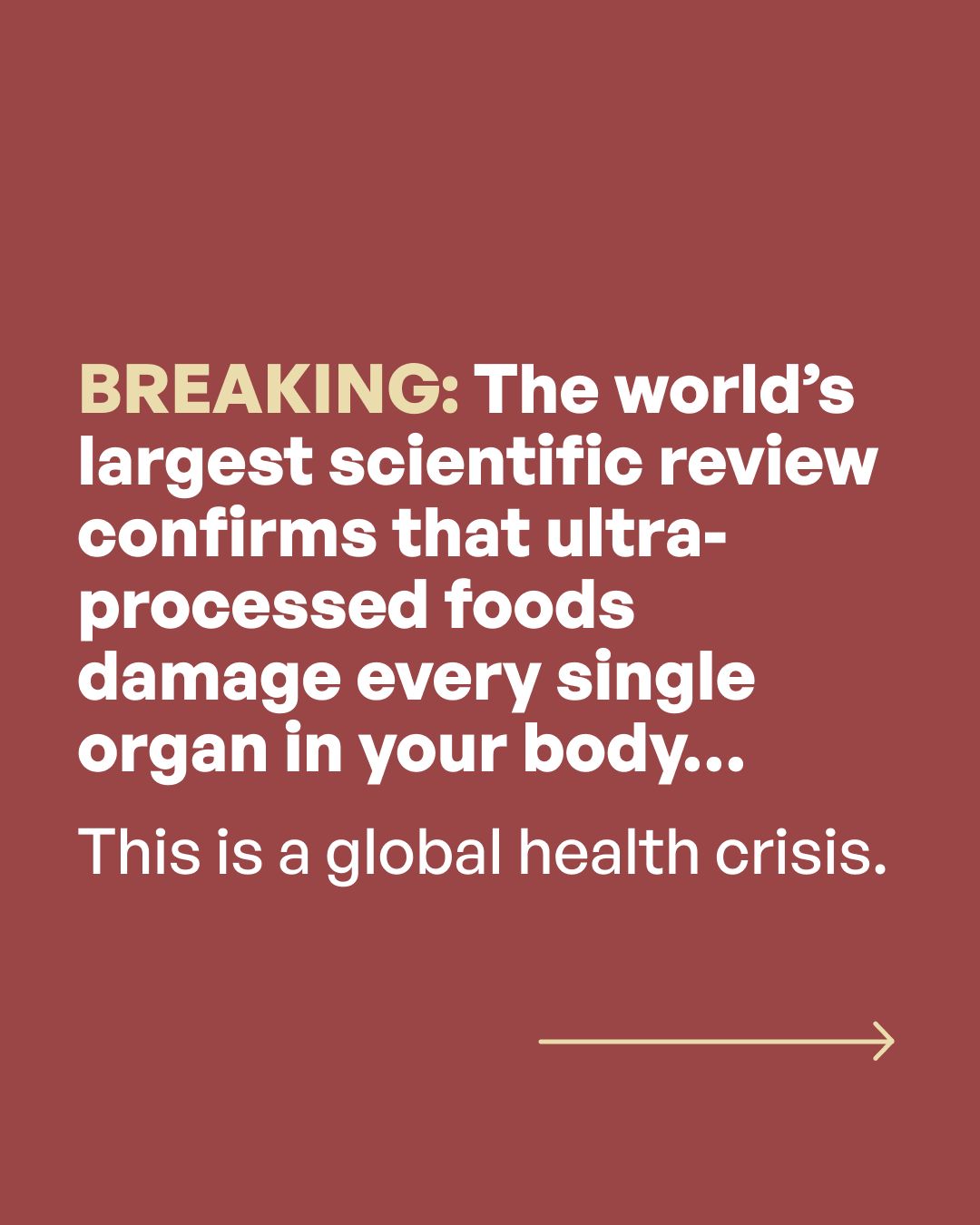
I’ve been talking about this for decades: what we call “food” today often isn’t food at all. It’s a chemical formulation designed to hijack your biology. A new global review of more than 100 long-ter…
Thanksgiving meals can leave even the healthiest bodies feeling off. That’s because food directly impacts your biology—turning genes on and off, influencing hormones, shaping your gut, and directing i…
If you’re like me, this year has brought its share of growth, change, and maybe even a few challenges (I know I’ve had some) — and you deserve to feel your best heading into 2026. To support that, m…
4.7 posts/week
Posts / Week
1.7 days
Days Between Posts
1
Total Posts Analyzed
HIGH
Posting Frequency
874.875%
Avg Engagement Rate
STABLE
Performance Trend
220
Avg Length (Words)
HIGH
Depth Level
ADVANCED
Expertise Level
8/10
Uniqueness Score
YES
Question Usage
0.2%
Response Rate
Writing style breakdown
Professional, authoritative, and science-based, but very accessible and conversational.
Strongly informative and educational with a clear persuasive undercurrent (nudging the reader toward behavior change or product/program adoption).
Tone is caring and supportive rather than salesy or aggressive, even when promoting products.
The voice is confident but not arrogant: “I’ve been talking about this for decades” establishes authority; then it quickly turns to “your body knows how to heal” to empower the reader.
Formal elements: references to studies, use of technical terms (e.g., “psychoneuroimmunology,” “ultra-processed foods,” “metabolic balance,” “vagus nerve”).
Casual elements: direct “you” address, contractions (“don’t,” “I’ve,” “I’m”), rhetorical questions, light emojis.
Overall: “professional conversational” — a doctor speaking plainly to an intelligent lay audience.
Calm, steady, and reassuring, not hyper or dramatic.
Serious about risks (“linked to harm in nearly every major organ system”) but always balanced with optimism and agency (“The good news is that your body knows how to heal…”).
Empowering statements (“Food is medicine. It always has been.”)
Practical opportunities (“now is the time,” “don’t miss it!”)
Gratitude and reflection (Thanksgiving posts).
Frequent linking of behavior or mindset to biology (food → genes, thoughts → hormones, gratitude → vagus nerve).
Food is medicine.
Your body knows how to heal.
You can change your biology with every choice you make.
Uses short, declarative, high-impact lines as standalone paragraphs for emphasis.
Open a line of thought (“What if instead of just buying stuff, you gave the gift of health…?”).
Close with reflection/engagement (“What will you tell yourself today?”).
Rare but strategic use of emojis to reinforce theme (🙏 for gratitude, 🧘🏽 for mental/emotional health, 👇 for engagement).
If you're ready to reset your own health…
What will you tell yourself today?
Establish authority: “I’ve been talking about this for decades.”
Express personal alignment: “If you’re like me, this year has brought its share of growth… (I know I’ve had some)”.
Announce offerings: “I’m excited to share something I've never done before…”
Third person mostly for describing studies, populations, or general principles.
Softer: “take a moment to be truly thankful,” “What if instead of just buying stuff…?”
More direct but still supportive: “don’t miss it!”, “now is the time.”
Sign in to unlock the full writing analysis
Free tools to help you write, score, and benchmark in the same style.
Other creators worth studying alongside Mark Hyman, MD.

Krystian Koronowski
Stop creating content. Start capturing it. | Founder @CaptureFlow - AI-powered content platform for busy professionals | Building in public
16 Viral Score

Marcel Dybalski
AI & Data Platform Engineer | GCP & Fabric Certified
309 Viral Score

Fivos Aresti
Co-Founder @ Workflows.io | Growth playbooks using AI
105 Viral Score

Alex Vacca
CEO @ Frontal (ex-ColdIQ Agency) | We help B2B companies grow faster | Clay Elite Studio Partner | +300 clients served
120 Viral Score

Zayd Syed Ali
Founder & CEO, Valley | The Smartest LinkedIn Outbound Engine | 2x Exits | Angel & LP
36 Viral Score

Kenny Damian
Head of GTM @ColdIQ🧠 | We build B2B revenue engines that sell for you | Elite Clay Studio Partner
300 Viral Score
ViralBrain plans, writes, and schedules your LinkedIn content, using official LinkedIn APIs so your account stays safe.
Write like Mark Hyman, MD.