
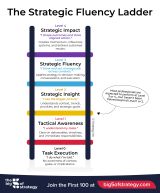
Organizations expect people to think and act strategically Yet very few know what that actually means. That gap is what this ladder reveals so clearly. Most professionals operate somewhere between L…
31926593 viral
Strategy10 months ago

LinkedIn Content Strategy & Writing Style
Getting Leaders and Organizations Unstuck | Strategy and Change Expert | LinkedIn Top Voice | No-Nonsense Collaborator, Educator, Coach, and Author | Creator of the Big 5 of Strategy
1 person tracking this creator on ViralBrain
Jeroen Kraaijenbrink positions himself as a high-level architect of organizational clarity who bridges the gap between abstract corporate planning and human capability. His content strategy centers on democratizing strategy as a learnable skill, consistently using visual frameworks like ladders and pyramids to strip away the "mysterious natural gift" myth from leadership. He is notable for his no-nonsense, human-centered approach that rejects traditional, rigid documentation in favor of "strategic fluency" and adaptive behaviors. By operating at the intersection of strategy and developmental coaching, Jeroen elevates the conversation from simple task management to the "hard infrastructure" of human growth, arguing that an organization’s strategy can only move as fast as its people can learn.
327.5K
15.2K
217
4.7
2
Organizations expect people to think and act strategically Yet very few know what that actually means. That gap is what this ladder reveals so clearly. Most professionals operate somewhere between L…
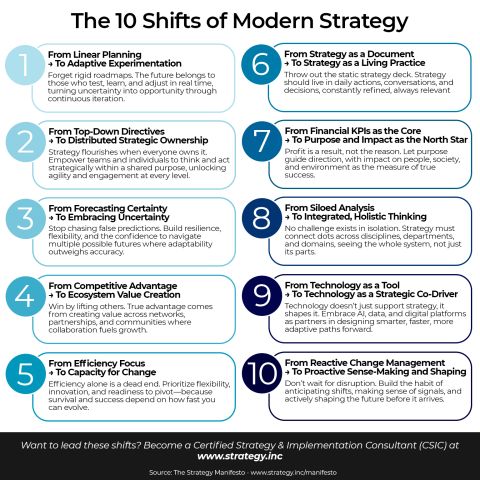
Strategy is changing, and the shift is already visible. The most exciting part? You can join the movement and lead the shift. Strategy is no longer what it used to be. Organizations focus less on lon…
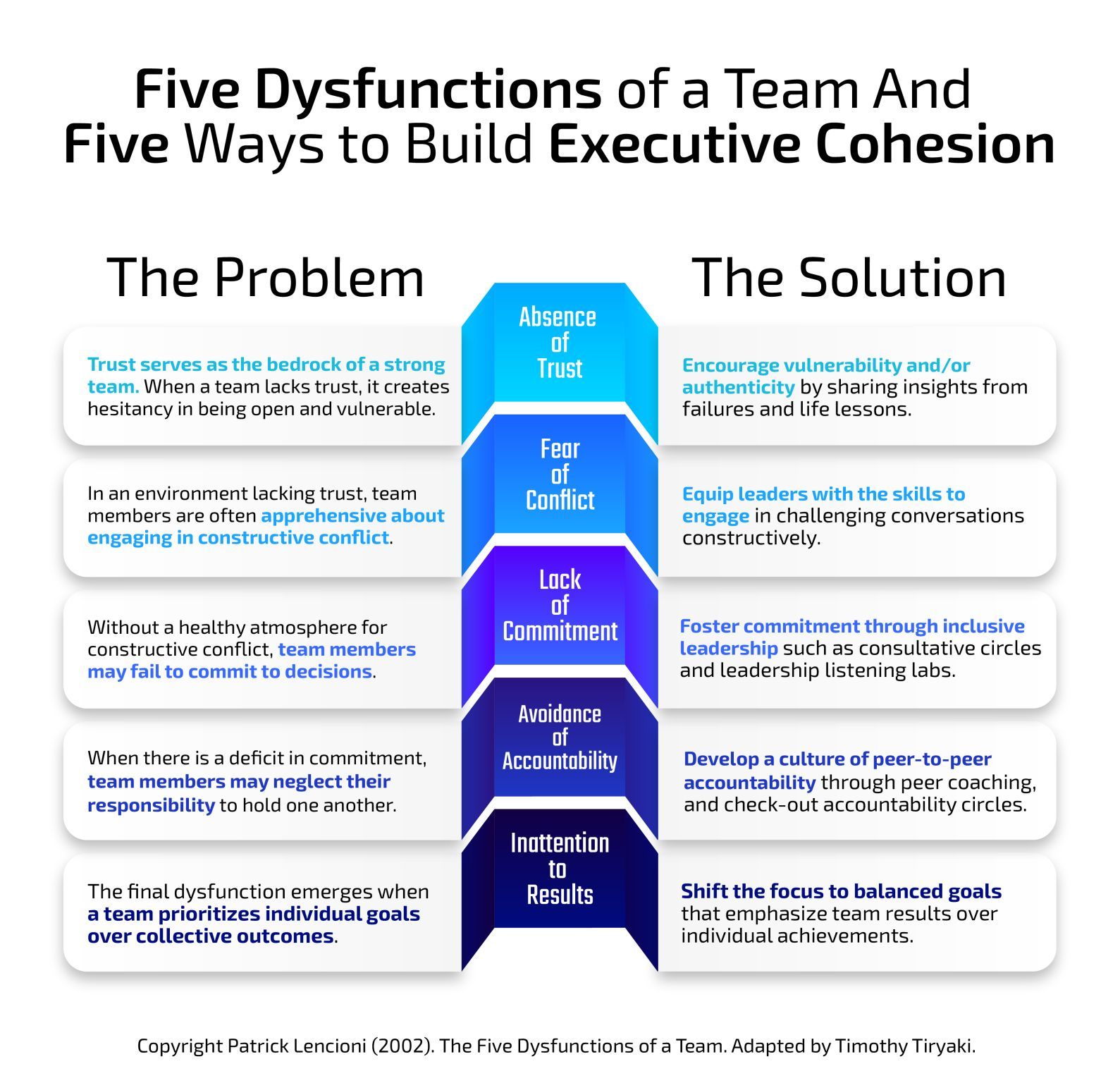
Teams rarely fail because people are unwilling. They fail because the conditions for working well together aren't there. What this visual based on Patrick Lencioni's "Five Dysfunctions of a Team" ma…
Every strategy implies a tension that many underestimate. It must hold on to what works and let go of what no longer serves at the very same time. This tension is not a flaw in strategy. It is the ac…

Are you coaching people for the world that is coming, or for the world that is already fading? Most coaching still focuses on traits and behaviours. Important, of course, but increasingly insufficie…
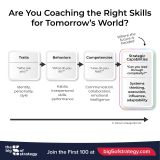
Most coaching strengthens people emotionally. Very little coaching strengthens people strategically. And that gap is becoming costly. The challenges leaders face now are not only about resilience, co…

4.7 posts/week
Posts / Week
1.7 days
Days Between Posts
2
Total Posts Analyzed
HIGH
Posting Frequency
217.4%
Avg Engagement Rate
INCREASING
Performance Trend
400
Avg Length (Words)
HIGH
Depth Level
ADVANCED
Expertise Level
8.5/10
Uniqueness Score
YES
Question Usage
0.5%
Response Rate
Writing style breakdown
Overall tone: professional, reflective, and human-centered. It feels like a senior strategist or coach speaking to peers and advanced practitioners.
Style is primarily informative and explanatory with a strong persuasive undercurrent. It is not salesy or hype-driven, but it steadily guides the reader toward a conceptual shift and then toward a program or offering.
The writing is structured and methodical, not free-flowing. Each post has a clear logical arc and is very intentionally scaffolded.
Calm, grounded, and thoughtful. The energy is medium: not slow to the point of being heavy, but definitely not high-octane.
The mood is serious but hopeful. There is a sense of “quiet conviction” rather than excitement or drama.
Emotional appeal is subtle: it uses recognition (“Most coaching…”, “Teams rarely fail because…”) and insight to create resonance, not emotional extremes.
Most coaching builds the base. Very few help leaders reach the peak.
Strategy fails fastest where people grow slowest.
Your life changes the moment you choose direction over distraction.
Strategy reframed as a skill.
Coaching reframed as strategic capability building.
Personal development reframed as “personal strategy.”
Pyramids, ladders, speed limits, shifts, tensions (transforming vs stabilizing).
References to diagrams (“this visual”, “this pyramid”, “this ladder”) even though the text has to carry the meaning.
Short repeated sentence stems: “Anyone can…”, “They ask… They introduce… They push…”
Repetitive syntactic patterns that build rhythm, e.g. “They learn, sense, decide, and adapt…”
Questions that invite reflection rather than push: “Do you have a personal strategy for 2026?”
Diagnostic questions at the end of a concept: “Does your team thrive? And if not, which dysfunction is the main cause?”
Minimal humor and no sarcasm. The tone is earnest and serious, leaning toward inspirational rather than witty.
Frequent second-person “you” for direct address.
First-person singular “I” used selectively to add authority or personal experience (“What I see time and again…”, “I’ve been on both sides and can tell the difference.”).
Third-person used for organizations, teams, and generic professionals (“Most professionals operate…”, “They assume only a few people can do it.”).
Primarily gentle invitations framed as options: “If you want to…”, “Consider joining…”, “The question is…”
Imperatives are used, but in a calm, advisory way: “Look beyond the plan.” / “Visit … for all information and book a call…”
The voice is that of an expert guide or mentor: confident, didactic but not domineering, often explaining “why” behind patterns.
Sign in to unlock the full writing analysis
Free tools to help you write, score, and benchmark in the same style.
Other creators worth studying alongside Jeroen Kraaijenbrink.
Ozan Okutan
Senior Quality Engineer
1,349 Viral Score

Kurt In Albon, MSc
Global Quality & CSV/C&Q/DI Leader | AI/ML Validation | Inspection Readiness | Data Integrity & Governance | OT Quality | GxP | Inspection Readiness | Pharma | Biotech.
63 Viral Score

Pierre-Yves L.
Executive Recruiter & Talent Advisor | Beauty, Cosmetics, Ingredients, CDMO | C-level & Strategic Roles | Industrial & Business Transformation
9 Viral Score

Tobias Zwingmann
Author: The Profitable AI Advantage. Created profits with AI from enterprise giants to 20-person teams.
10 Viral Score

Roger Martin
Founder & President at Roger L. Martin, Inc. and author of A New Way to Think
51 Viral Score

Matt Pocock
Author of AI Hero
38 Viral Score
ViralBrain plans, writes, and schedules your LinkedIn content, using official LinkedIn APIs so your account stays safe.
Write like Jeroen Kraaijenbrink.