
I built 5 workflows that save me 5+ hours a week. Claude Co-work lets me run repeatable workflows for writing, repurposing, and organising ideas. That’s what removes the manual work and saves time H…
2441451568 viral
AI Productivity8 months ago

LinkedIn Content Strategy & Writing Style
Strong brands don’t pitch
0 people tracking this creator on ViralBrain
Yonathan Levy positions himself as a high-leverage sales architect who bridges the gap between traditional outbound grit and modern AI efficiency. His content strategy centers on the tactical intersection of sales psychology and a sophisticated "2026 tech stack," offering a value proposition rooted in reclaiming time through automation. He is notable for his refusal to romanticize the "hustle," instead advocating for systematized pattern recognition and the use of specialized AI tools like Claude, Grok, and Wispr Flow to replace manual workflows. This unique intersection of hard-nosed sales discipline and AI-driven workflow engineering allows him to speak to both the SDR in the trenches and the founder looking to scale their go-to-market motion without increasing headcount.
17.3K
7.1K
274
5.0
250
1
I built 5 workflows that save me 5+ hours a week. Claude Co-work lets me run repeatable workflows for writing, repurposing, and organising ideas. That’s what removes the manual work and saves time H…
You're working harder than you need to on LinkedIn. Your content stack is holding you back. LinkedIn content doesn't have to take hours. You just need the right stack. Here's how to build yours: 1…
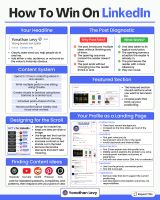
LinkedIn doesn’t have to be hard. It works when you follow a system. Your headline should say what you help people do. - Not your job title - The outcome Your posts need one clear idea. - Name a…
All AI writing sounds exactly the same. Here's how I fixed that with Claude. The problem: Every AI tool spits out the same “fast-paced digital landscape” garbage. It doesn’t sound like you. It sound…
SMB sales is speed. Enterprise sales is strategy. Same product. Completely different game. Here's what most people get wrong: They try to sell to enterprises like they're SMBs. Fast pitches. Quick…

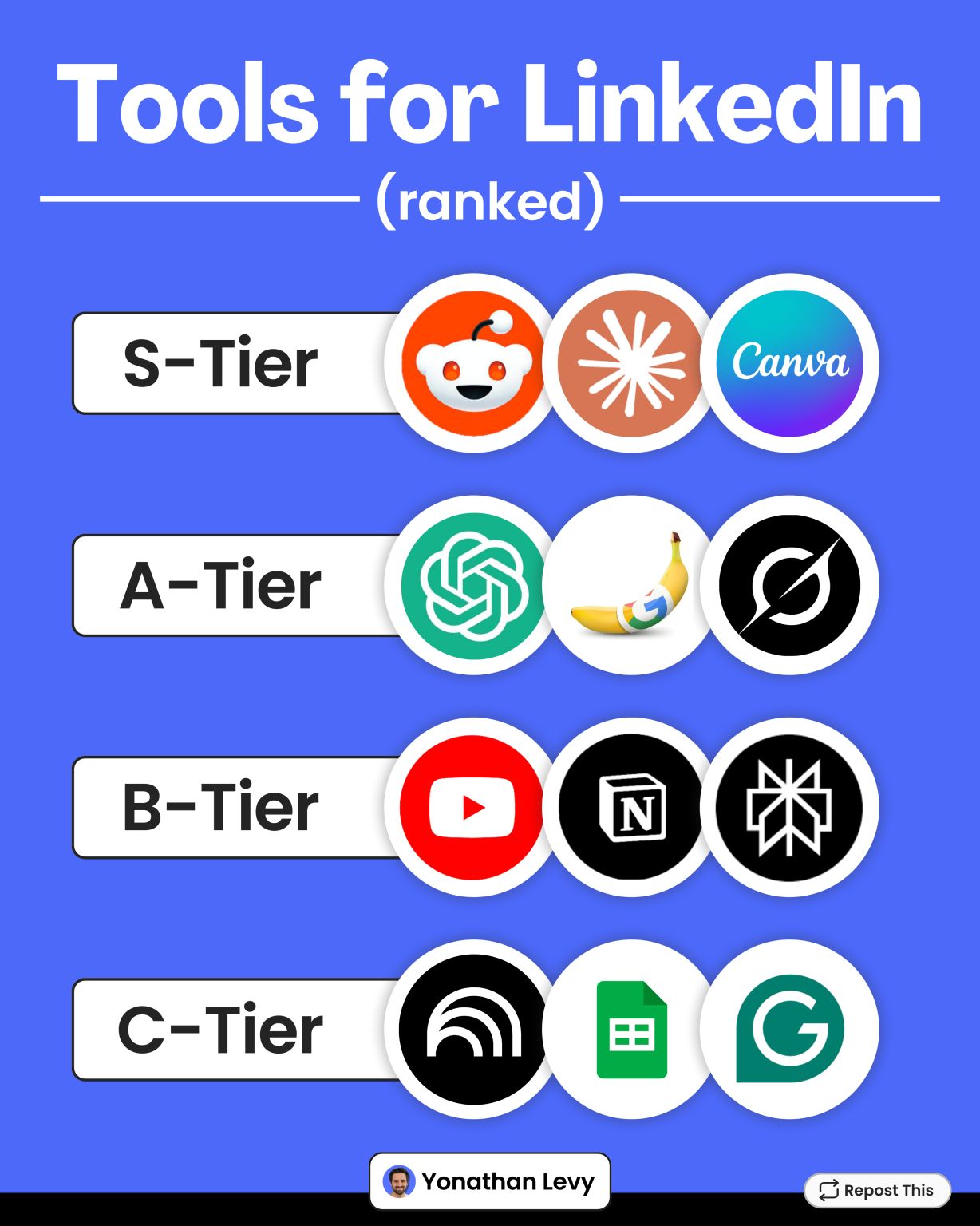
Not all tools matter equally on LinkedIn. Some shape the post. Some just support it. This is how I rank them based on where they help. S-Tier • Tools I’m using while writing and publishing • If the…
5.0 posts/week
Posts / Week
1.6 days
Days Between Posts
1
Total Posts Analyzed
HIGH
Posting Frequency
273.9%
Avg Engagement Rate
STABLE
Performance Trend
190
Avg Length (Words)
HIGH
Depth Level
ADVANCED
Expertise Level
0.78/10
Uniqueness Score
YES
Question Usage
0.65%
Response Rate
Writing style breakdown
The author writes in a modern “LinkedIn operator” voice: practical, declarative, and skimmable, with a strong bias toward clarity over flourish. The dominant mode is professional and instructive, but not corporate-formal; it’s closer to conversational coaching with a calm, competent tone. The writer routinely strips away hedging and filler and replaces it with direct claims and concrete contrasts. The voice suggests “I’ve done this, here’s the system,” but it rarely over-explains. It assumes a reader who wants fast insight, fast structure, and immediate application.
Tone and energy are medium-to-high, expressed through short paragraphs, emphatic standalone lines, and frequent contrast framing. The emotional register is controlled confidence rather than hype. Even when the author uses stronger emotion, it’s brief and stylized (example: post 3’s ‘Huge !!’ plus ‘Stay tuned 👀’). Most posts feel like “tight briefing notes”: assertive, simple, and designed to be saved or acted on.
Contrast and polarity: “X isn’t Y. It’s Z.” appears repeatedly (post 4: ‘Perplexity tells you what happened. Grok tells you what’s happening.’; post 8: ‘SMB sales is speed. Enterprise sales is strategy.’).
Systems language: the author frames actions as “workflows,” “stack,” “system,” “setup,” “structure,” “boundaries,” “loop” (posts 1, 6, 7, 10).
Labeling and segmentation: frequent use of short headers followed by quick lines (post 5: ‘The problem:’ / ‘The solution…’; post 8: ‘SMB motion:’ / ‘Enterprise motion:’).
Repetition for rhythm: anaphora-like repetition in short sentences to create momentum (post 9: ‘That’s how you build trust. That’s how you get seen. That’s how you fill your pipeline…’).
Low-metaphor, high-utility language: few poetic images; when used, they’re functional (“compounding leverage,” “energy drain,” “stack,” “landing page”).
Reader addressing is mostly second-person “you,” often paired with direct imperatives that feel like coaching, not barking orders: ‘Try it.’ (post 5), ‘Know which game you’re playing.’ (post 8), ‘Use the right tool for the right moment.’ (post 4). First-person shows up to establish credibility or context (“I built…”, “I switched…”, “Here’s how I fixed that…”), but the focus quickly returns to the reader’s execution.
Sign in to unlock the full writing analysis
Free tools to help you write, score, and benchmark in the same style.
Other creators worth studying alongside Yonathan Levy.
René Remsik
Exploring useful tips that make AI simple and fun
184 Viral Score

Diandra Escobar
Building content engines across LinkedIn, YouTube & newsletters | Founder, Distinctiva.io → we grow brands through organic content | Speaker
118 Viral Score

Jacob Pegs
I build marketing systems that get solopreneurs + agency founders customers on repeat. 352+ clients, $4.2M in wins. Founder at Modern Maker. See the model → jacobpegs.xyz
72 Viral Score

Darren McKee
Founder of 531 Social & Darren McKee Co. | Social Selling took me from the mailroom to the boardroom and now I get to transfer 10 years of knowledge to thousands around the world via services and software
23 Viral Score

Jon Gordon
19x Bestselling Author of The Energy Bus, Power of Positive Leadership & The 7 Commitments of a Great Team. I created Certified Positive Leader to develop positive leaders who impact their businesses, schools and teams.
13 Viral Score

Rory Vaden, MBA CSP CPAE
2x New York Times bestselling author of “Take The Stairs” and “Wealthy and Well-Known”, Hall of Fame Speaker, 8 Figure Entrepreneur, and Co-Founder of Brand Builders Group
5 Viral Score
ViralBrain plans, writes, and schedules your LinkedIn content, using official LinkedIn APIs so your account stays safe.
Write like Yonathan Levy.