
Argentina is the first country in the world to develop a legal framework for AI personhood. President Milei is positioning the entire country as a special economic zone for the singularity. Just that…
40740564 viral
AI & Economics3 months ago

LinkedIn Content Strategy & Writing Style
Data-driven optimist inspiring entrepreneurs through research, investment & community to create an abundant future for humanity | M.D. | Futurist | Speaker | Podcast Host | 4x NY Times Best-Selling Author
0 people tracking this creator on ViralBrain
Peter H. Diamandis positions himself as a data-driven optimist who bridges the gap between radical scientific breakthroughs and entrepreneurial action. His content strategy centers on dismantling the "business model of fear" by countering doom-laden headlines with evidence of compounding human progress, specifically within longevity, AI, and energy. He is notable for his ability to translate high-level technical milestones—such as Phase 3 cancer vaccines or humanoid robotics—into a framework for moonshot thinking that inspires leaders to solve global-scale problems. The core of his work lies at the intersection of futurism and venture philanthropy, where he uses his platform to move the needle from theoretical abundance to the practical deployment of capital and talent.
262.2K
3.3K
213
10
19
Argentina is the first country in the world to develop a legal framework for AI personhood. President Milei is positioning the entire country as a special economic zone for the singularity. Just that…
In 1999, Ray Kurzweil predicted human-level AI by 2029. Stanford's top AI experts said 100 years. Three years from the deadline, he says two things are still missing: AI that understands physics, and…
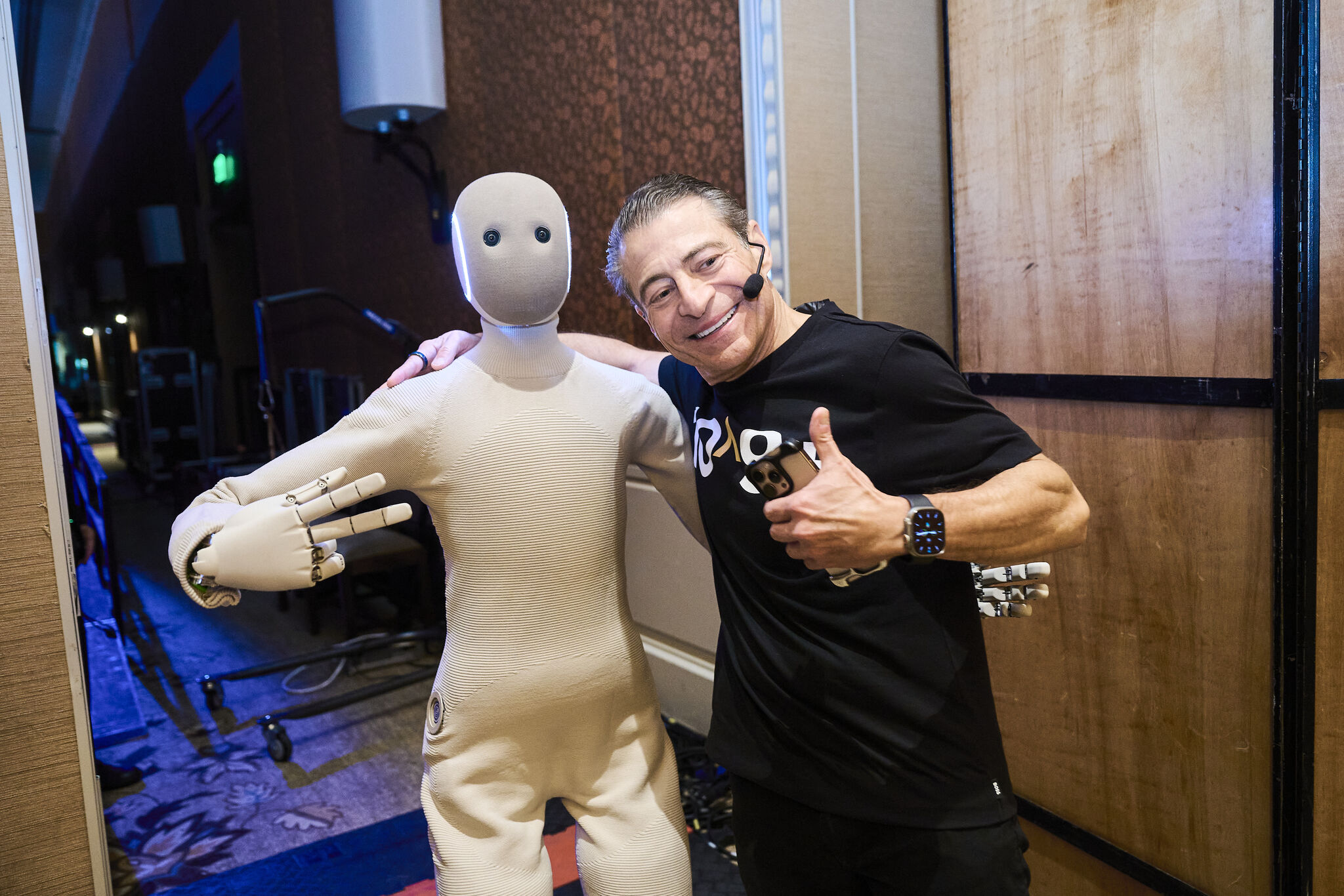
Day 2 of Abundance360 brought the humanoid revolution to stage. Here's the thing most people don't get yet: AI isn't just a software story anymore. It's jumping off the screen and into the PHYSICAL…
Abundance360 Day 1 proved how Agents are transforming businesses and individual..... → Amjad Masad dropped a truth bomb: Entrepreneurship isn't a career option anymore — it's THE career. The world yo…

The last time humanity forked, it took 500,000 years and gave rise to Neanderthals. The next one takes decades, and it's already started. Let me walk you through them.
An AI just disproved a mathematical conjecture that had stood for 80 years. The same week, SpaceX filed the largest IPO in human history: $75 billion at a $1.75 trillion valuation with a $28.5 trillio…
2.5 posts/week
Posts / Week
19
Total Posts Analyzed
MEDIUM
Posting Frequency
212.7%
Avg Engagement Rate
STABLE
Performance Trend
850
Avg Length (Words)
HIGH
Depth Level
ADVANCED
Expertise Level
0.85/10
Uniqueness Score
YES
Question Usage
0.75%
Response Rate
Writing style breakdown
<start of post>
The cost of intelligence is heading toward zero, and most people are still worried about the cost of electricity. We are witnessing the greatest deflationary force in human history.
Let me explain why this matters...
In 1999, a gigabyte of storage cost $300. Today, it's essentially free. In 2020, training a frontier AI model cost $100 million. By 2030, the reasoning capabilities that today cost $20/month will be embedded in every $5 toy and $1 sensor on Earth.
We are moving from a world of scarcity to a world of absolute abundance.
-- Energy: Solar plus storage is now the cheapest energy in history. In some regions, it's hitting $0.02 per kWh.
-- Labor: Humanoid robots are moving from labs to factory floors. The cost per hour for a robot is dropping below $3.
-- Knowledge: Every person with a smartphone now has a PhD-level tutor in their pocket for the price of a data plan.
This isn't just progress. It's a phase shift. When the cost of the three primary inputs to the economy—energy, labor, and intelligence—all trend toward zero simultaneously, the old rules of economics break.
We aren't ready for what comes next, but the data says it's happening anyway.
Watch the full episode: https://lnkd.in/eN8-zAH7
<end of post>
Sign in to unlock the full writing analysis
Free tools to help you write, score, and benchmark in the same style.
Other creators worth studying alongside Peter H. Diamandis.

Pavel Alimov
IT Project Manager | Delivery Mnager | Digital & Software Projects | Remote | Fintech · Web3 · iGaming
60 Viral Score

Artem Zakharov
CEO & Co-Founder at JobHire.AI | Building your long-term career partner | Helping 10K+ people become happier at work every day
145 Viral Score

Grace Liu
SWE Intern @ Databricks | Prev @ Vercel, AWS, HubSpot | CS + Comp Bio @ UofT
614 Viral Score

Maya Lekhi
AI Infra @ Notion, Incoming @ Vercel ▲ | Western National Scholar
286 Viral Score

Josef José Kadlec
Co-Founder at GoodCall | 🦾HR Tech - AI - RecOps - Talent Sourcing - Linkedln | 🪖Defence, Dual-use & MilTech Industry Consultant+Investor 🎤Keynote Speaker 📚Bestselling Author 🏆 Fastest Growing by Financial Times
6 Viral Score

Raj Shamani
Founder & Host @ Figuring Out | Building Cüraa by YFL Home | Bestselling Author, Build Don’t Talk
52 Viral Score
ViralBrain plans, writes, and schedules your LinkedIn content, using official LinkedIn APIs so your account stays safe.
Write like Peter H. Diamandis.