
I caved. Picked up a Mac mini. What are y’all using yours for? So far I’m planning: 🏡 24×7 server for my agents (my Claude needs a home) 📦 Dev / sandbox environment for risky experiments 📽️ Media…

13654015 viral
Developer Tools7 months ago

LinkedIn Content Strategy & Writing Style
Product Director, AI & ML @Booking.com | AI, strategy, product, and real P&Ls.
1 person tracking this creator on ViralBrain
Pranav Pathak positions himself as a high-stakes practitioner who bridges the gap between enterprise-scale AI strategy and the gritty reality of technical implementation. His content strategy centers on the "rare middle"—the intersection where deep proprietary data meets malleable, modern tech stacks—moving beyond the hype of model releases to focus on the orchestration of agentic workflows and UX design. He is notable for his "builder-first" transparency, often sharing how he navigates the 80% accuracy of LLMs by treating model limitations as design constraints rather than failures. By blending his role as a Product Director at Booking.com with a hands-on obsession for local dev environments and agent stacks, Pranav offers a unique synthesis of corporate P&L responsibility and grassroots engineering curiosity.
23.6K
13.6K
117
3.7
63
2
I caved. Picked up a Mac mini. What are y’all using yours for? So far I’m planning: 🏡 24×7 server for my agents (my Claude needs a home) 📦 Dev / sandbox environment for risky experiments 📽️ Media…
Every AI feature shipped in the last two years looks the same. A chat box, a loading spinner, a disclaimer at the bottom, and the interface is a text field that says “Ask me anything.” The problem i…

Will we have AGI in 5 years? Self improving agents? No more UI? These questions hardly matter when you're on the ground building with AI. What matters is a deep understanding of capabilities, their…
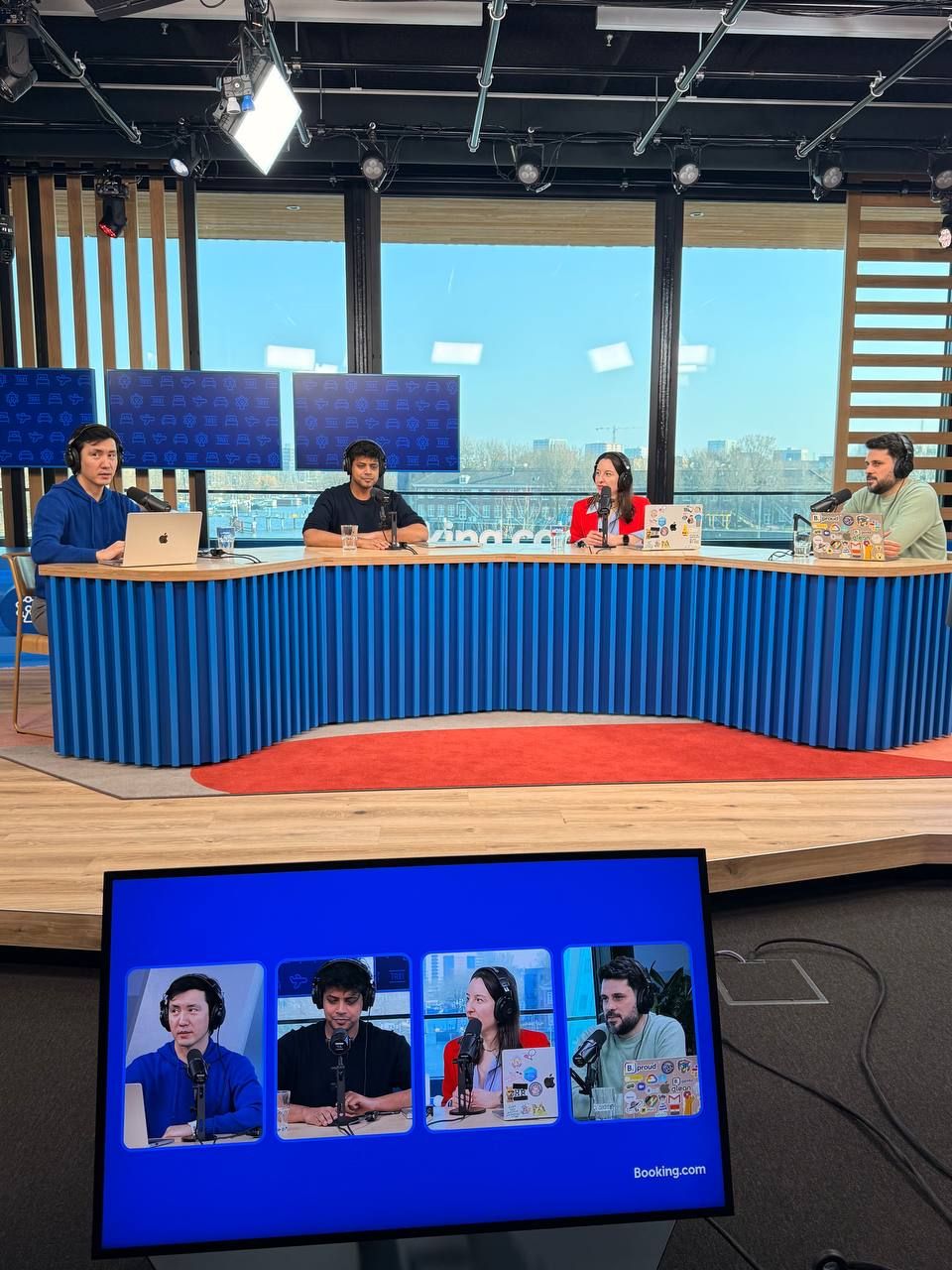
Over the last week, 20+ devs told me they haven't written a single line of code by hand for close to a month. AI (and in most cases, Claude Code), has made punching code obsolete for these devs. T…

What do you do when you’re right only 80% of the time? How do you maximise upside while minimising downside? This is where AI product design begins. Model performance isn’t the product, it’s a desig…
I've stopped caring as much as I did about model improvements. This is a big milestone. When a new model was released before, I would drop everything to try it. Each launch brought a step change impr…
3.7 posts/week
Posts / Week
2.1 days
Days Between Posts
2
Total Posts Analyzed
HIGH
Posting Frequency
116.8888888888889%
Avg Engagement Rate
STABLE
Performance Trend
200
Avg Length (Words)
HIGH
Depth Level
ADVANCED
Expertise Level
0.82/10
Uniqueness Score
YES
Question Usage
0.3%
Response Rate
Writing style breakdown
The author writes with the voice of a practitioner-expert—someone who is 'on the ground' building rather than just theorizing. The style is professional yet conversational, blending the authority of a senior tech leader with the accessibility of a peer. It is predominantly direct and informative, but it frequently leans into a motivational and persuasive tone when discussing the future of technology.
The core characteristic is 'pragmatic insight.' The author avoids hype in favor of lived experience, often using a 'then vs. now' or 'problem vs. solution' framework. The energy is high and fast-paced; sentences are designed to move the reader quickly through a logical argument toward a definitive conclusion.
The use of 'industry-insider' terminology (e.g., 'API layers', 'GTM', 'agent orchestration', 'wrapper') to establish credibility.
Rhetorical questions used as hooks or transitions to simulate a live dialogue.
A strong preference for 'The Rule of Three' or numbered lists to categorize complex observations.
Direct audience engagement, often ending posts with a question or a call to 'inspire me.'
The author primarily uses the first-person ('I', 'my') to ground claims in personal experience, and the second-person ('you', 'y'all') to challenge or guide the reader. The tone is authoritative but not condescending, often using softer suggestions like 'Consider this' or 'What matters is...' alongside direct commands like 'Build custom intelligence.'
Sign in to unlock the full writing analysis
Free tools to help you write, score, and benchmark in the same style.
Other creators worth studying alongside Pranav Pathak.

Martina De Angelis
Marketing Strategist ti ascolto e cerco di venirne a capo
862 Viral Score

Rubén Domínguez Ibar
Founder The AI Corner | Scout a16z speedrun
1 Viral Score

26 Viral Score

Conor Grennan
CEO, AI Mindset | Former Chief AI Architect, NYU Stern | MasterClass Instructor | NY Times and #1 Int’l bestselling author | Board Member, SHRM Foundation
9 Viral Score

Christ Coolen
↳ Specialist Marketing(Psychologie) | Marketeer, Spreker & Trainer
55 Viral Score

Nate B. Jones
AI News & Strategy Daily. Your guide through the noise. 20-year product leader. Clear, actionable AI strategy for builders & executives.
163 Viral Score
ViralBrain plans, writes, and schedules your LinkedIn content, using official LinkedIn APIs so your account stays safe.
Write like Pranav Pathak.