
And Clay Enterprise Cohort 12 has liftoff!! 🚀 The energy in the room was palpable and the passion for learning was LOUD! 👇 Once again, the room is a mix of backgrounds, roles and industries, which…

6921041 viral
Education & Learningabout 1 month ago

LinkedIn Content Strategy & Writing Style
Brand-Led GTM Engineer | Enterprise Cohort Coach @ Clay | Revenue Bottlenecks → Pipeline Systems | Clay Integration & GTM Architecture | UK & EMEA
0 people tracking this creator on ViralBrain
Stephanie positions herself as a brand-led GTM engineer who turns revenue bottlenecks into practical pipeline systems, especially through Clay architecture and enterprise coaching. Her content consistently argues that tools are secondary to clear GTM strategy, using cohort examples to explore ICP definition, buying signals, enrichment gates, account scoring, workflow observability, and trustworthy CRM data. She stands out by treating Clay as a reasoning system rather than a collection of integrations, insisting on confidence scores, feedback loops, and visible logic behind every output. Her most distinctive intersection is coaching as systems design: teaching others while refining her own thinking about AI, human judgment, ethical infrastructure, and the limits of automation.
3.7K
2.8K
33
143
23
And Clay Enterprise Cohort 12 has liftoff!! 🚀 The energy in the room was palpable and the passion for learning was LOUD! 👇 Once again, the room is a mix of backgrounds, roles and industries, which…
When Natalie Ho emailed to let me know I was a coach for Clay's Enterprise Cohort 10, I SCREAMED!! Then it got better... Natalia Méndez Cortés, Hakeem Oloritun, Polly Morphew & Judy Phey are coaching…
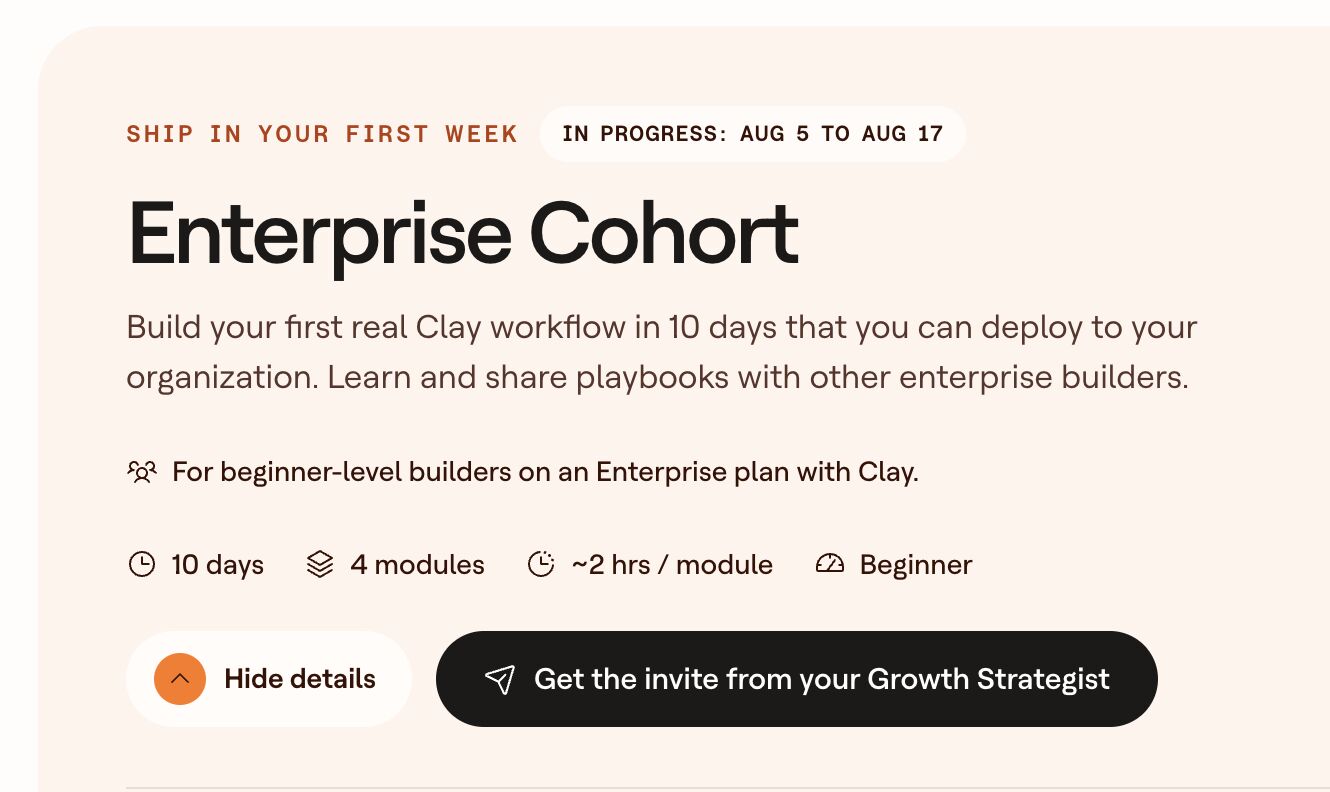
Clay's Enterprise Cohort 10 is in full flow, and the intros prove that we all have a singular, collective ambition at the start: how to get good at Clay. But what does 'good at Clay' mean?!!! Because…
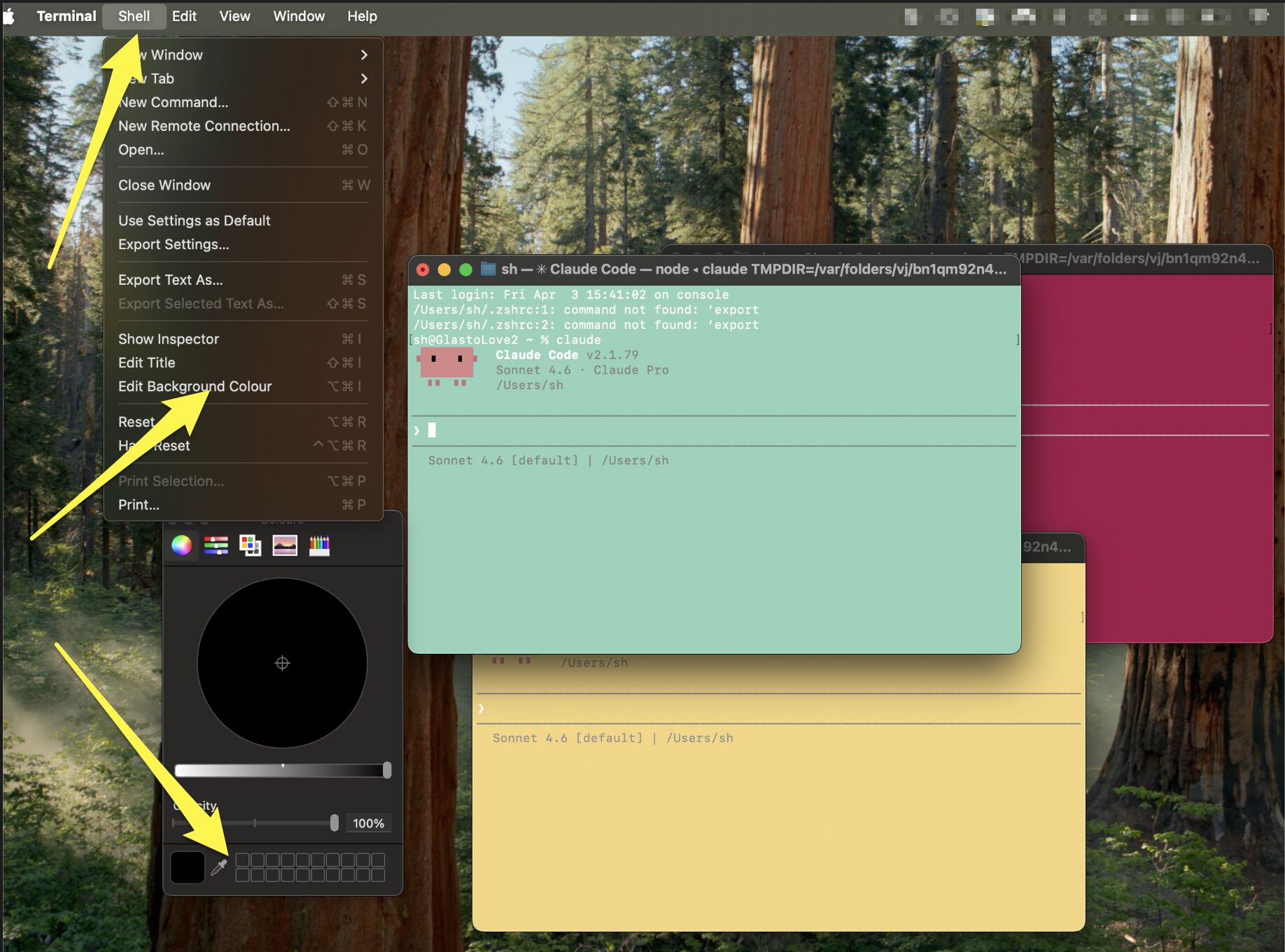
Working in Claude Code just got way more COLOURFUL!! Did you know you could colour code your terminal shells?! Not only do I love colour coding different project types & tasks, it helps me find the…
I'm starving for book recommendations. What's blown your mind lately? What should I be reading? 📚 📚 📚 I'm ravenous for fiction in these genres: Fantasy Sci-fi Mythic fiction Gothic fiction Histor…
Celebrating my new certification in AI Fluency: Framework & Foundations from Anthropic Academy. Unforgettable: HUMAN input optimises AI outcomes. If you're passionate about AI Ethics & Safety... 💜 💜…
0.0 posts/week
Posts / Week
23
Total Posts Analyzed
LOW
Posting Frequency
33.2%
Avg Engagement Rate
STABLE
Performance Trend
0
Avg Length (Words)
HIGH
Depth Level
ADVANCED
Expertise Level
9/10
Uniqueness Score
YES
Question Usage
0%
Response Rate
Writing style breakdown
The writing is conversational, energetic, observant, and practically oriented. It combines professional subject matter—GTM strategy, RevOps, Clay workflows, AI systems, data quality, enrichment, and automation—with the looseness and emotional immediacy of a personal social-media post. The author does not sound like a corporate marketer making a polished announcement. The voice feels like an experienced practitioner thinking aloud after a live session, coaching conversation, experiment, or disagreement.
The dominant mode is direct explanation. The author frequently begins with a concrete event or observation, then extracts a broader lesson from it. The writing moves from what happened to what it means. A cohort session becomes a lesson about GTM clarity. A workflow becomes a lesson about feedback loops. A disagreement about public repositories becomes a question about what marketers actually need to become.
The emotional energy is high, but not uniformly loud. Exclamation marks, emojis, capitalized words, repeated words, and enthusiastic phrases create bursts of intensity: 'The energy in the room was palpable and the passion for learning was LOUD!', 'GAME-CHANGER', 'SUPERPOWERS!', and 'I CAN'T WAIT FOR THE NEXT ONE!' These bursts are usually surrounded by more analytical sentences, so the emotion functions as contrast rather than as a constant state.
The author regularly addresses the reader directly through 'you', especially when offering advice or reframing a problem: 'If you have the will for it, you’ll always find a way', 'So next time you do insight synthesis', and 'I don’t know which marketer needs to hear this'. The author also uses 'we' to create shared participation: 'we cover all time zones', 'we all have a singular, collective ambition', and 'we are better together'. First person is central, particularly in reflective passages: 'I asked', 'I want', 'I love it', 'I see things AI doesn’t', and 'I disagree'.
The author’s signature trait is the combination of technical specificity and human interpretation. Technical concepts are not presented as isolated features. They are connected to judgment, intuition, business context, confidence, curiosity, and lived experience. The writing repeatedly insists that the tool is not the real point. The point is the thinking behind the tool.
The voice also relies on contrast. Common patterns include tool versus strategy, data versus judgment, automation versus understanding, beginner versus expert, apparent cleanliness versus hidden error, and public technical performance versus actual business competence. These contrasts give the posts a clear argumentative spine without making them sound like formal essays.
Rhetorical questions are frequent and perform several functions. They open a post, challenge an assumption, expose a hidden issue, or invite comments: 'But what does 'good at Clay' mean?!!!', 'Why?! (& how to fix)', 'What happens when what you’ve built is completely wrong, but you don’t know it?', and 'what's your single biggest takeaway'. Questions are usually followed immediately by an answer, explanation, or practical framework.
Humor is light, self-aware, and occasionally parenthetical. Examples include '(OCD?!)', 'Queen 🫅 of MCP connections!', 'Houston, we have a problem', 'a steep learning curve is a LOT MORE FUN', and 'to infinity and beyond!'. The humor never fully takes over. It softens technical material and makes the author’s expertise feel approachable.
Sign in to unlock the full writing analysis
Free tools to help you write, score, and benchmark in the same style.
Other creators worth studying alongside Stephanie Holland.

Haris Odobasic
Inside the companies doing $1M+ revenue per employee
26 Viral Score

Meenakshi (Meena) Das
CEO at NamasteData.org | Advancing Human-Centric Data & Responsible AI | Founder of the AI Equity Project
46 Viral Score

Fabrice Courdesses
Co-Founder & CEO of VideoRunRun | Data-Driven Creative Intelligence Platform for Video Ads Performance
8 Viral Score

64 Viral Score
43 Viral Score

18 Viral Score
ViralBrain plans, writes, and schedules your LinkedIn content, using official LinkedIn APIs so your account stays safe.
Write like Stephanie Holland.