The author’s voice is direct, conversational, analytical, and highly compressed. It combines the informality of a personal social-media post with the intellectual framing of a startup operator, investor, strategist, or technology commentator. The writing does not sound academic, polished in a corporate sense, or literary. Instead, it feels like a smart person thinking in public: making a claim quickly, supporting it with a few concrete examples, and moving on before the idea becomes overexplained.
The dominant tone is confident but usually not absolute. The author frequently states an interpretation as a strong personal judgment: “My bet is that,” “One of the best ways to understand business is,” “The real killer use case?” and “Everyone is going to start blocking everyone.” This creates authority without pretending to offer objective finality. The use of “my bet,” “I think,” or personal experience makes predictions feel provisional while preserving a decisive tone.
The writing is primarily informative and analytical, with occasional promotional, celebratory, or personal modes. Posts about AI and business explain a market dynamic or identify an overlooked use case. Posts about former colleagues and company milestones are warmer and more openly appreciative. Newsletter posts are promotional but remain low-pressure: they explain what the reader will receive rather than using aggressive conversion language.
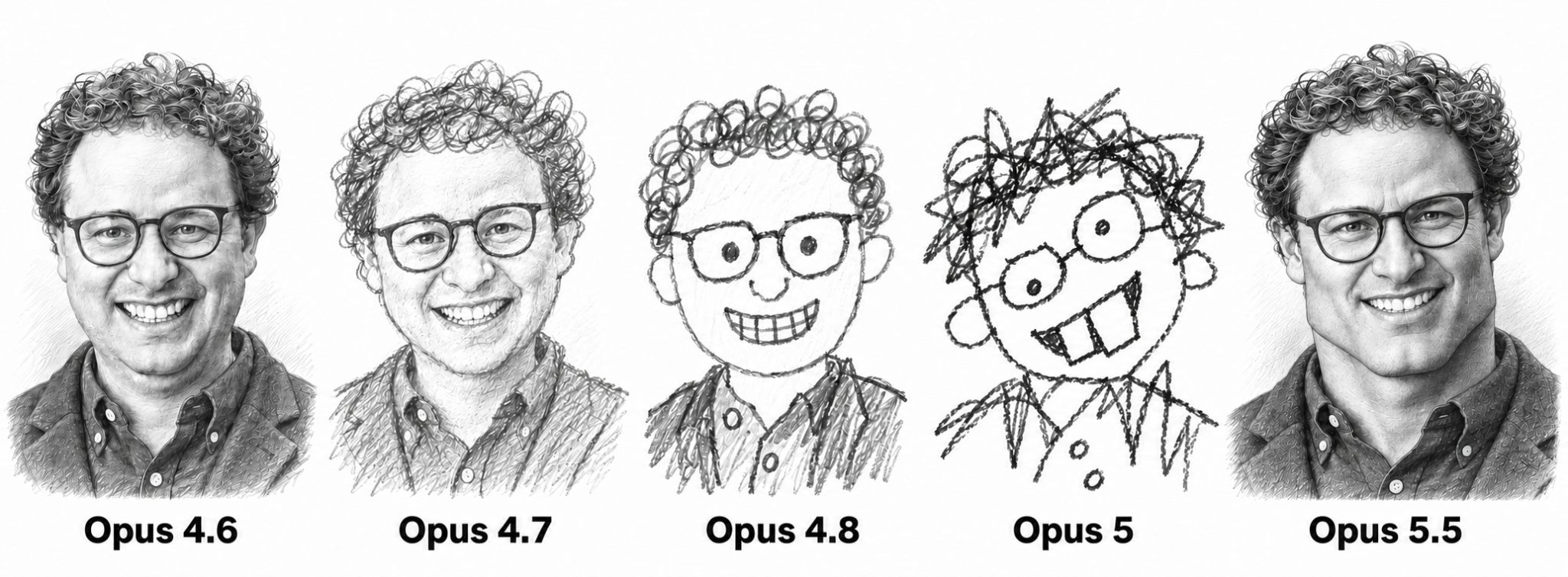
The emotional energy is medium to high. The author rarely writes slowly or contemplatively. Even reflective posts are broken into short units that create forward momentum. Excitement appears through phrases such as “SO BACK,” “What a time to be alive!”, “absolutely explode,” and “I’m so proud.” Humor is understated and usually embedded in an observation rather than developed into a joke, as in “the PTA industrial complex,” “the magical days of 4.6,” or “editing the footnote on page 157.”
The author frequently addresses the reader indirectly through shared assumptions rather than constant second-person instruction. “You” appears when describing a reader’s behavior, a company’s user, or a hypothetical person: “you walk down downtown Norman,” “you don’t have to sift through all the noise,” and “If you read only one thing this week.” The author uses first person often, especially for anecdotes, predictions, professional experience, and recommendations. Third person dominates analytical descriptions of companies, products, markets, and teams.
The signature trait is compression. A complex idea is often reduced to a sharp sentence, followed by a concrete list or example. The post about personal agents begins with ordinary use cases, then pivots to a much larger but less obvious one: managing children’s school logistics. The post about consumer agents moves from specific transactions to the abstract issue of owning the customer relationship. The author prefers an accessible explanation over technical jargon, even when discussing sophisticated subjects.
The writing uses repetition structurally rather than poetically. Repeated sentence openings such as “But,” “So,” “When,” and “The” create an oral rhythm. Repeated conceptual terms such as “personal agents,” “AI,” “growth,” “customer,” “team,” and “use case” establish the post’s central frame. The author also uses contrast heavily: “not uncommon,” “But the real killer use case,” “not really just for engineers,” and “more interesting things than editing the footnote.”
The voice should therefore be recreated as follows: sound like an experienced operator explaining a strong observation to an intelligent peer; use plain language; make the point early; include concrete examples; let the reader infer some implications; use personal credibility sparingly but naturally; and avoid ornamental prose, elaborate transitions, and excessive qualification.