Products
Discover HeroesFind top LinkedIn creators in your niche.Post CreatorAI-powered composer with your tone and style.Trending PostsSee what's going viral on LinkedIn right now.
Use Cases
Repurpose ContentTurn YouTube, blogs, and articles into LinkedIn posts.Carousel GeneratorCreate swipeable LinkedIn carousels with AI.30-Day Auto CalendarPlan and auto-publish a month of posts.LinkedIn MCP ServerPost to LinkedIn from Claude, Codex and OpenClaw.For AgenciesRun your clients' LinkedIn content in one place.
Tools
Text FormatterBold, italic, and Unicode styles for posts.Hashtag GeneratorFind the best hashtags for your content.Engagement CalculatorMeasure your post performance instantly.Hook GeneratorAI hooks that stop the scroll.Post PreviewSee exactly how your post will look.Content CalendarPlan and schedule your LinkedIn content.Browse all 90+ free tools
Resources
Free Tools90+ LinkedIn tools, no signup required.Templates100 ready-to-use LinkedIn post templates.GuidesStep-by-step LinkedIn growth playbooks.CollectionsCurated tool sets by role and goal.CompareViralBrain vs. other LinkedIn tools.BlogLinkedIn growth tips and strategies.
Pricing
LoginStart 7 Days Trial
Back to Discover Heroes
Victoria Repa

Victoria Repa

LinkedIn Content Strategy & Writing Style

#1 Female Creator Worldwide 🌎 | CEO & Founder of BetterMe, Health Coach, Harvard Guest Speaker, Forbes 30 Under 30. On a mission to create an inclusive, healthier world

United States
19 Viral ScoreView on LinkedIn

1 person tracking this creator on ViralBrain

Warm Analysis

Victoria Repa positions herself as a mission-driven wellness founder and modern CEO, linking BetterMe’s growth to her broader goal of creating a healthier, more inclusive world. Her content strategy blends practical leadership education - from anti-micromanagement principles and team motivation checklists to lessons on confidence, rejection, and experimentation - with candid reflections on burnout and culture. She stands out by extending wellness beyond fitness into employee well-being, trust, and inclusive product design, as seen in BetterMe’s adaptive fashion collection supporting prosthetic care. The result is a distinctive intersection of founder storytelling, accessible self-development, and tangible social-impact initiatives.

Performance Overview

Followers

523.8K

Connections

3.4K

Avg. Engagement

641

Engagement Rate

Posts/Week

Viral Score

19

Posts Analyzed

2

Top Posts by Engagement

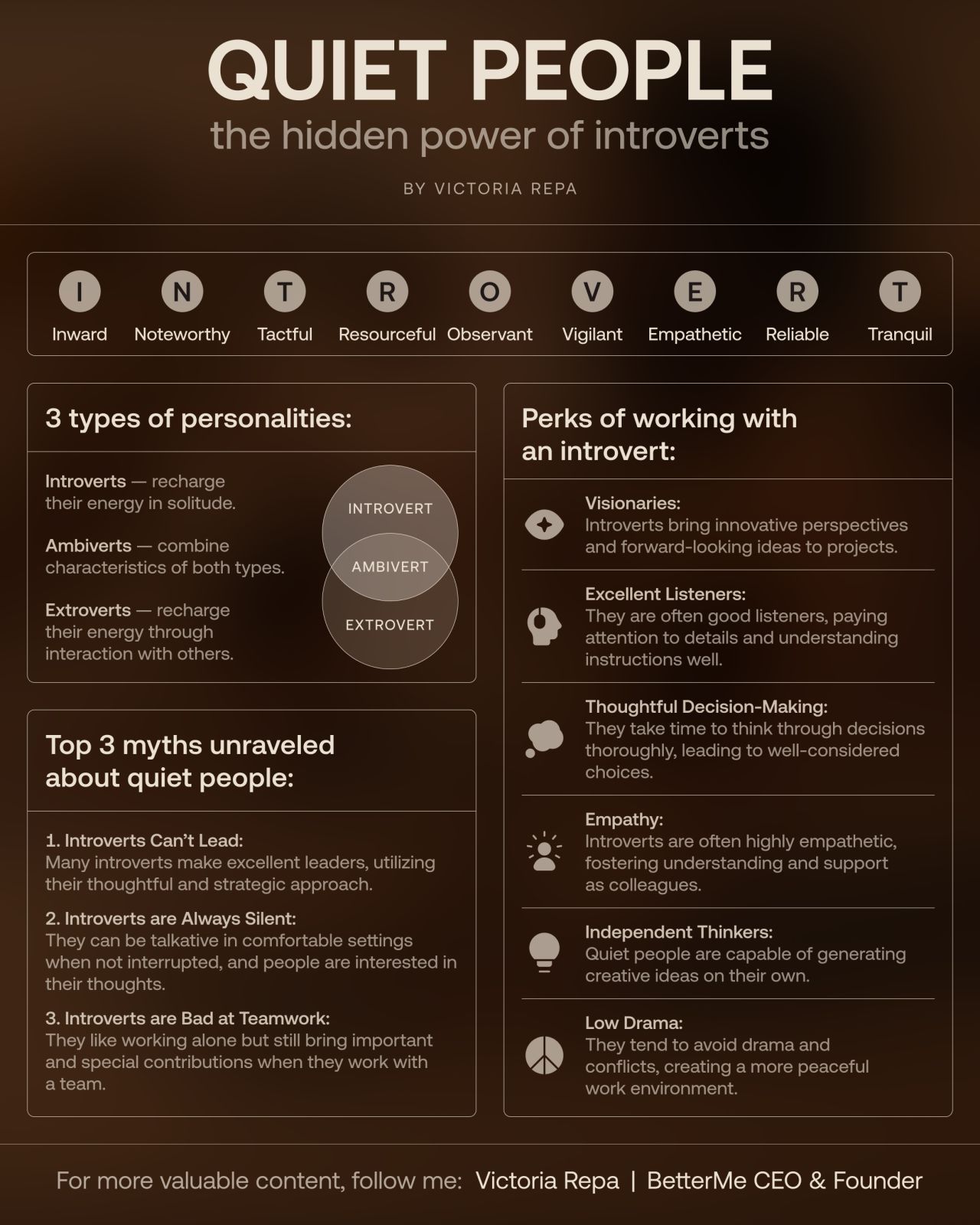
I am an introvert. ↳ I was embarrassed in school for being quiet. ↳ It was hard for me to find friends; they thought I was boring. ↳ I went unnoticed at work. But there's more: ↳ I quietly but cons…

LinkedIn post image: I am an introvert.
1.5K3812019 viral
Leadership & Management22 days ago
View on LinkedIn

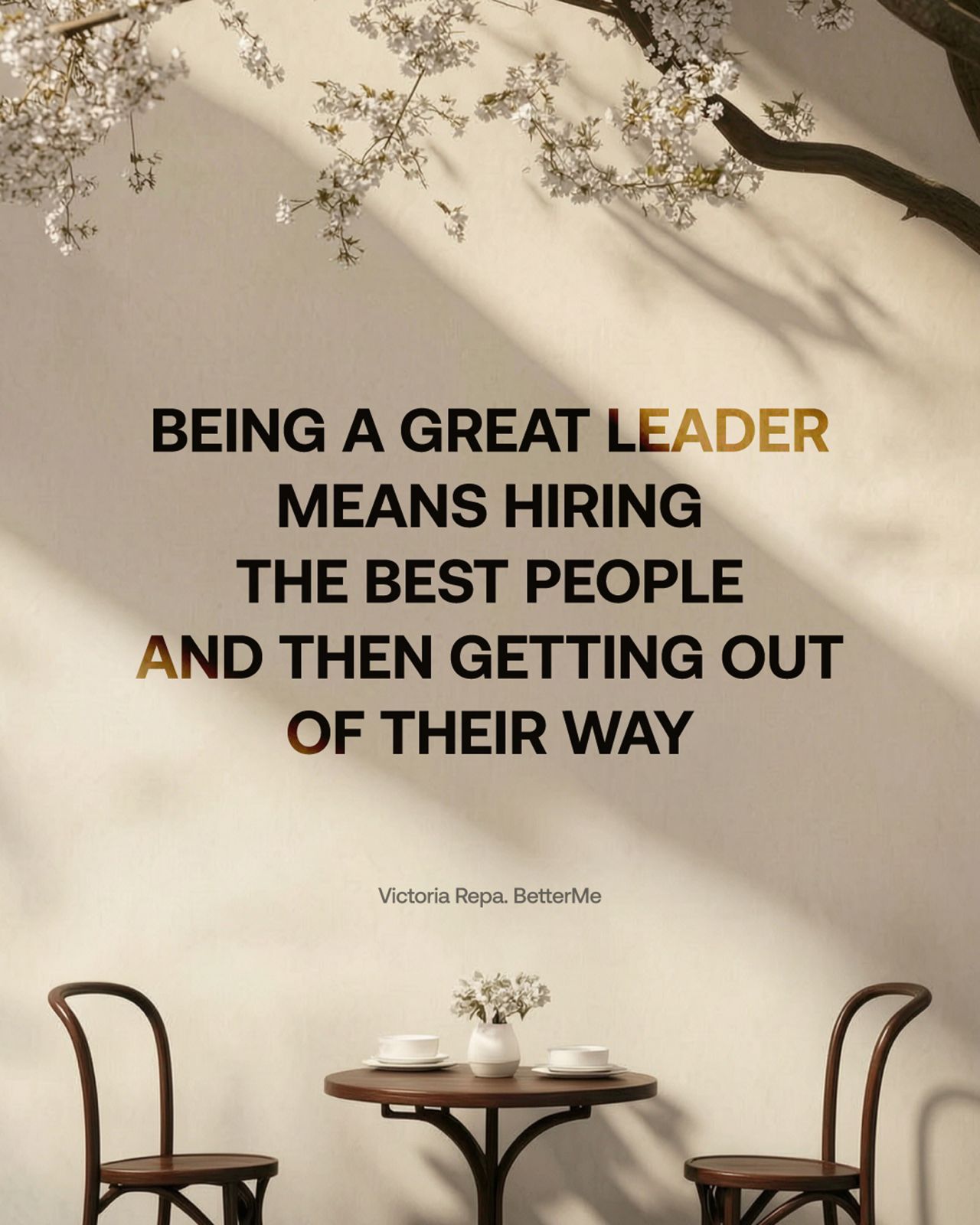
The #1 Secret to Effective Leadership: (and it's simpler than most people think) Being a great leader isn’t about micromanaging. It’s about 2 simple rules: 👉 Hiring the best people. 👉 Then gettin…

LinkedIn post image: The #1 Secret to Effective Leadership:
1.3K3381467 viral
Leadership & Management27 days ago
View on LinkedIn

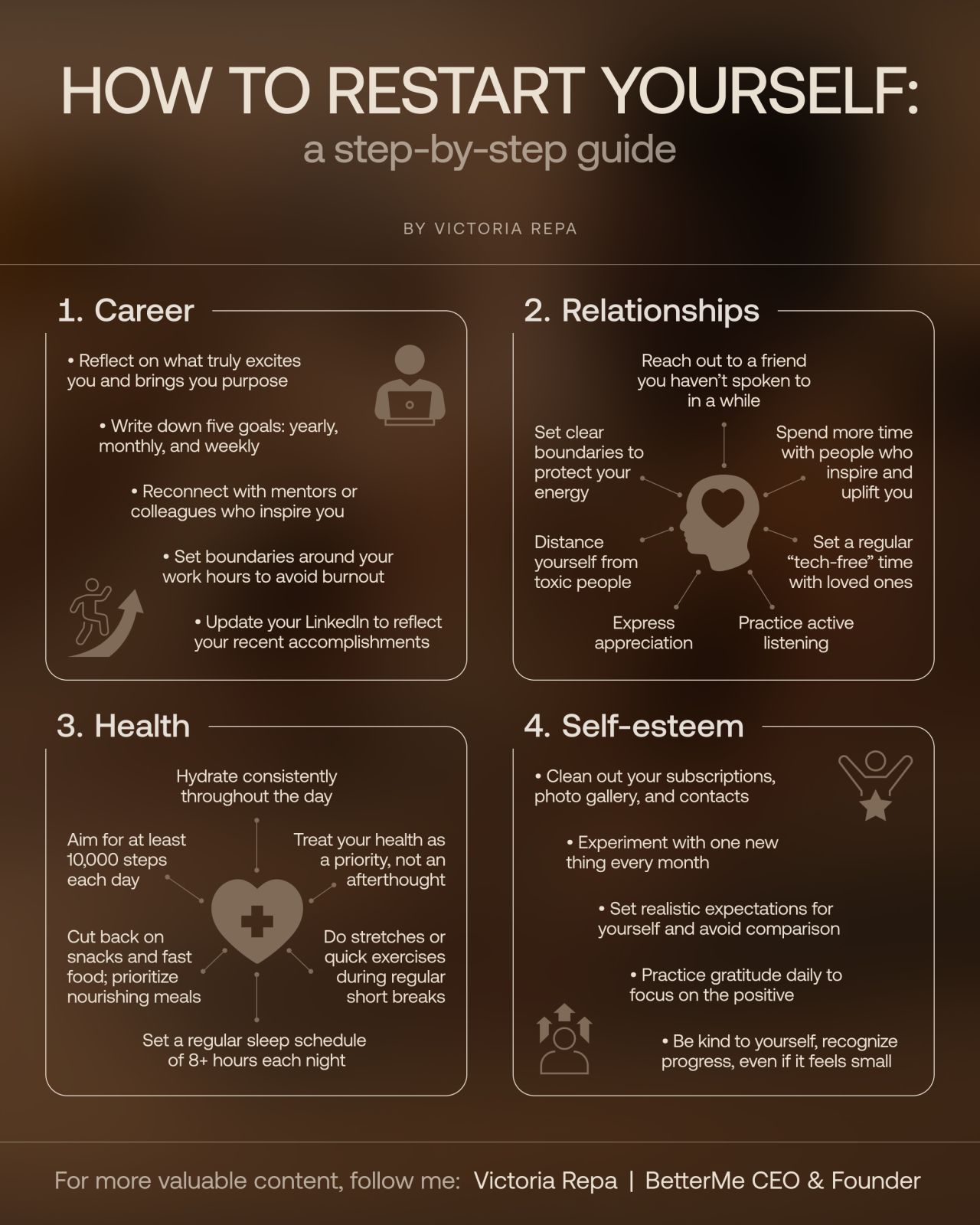
One thing I’ve learned over the years: You don’t always need a new life. Sometimes, you just need to reset the one you already have. When things feel stuck, the instinct is often to change everythin…

LinkedIn post image: One thing I’ve learned over the years:
1.2K2561827 viral
Personal Development21 days ago
View on LinkedIn

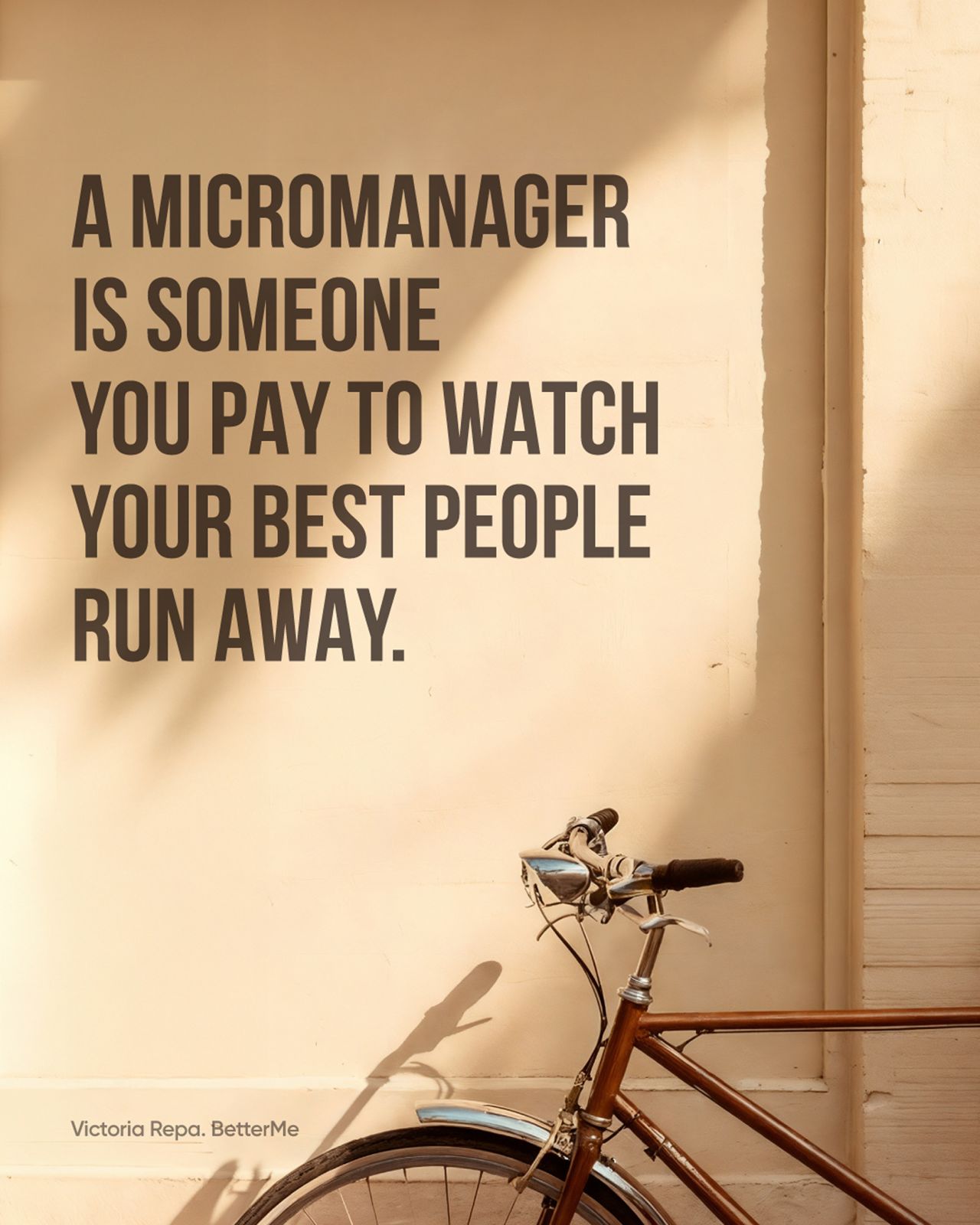
A micromanager is someone you pay to: ↳ Lose the trust of employees. ↳ Slow down decision-making. ↳ Drive top talent to seek opportunities elsewhere. Micromanagement doesn’t mean high standards. It…

LinkedIn post image: A micromanager is someone you pay to:
1.1K2711156 viral
Leadership & Management12 days ago
View on LinkedIn

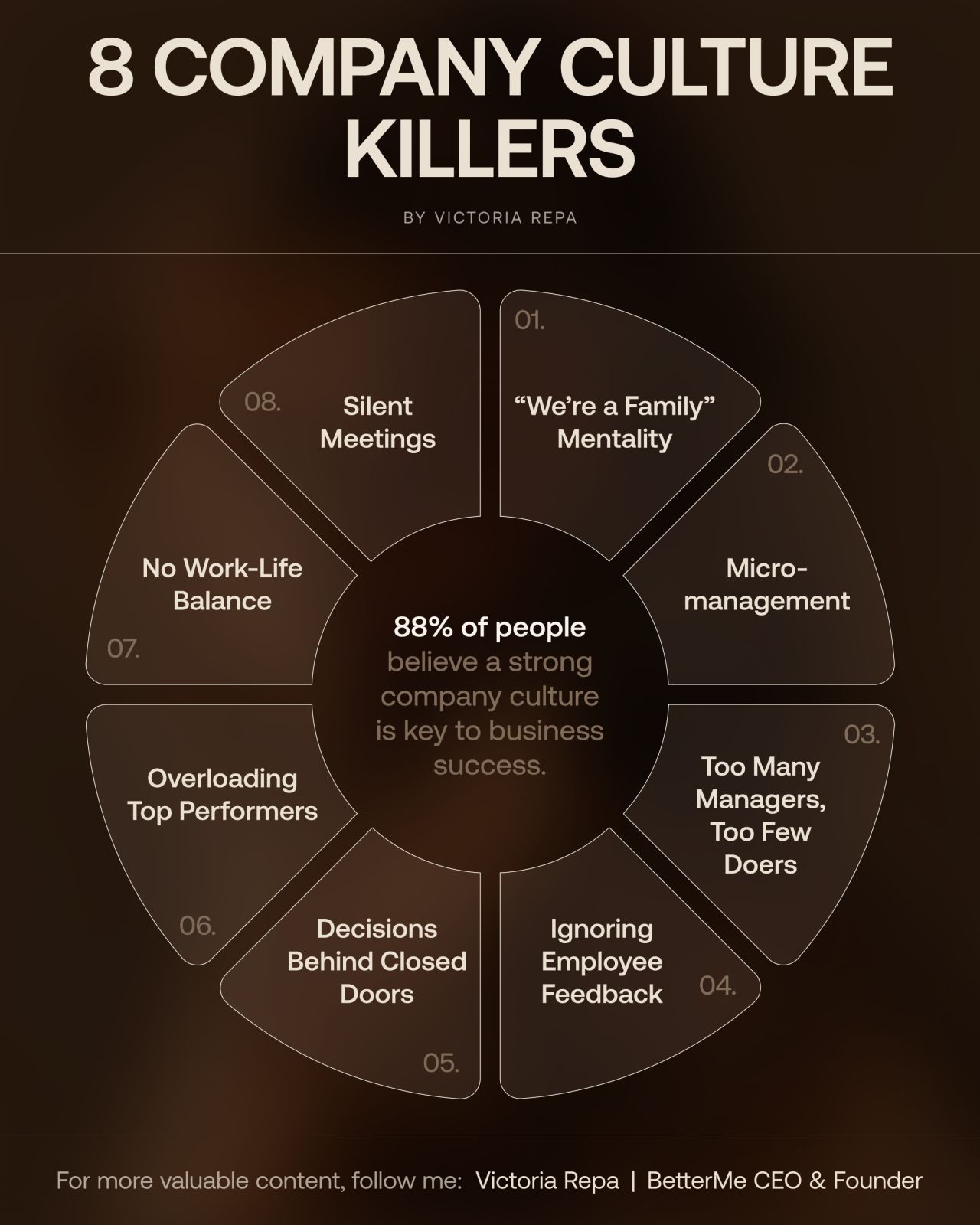
88% of people believe that a strong company culture is key to business success. But just one mistake can destroy it all. Here are 8 company culture killers that often drain teams: 1/ “We’re a Famil…

LinkedIn post image: 88% of people believe that a strong company culture is key to business success.
9332631346 viral
Human Resources & Culture28 days ago
View on LinkedIn

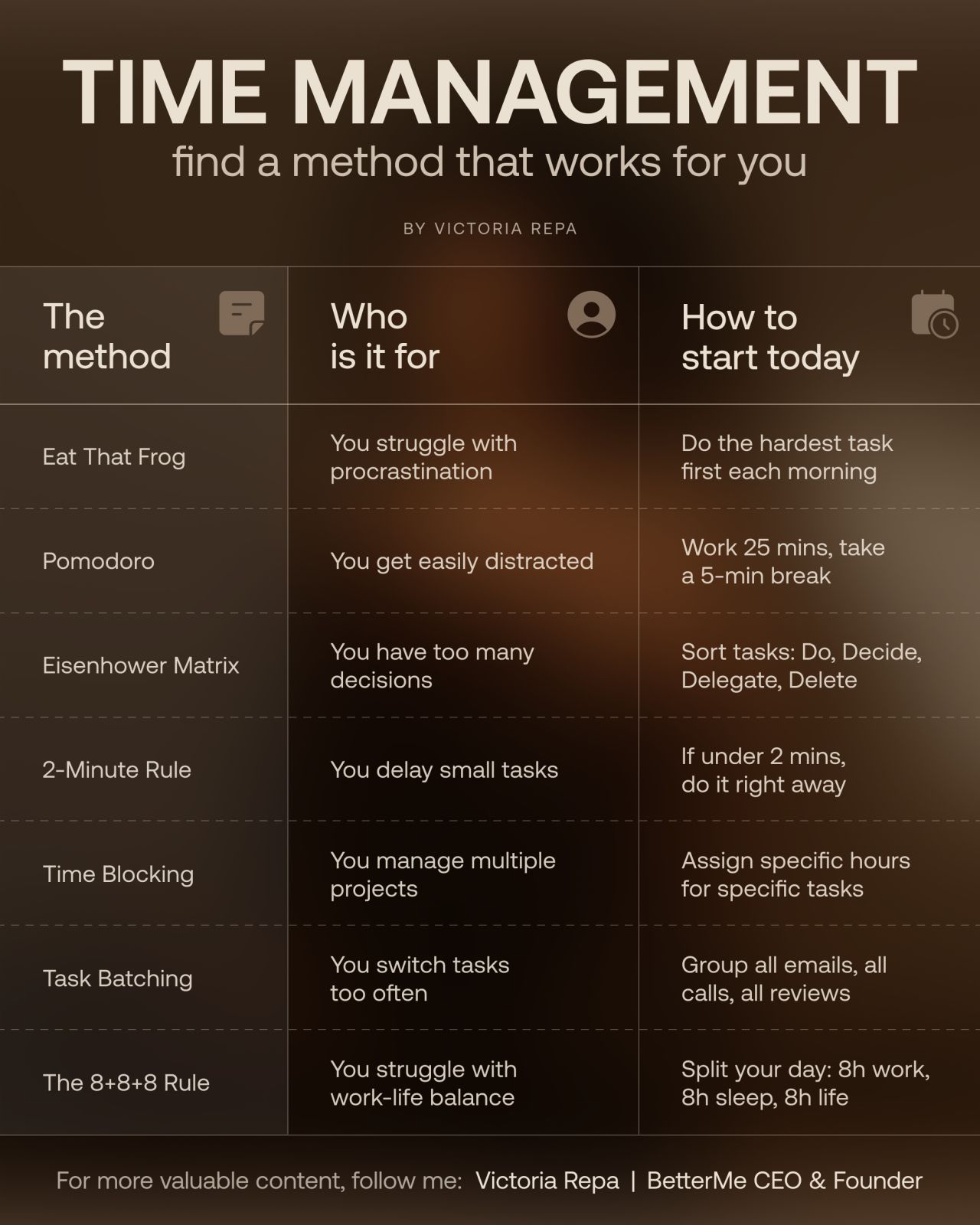
The problem with time management isn’t laziness. It starts when people try to use the wrong approach for the wrong problem. ↳ Some people lose focus easily. ↳ Some keep delaying small tasks. ↳ Some…

LinkedIn post image: The problem with time management isn’t laziness.
7392691065 viral
Productivityabout 1 month ago
View on LinkedIn

Posting Patterns & Frequency

7.0 posts/week

Posts / Week

2

Total Posts Analyzed

HIGH

Posting Frequency

Timezone: UTC

Best Performing Days

ThursdayFridayMondayTuesday

Best Performing Times To Post

Around 12:00 UTC

Topics & Content Focus

Primary Topics

Trust-Based Leadership and Managerial AccountabilityHealthy Workplace Culture, Retention, and Employee ExperienceConfidence Through Repetition and Action-Oriented Personal Growth

Secondary Themes

Inclusive Product Design and AccessibilityFounder-Led Values and Purpose-Driven BusinessPractical Team Motivation and Performance Enablement

Industry Focus

Consumer Wellness and Fitness TechnologyFounder-Led Consumer BrandsInclusive Fashion and Accessibility InnovationPeople Leadership and Workplace Culture

Content Categories

Leadership AdviceWorkplace Culture CommentaryPersonal DevelopmentPurpose-Driven Brand StorytellingActionable Management Frameworks

Performance Insights

641%

Avg Engagement Rate

INCREASING

Performance Trend

Best Performing Topics

Ending Micromanagement Through Trust-Based ManagementManagerial Accountability and Toxic Workplace CulturePractical Leadership Behaviors That Motivate TeamsConfidence Built Through Repeated Action

Virality Signals

Contrarian hooks produce the strongest reaction when they identify a recognizable workplace problem.Posts that validate employee frustrations invite more comments and shares than brand announcements.High-performing posts combine a sharp diagnosis with a practical remedy.Questions about personal experiences create conversational participation rather than passive reactions.Share prompts work best when attached to broadly recognizable workplace dysfunction.

Structure & Quality

190

Avg Length (Words)

MEDIUM

Depth Level

INTERMEDIATE

Expertise Level

72/10

Uniqueness Score

Common Hooks

Contrarian statements that challenge conventional workplace beliefsNegative or provocative labels aimed at familiar management failuresDirect truths framed as overlooked lessonsPersonal discovery hooks that introduce a broadly relatable insightPractical cheat-sheet framing with a promised list of solutions

Common Endings

A reflective question inviting readers to share personal workplace experiencesA concise principle that summarizes the leadership lessonA follow prompt positioned around continued practical valueA repost or share invitation tied to improving workplace culture

Value Delivery Methods

Transforms broad leadership principles into immediately usable behaviors.Uses structured lists as portable management playbooks.Connects managerial behavior to retention, motivation, trust, and performance.Frames accessibility and wellness as design requirements rather than charitable add-ons.Provides emotional validation for employees experiencing poor workplace conditions.

Formatting Style

Short, highly scannable paragraphsNumbered frameworks and long-form checklistsArrow-led supporting pointsFrequent line breaks for mobile readabilityEmphasis through isolated sentences and repeated contrasts

Audience & Tone

YES

Question Usage

0%

Response Rate

Detected Tone

Smart-casualRelatable expertDirect and conviction-ledEmployee-advocacy orientedConstructively provocativeOptimistic but unsentimentalsemi-formalsecond-person

Interaction Style

Experience-sharing in response to workplace promptsAgreement and identity-based commenting around management frustrationsPeer-to-peer sharing of practical leadership advicePassive consumption of list-based, saveable frameworks

Community Building Signals

Positions the audience as a community of employees, managers, and founders improving work culture together.Uses personal workplace experiences as the primary bridge between creator and audience.Encourages readers to distribute useful ideas through reposts and shares.Builds affiliation around fairness, trust, psychological safety, and humane leadership.

Writing Style Patterns

Content Strategy

Hook: Contrarian statements that challenge conventional workplace Tone: semi-formalCTA: Experience-based questions designed to generate co

Writing style breakdown

The writing is professional, motivational, direct, and highly accessible. It combines the authority of a business leader with the simplicity of social-media coaching. The voice is not academic, literary, or corporate in the traditional sense. It is designed to be understood quickly, remembered easily, and shared widely.

The dominant emotional register is encouraging but assertive. The author frequently identifies a common fear, misconception, workplace problem, or leadership weakness, then reframes it into a practical lesson. The tone is optimistic without being excessively sentimental. Even when discussing burnout, rejection, toxic management, or failure, the writing usually moves toward agency: the reader is reminded that they can act, learn, improve, communicate, or change their perspective.

The posts use second-person address heavily. The reader is directly challenged through phrases such as “If you want to become more confident,” “Think about it,” “You don’t need certainty to start,” and “What’s one thing a leader did that truly inspired you?” First-person statements appear when the author establishes personal credibility, as in “One thing entrepreneurship taught me,” “For years, I believed,” and “I decided to rethink my approach.” The first person is generally used to introduce experience; the second person is used to transfer the lesson to the audience.

The voice depends on contrast. Common oppositions include trying versus doing nothing, confidence before action versus confidence after action, trust versus control, good jobs versus bad managers, and thriving versus surviving. These contrasts create memorable formulas and make complex ideas feel binary and immediately actionable.

The author favors short declarative sentences, visible repetition, numbered frameworks, and emotionally recognizable situations. The writing is methodical rather than spontaneous. Even when it appears conversational, the underlying structure is carefully organized: attention-grabbing opening, explanation, list or framework, distilled conclusion, question, and promotional footer.

Rhetorical questions are common, especially near the end. They function as engagement devices rather than requests for detailed answers. Metaphors are present but restrained. Examples include “silent killer,” “the formula won’t work,” “wearing our team down,” and “get out of the way.” The author rarely uses elaborate imagery. Clarity and shareability are more important than originality of metaphor.

The writing often uses repetition as a motivational device. “Then again. Then again.” and “You might learn. You might succeed. But at least you’ll know.” demonstrate the preferred rhythm: short parallel units that build emotional force. The author also uses repeated sentence openings, especially “You,” “And,” “But,” “Without,” and “To develop.”

The author’s core voice can therefore be defined as: credible executive, supportive mentor, practical leadership coach, and motivational content creator. It is polished but not distant, emotionally positive but not soft, and instructional without sounding like a textbook.

2. STRUCTURAL FLOW & LOGICAL PROGRESSION
3. SPACING, LINE BREAKS & VISUAL FLOW

Sign in to unlock the full writing analysis

Apply Victoria Repa's patterns to your posts

Free tools to help you write, score, and benchmark in the same style.

LinkedIn Hook Generator

Generate scroll-stopping hooks in the same style top creators use.

Open tool

LinkedIn Post Scorer

Score your draft against viral post patterns before you publish.

Open tool

LinkedIn Engagement Calculator

Benchmark your engagement rate against creators in your niche.

Open tool

More LinkedIn creators to learn from

Discover all

Other creators worth studying alongside Victoria Repa.

Paweł Huryn

Paweł Huryn

AI PM | Deep research. I build, test, then teach | 130K+ subscribers

8 Viral Score

🦾Eric Nowoslawski

🦾Eric Nowoslawski

Founder Growth Engine X | Clay Enterprise Partner

27 Viral Score

Patrick Dang

Patrick Dang

Helping Founders Build Profitable Personal Brands

76 Viral Score

Nick Abraham

Nick Abraham

I send 2M+ cold emails and 1M+ LinkedIn DMs per month for 1,000+ active clients across Leadbird and Cleverly

55 Viral Score

Matteo Fois

Matteo Fois

Co-Founder @ Kinetyca | I build GTM Systems that connect outbound, content, and paid ads into one revenue engine | Official Partners: Clay, Hubspot, Heyreach, Smartlead, Snov.io

124 Viral Score

Kellen Casebeer

Kellen Casebeer

Helping companies find Message-Market-Fit | Founder @ The Deal Lab

75 Viral Score

€1 trial · 7 days

Automate your LinkedIn for 30 days

ViralBrain plans, writes, and schedules your LinkedIn content, using official LinkedIn APIs so your account stays safe.

  • Official LinkedIn APIs, no risk of ban
  • You approve every post before it goes live
  • Cancel anytime
Start €1 trial€39 Pro or €69 Premium · cancel anytime

30-day plan

On track
1
2
3
4
5
6
7
8
9
10
11
12
13
14
15
16
17
18
19
20
21
22
23
24
25
26
27
28
13 posts queued · auto-publishing
€1 · 7-day trial

Write like Victoria Repa and auto-post for 30 days.

ViralBrain learns their voice and publishes for you.

Try it free

Write like Victoria Repa.

Try it free

Discover more LinkedIn creators · ViralBrain

Other LinkedIn creators

  • Daniel Priestley
  • Ben Labay
  • Yared Endale
  • JP Malherbe
  • Josh Braun
  • Chris Ritson
  • Jason Bay
  • Mark Hunter
  • James Leavesley
  • Anu Sharma
  • Shane Butler
  • Matteo Tittarelli
  • Kyle Poyar