
It’s been 60 days since I left VC to become a full-time solopreneur. It feels like it’s been 6 months. An update on how it’s going: For context, I write a newsletter about startup growth and monetiza…
3617817 viral
Entrepreneurship10 months ago

LinkedIn Content Strategy & Writing Style
Founder & Creator | Growth Unhinged
2 people tracking this creator on ViralBrain
Kyle Poyar positions himself as the premier B2B growth strategist for the AI era, serving as a bridge between traditional SaaS playbooks and the emerging "AI-native" frontier. His content strategy centers on high-density teardowns of pricing models, experimentation velocity, and go-to-market shifts, consistently offering a "TL;DR" on complex corporate moves like Figma’s credit system or Clay’s monetization overhaul. He is notable for his ability to quantify the "dark funnel" and AI-assisted buyer journeys, moving beyond vague trends to provide specific tech stacks and experiment counts. The power of his work lies in the intersection of pricing psychology and technical automation, where he treats AI agents not just as tools, but as the new rational buyers that companies must learn to influence.
99.9K
20.8K
209
4.4
29
1
It’s been 60 days since I left VC to become a full-time solopreneur. It feels like it’s been 6 months. An update on how it’s going: For context, I write a newsletter about startup growth and monetiza…
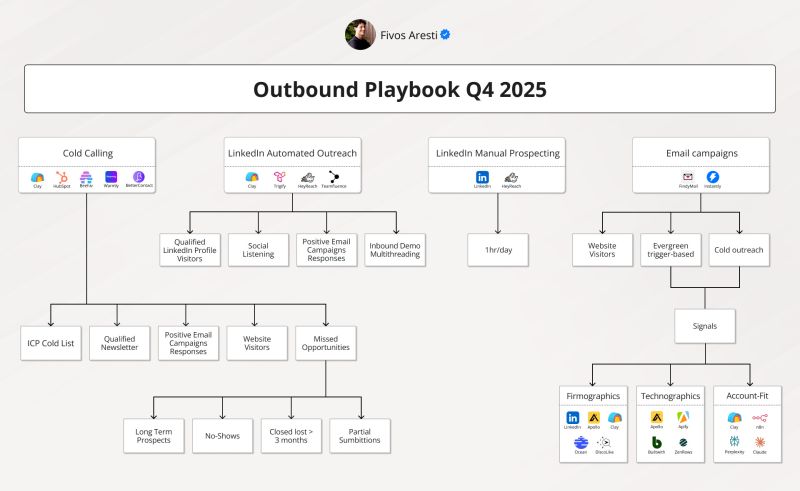
A modern outbound playbook for 2025: Many predicted the demise of outbound. Well, it's alive & kicking. GTM leaders told me that intent-based outbound is the no. 2 channel where they plan to invest m…
Some (unsolicited) GTM predictions for 2026: 1. What ChatGPT says about your product becomes the top product marketing KPI. It’s seen as the most “objective” source about why you’re better (or wors…
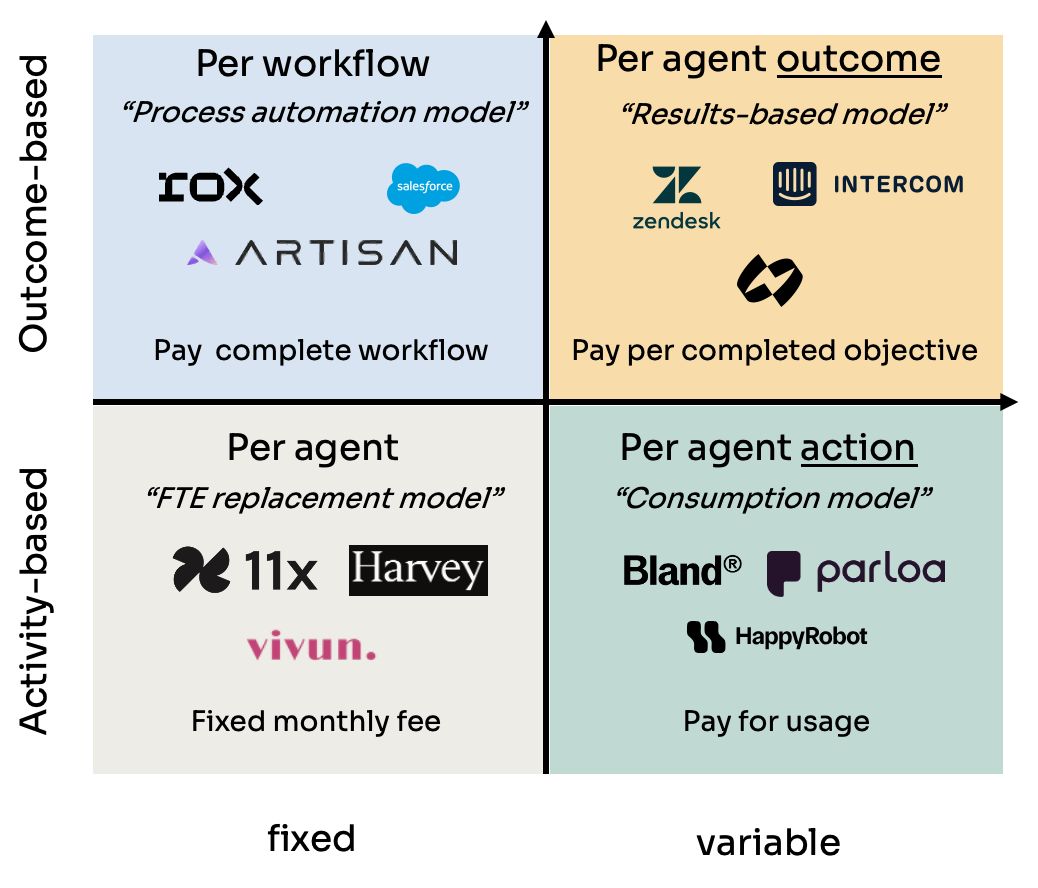
Everyone seems to be talking about AI agents. The biggest problem not enough people are talking about: how to monetize & capture the value of them. Earlier this year Manny Medina (founder of Outreach…
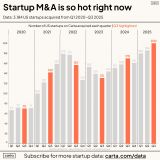
I'm having some major cognitive dissonance about startup M&A. Anyone else confused? It *seems* to be 🌶️ with a record number of acquisitions in 2025 according to Peter Walker (see the chart). Yet J…
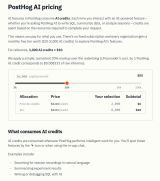
What's new in AI pricing: giving up on the idea of value-based pricing? PostHog just announced new AI pricing that's disruptive in a way that might upset pricing experts. They're not trying to tie pr…
4.4 posts/week
Posts / Week
1.8 days
Days Between Posts
1
Total Posts Analyzed
HIGH
Posting Frequency
0%
Avg Engagement Rate
STABLE
Performance Trend
450
Avg Length (Words)
HIGH
Depth Level
ADVANCED
Expertise Level
8.5/10
Uniqueness Score
YES
Question Usage
0.6%
Response Rate
Writing style breakdown
Overall tone is expert, analytical, and data-driven, but delivered in a conversational, human way.
The voice is professional-yet-casual: clearly a domain expert talking to peers, not a “marketing copy” voice talking down to novices.
Content is highly informative and dense with specifics (numbers, models, frameworks, examples, names, companies).
Persuasive in a low-key way: the writer “shows” via data, stories, and patterns rather than hard-selling opinions.
Frequently includes light, dry humor, self-awareness, and occasional mild sarcasm, but never snarky or mean.
Very clear “explainer” energy: they unpack complex market dynamics (AI, pricing, GTM, SaaS) in simple, structured ways.
Semi-formal: precise and business-focused content, but language is relaxed and modern.
Uses contractions (“it’s”, “they’re”, “I’m”), abbreviations (w/, co's, no.), and colloquialisms (“hot”, “n00bs”, “hurting my brain”, “not great”, “AI tourists”).
Mixes industry jargon (PLG, GRR, NRR, Rule of 40, vSaaS, LLM, GTM) with plain English explanations.
Medium to high energy intellectually; not breathless hype, but engaged and enthusiastic about the topics.
Curiosity (“Curious to hear what y’all think”)
Concern/realism (“gross retention apocalypse”, “deals will increasingly become a knife fight”, “The retention rates … are… not great.”)
Optimism (“what’s exciting about this direction”, “the best protection against churn is…”)
Uses occasional emojis to inject playfulness or emotional color without undermining credibility.
Rhetorical questions: “Anyone else confused?”, “What gives?!?”, “But can it improve performance?”
Parenthetical asides: “(I’m trying to be polite.)”, “(IMO)”, “(coming in January 👀)”
Light metaphorical language: “knife fight”, “AI tourists”, “layer-cake strategy”, “back-to-the-future”.
Internal quotes to signal nuance: “objective”, “competing”, “trial” mode.
Strong preference for specificity: naming people (Brian Balfour, Manny Medina), companies (PostHog, Housecall Pro, Replit), metrics (percentages, revenue figures), and timeframes.
A set of “predictions”
A “playbook”
Biggest learnings
A new “framework” or “direction”.
The math on that is hurting my brain.
co-pilot”, “coding n00bs (like me)”, “whether your weekly martini counts as ARR”.
First-person singular: “I see so much opportunity…”, “I teamed up with…”, “I’m resolving to…”
First-person plural: “we scraped the websites…”, “we compared…”, “we’re going to need to differentiate…”
Second-person: “see the full report”, “Hope you find it useful”, “See you there?”
Tone with reader is collegial and peer-to-peer, as if addressing other operators, founders, or GTM leaders.
Curious to hear what y’all think
See you there?
Hope you enjoy it
Hope you find it useful
Advice is usually framed as description of what others are doing rather than prescriptive commands. When prescriptive, it tends to be implicit (“Start by mapping out…” in playbook-type posts).
Sign in to unlock the full writing analysis
Free tools to help you write, score, and benchmark in the same style.
Other creators worth studying alongside Kyle Poyar.
ViralBrain plans, writes, and schedules your LinkedIn content, using official LinkedIn APIs so your account stays safe.
Write like Kyle Poyar.


