
Learn about Anthropic's AntFooding Product Development method
9215 viral
AI10 months ago

LinkedIn Content Strategy & Writing Style
Author The Deep Learning Playbook, Artificial Intuition, Artificial Fluency & Artificial Empathy, A Pattern Language for Generative AI, Long Reasoning AI & Agentic AI
1 person tracking this creator on ViralBrain
Carlos E. Perez positions himself as a high-level architect of the machine intelligence era, moving beyond technical implementation to define the cognitive frameworks of Artificial Intuition and Empathy. His content strategy centers on translating frontier research from labs like Google and Anthropic into actionable enterprise behaviors, focusing heavily on the "AI efficiency dividend" and the navigation of the singularity. He is notable for his ability to bridge the gap between abstract AGI safety concepts and the practical blueprint for agentic AI, making him a rare voice that is both philosophical and operational. This intersection of deep technical authorship and strategic enterprise foresight allows him to challenge leaders on whether they are "doing AI wrong" while providing the pattern languages necessary to fix it.
4.6K
1.8K
4
7.7
10
1
Learn about Anthropic's AntFooding Product Development method
7 Behaviors of Top Performing Enterprises at the AI Frontier

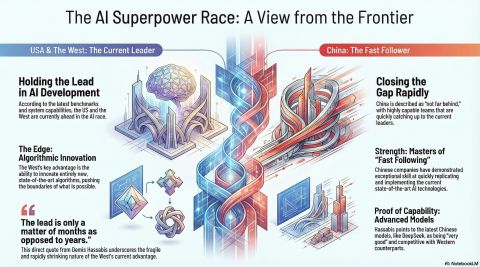
The Global AI Race according to Demis Hassabis Source: https://lnkd.in/e3yxNZDN
7.7 posts/week
Posts / Week
1 days
Days Between Posts
1
Total Posts Analyzed
HIGH
Posting Frequency
4.3%
Avg Engagement Rate
STABLE
Performance Trend
9
Avg Length (Words)
MEDIUM
Depth Level
ADVANCED
Expertise Level
0.6/10
Uniqueness Score
YES
Question Usage
0.4%
Response Rate
Writing style breakdown
Overall tone: concise, professional, and minimalist.
Voice is neutral and informational, with almost no emotional language.
Style leans corporate/academic-tech (AI, conferences, enterprises, AGI, Demis Hassabis, Google MIT, Anthropic).
The writing is highly compressed: each post is essentially a title, headline, or micro-announcement.
No storytelling, no descriptive flourishes, no metaphors, no humor, no rhetorical ornamentation.
Formally professional, but not stiff. It reads like LinkedIn or conference/academic-adjacent social media updates.
No slang, no contractions in the samples (e.g., “I will be attending,” not “I’ll be attending”).
Lexicon is business/tech: “Top Performing Enterprises,” “AI Frontier,” “efficiency dividend,” “Product Development method.”
Very structured and minimal. Posts are usually one standalone line, sometimes two.
Each post is a single idea: a headline, a question, or a short announcement.
The writing is more like labels or titles than fully developed text.
Low to medium energy. Calm, matter-of-fact, not hype-driven.
No exclamation marks. No overt enthusiasm words like “excited,” “thrilled,” etc.
Emotional distance: content is positioned as informational or question-based, not emotionally expressive.
Heavy use of short, punchy, self-contained headlines.
How to navigate the AI singularity
Have you adopted these behaviors?
Are you doing AI wrong?
Preference for broad, intriguing topic framings instead of detailed exposition.
Occasional very minimal CTA (e.g., “DM me if you’ll be around for a meetup.”).
Mostly impersonal and third-person / topic-focused (e.g., “7 Behaviors of Top Performing Enterprises at the AI Frontier”).
When addressing the reader directly, it uses second-person “you” in questions that challenge or prompt self-reflection:
Have you adopted these behaviors?
Are you doing AI wrong?
I will be attending the IAESEAI conference in Paris this coming February.
DM me if you’ll be around for a meetup.
No “Try this,” “Do this,” or instructional imperative forms in the sample. Interaction is mostly via questions, not commands.
Sign in to unlock the full writing analysis
Free tools to help you write, score, and benchmark in the same style.
Other creators worth studying alongside Carlos E. Perez.

Sergio D'Amico, CSSBB
I talk about continuous improvement and organizational excellence to help small business owners create a workplace culture of profitability and growth.
147 Viral Score

Ivan Carillo
Powering Gemba Walks with Artificial Intelligence | Follow for posts on Continuous Improvement and Innovation
39 Viral Score

Olaf Boettger
Continuous Improvement & Executive Coaching. I partner with executives to build improvement cultures that grow people and deliver results.
366 Viral Score

Daniel Whytock
Strategy Director Valae.ai | Revenue & Cost Impact | Seasoned Entrepreneur
63 Viral Score

Sergey Bar
Senior QA Engineer | Technical Lead | Embedded, Web & Cloud | GenAI-Driven Quality
129 Viral Score

Karen Kluss 🍬
Not like other Karens | Founder + Creative Director @ Overtone | Founder + Theatre Producer @ Bijou Tasmania
480 Viral Score
ViralBrain plans, writes, and schedules your LinkedIn content, using official LinkedIn APIs so your account stays safe.
Write like Carlos E. Perez.