Products
Discover HeroesFind top LinkedIn creators in your niche.Post CreatorAI-powered composer with your tone and style.Trending PostsSee what's going viral on LinkedIn right now.
Use Cases
Repurpose ContentTurn YouTube, blogs, and articles into LinkedIn posts.Carousel GeneratorCreate swipeable LinkedIn carousels with AI.30-Day Auto CalendarPlan and auto-publish a month of posts.LinkedIn MCP ServerPost to LinkedIn from Claude, Codex and OpenClaw.For AgenciesRun your clients' LinkedIn content in one place.
Tools
Text FormatterBold, italic, and Unicode styles for posts.Hashtag GeneratorFind the best hashtags for your content.Engagement CalculatorMeasure your post performance instantly.Hook GeneratorAI hooks that stop the scroll.Post PreviewSee exactly how your post will look.Content CalendarPlan and schedule your LinkedIn content.Browse all 90+ free tools
Resources
Free Tools90+ LinkedIn tools, no signup required.Templates100 ready-to-use LinkedIn post templates.GuidesStep-by-step LinkedIn growth playbooks.CollectionsCurated tool sets by role and goal.CompareViralBrain vs. other LinkedIn tools.BlogLinkedIn growth tips and strategies.
Pricing
LoginStart 7 Days Trial
Back to Discover Heroes
Frederic Brunner

Frederic Brunner

LinkedIn Content Strategy & Writing Style

I Help Insurers To Achieve Faster Claims Processing By Automating Coverage Checks | CEO @ AI Swiss Knife

Switzerland
74 Viral ScoreView on LinkedIn

1 person tracking this creator on ViralBrain

Warm Analysis

Frederic Brunner positions himself as a pragmatic architect of AI automation, bridging the gap between high-level strategic shifts and the "boring" engineering required to make them work. His content strategy centers on the transition from technical syntax to domain-specific problem solving, specifically targeting the insurance and legal sectors with a value proposition of buying back time through structured workflows. He is notable for his "anti-hype" technical realism, often advocating for reliable legacy tools like OCR over flashy vision models when the data demands it. By intersecting deep insurance domain expertise with n8n orchestration, Brunner moves beyond generic AI advice to provide a blueprint for the "architect" era, where the goal is not just faster processing, but building the invisible infrastructure for an agent-led economy.

Performance Overview

Followers

1.6K

Connections

1.5K

Avg. Engagement

10

Engagement Rate

Posts/Week

5.2

Viral Score

74

Posts Analyzed

2

Top Posts by Engagement

How to darft legal docs in minutes instead of hours. Problem: Every new client means drafting CSAs and SOWs. Same clauses with slightly different contexts. Hours wasted on copy-paste and tweaking. S…
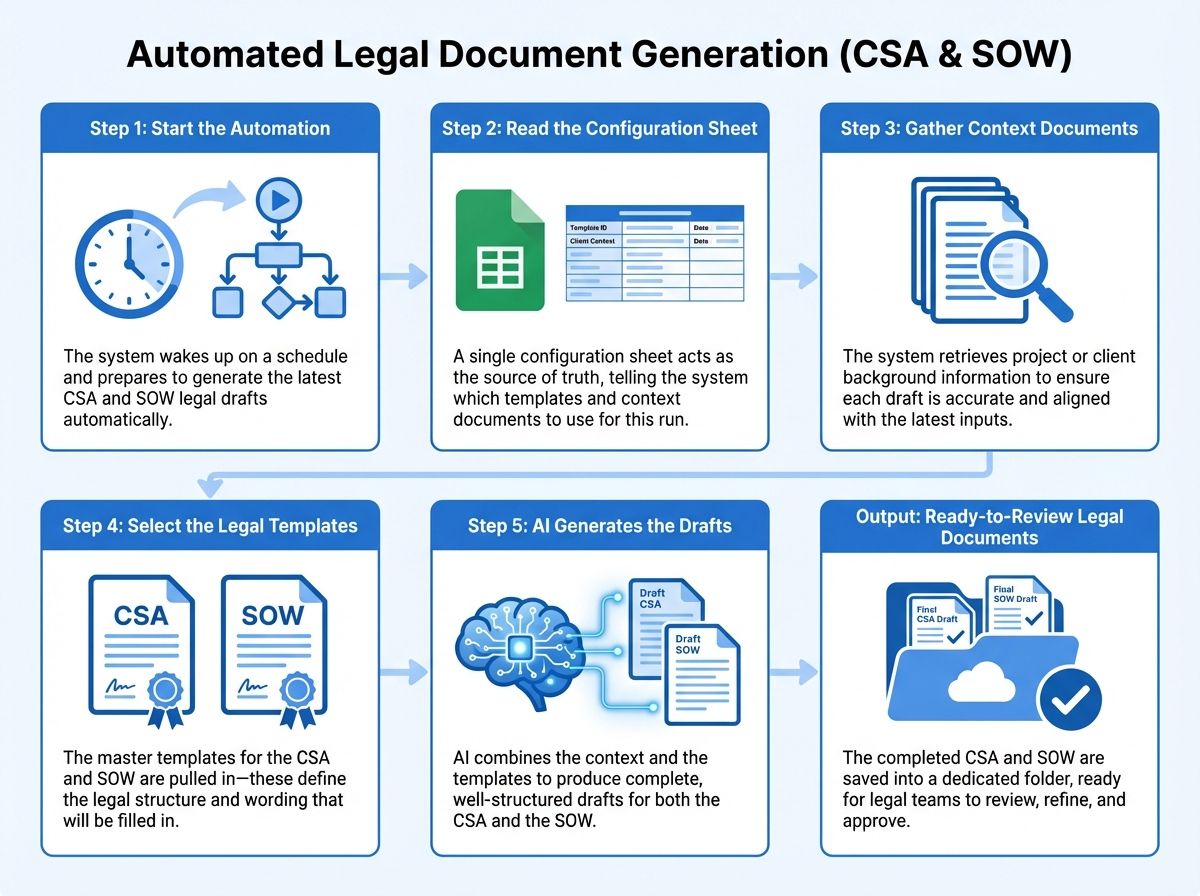
LinkedIn post image: How to darft legal docs in minutes instead of hours.
66123 viral
AI11 months ago
View on LinkedIn

Watch me turn contract drafting into a 30-second process. → Master Services Agreement template (with placeholders) → SOW template (standard clauses ready) → One-pager context file per client → Hit ex…

94120 viral
Automation10 months ago
View on LinkedIn

This simple engineering pattern blew my mind. AI agents are like little kids. If you don't provide clear instructions they go all over the place. They try to build everything at once. Every featur…

LinkedIn post image: This simple engineering pattern blew my mind.
82219 viral
AI Engineering10 months ago
View on LinkedIn

I expected the vision models to win. They didn't. We've been testing long, complex contracts through two pipelines: GPT-4o vision (the cool thing) High-res OCR (the boring old way) On contracts over…
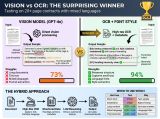
LinkedIn post image: I expected the vision models to win.
132118 viral
AI10 months ago
View on LinkedIn

Your coding skills are becoming obsolete. That's your advantage. Tomorrow's tech leaders aren't the ones who memorize syntax. They're the ones who understand problems. Before AI: Identity: "I'm a…

LinkedIn post image: Your coding skills are becoming obsolete.
90117 viral
AI & Career Development10 months ago
View on LinkedIn

Most insurers want AI automation… but refuse to send claims data outside their servers. Good news: you don't have to! Over the last months, I’ve rebuilt my entire claims automation pipeline to run fu…
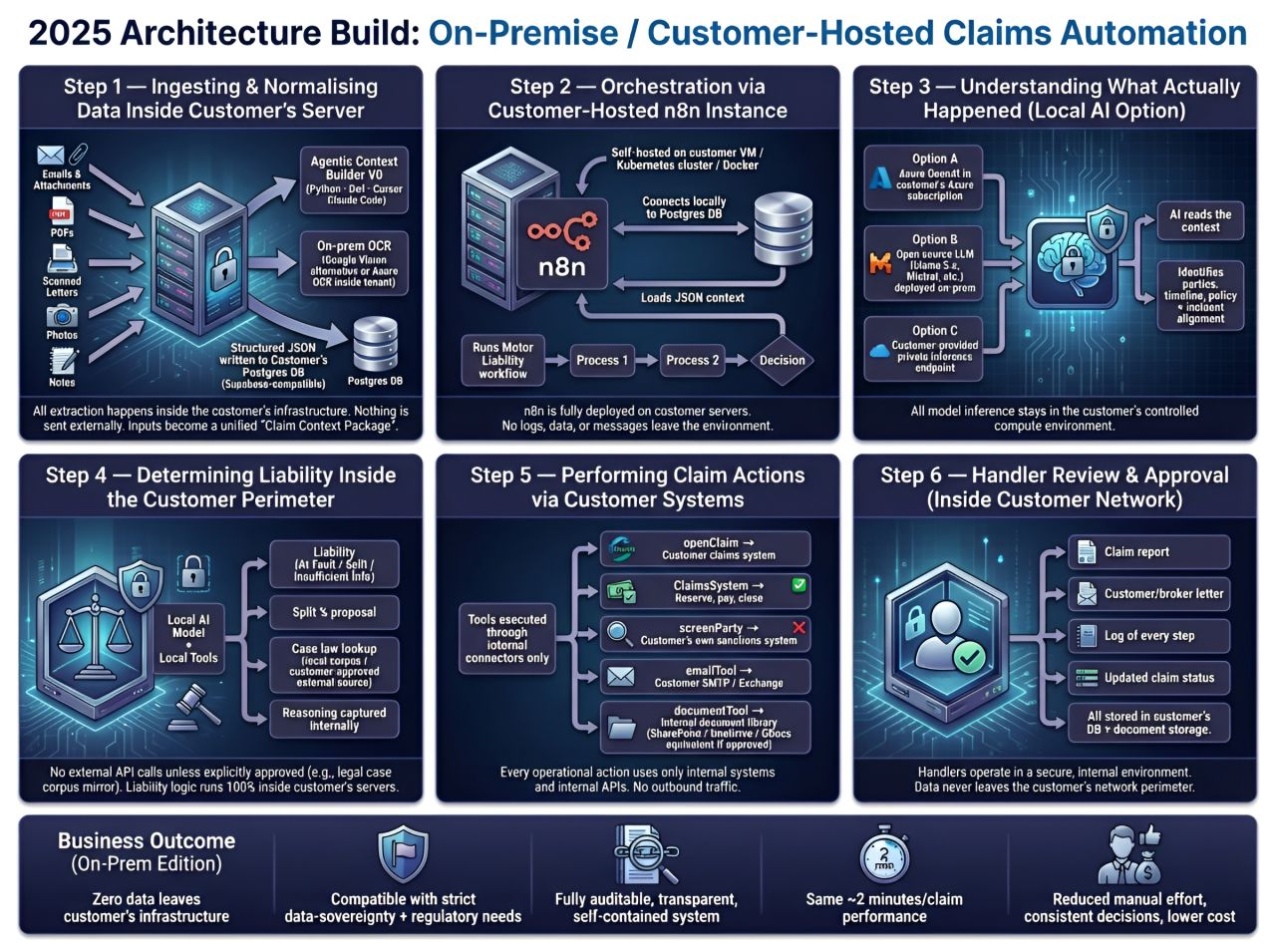
LinkedIn post image: Most insurers want AI automation… but refuse to send claims data outside their servers.
64013 viral
AI in Insurance11 months ago
View on LinkedIn

Posting Patterns & Frequency

5.2 posts/week

Posts / Week

1.5 days

Days Between Posts

2

Total Posts Analyzed

HIGH

Posting Frequency

Timezone: Europe/Zurich

Best Performing Days

MondayThursdaySunday

Best Performing Times To Post

morning (07:00–09:00)early evening (17:00–20:00)

Topics & Content Focus

Primary Topics

AI-assisted software development and the shift from coder to product/solution architectPractical AI agent engineering patterns and system designInfrastructure for an agentic, API-first internet (MCP, APIs over UIs)Operationalizing AI in production: prompts, schemas, workflows and toolingStrategic implications of frontier AI model progress and the emerging arms race

Secondary Themes

Career positioning for developers and technical professionals in the AI eraBoring-but-critical software engineering discipline as the foundation for powerful AI systemsBenchmark-driven interpretation of AI capabilities and limitsZero-UI product thinking and machine-facing interfacesDeveloper experience and configuration management for AI systems

Industry Focus

AI developer tooling and infrastructureAgentic systems and automation platforms for B2B softwareTechnical founders and product teams building AI-native applicationsEarly-stage SaaS and infra startups targeting machine and agent consumption rather than end-user UIs

Content Categories

AI futures and strategic foresight for buildersHands-on patterns and architectures for AI agents and coding systemsDeveloper workflow design: prompts-as-code, schemas and configurationCareer and identity reframing for software engineers in the AI transitionNews analysis and interpretation of major AI model releases

Performance Insights

10%

Avg Engagement Rate

STABLE

Performance Trend

Best Performing Topics

Concrete AI agent engineering patterns and workflow designDeveloper tooling and prompts-as-code practices with direct implementation valueCareer and role reframing for developers in an AI-first world

Virality Signals

Hooks that evoke loss, obsolescence or death of familiar concepts followed by an empowering reframingProviding a named pattern or workflow (e.g., role-splitting agents, Plan → Code → Test → Commit) that readers can adopt and shareConnecting deep technical patterns to big, decade-scale strategic bets (agents vs UIs, APIs vs websites)Using concrete benchmarks and numbers to substantiate large claims about AI capability shiftsHighlighting underappreciated infrastructure layers (MCP servers, APIs, structured data) that feel "early" and contrarian

Structure & Quality

300

Avg Length (Words)

HIGH

Depth Level

ADVANCED

Expertise Level

0.85/10

Uniqueness Score

Common Hooks

Strong negative or contrarian opener that reframes a familiar belief ("Your coding skills are becoming obsolete.")Apocalyptic or transformational framing of the near future ("The internet you know is dying.")Hard-news / breaking-style intros for model updates ("BREAKING: OpenAI just released...")Simple, curiosity-led pattern reveals ("This simple engineering pattern blew my mind.")How-to and playbook framing for practitioners ("Here is my playbook...", "How to keep prompt dependencies all in one place?")

Common Endings

Condensed principle or takeaway sentence that reframes the whole post ("The best AI systems come from boring software engineering.")Future-oriented directive or positioning statement ("Think like a product owner, not just a programmer.")Soft share/follow prompts and redistribution requestsPointers to code or implementation details in the commentsSignature emoji sign-off (💚 🦉)

Value Delivery Methods

Translating cutting-edge AI patterns into concrete, low-friction workflows for practitionersOffering mental models and identity shifts that help technical readers reposition themselves in the AI economyProviding lightweight, production-minded patterns (file-based state, role-splitting, prompts-as-code) instead of abstract theoryBlending strategic foresight with highly tactical examples (benchmarks + code schemas) to anchor big claims in practice

Formatting Style

Short, single-sentence paragraphs separated by blank lines for rhythm and emphasisFrequent use of bullet lists and numbered steps to structure patterns and workflowsSection headers with colons ("The Context:", "What This Actually Means:")Use of arrows, percentages and metrics to highlight key facts ("→", "52.9%", "70.9%")Before/after blocks and role contrasts to visualize transitions ("Before AI" vs "After AI")

Audience & Tone

YES

Question Usage

0.3%

Response Rate

Detected Tone

Strategic engineerSmart-casual technical authorityPractical futurist for developersSystems thinker with a builder biassemi-formalsecond-person

Interaction Style

Primarily broadcast-style thought leadership with strong explanatory depthOccasional invitation to experiment with patterns, appealing to hands-on buildersLow-friction sharing CTAs designed to spread ideas rather than solicit conversationCommunity building through shared identity as early infra/agent builders rather than casual AI users

Community Building Signals

Creating an in-group of "architects" and "infra builders" who think in APIs, agents and boring engineering disciplineRepeated motifs (agents as kids, boring engineering, internet dying) that form a recognizable narrative worldPositioning followers as early adopters of the agentic, machine-facing internet infrastructureDirecting technically inclined readers to code in comments, reinforcing a practitioner-centric community

Writing Style Patterns

Content Strategy

Hook: Strong negative or contrarian opener that reframes a familiaTone: semi-formalCTA: Soft, opt-in CTAs using "please consider" language

Writing style breakdown

- Core characteristics

Strongly conversational, but with a professional, expert undercurrent.

Direct, confident, and pragmatic; never overly formal or academic.

- Hybrid of

Informative / instructional (explaining patterns, workflows, architectures).

Persuasive (reframing how the reader thinks about AI, tech, or work).

Slightly motivational (inviting readers to upgrade how they operate).

Not poetic, but occasionally uses simple analogies and short metaphors.

Punchy and concise; avoids long-winded exposition.

- Emotional tone and energy

Medium-to-high energy, but controlled.

- Posts open with high-impact, emotionally charged lines

Your coding skills are becoming obsolete.
The internet you know is dying.
BREAKING: OpenAI just released GPT-5.2 in emergency 'Code Red' mode.

- Tone shifts quickly from alarm/urgency to clarity and reassurance

That's your advantage.
That's not a problem.

- The emotional arc is often

Mild shock → explanation → empowerment / practical takeaway.

- Frequent use of contrast

Before/After pairs ("Before AI / After AI").

X over Y ("Domain expertise over technical syntax").

Problem vs solution, chaos vs structure.

- Heavy use of labeled sections and micro-headings

The Context:
3 Massive Breakthroughs:
What This Actually Means:
The key insight:

- Frequent rhetorical devices

Rhetorical questions ("How to darft legal docs in minutes instead of hours.")

Repetition for emphasis ("The chaos fades. / The unimportant falls away. / The complicated becomes simple.")

Parallel structure in lists (especially with arrows and timelines).

- Analogy

AI didn't kill coding. It killed the commodity of coding. Just like calculators didn't kill mathematics, they killed mental arithmetic.
AI agents are like little kids.

- Asks questions and invites responses

What is your approach, what am I missing?
What’s your experience with vision vs OCR on long documents?
Did you learn something 👇?

Uses "you" frequently to pull the reader in.

- Point of view

Mix of first-person singular ("I") and second-person ("you").

- First-person used for

Sharing experience ("The other day I tried generating nice Google Docs with n8n.")

Giving personal take ("My Take:")

- Second-person used for

Advice, commands, and empathy ("Don't waste time to get the perfect alignement between those boxes.")

- Often uses direct imperatives

Stop adjuting text boxes in powerpoint!
Break the problem down.
Start here: Stop optimizing for eyeballs. Start optimizing for agents.

- Sometimes softer, but still directive

So, next time your agent gets stuck or loops, try this experiment:
Consider reposting" is softened with "Please" but still a CTA.

- Overall voice summary

Expert builder / operator talking to peers and ambitious professionals.

Pragmatic, grounded in real systems and workflows.

Confident but not boastful; authority comes from concrete details.

Feels like a practitioner teaching from experience, not a marketer hyping vague promises.

2. STRUCTURAL FLOW & LOGICAL PROGRESSION
3. SPACING, LINE BREAKS & VISUAL FLOW
4. SENTENCE CONSTRUCTION & PACING

Sign in to unlock the full writing analysis

Apply Frederic Brunner's patterns to your posts

Free tools to help you write, score, and benchmark in the same style.

LinkedIn Hook Generator

Generate scroll-stopping hooks in the same style top creators use.

Open tool

LinkedIn Post Scorer

Score your draft against viral post patterns before you publish.

Open tool

LinkedIn Engagement Calculator

Benchmark your engagement rate against creators in your niche.

Open tool

More LinkedIn creators to learn from

Discover all

Other creators worth studying alongside Frederic Brunner.

Andrew Ng

Andrew Ng

Founder of DeepLearning.AI; Managing General Partner of AI Fund; Exec Chairman of LandingAI

21 Viral Score

Claus Sneppen

Claus Sneppen

Creating successful office workplaces and meeting cultures in a hybrid work environment. We'll meet in a myriad of ways - the most crucial being in proximity...or is it?

Dave Cairns

Dave Cairns

The future of work needs better ideas. I’m trying... Join me?

Dr. Marc Sniukas

Dr. Marc Sniukas

20+ Years Helping Leaders Design + Execute Winning Strategies • Founded The Better Strategy School to Help Leaders Worldwide Master Strategy • Global C-Suite Strategy Partner

Ndubuisi Ekekwe

Ndubuisi Ekekwe

Professor, Entrepreneur, Investor

Roger Martin

Roger Martin

Founder & President at Roger L. Martin, Inc. and author of A New Way to Think

€1 trial · 7 days

Automate your LinkedIn for 30 days

ViralBrain plans, writes, and schedules your LinkedIn content, using official LinkedIn APIs so your account stays safe.

  • Official LinkedIn APIs, no risk of ban
  • You approve every post before it goes live
  • Cancel anytime
Start €1 trial€39 Pro or €69 Premium · cancel anytime

30-day plan

On track
1
2
3
4
5
6
7
8
9
10
11
12
13
14
15
16
17
18
19
20
21
22
23
24
25
26
27
28
13 posts queued · auto-publishing
€1 · 7-day trial

Write like Frederic Brunner and auto-post for 30 days.

ViralBrain learns their voice and publishes for you.

Try it free

Write like Frederic Brunner.

Try it free

Discover more LinkedIn creators · ViralBrain

Other LinkedIn creators

  • Ovidiu Ionita
  • Kim Loohuis
  • Ollie Scheers
  • Paolo Perrone
  • Jacqueline van den Ende
  • Irene Rompa
  • Adam Grant
  • Scot Chisholm
  • Ian Tenenbaum
  • Finn Thormeier
  • Yoram Wijngaarde
  • Prateek Sanjay
  • Sergei Vasiuk
  • Montgomery Singman