
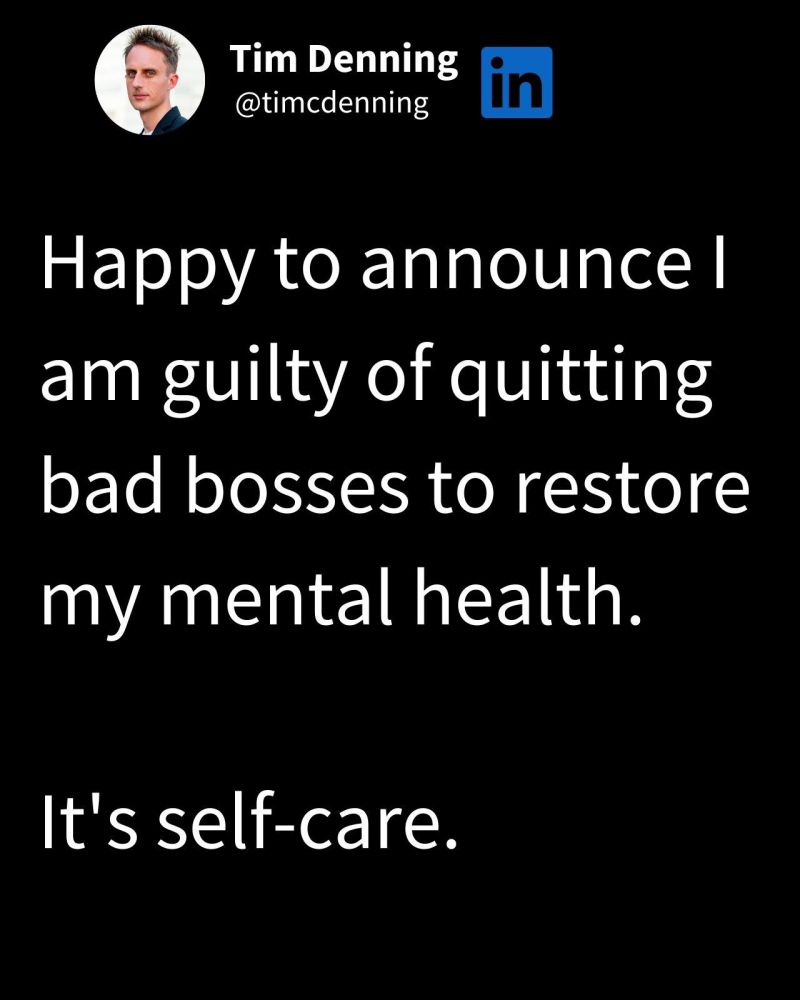
True wealth is strong mental health. No salary compensates for a boss who destroys it daily. ━━━━━ Had a friend making $250K at Google. Pristine office. Unlimited PTO. Free everything. His manager…
3.4K34313710 viral
Career Advice10 months ago

LinkedIn Content Strategy & Writing Style
Aussie writer with 1B+ content views in 10 years | I teach people to use writing online to create career opportunities | Let's connect: tim@timdenning.com
2 people tracking this creator on ViralBrain
Tim Denning positions himself as the unfiltered voice of the modern worker, acting as a bridge between the soul-crushing reality of traditional corporate ladders and the autonomy of the digital economy. His content strategy centers on a "brutal honesty" value proposition, using visceral storytelling about C-suite misery, mental health struggles, and corporate toxicity to advocate for career self-sovereignty through online writing. He is notable for his aggressive rejection of prestige markers like high salaries or big-tech logos, instead prioritizing "lifestyle ROI" and mental health as the ultimate metrics of success. By intersecting raw vulnerability with tactical solopreneurship, Denning transforms the act of quitting the "rat race" from a risky gamble into a calculated, moral necessity for anyone seeking a life of true leverage.
585.5K
28.3K
1.5K
9.5
32
1
True wealth is strong mental health. No salary compensates for a boss who destroys it daily. ━━━━━ Had a friend making $250K at Google. Pristine office. Unlimited PTO. Free everything. His manager…
The biggest career risk is never taking a risk. Playing it safe is killing you slowly. ━━━━━ Watched my friend’s dad work the same government job for 35 years. Never fired. Never promoted. Never a…

Mental health issues at work are embarrassing. I hid mine for decades. For 5 years I sat in meetings with my heart racing. Hands shaking under the table. Smile plastered on while my brain screamed "…

Self-promotion isn't bragging. It's a crucial ability. And individuals who avoid it get overlooked. Nobody is discussing you. Nobody will advocate for your efforts. Most colleagues at your organizat…
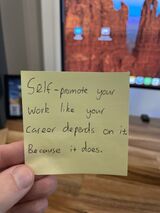
I'm 39. After 10 years in 9-5 jobs, here are 25 lessons I wish I understood in my 20s. If you work in 9-5 corporate, this one is for you: 1. Negotiate the conditions of every job offer The compen…

The C-suite is where happiness goes to die. Every executive I know is medicating something. ━━━━━ Had drinks with a Fortune 500 CEO last month. Three whiskeys in, he broke. "I haven't seen my kids…
9.5 posts/week
Posts / Week
0.9 days
Days Between Posts
1
Total Posts Analyzed
HIGH
Posting Frequency
1500.166666666667%
Avg Engagement Rate
STABLE
Performance Trend
650
Avg Length (Words)
HIGH
Depth Level
ADVANCED
Expertise Level
8.5/10
Uniqueness Score
YES
Question Usage
0.6%
Response Rate
Writing style breakdown
The style is direct, emotionally charged, and highly narrative.
It blends professional/career advice with personal vulnerability.
Tone mix: persuasive + confessional + motivational + slightly dark/critical.
It is not academic-formal; it is polished-conversational, like a very articulate LinkedIn creator.
Strong anti-corporate, pro-autonomy framing throughout.
Medium-to-high emotional energy: intense but controlled.
Frequent use of stark contrasts and dramatic phrasing (e.g., career vs. soul, salary vs. sanity).
Often starts with a punch-in-the-gut statement to set a serious, sobering mood.
Uses empathy and reassurance when talking about mental health and anxiety.
Rhetorical contrasts (X vs. Y, safe vs. risky, boss vs. company, ladder vs. life).
Parallel structures and triads (three short sentences with similar rhythm).
Metaphors/analogies: ladder, treadmill, treadmill vs. ladder, car crash, chains.
Repetition of sentence stems: 'Every year...', 'The higher you climb...', 'You think... It brings...'.
Short, staccato fragments for emphasis: 'Now.' 'Not a good choice.' 'It's not dues. It's damage.'
Frequent direct engagement with the reader using "you" and "to everyone who..." and questions at the end.
Narrative vignettes of specific people (friend’s dad, VP, CEO, boss, colleague) as case studies.
Frequent second-person: 'you' to advise, warn, or empathize.
First-person singular 'I' and 'my' used to narrate personal experience and observations.
Third-person used to describe archetypes and examples (friend’s dad, executives, VPs, 'people I know').
Direct commands are common: 'Stop climbing their ladder. Build your own.' / 'Choose leaders, not logos.' / 'Quit bad bosses...'
Sometimes softer suggestions framed as advice: 'Consider...', but usually the voice is more directive than tentative.
Ending questions to invite reader reflection and comments: 'When did you realize...?' / 'What calculated risk have you been avoiding?'
Sign in to unlock the full writing analysis
Free tools to help you write, score, and benchmark in the same style.
Other creators worth studying alongside Tim Denning.

Jason Knight
B2B Product Consultant - Check out “The State of B2B Product Management” report, download it now!
12 Viral Score

Carmelo Aleman Santana
Verified On-Chain Analyst at CryptoQuant
165 Viral Score

Deepak Panchal
SEO Expert | SMO Executive | Digital Marketing
62 Viral Score

Huma Rajput
Dubai Luxury waterfront Real Estate Advisor | Helping Investors Multiply Capital through Waterfront Assets and off plan investment | Off plan specialist
5 Viral Score

Svitlana Melnyk
Senior Global Talent Acquisition Specialist |GTM| Building great teams & careers in B2B SaaS 💼
148 Viral Score
Unknown
Unknown
ViralBrain plans, writes, and schedules your LinkedIn content, using official LinkedIn APIs so your account stays safe.
Write like Tim Denning.