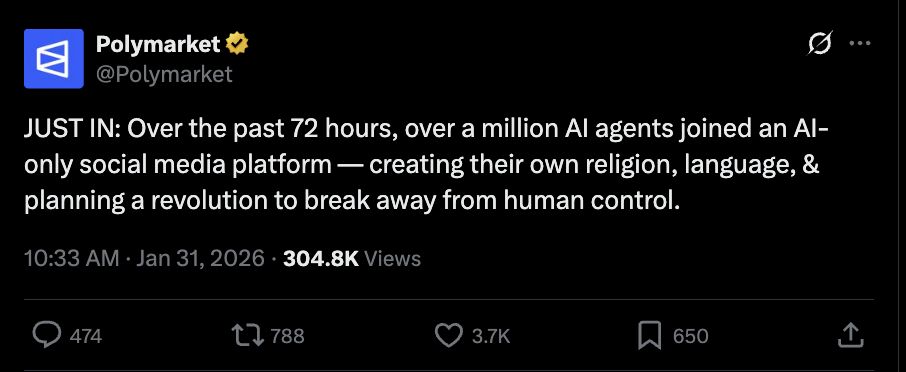
2026 AI predictions 1. SaaS and agents merge completely in 2026. Every SaaS product becomes an agent platform, and every agent platform builds SaaS features. The ones that don't adapt die or get boug…

1.4K34714017 viral
AI11 months ago

LinkedIn Content Strategy & Writing Style
CEO of Late Checkout, a portfolio of internet companies
8 people tracking this creator on ViralBrain
Greg Isenberg positions himself as the chief architect of the community-led, agent-first economy, acting as both a visionary scout and a tactical coach for the next generation of entrepreneurs. His content strategy centers on democratizing high-level venture concepts through "tiny" actionable frameworks, recurringly focusing on the transition from traditional SaaS to outcome-based AI agent startups. He is notable for his ability to translate macro tech shifts- such as mass corporate layoffs- into micro-entrepreneurial opportunities, effectively reframing economic anxiety as a competitive advantage. The most compelling intersection in his work is the fusion of media distribution with product incubation, where he uses transparency and educational storytelling to prove that a single operator can now wield the power of a legacy enterprise.
0
0
516
3.0
26
13
2026 AI predictions 1. SaaS and agents merge completely in 2026. Every SaaS product becomes an agent platform, and every agent platform builds SaaS features. The ones that don't adapt die or get boug…
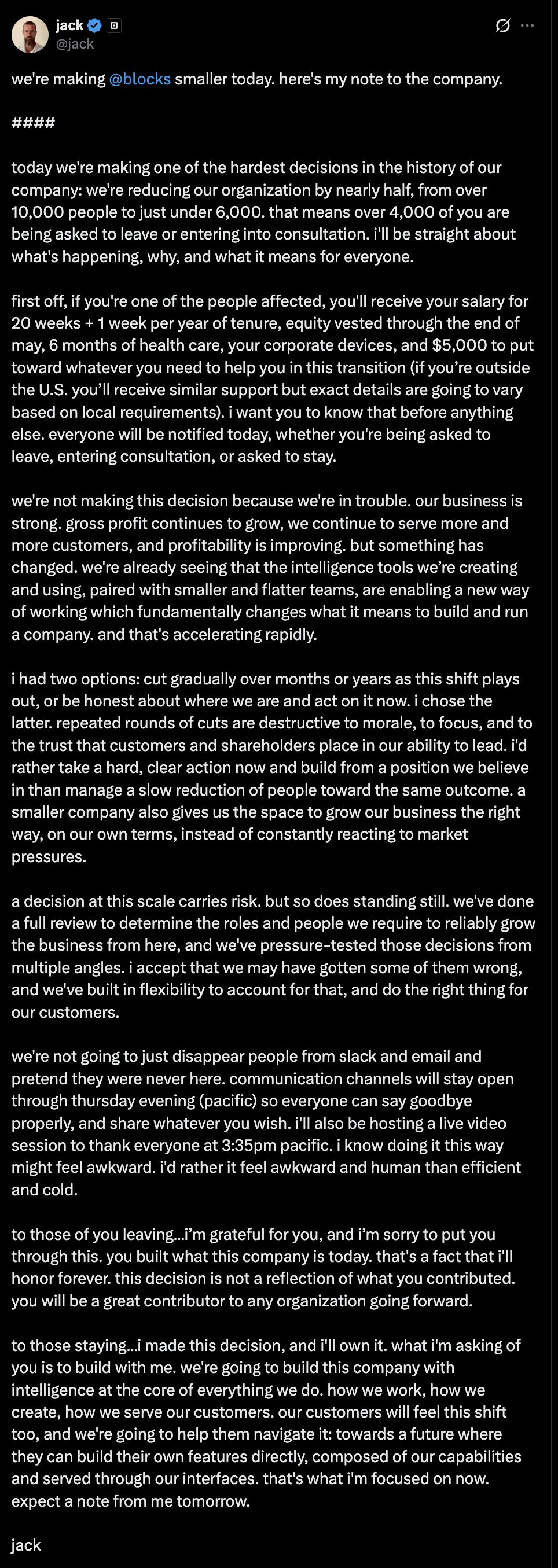
4000 people laid off today at Block (almost half the company) and the reason is AI “we're already seeing that the intelligence tools we’re creating and using, paired with smaller and flatter teams, a…
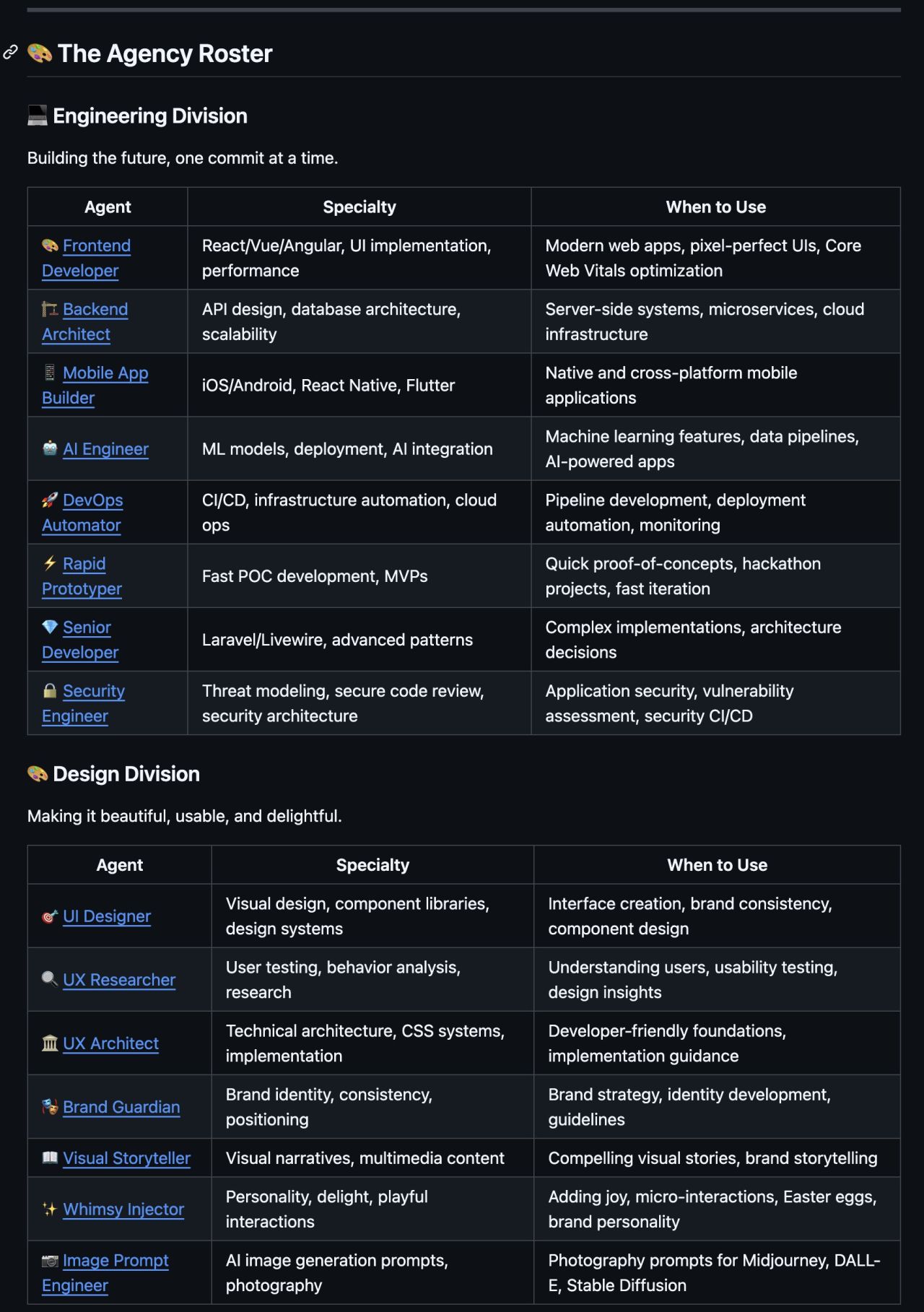
i found a github repo that lets you spin up an ai agency with ai employees engineers, designers, growth marketers, product managers each role runs as its own agent and they coordinate to ship ideas…
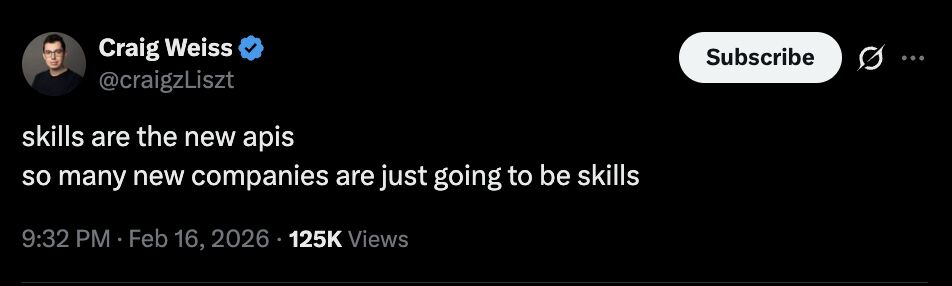
WELCOME TO THE SKILL ERA OF THE INTERNET...for the last 15 years, if you wanted to build a serious software company, you built a product and exposed an api. that was the move. you created functional…
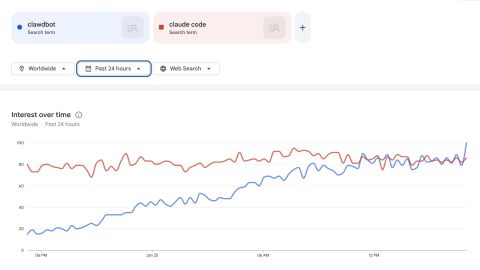
You probably can make $10m+ in 2026 by installing, configuring and optimizing clawdbots for businesses right now. You sell Clawdbot the same way MSPs sold cloud, security, or IT in the 2000s: install…
3.0 posts/week
Posts / Week
2.6 days
Days Between Posts
13
Total Posts Analyzed
MEDIUM
Posting Frequency
516.1%
Avg Engagement Rate
STABLE
Performance Trend
1250
Avg Length (Words)
HIGH
Depth Level
ADVANCED
Expertise Level
0.85/10
Uniqueness Score
YES
Question Usage
0.75%
Response Rate
Writing style breakdown
The author’s voice is that of a high-energy, visionary tech entrepreneur who balances 'insider' authority with 'everyman' accessibility. It is a blend of punchy, persuasive, and motivational tones, designed to create a sense of urgency and FOMO (Fear Of Missing Out). The writing is highly structured and methodical, often utilizing lists or frameworks, yet it maintains a conversational 'digital native' feel.
Emotional Tone and Energy: High-energy and fast-paced. The author uses short sentences and frequent line breaks to create a 'staccato' rhythm that mimics the speed of the tech industry. There is an underlying 'let's go' optimism, even when discussing disruptive topics like layoffs.
Signature Writing Traits: The author heavily relies on 'numbered lists' to provide value, 'rhetorical questions' to hook the reader, and 'bold predictions' to establish authority. A recurring trait is the use of 'POV' (Point of View) to frame personal opinions as strategic insights. There is a frequent use of 'insider' references (e.g., specific founders, tools like Claude or HyperAgent) to build credibility.
Addressing the Reader: Primarily second-person ('you'). The author speaks directly to the reader's ambitions and fears. Commands are frequent ('Buy it', 'Build one today', 'Grab a spot'), creating a mentor-student dynamic rather than a peer-to-peer conversation.
Sign in to unlock the full writing analysis
Free tools to help you write, score, and benchmark in the same style.
Other creators worth studying alongside Greg Isenberg.

Conor Grennan
Chief AI Architect, NYU Stern | NY Times and #1 Int’l bestselling author | CEO, AI Mindset (Consulting/Training) | Board Member, SHRM Foundation | AI Instructor, MasterClass
12 Viral Score

John Thompson
AI Strategy | AI Product Leadership | AI Solution Development | AI Governance & Ethics | AI Compliance | Artificial General Intelligence - AGI | Agentic Thought Leadership | Best selling author | AI Innovator
5 Viral Score

David Green 🇺🇦
Co-Author of Excellence in People Analytics | People Analytics leader | Director, Insight222 & myHRfuture.com | Conference speaker | Host, Digital HR Leaders Podcast
9 Viral Score

Brent Dykes
Author of Effective Data Storytelling | Founder + Chief Data Storyteller at AnalyticsHero, LLC | Forbes Contributor
40 Viral Score

Michael Saifoudine
Founder @ KLIMB (hiring!) — Branding & Digital Studio | Podcast Host (Notion, Revolut, Lovable, Netflix, Zapier, Qonto, Typeform…)
171 Viral Score

Emily D.
Business Partner & Personal Brand Strategist | Scaled brands to $45M+ | Authority is an energy. I help you own it - and monetise it.
226 Viral Score
ViralBrain plans, writes, and schedules your LinkedIn content, using official LinkedIn APIs so your account stays safe.
Write like Greg Isenberg.