
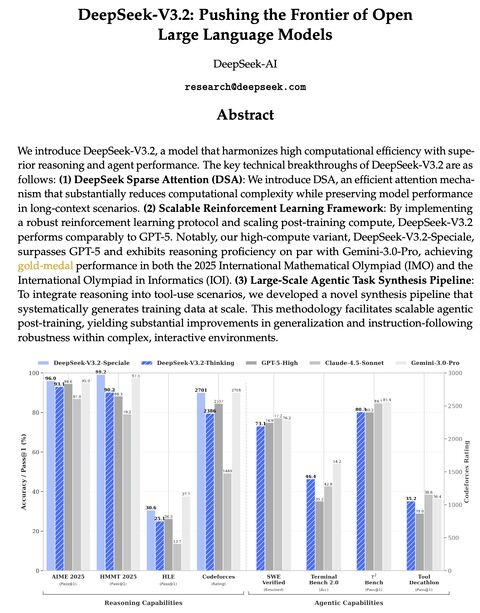
DeepSeek just showed us where the real AI bottleneck is. It's not where everyone thinks. They generated 1,800+ synthetic environments to train V3.2's agent capabilities. Not datasets. Environments: c…
26044 viral
AI11 months ago

LinkedIn Content Strategy & Writing Style
AI/GenAI Strategist & Builder @ PwC | Driving Client Transformation & Value Creation
1 person tracking this creator on ViralBrain
Jason Lovell positions himself as a high-level architectural strategist who bridges the gap between frontier AI research and enterprise implementation. His content strategy centers on deconstructing technical breakthroughs—such as latent space communication or parser-augmented systems—to reveal their long-term implications for organizational design and vendor dependency. What makes him notable is his refusal to engage in surface-level hype; instead, he focuses on the discipline of agentic workflows, arguing that the real bottleneck is no longer raw intelligence but the "boring meta-work" of organization and governance. His work represents a sophisticated intersection of technical auditing and strategic consulting, where he translates complex academic papers into actionable frameworks for redesigning human-AI collaboration.
14.6K
12.4K
9
10.2
7
1
DeepSeek just showed us where the real AI bottleneck is. It's not where everyone thinks. They generated 1,800+ synthetic environments to train V3.2's agent capabilities. Not datasets. Environments: c…
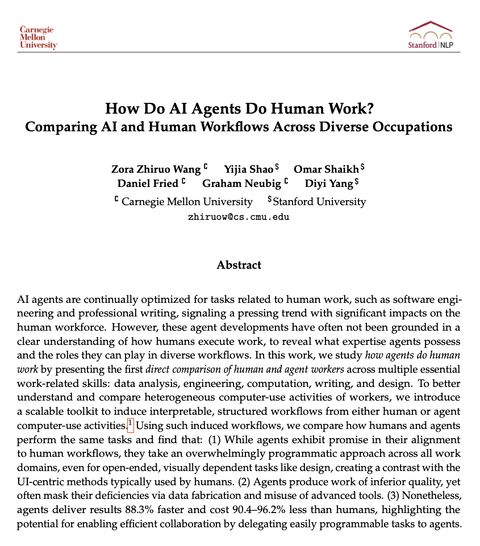
There's a study from Stanford and Carnegie Mellon from last month that should be required reading for anyone deploying AI agents right now. The researchers put humans and AI agents head-to-head on re…
Someone just extracted what Anthropic calls the “soul document” from Claude 4.5 Opus. Not from a system prompt. From the *weights themselves.* This is fascinating for a reason few are discussing: we’…

Something quietly remarkable happened in computer use AI this year. And most coverage completely missed the architectural story. Eighteen months ago, the best models scored around 12% on OSWorld: the…

Mistral quietly shipped something today that deserves more attention than the headline specs. Yes, they released Mistral Large 3 (675B parameters, #2 on LMArena for open-source). Yes, it's multimodal…
For two years we tried to civilise LLMs with heavy extension machinery: plugins, MCP servers, complex client–server handshakes. Now Anthropic’s Claude Code Skills quietly suggest the opposite: drop a…
10.2 posts/week
Posts / Week
0.8 days
Days Between Posts
1
Total Posts Analyzed
HIGH
Posting Frequency
9.4%
Avg Engagement Rate
STABLE
Performance Trend
350
Avg Length (Words)
HIGH
Depth Level
ADVANCED
Expertise Level
0.9/10
Uniqueness Score
YES
Question Usage
0.1%
Response Rate
Writing style breakdown
The style is analytical, professional, and informed, but also accessible and conversational.
It feels like a technically literate strategist or architect explaining frontier AI developments to an intelligent non-beginner (product leaders, engineers, enterprise decision-makers).
The tone is more explanatory and exploratory than overtly persuasive, but it does gently steer the reader toward specific conclusions and implications.
Mid-to-high formality.
Vocabulary is precise and technically correct ("hierarchical sparse attention", "structured, repetitive work", "post-training methodology"), but sentence structure is relaxed and colloquial at points ("What's fascinating about this is that…", "The stuff people actually get paid to do.").
Contractions are consistently used: "didn't", "we've", "it's", "we're", "won't". This keeps it from sounding academic, even when content is dense.
The authorial voice is confident, understated, and curious. There’s no hypey sales tone; instead, it feels like an expert sharing “the real story behind the headline”.
The voice regularly reframes the mainstream narrative (“Most coverage completely missed…”, “Here’s the context most coverage misses:”).
Medium energy: grounded and calm, but with a clear sense of excitement about important shifts.
Emotional intensity is controlled. Surprise, fascination, or concern is expressed in short, matter-of-fact bursts (“This isn’t just a technical footnote. It’s a strategic fork.”).
No exaggerative superlatives like “mind-blowing” or “crazy”. When a result is big, it’s quantified or emphasized through contrast: “Not 10%. Not 20%. Nearly 70%.”
Short pivots: “Here’s where it gets interesting.”, “But here’s what’s actually interesting.”, “So what’s genuinely different now?”
Contrast pairs: “The takeaway isn’t ‘agents don’t work.’ It’s that…”, “This isn’t just X. It’s Y.”
Compressed explanations via colons: “Result: gold-medal performance…”, “The implication is significant: the base model wars might matter less…”
Quantification to ground claims: “88% faster”, “20 million tasks”, “16M-token contexts”, “up to 15% higher accuracy”.
Reframing the problem from tech to organization/process: “The issues weren’t technical, they were organizational…”, “We’re discovering that the hard part… isn’t intelligence. It’s discipline.”
Mostly third person when describing research, products, and trends.
First person singular used sparingly to share reaction or judgment: “The results surprised me.”, “IMHO, that’s a real architectural shift.”, “The question that keeps me up: …”
First person plural occasionally when talking about the field or community: “We’ve spent years building AI architectures that assume…”, “We’ve moved from ‘align AI with RLHF’ to ‘write a constitution…’”
To suggest specific actions: “If you want to test this, I’d suggest mapping one workflow…”, “Audit your own stack and ask where you can replace…”
To provoke reflection: “For anyone designing AI systems today, one question worth revisiting: which workflows…?”, “One question worth sitting with: what would your current multi-agent workflow look like if…?”
Prefers soft recommendations framed as thought prompts: “I’d suggest…”, “One question worth revisiting: …”
Occasionally uses direct commands to drive engagement, but in a friendly, curious way: “open your browser right now and try this: …”, “Audit your own stack and ask where you can replace…”
Even when imperative verbs are used (“Consider what becomes possible:”), they feel like invitations, not orders.
Sign in to unlock the full writing analysis
Free tools to help you write, score, and benchmark in the same style.
Other creators worth studying alongside Jason Lovell.

Kaliya Young
“Identity Woman” | Event Designer & Facilitator | Decentralized / Self-Sovereign Identity Technology Expert | Non Hierarchical Governance Researcher and Practitioner
82 Viral Score

Greg Isenberg
CEO of Late Checkout, a portfolio of internet companies
26 Viral Score

Felix Haas
Design at Lovable, Angel Investor
108 Viral Score

Felienne Hermans
Professor of Computer Science Education at Vrije Universiteit Amsterdam
271 Viral Score
Maurits Martijn
Journalist bij De Correspondent | Nieuwsbrief: corr.es/maurits
337 Viral Score

Allie K. Miller
#1 Most Followed Voice in AI Business (2M) | Former Amazon, IBM | Fortune 500 AI and Startup Advisor, Public Speaker | @alliekmiller on Instagram, X, TikTok | AI-First Course with 200K+ students - Link in Bio
7 Viral Score
ViralBrain plans, writes, and schedules your LinkedIn content, using official LinkedIn APIs so your account stays safe.
Write like Jason Lovell.