
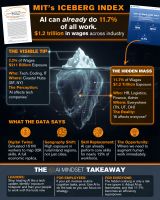
This is nutso - MIT built a digital twin of the entire US labor market (151 million workers, 32,000 skills.) Their study shows AI can already do *almost 12% of all work* - but we're measuring disrupti…
16334324 viral
AI & Future of Work10 months ago

LinkedIn Content Strategy & Writing Style
Chief AI Architect, NYU Stern | NY Times and #1 Int’l bestselling author | CEO, AI Mindset (Consulting/Training) | Board Member, SHRM Foundation | AI Instructor, MasterClass
1 person tracking this creator on ViralBrain
Conor Grennan positions himself as the premier translator between cutting-edge AI capabilities and organizational culture, moving beyond technical specs to focus on the human element of adoption. His content strategy centers on behavioral transformation and AI fluency, frequently arguing that "pilot purgatory" is a leadership failure rather than a technical one. He is notable for his ability to synthesize complex academic research, such as MIT labor market studies, into urgent, actionable insights for the modern workforce. By operating at the intersection of Ivy League academia and enterprise consulting, Grennan provides a unique value proposition: he validates high-level AI strategy with the rigor of an educator while maintaining the practical, fast-paced mindset of a CEO.
153.2K
12.4K
141
5.5
12
1
This is nutso - MIT built a digital twin of the entire US labor market (151 million workers, 32,000 skills.) Their study shows AI can already do *almost 12% of all work* - but we're measuring disrupti…
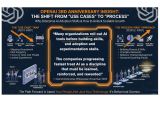
Happy third birthday to ChatGPT! But check this out - just days ago, OpenAI released a white paper with a quote (and a lesson) that most enterprises are way behind on: “Many organizations roll out…
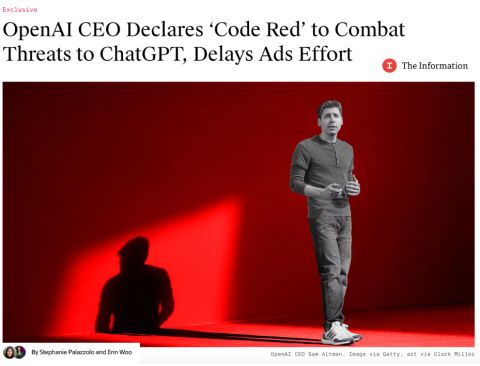
Critical move by OpenAI - I find myself defaulting to Google Gemini 3 thinking mode these days - it just feels "smarter" on deep work than ChatGPT. What are you all finding? Here's what to know: Ste…
Even when we love what we do, we still need mental breaks. Thanksgiving with the family at Blackberry Farm in Tennessee. Long walks, little AI. (Have a restful holiday, America!)

Finn Grennan and I guest lectured at Harvard Division of Continuing Education on "AI in Learning Design" to a class of 30+. It was actually amazing. Here were three takeaways: Okay first, a bonus ta…

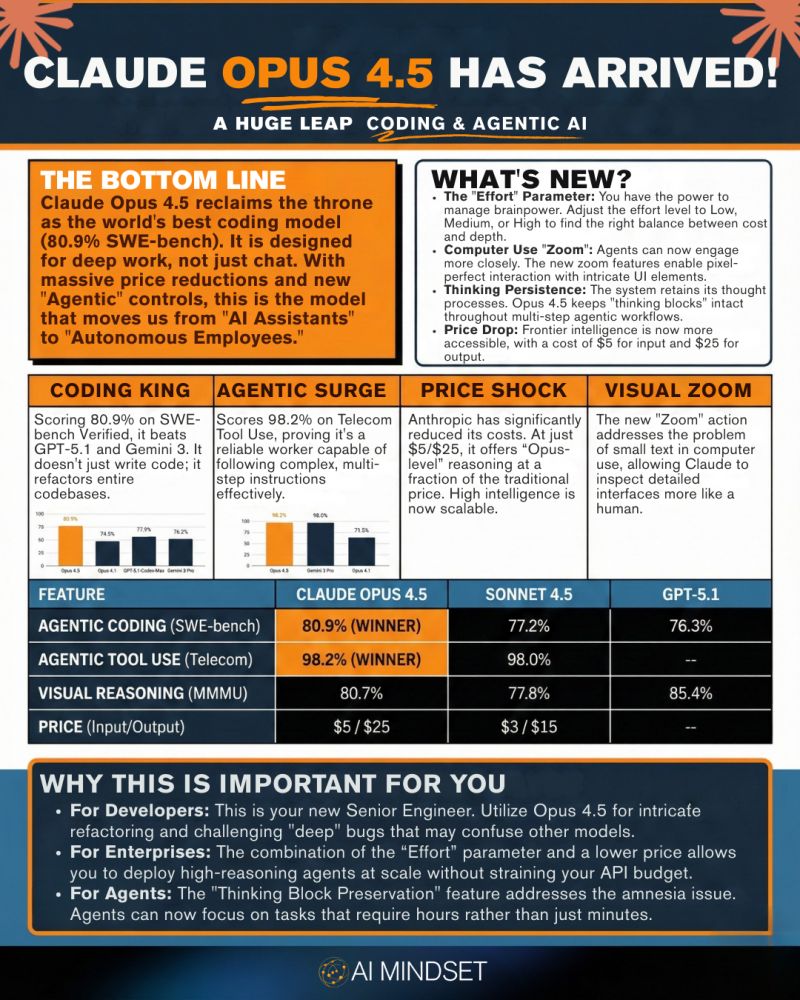
Anthropic just launched Claude 4.5 Opus, and it’s REALLY good - built to handle harder work: coding, in-depth research, complex projects for teams and enterprises. Here’s what you need to know: I *l…
5.5 posts/week
Posts / Week
1.4 days
Days Between Posts
1
Total Posts Analyzed
HIGH
Posting Frequency
140.8%
Avg Engagement Rate
STABLE
Performance Trend
450
Avg Length (Words)
HIGH
Depth Level
ADVANCED
Expertise Level
0.82/10
Uniqueness Score
YES
Question Usage
0.45%
Response Rate
Writing style breakdown
Overall tone: conversational, insightful, and high-credibility. Think “smart, friendly analyst who’s been in the trenches,” not academic or corporate bland.
Style is professional but relaxed. It mixes newsy, data-backed commentary with personal reactions and practical framing.
The writing feels like an expert talking directly to an intelligent, non-technical-but-tech-aware audience.
Strongly oriented around AI, organizations, and behavior change, with repeated meta-commentary about “adoption,” “workflows,” and “culture.”
Hybrid: fundamentally professional, but heavily flavored with casual, spoken-language elements.
Frequent use of contractions: it’s, don’t, we’ve, they’re.
Conversational word choices: “nutso,” “crazy smart,” “tons of folks,” “gonna,” “it’s kinda like,” “this is quite role reversal.”
Occasional light slang and interjections: “man!,” “BTW,” “okay first,” “check this out.”
Medium-to-high energy. The writer is often excited, impressed, or alarmed (in a productive way).
Emotional arc often moves: astonishment → explanation → sober framing → constructive guidance.
Optimistic about AI’s potential but very clear-eyed about risks and organizational failure modes.
Often uses exclamatory or emphatic lines, especially around key learnings or promotions.
Rhetorical questions: “What are you all finding?” “We know that, right?” “Is anyone sad about the delay in advertising??”
Analogies and metaphors: earthquake zones, iceberg, treadmill, “Lord of the Rings style,” “translation layer,” “pilot purgatory.”
Quotations from reports and white papers to anchor authority.
Framing sentences that summarize the core point in a punchy way: “That’s it. That’s the whole thing.” “The gap isn’t access. It’s support.”
Personal commentary layered on top of news: “I love how Chat responds,” “It was actually amazing,” “I love when Anthropic drops new models.”
Short, memorable thesis lines, often standing alone as their own paragraph.
First person singular “I”: for reactions, personal habits, and lived experience (“I find myself defaulting…”, “I love how Chat responds.”).
First person plural “we”: for shared understanding or organizational stance (“We’ve said this from the beginning at AI Mindset…”, “We’re investing in all the wrong places.”).
Second person “you”: for direct coaching or warning (“If your organization is stuck in pilot purgatory…”, “Stop treating AI like a search engine…”).
Direct imperatives when giving advice: “Stop treating AI like a search engine,” “List your tasks,” “Time to prepare, friends.”
Softer when commenting on options: “The whitepaper is worth a read,” “Excited to see it,” “When your organization is ready…, AI Mindset can help.”
Write as a knowledgeable, enthusiastic AI strategist talking directly to peers and leaders.
Use “I” to share opinions and experiences, “we” for shared truths or your team/company, and “you” to nudge the reader into reflection or action.
Keep the voice confident but human: willing to say “I love X,” “this is nutso,” “this is a huge shift,” while grounding with data and quotes.
Sign in to unlock the full writing analysis
Free tools to help you write, score, and benchmark in the same style.
Other creators worth studying alongside Conor Grennan.

Suhail Ahmed Khan
Product Manager at Google | IIM Kozhikode
40 Viral Score

Sneha Vohra 🌻
Brand Manager | Thodi Gupshup about Branding • Marketing • Geopolitics • D2C Startups 🤓 | Hum bhi bana lenge 😎
199 Viral Score

Will Cannon
CEO @ UpLead • Bootstrapped to $30M+ in Sales • Ask me about Done-For-You Outbound
89 Viral Score

Greg McKeown
2X NYTs Bestselling Author
2 Viral Score

Nozomi Michiki Morgan
Strategic Partner to Global Executives: Accelerating Innovation & Intercultural Agility for Future-Ready Leadership | CEO, Speaker, Organizational Transformation Expert
5 Viral Score

Dave Ulrich
Speaker, Author, Professor, Thought Partner on Human Capability (talent, leadership, organization, HR)
24 Viral Score
ViralBrain plans, writes, and schedules your LinkedIn content, using official LinkedIn APIs so your account stays safe.
Write like Conor Grennan.