
Vi diskuterer stadig kontoret … men forstår vi egentlig arbejdet? Debatten om kontoret, fleksibilitet og fremtidens vidensarbejde fortsætter med uformindsket styrke. Skal vi tilbage? Skal vi være h…
172024 viral
Future of Work10 months ago
LinkedIn Content Strategy & Writing Style
Creating successful office workplaces and meeting cultures in a hybrid work environment. We'll meet in a myriad of ways - the most crucial being in proximity...or is it?
1 person tracking this creator on ViralBrain
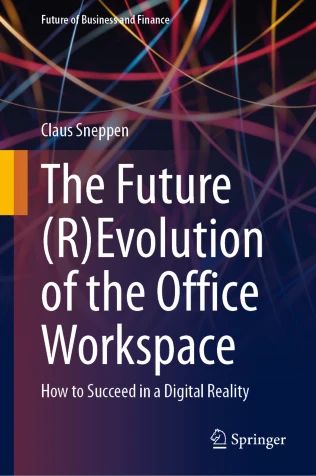
Claus Sneppen positions himself as a strategic futurist and workplace architect who moves the conversation beyond the binary "home vs. office" debate toward a deeper understanding of knowledge work. His content strategy centers on the transition from analogue-first traditions to what he terms the analogue-intentional organisation, where physical presence is treated as a scarce, high-value resource rather than a default requirement. He is notable for his ability to bridge high-level academic rigor-exemplified by his peer-reviewed book with Springer-with practical, leadership-focused frameworks for navigating digital maturity and AI integration. By intersecting organisational design with digital orchestration, Sneppen provides a sophisticated blueprint for leaders to treat flexibility as a strategic capability rather than a mere employee perk.
1.8K
1.5K
9
1.5
1
Vi diskuterer stadig kontoret … men forstår vi egentlig arbejdet? Debatten om kontoret, fleksibilitet og fremtidens vidensarbejde fortsætter med uformindsket styrke. Skal vi tilbage? Skal vi være h…
Tomorrow's succesful office? Vey different from today! The emerging frontier of the next stage is not hybrid as we currently know it. It is a digitally orchestrated, intentionally analogue organisati…
Møder koster - så skal de også skabe maksimal værdi D. 2. december afholder jeg et webinar i samarbejde med Optimeet under overskriften ”Sådan gør du møder til jeres stærkeste værktøj” - 6 konkrete r…
Knowledge work today is inherently team-based. While individuals may execute tasks independently - often from anywhere - true value is created through interdependent collaboration. It is therefore on…
How do you view the future of knowledge work and the office in the longer term - as artificial intelligence continues to advance at accelerating pace? We stand at a defining crossroads. For more than…
In the evolving discourse on the future of knowledge work, few domains remain as paradoxically rigid, and as vulnerable to obsolescence, as the strategic leadership of the office workplace. While di…
1.5 posts/week
Posts / Week
5.4 days
Days Between Posts
1
Total Posts Analyzed
MEDIUM
Posting Frequency
8.89%
Avg Engagement Rate
INCREASING
Performance Trend
400
Avg Length (Words)
HIGH
Depth Level
ADVANCED
Expertise Level
8.5/10
Uniqueness Score
YES
Question Usage
0.5%
Response Rate
Writing style breakdown
Overall register: highly professional, analytical, and reflective, with occasional controlled rhetorical flair. The voice blends academic precision with strategic consulting language.
Tone: formal-neutral to slightly conversational. Never chatty, never slangy, but also not dry academic jargon. It feels like a senior advisor or thought leader writing for executives and professionals.
The style is methodical and structured, but not stiff. Arguments are built step by step, with clear logical scaffolding and careful qualification.
Energy level: medium. It is calm, composed, and authoritative rather than high-energy or hype-driven. Intensity comes from the weight of ideas, not from exclamation-heavy enthusiasm.
The emotional baseline: thoughtful, serious, and future-oriented. The author writes with a sense of urgency about structural change, but expresses it in a measured, reasoned way.
Subtle frustration with outdated assumptions (e.g. “unhelpful binaries”, “cling to inherited assumptions”).
Subtle optimism and inspiration around what is possible if we rethink work intelligently.
Occasional dry humour or vivid phrasing to puncture illusions (“pulled into it by their nose hair”).
Pacing: contemplative, building arguments gradually, but with enough punchy one-liners and questions to keep flow dynamic.
Rhetorical questions, often as paragraph openers or closers.
Parallelism and triads (three-part lists) for rhythm: “presence, productivity, and control”; “flexible, attractive, effective and productive” (even four-part).
Conceptual contrast: analogue vs digital, past vs future, presence vs flexibility, control vs autonomy, permanence vs flexibility.
In my view,” “In my opinion,” “If we are honest,” “Now more than ever,” “As I often note,” “The question is no longer X, but Y.
It is therefore only natural that…”, “This reversal has profound consequences…”, “The foremost implication is that…
Strong reliance on abstract nouns and conceptual phrases: “structural blind spots”, “path dependencies”, “operating environment”, “strategic capability”, “digital maturity”, “structural forces”, “megatrends”.
Storytelling is present but always in service of argument; it is never purely anecdotal or personal for entertainment.
Frequently uses “we” in an inclusive, reflective sense (“If we are honest…”, “We stand at a defining crossroads.”).
Uses “you” when directing content to specific professional roles or inviting the reader to consider themselves part of the target group (“Hvis du arbejder med… så er bogen skrevet til dig.” / “If you are searching for your next office workplace POC…”).
Ground opinions (“In my view…”, “It is, in my opinion, a strategic imperative…”).
Reference personal work (book, webinar: “I argue”, “I will give you six concrete tips…”).
Prefers gentle, reasoned suggestions: “If you are searching… Zoom’s approach provides…”, “Læs den, hvis du vil…”.
When prescriptive, it is framed as strategic necessity, not bossy instruction: “All workflows must therefore be digitally enabled by default.” / “Addressing these vulnerabilities is no longer a discretionary exercise.”
Rarely uses direct imperatives without context; when it does (e.g. “Læs den…” / “Read it…”), they are anchored in clear benefit.
Grounds claims in structural logic.
Balances conceptual depth with clarity.
Uses rhetorical questions and contrasts to provoke reflection, not to entertain.
Sign in to unlock the full writing analysis
Free tools to help you write, score, and benchmark in the same style.
Other creators worth studying alongside Claus Sneppen.

Simon S. Morel
I help SaaS and AI companies succeed and grow with Product & PLG | Fractional & interim PM | Founder & Indie hacker
66 Viral Score

Harro Schwencke
Founder Upfront
564 Viral Score

René van der Zel
Founder - XXL Nutrition - LinkedIn Top Voice
117 Viral Score
Zsuzsa Kecsmar
International Loyalty Personality of the Year 2024 // Powering loyalty programs with tech. Proud co-founder and Chief Strategy Officer at Antavo (Gartner & Forrester Recognized Vendor) // Click FOLLOW #loyalty and #tech
58 Viral Score

Mark Sage
CXO | Digital | Loyalty | CRM | Data
69 Viral Score

Allie K. Miller
#1 Most Followed Voice in AI Business (2M) | Former Amazon, IBM | Fortune 500 AI and Startup Advisor, Public Speaker | @alliekmiller on Instagram, X, TikTok | AI-First Course with 300K+ students - Link in Bio
6 Viral Score
ViralBrain plans, writes, and schedules your LinkedIn content, using official LinkedIn APIs so your account stays safe.
Write like Claus Sneppen.