
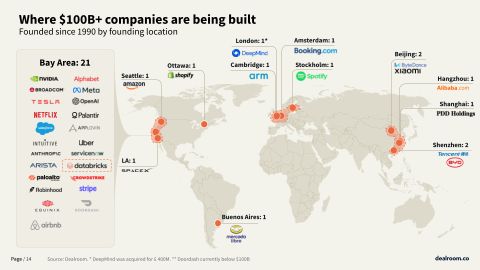
Confirmed: Databricks is raising $4B in Series L funding at a $134B valuation. That's the 21st $100B+ company built out of the Bay Area 🇺🇸 since 1990 (with Swedish 🇸🇪 / Iranian 🇮🇷 founder btw).…
18721513 viral
Entrepreneurship10 months ago

LinkedIn Content Strategy & Writing Style
Founder and CEO at Dealroom.co
1 person tracking this creator on ViralBrain
Yoram Wijngaarde positions himself as the authoritative architect of the European tech narrative, using his vantage point as CEO of Dealroom.co to provide a data-driven reality check on global venture capital. His content strategy centers on debunking lazy market sentiment by injecting granular proprietary metrics into high-stakes debates, specifically focusing on the rise of "Hard Tech," the resilience of the UK ecosystem, and the nuances of the global startup funnel. He is notable for his ability to translate cold data into strategic geopolitical insights, often challenging prevailing "doom and gloom" headlines with evidence of structural growth in European deep tech and manufacturing. By operating at the intersection of venture intelligence and industrial policy, Yoram provides a sophisticated briefing that bridges the gap between raw investment flows and the long-term competitiveness of global innovation hubs.
24.4K
15.2K
84
8.0
43
1
Confirmed: Databricks is raising $4B in Series L funding at a $134B valuation. That's the 21st $100B+ company built out of the Bay Area 🇺🇸 since 1990 (with Swedish 🇸🇪 / Iranian 🇮🇷 founder btw).…
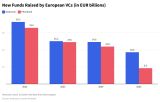
Fact check: European VC fundraising isn’t “falling off a cliff”. The data story is more nuanced. Some PitchBook figures have been circulating claiming European VC fundraising is down ~60% in 2025 vs…
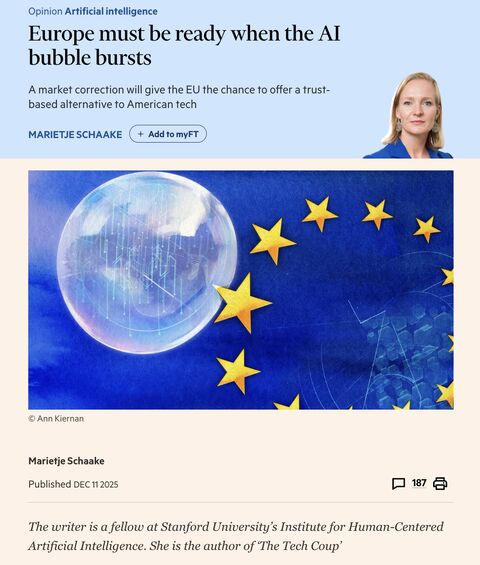
Marietje Schaake’s recent FT piece (“Europe must be ready when the AI bubble bursts”) is getting a lot of pushback in tech circles. I think it’s worth explaining why. First: the piece isn’t entirely…
Nothing creates urgency like an existential threat. When ChatGPT launched in Nov 2022, Google went "Code Red". Sergey Brin later admitted they “messed up” by being too cautious. But he didn't let a g…

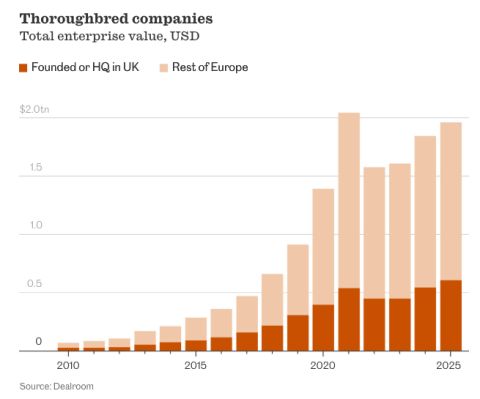
The UK has more Unicorns 🦄 and $100M+ revenue Thoroughbreds 🐎 than France, Germany, Sweden, and the Netherlands combined. Yet, the narrative is often one of economic decline. Saul Klein’s latest p…
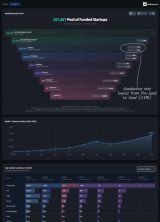
𝗧𝗵𝗲 𝗣𝗮𝘁𝗵 𝘁𝗼 $𝟭 𝗧𝗿𝗶𝗹𝗹𝗶𝗼𝗻: 𝗠𝗮𝗽𝗽𝗶𝗻𝗴 𝘁𝗵𝗲 𝗚𝗹𝗼𝗯𝗮𝗹 𝗦𝘁𝗮𝗿𝘁𝘂𝗽 𝗙𝘂𝗻𝗻𝗲𝗹 🚀 Only 1.6% of funded startups become unicorn. The steepest dropoff is from Pre-Seed to Seed…
8.0 posts/week
Posts / Week
1 days
Days Between Posts
1
Total Posts Analyzed
HIGH
Posting Frequency
83.5%
Avg Engagement Rate
STABLE
Performance Trend
130
Avg Length (Words)
HIGH
Depth Level
ADVANCED
Expertise Level
8.5/10
Uniqueness Score
YES
Question Usage
0.6%
Response Rate
Writing style breakdown
Overall tone: analytical, data-driven, and professional, but with a conversational and accessible edge.
Primary vibe: informed commentator / strategist rather than marketer or evangelist.
The writing is structured and methodical, not free-flowing. Each post feels carefully engineered for clarity, narrative arc, and data delivery.
Strong focus on synthesis: turning numbers, trends, and examples into concise takeaways.
Medium-high formality: correct grammar, precise vocabulary, but not stiff.
Casual elements are sprinkled in: "btw", rhetorical asides, emojis, gently playful phrasing ("Goldilocks", "don’t let a good crisis go to waste").
No slang-heavy or meme-y style; informality is controlled and purposeful.
Calm, confident, and measured.
Energy is moderate: not hyper, but not slow or sleepy. Pacing is brisk but thoughtful.
Has an optimistic, opportunity-focused undercurrent, even when discussing challenges or correcting narratives.
Often slightly contrarian or corrective: "the data story is more nuanced", "isn’t entirely wrong", "this does shows once again".
Rhetorical questions to provoke thought or set up a reveal ("Guess how many…", "Is the UK doing enough…?", "So what should Europe do instead?").
Short, impactful stand-alone sentences for emphasis ("Nothing creates urgency like an existential threat.", "This isn't nostalgia.").
Contrast and corrective framing ("the piece isn’t entirely wrong. But…", "this isn’t… The real win is…").
Conceptual labels in quotes: "Hard Tech", "software plus machines", "root node" problems, "trusted European AI".
Heavy reliance on concrete data, numbers, and percentages as anchors for any claim.
Occasional compressed metaphors or analogies, almost always rooted in tech/innovation (Goldilocks state, "manic oscillation", "root node" problems).
Strong use of examples: specific companies, reports, or products as proof points.
Understated persuasion: nudging, reframing, inviting the reader to see the data differently, rather than overt selling.
Mostly third person: describing markets, companies, and trends.
First person plural appears implicitly via alignment with a data platform ("Dealroom.co has launched…", "Our data…") but without heavy "we" voice.
Second person is used sparingly for engagement or challenge, not as a constant coaching voice.
Rhetorical questions to the reader ("Guess how many…", "Is the UK doing enough…").
Imperatives are used but kept light: "Check out the full interactive dashboard…", "Stop theorizing, look at actual demand flows…".
Commands appear primarily in the final lines or when giving guidance to policymakers ("Stop theorizing…").
More often, advice is couched as observation and implication rather than explicit "You must…".
Sign in to unlock the full writing analysis
Free tools to help you write, score, and benchmark in the same style.
Other creators worth studying alongside Yoram Wijngaarde.

Vedika Bhaia
Founder at Social Capital Inc.
27 Viral Score

Palaniappan Chidambaram
Founder at Unison Group | AI and Data
127 Viral Score

Danyil Kurka
AI Solution Architect
22 Viral Score

André Lindenberg
Agents, Graphs, Ontologies
51 Viral Score

Milan Jovanović
Practical .NET and Software Architecture Tips | Microsoft MVP
14 Viral Score

Rand Fishkin
Cofounder of SparkToro, Alertmouse, & Snackbar Studio. Author of Lost & Founder. Feminist. I love underdogs, cooking, & helping people do better marketing
21 Viral Score
ViralBrain plans, writes, and schedules your LinkedIn content, using official LinkedIn APIs so your account stays safe.
Write like Yoram Wijngaarde.