
While everyone else is learning ChatGPT prompts... The real winners are mastering this: Doing the old fashioned things well. Stand up straight. Look people in the eye. Do what you say you'll do. Be…

2.6K281836 viral
Career Advice11 months ago

LinkedIn Content Strategy & Writing Style
NYT Bestselling Author of The 5 Types of Wealth
1 person tracking this creator on ViralBrain
Sahil Bloom positions himself as a modern philosopher-practitioner who bridges the gap between high-performance systems and holistic fulfillment. His content strategy centers on "timeless principles," using structured frameworks like the 5 Levels of Financial Wealth and the jar metaphor to simplify complex life choices into actionable mental models. What makes him notable is his refusal to stay in a single niche; he successfully blends financial literacy with fitness, relationship advice, and stoic philosophy to redefine wealth as a multi-dimensional asset. This intersection of tactical wealth-building and intentional living allows him to serve as a guide for the "growth-minded" professional who is wary of burnout and seeking a life of purpose rather than just a high net worth.
679.0K
8.3K
1.2K
10.0
23
1
While everyone else is learning ChatGPT prompts... The real winners are mastering this: Doing the old fashioned things well. Stand up straight. Look people in the eye. Do what you say you'll do. Be…
The most liberating truth no one tells you: Nobody cares. When you’re winning, nobody cares. When you’re losing, nobody cares. It doesn’t mean nobody loves you, it just means nobody cares about yo…

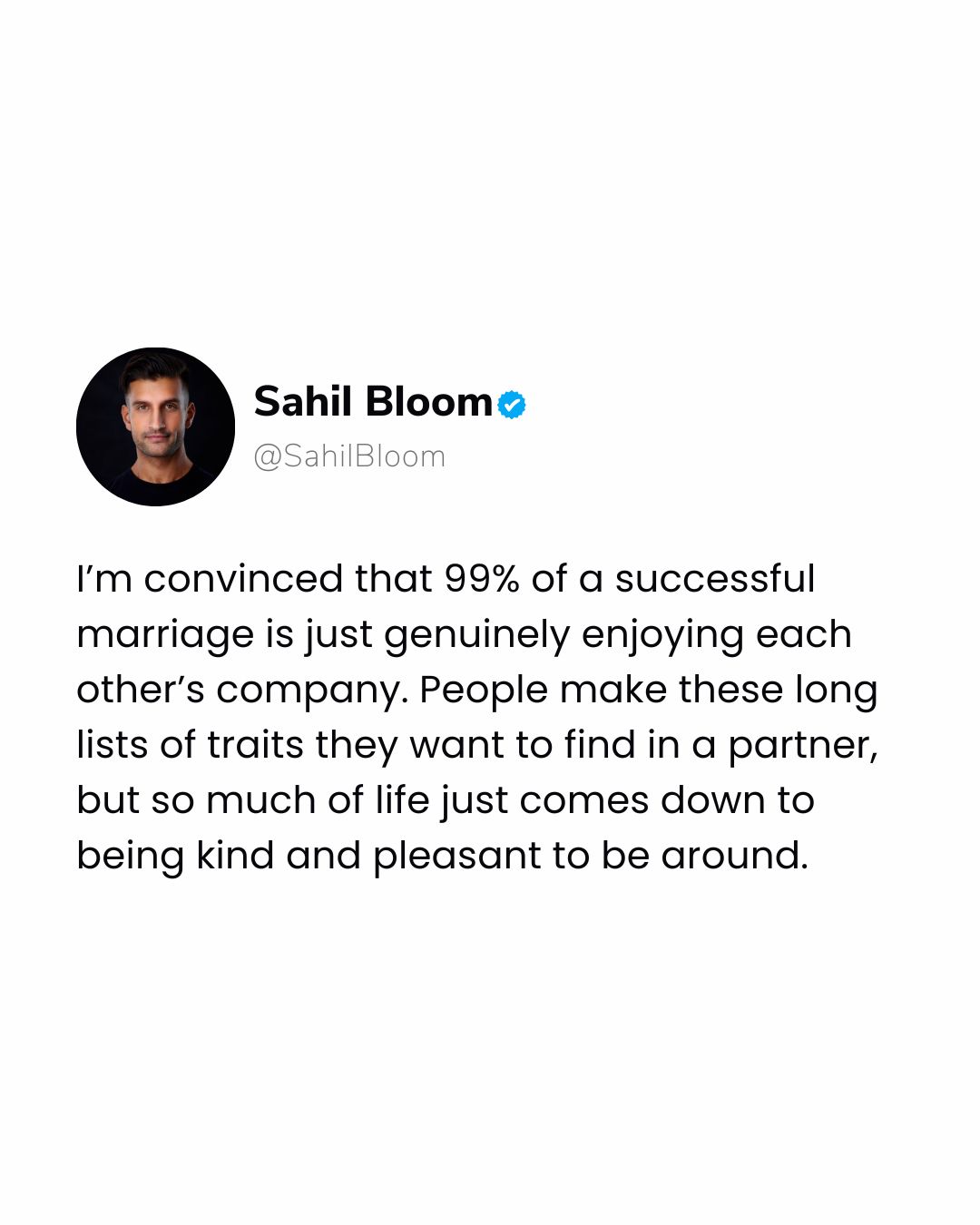
Want to know the secret to a lasting marriage? (It's hiding in plain sight). I’m convinced that 99% of a successful marriage is just genuinely enjoying each other’s company. People make these long l…
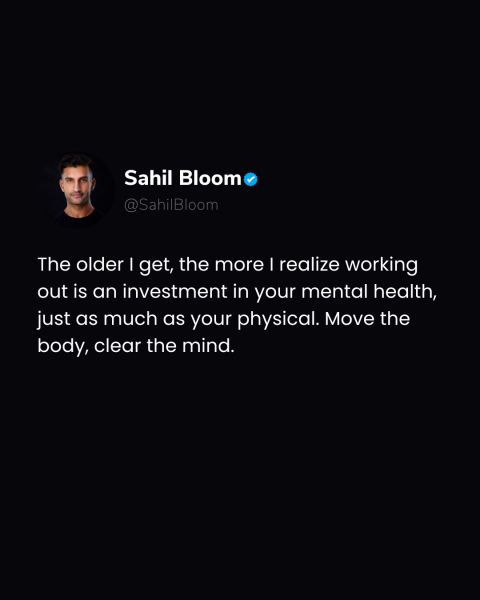
The best mental health tool costs zero dollars. (Most people ignore it)... Working out is an investment in your mental health, just as much as your physical. Move the body, clear the mind. 📌 Wan…
This email stopped me in my tracks… If you're feeling lost, this is for you: 5 things I wish I could tell my younger self... First, reclaim your power. Your power in life comes from the belief tha…

This 2-minute story will change your life… (I think about it every day): A professor walks into a class and places four items on the table: • A clear, empty glass jar • A pile of big rocks • A pile…
10.0 posts/week
Posts / Week
0.8 days
Days Between Posts
1
Total Posts Analyzed
HIGH
Posting Frequency
1158.6%
Avg Engagement Rate
STABLE
Performance Trend
250
Avg Length (Words)
HIGH
Depth Level
ADVANCED
Expertise Level
8.5/10
Uniqueness Score
YES
Question Usage
0.6%
Response Rate
Writing style breakdown
Professional yet highly conversational.
Clear, direct, and didactic, but with warmth and encouragement.
Strongly informative and explanatory, with a motivational edge.
Tone is rational and grounded; no hype, little to no slang.
Feels like a thoughtful mentor or coach speaking plainly to an intelligent general audience.
Mid-register: not academic, not casual internet slang.
Uses contractions frequently (you’re, don’t, it’s).
Vocabulary is accessible but occasionally elevated with precise words (“masquerading,” “in a vacuum,” “tangential”).
Calm, steady, and confident; not frantic or overly excited.
Emotional energy builds around key insights; he uses repetition and short, punchy lines for impact.
There is an undercurrent of seriousness (life advice, meaning, purpose) with gentle optimism.
Short, standalone emphatic lines (“Nobody cares. Go do it.” / “Money is a tool, not the goal.”)
Parallel structures and repeated phrases for rhythm (“Nobody cares. When you’re winning… When you’re losing…”).
Simple, memorable formulations (“Money solves money problems, but it will not, in a vacuum, solve anything else.”).
Concept naming and framing (“The 5 Levels of Financial Wealth,” “challenge-seekers,” “The most liberating truth…”).
Occasional rhetorical questions to guide the reader’s reflection (“What life am I actually trying to build?”).
Parenthetical asides to qualify or deepen a thought (“(I think about it every day):” / “(most people use these without even knowing it):”).
Heavy use of second person “you” to involve and coach the reader.
Establish credibility (“I write every issue like I’m sending it to my closest friend.”).
Share personal reflection (“I think about it every day.” / “I’m convinced that 99% of a successful marriage…”).
Third person appears in explanations and stories (students, professor, “a person,” “someone”).
Bookmark this field guide.
Stop climbing blindly. Start building purposefully.
What are your rocks? Write them down.
This week, do two things:…
I’d encourage you to think about this metaphor:
When prescribing behavior, tone is firm but not aggressive; more “wise coach” than “drill sergeant.”
Sign in to unlock the full writing analysis
Free tools to help you write, score, and benchmark in the same style.
Other creators worth studying alongside Sahil Bloom.

Dan Hockenmaier
Exploring, writing at danhock.co
110 Viral Score

Alex Rechevskiy
I help PMs land $700K+ product roles 🚀 Follow for daily posts on growing your product skills & career 🛎️ Join our exclusive group coaching program for ambitious PMs 👇
10 Viral Score

Lenny Rachitsky
Deeply researched product, growth, and career advice
11 Viral Score

Lily Ray
Founder of Algorythmic | VP, SEO & AI Search at Amsive
44 Viral Score

Eli Schwartz
Author of Product-Led SEO | Strategic SEO/AEO & Growth Advisor/Consultant | Angel Investor| Newsletter Productledseo.com| Please add a note to connection requests.
36 Viral Score
169 Viral Score
ViralBrain plans, writes, and schedules your LinkedIn content, using official LinkedIn APIs so your account stays safe.
Write like Sahil Bloom.