Products
Discover HeroesFind top LinkedIn creators in your niche.Post CreatorAI-powered composer with your tone and style.Trending PostsSee what's going viral on LinkedIn right now.
Use Cases
Repurpose ContentTurn YouTube, blogs, and articles into LinkedIn posts.Carousel GeneratorCreate swipeable LinkedIn carousels with AI.30-Day Auto CalendarPlan and auto-publish a month of posts.LinkedIn MCP ServerPost to LinkedIn from Claude, Codex and OpenClaw.For AgenciesRun your clients' LinkedIn content in one place.
Tools
Text FormatterBold, italic, and Unicode styles for posts.Hashtag GeneratorFind the best hashtags for your content.Engagement CalculatorMeasure your post performance instantly.Hook GeneratorAI hooks that stop the scroll.Post PreviewSee exactly how your post will look.Content CalendarPlan and schedule your LinkedIn content.Browse all 90+ free tools
Resources
Free Tools90+ LinkedIn tools, no signup required.Templates100 ready-to-use LinkedIn post templates.GuidesStep-by-step LinkedIn growth playbooks.CollectionsCurated tool sets by role and goal.CompareViralBrain vs. other LinkedIn tools.BlogLinkedIn growth tips and strategies.
Pricing
LoginStart 7 Days Trial
Back to Discover Heroes
Nikki Siapno

Nikki Siapno

LinkedIn Content Strategy & Writing Style

Eng Manager | ex-Canva | 400k+ audience | Helping you become a great engineer and leader

Australia
24 Viral ScoreView on LinkedIn

2 people tracking this creator on ViralBrain

Warm Analysis

Nikki Siapno positions herself as a high-authority bridge between technical execution and engineering leadership, leveraging her ex-Canva pedigree to mentor a massive global audience. Her content strategy centers on "de-obfuscating" complex infrastructure, using recurring "System Design 101" frameworks and mental models to help engineers move from writing code to architecting systems. She is notable for her ability to transform dry technical documentation into highly shareable, visual-first educational assets that prioritize performance and scalability tradeoffs. An interesting intersection in her work is the marriage of traditional SDLC principles with emerging AI agent architectures, where she treats modern tooling not as a replacement for engineering rigor, but as a new layer of system design to be mastered.

Performance Overview

Followers

212.9K

Connections

674

Avg. Engagement

485

Engagement Rate

Posts/Week

5.6

Viral Score

24

Posts Analyzed

2

Top Posts by Engagement

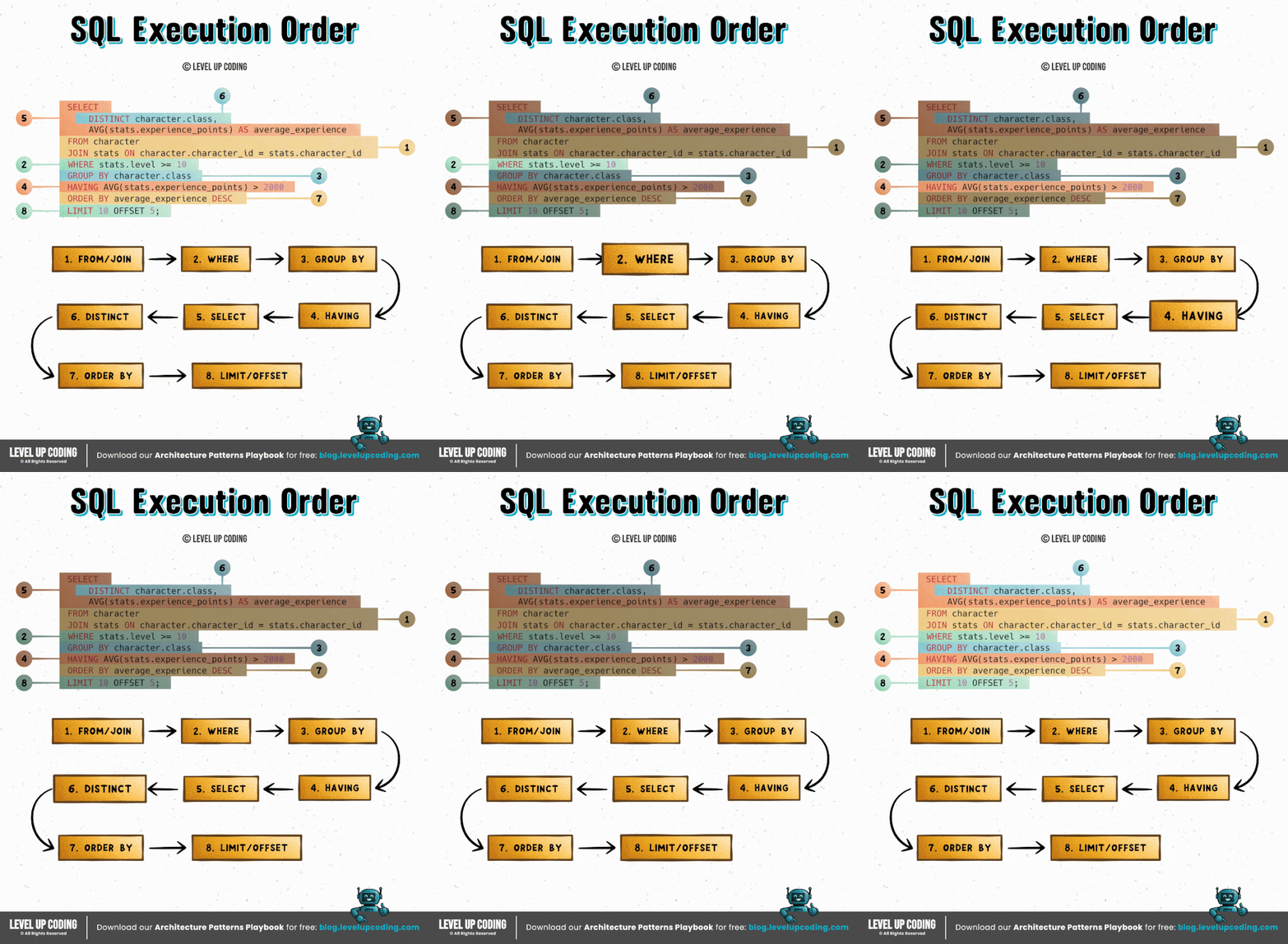
Things Every Engineer Should Know: SQL Execution Order. Most engineers read SQL top-down, but that only explains intent. Performance requires a second pass that follows execution order. A SQL query…

LinkedIn post image: Things Every Engineer Should Know: SQL Execution Order.
1.5K6027719 viral
SQL Query Optimization8 months ago
View on LinkedIn

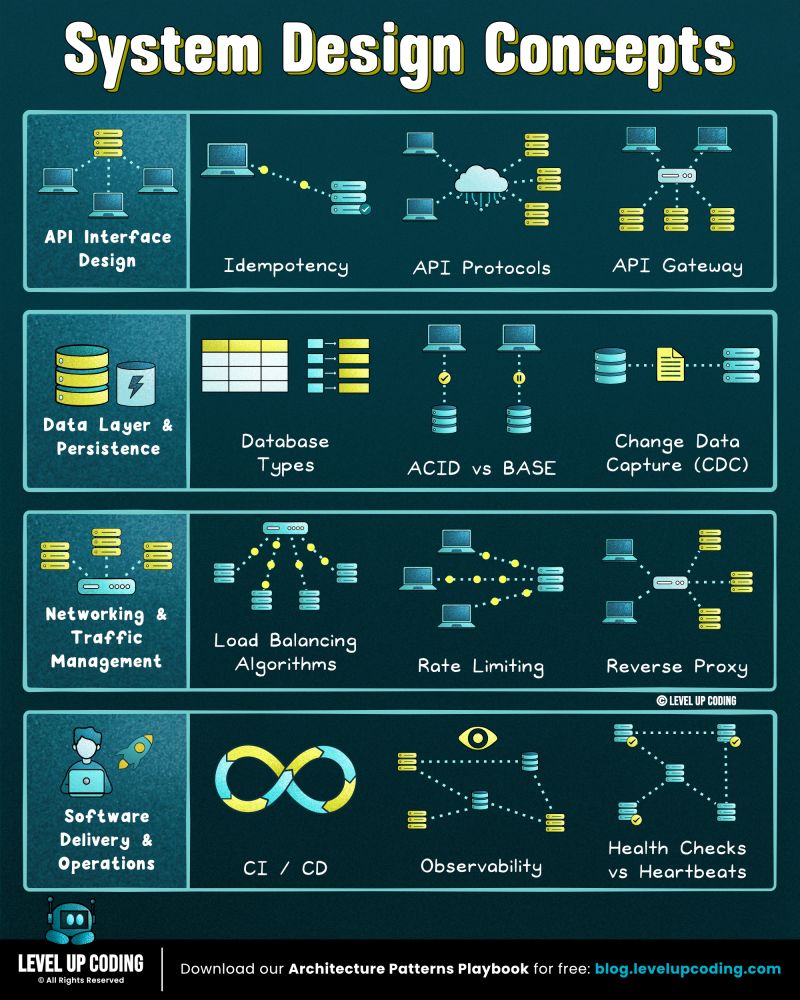
I wrote 25 articles for 25 system design concepts: 1. JWT: https://lnkd.in/gdF2ce3K 2. Idempotency: https://lnkd.in/gj5YZCKs 3. Rate limiting: https://lnkd.in/gFe2knKy 4. Observability: https://ln…

LinkedIn post image: I wrote 25 articles for 25 system design concepts:
1.0K4620613 viral
System Design8 months ago
View on LinkedIn

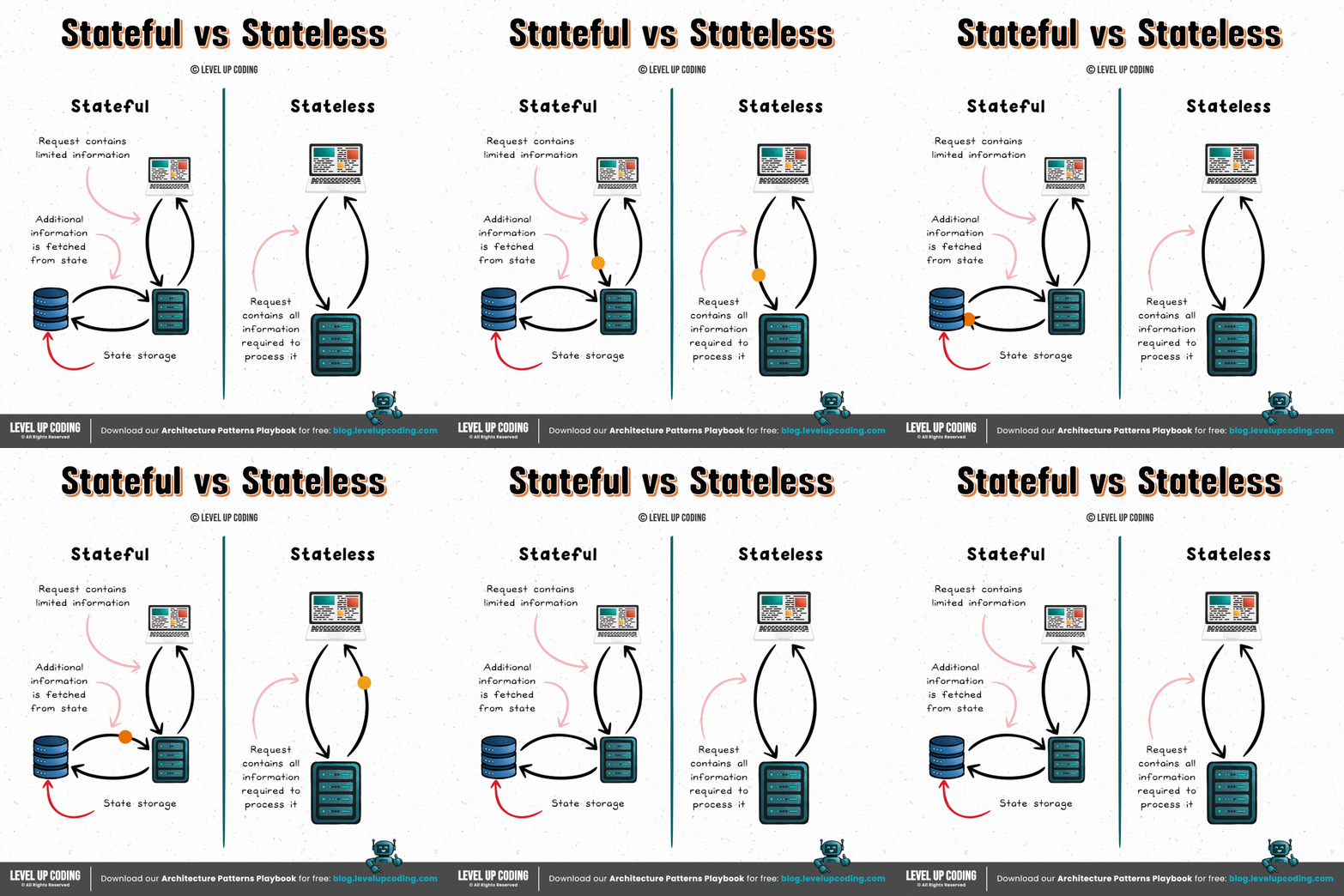
Stateful vs Stateless Design. Stateless design is a powerful model that has led to the development of simple yet highly scalable and efficient applications. “State” refers to stored information that…

LinkedIn post image: Stateful vs Stateless Design.
730531068 viral
Software Architecture8 months ago
View on LinkedIn

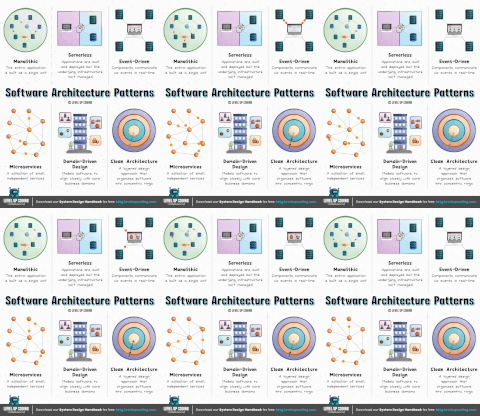
6 Software Architecture Patterns Engineers Should Know: Choosing the right architecture isn’t about following trends. It’s about aligning with your application’s needs, your team’s expertise, and the…

LinkedIn post image: 6 Software Architecture Patterns Engineers Should Know:
60445987 viral
Software Architecture8 months ago
View on LinkedIn

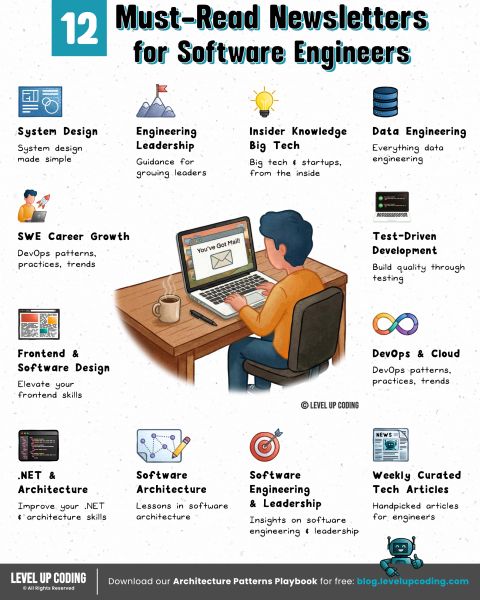
If you want to grow as a software engineer, try these newsletters (all free): 1. System Design ➟ https://lnkd.in/gDCD8gaq 2. Engineering Leadership ➟ https://lnkd.in/g3wQkZX9 3. Insider Knowledge B…

LinkedIn post image: If you want to grow as a software engineer,
40740745 viral
Software Engineering Learning Resources8 months ago
View on LinkedIn

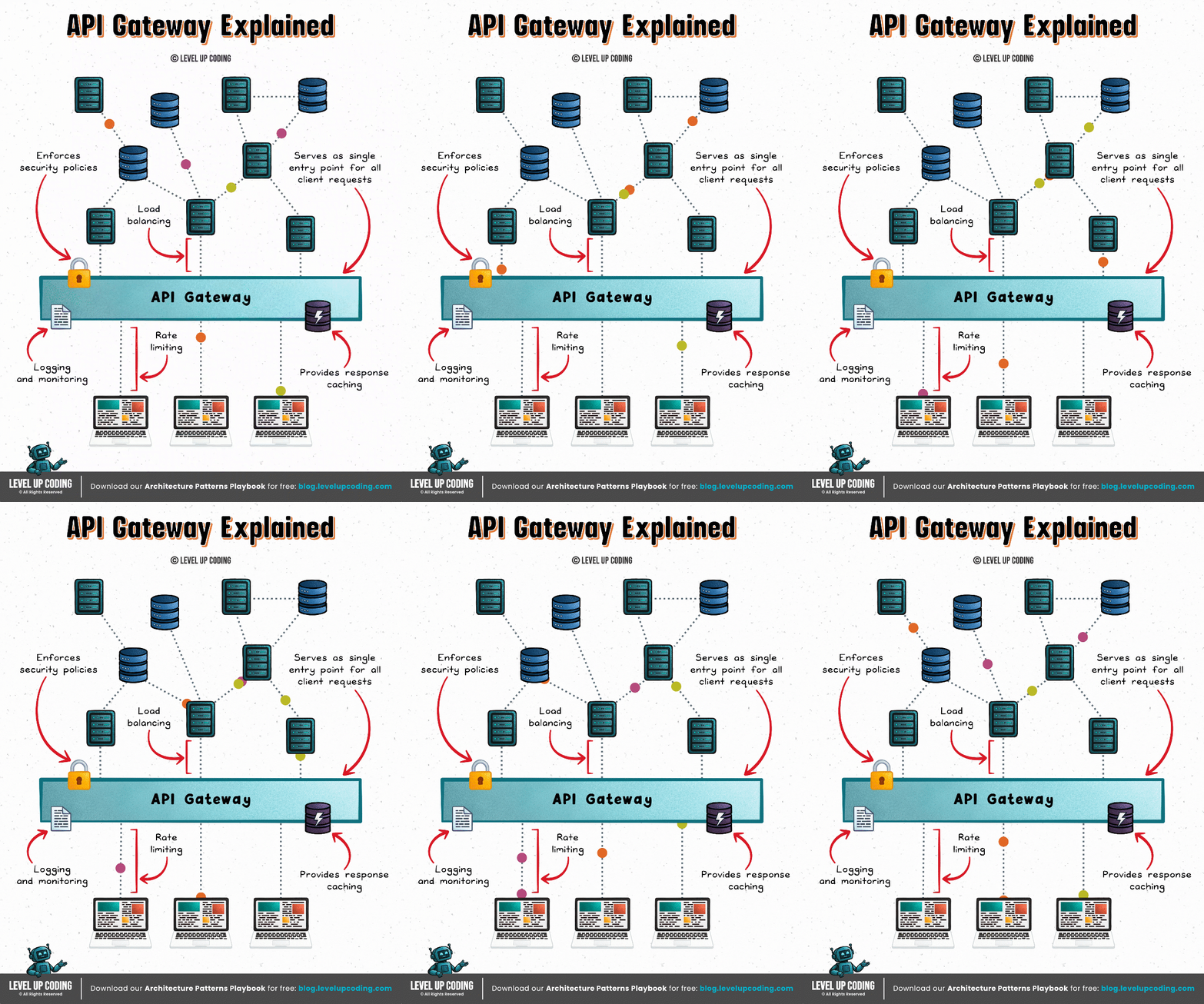
API Gateway Clearly Explained. An API gateway acts as a single entry point for clients, handling request routing, response composition, and protocol translation. It simplifies client interactions wit…

LinkedIn post image: API Gateway Clearly Explained.
36739725 viral
API Architecture8 months ago
View on LinkedIn

Posting Patterns & Frequency

5.6 posts/week

Posts / Week

1.7 days

Days Between Posts

2

Total Posts Analyzed

HIGH

Posting Frequency

Timezone: Antarctica/Macquarie

Best Performing Days

WednesdaySaturday

Best Performing Times To Post

07:30-08:00

Topics & Content Focus

Primary Topics

Pragmatic System Design Education (tradeoffs, patterns, scalability choices)AI Agent Architecture for Software Delivery (SDLC surfaces, specialized agents, subagents)Engineering Team Throughput & Context Management (interruption tax, flow protection, knowledge capture)

Secondary Themes

Architecture decision-making frameworks (constraints, ownership, long-term cost)Developer productivity tooling embedded in existing workflows (Slack/Jira/Confluence)Productized learning assets (playbooks/handbooks) as lead magnets

Industry Focus

B2B developer tools and platform engineering (DevEx, SDLC, agentic tooling)SaaS for engineering productivity and knowledge managementSystem design education for working engineers and engineering leaders

Content Categories

Evergreen technical explainersMental models & taxonomy postsTradeoff-driven architecture guidanceEngineering management/operator playbooksSponsored product narratives anchored in real pain points

Performance Insights

484.5%

Avg Engagement Rate

STABLE

Performance Trend

Best Performing Topics

System design fundamentals with clear tradeoffs (stateful vs stateless)Architecture pattern roundup content (modular monolith, microservices, EDA, serverless, DDD)Evergreen educational assets tied to a free resource (handbook/playbook)

Virality Signals

Bookmarkable evergreen formats (definitions, patterns, pros/cons)Share-optimized structure (lists + clean mental models)Explicit save/repost prompts that match the content utilityAudience participation prompt that invites additions (drives comments)Resource-based conversion hooks (free playbooks/handbooks)

Structure & Quality

320

Avg Length (Words)

HIGH

Depth Level

ADVANCED

Expertise Level

0.77/10

Uniqueness Score

Common Hooks

Taxonomy/contrast hook (A vs B vs C) that promises a clearer mental modelCurated list hook (X patterns you should know) positioned as career-leverage knowledgeAuthority + diagnostic hook (after years leading teams, one signal predicts the problem)Definition-first explainer hook that quickly sets terms before tradeoffs

Common Endings

Open-loop question to solicit peer additions ("What else would you add?")Save/repost/follow ritual to encourage repeat reachResource link (playbook/handbook) or product link (sponsor integration)Brief attribution/thanks to collaborator

Value Delivery Methods

Compresses complex engineering choices into decision-ready frameworksMakes tradeoffs explicit (benefits + risks) rather than giving one-size-fits-all adviceTranslates tool/product positioning into concrete workflow pain pointsProduces reusable reference content (patterns, definitions, mental models)

Formatting Style

Skimmable micro-paragraphs with heavy line breaksBullets and numbered lists as the primary information containerArrow/chevron hierarchy to show decomposition and delegationExplicit tradeoff statements (benefit + risk) to signal engineering rigorOccasional stylized emphasis (bolded headings) to guide scanning

Audience & Tone

YES

Question Usage

0.2%

Response Rate

Detected Tone

Pragmatic architect-educatorTradeoff-first systems thinkerSmart-casual but technically rigorousOperator mindset (focus, flow, throughput) with product-aware framingsemi-formalfirst-person

Interaction Style

Peer-level prompts inviting engineers to add missing patterns/examplesDiagnostic questions that encourage self-identification with a pain pointCommunity learning cues (save/repost) that treat readers as amplifiers

Community Building Signals

Consistent end-of-post discussion promptRepeated rituals that condition audience behavior (save/repost/follow)Newsletter/playbook ecosystem that turns posts into an ongoing curriculum

Writing Style Patterns

Content Strategy

Hook: Taxonomy/contrast hook (A vs B vs C) that promises a clearerTone: semi-formalCTA: Evergreen utility CTA ("Save for later")

Writing style breakdown

<start of post>

Monolith vs Microservices vs Serverless.

Most developers view these as a linear progression of "better" tech, but they are actually just different ways to manage complexity and state.

Here’s the clean mental model

Monolith = Simplicity of deployment

↳ Single codebase. Unified database. Easy to test.

↳ Optimized for small teams and rapid initial velocity.

↳ Risk: Becomes a "big ball of mud" as the team scales.

Microservices = Scalability of teams

↳ Decoupled logic. Independent deployments. Polyglot stacks.

↳ Great for large organizations with complex domains.

↳ Risk: Operational complexity and network latency.

Serverless = Efficiency of resources

↳ No infrastructure management. Pay-per-use. Auto-scaling.

↳ Ideal for event-driven tasks and unpredictable workloads.

↳ Risk: Vendor lock-in and cold start issues.

So the real question isn’t “which is the most modern?”

It’s which tradeoff your team is equipped to handle.

For most startups, the winning architecture looks like this

A modular monolith to start

Extracting microservices only when the pain of the monolith exceeds the pain of the network

One repo.

Clear boundaries.

Strategic extraction.

The shift isn’t “moving to the cloud.”

It’s moving toward the right boundaries.

What else would you add?

--

🔖 Save for later.

♻️ Repost to help others learn system design.

➕ Follow Nikki Siapno + turn on notifications.

<end of post>

1. OVERALL WRITING STYLE & VOICE
1. The Hook: A bold statement, a comparison, or a personal observation (1: 3 lines).
1. The Engagement Question: A single line like 'What else would you add?' or 'Which of these is the biggest hidden tax on your team?'

Sign in to unlock the full writing analysis

Apply Nikki Siapno's patterns to your posts

Free tools to help you write, score, and benchmark in the same style.

LinkedIn Hook Generator

Generate scroll-stopping hooks in the same style top creators use.

Open tool

LinkedIn Post Scorer

Score your draft against viral post patterns before you publish.

Open tool

LinkedIn Engagement Calculator

Benchmark your engagement rate against creators in your niche.

Open tool

More LinkedIn creators to learn from

Discover all

Other creators worth studying alongside Nikki Siapno.

A

Amos Bar-Joseph

CEO @ getswan.com 🦢 | hire your AI GTM Engineer

52 Viral Score

U

Unknown

Unknown

U

Unknown

Unknown

Clément Predo

Clément Predo

Votre partenaire IA | Automatisations, Formations, Conférences, Productions | Co-Founder @Axem IA

22 Viral Score

Alex Wang

Alex Wang

Learn AI Together - I explain practical AI, real workflows, and where AI is actually going. Follow me and let’s grow together.

20 Viral Score

Théophile Burnet ⚡️

Théophile Burnet ⚡️

Partenaire IA des entreprises | Je vous accompagne avec ma méthode AFD : audit, formation, déploiement (+30 clients) | +11 000 lecteurs sur ma newsletter 👇

67 Viral Score

€1 trial · 7 days

Automate your LinkedIn for 30 days

ViralBrain plans, writes, and schedules your LinkedIn content, using official LinkedIn APIs so your account stays safe.

  • Official LinkedIn APIs, no risk of ban
  • You approve every post before it goes live
  • Cancel anytime
Start €1 trial€39 Pro or €69 Premium · cancel anytime

30-day plan

On track
1
2
3
4
5
6
7
8
9
10
11
12
13
14
15
16
17
18
19
20
21
22
23
24
25
26
27
28
13 posts queued · auto-publishing
€1 · 7-day trial

Write like Nikki Siapno and auto-post for 30 days.

ViralBrain learns their voice and publishes for you.

Try it free

Write like Nikki Siapno.

Try it free

Discover more LinkedIn creators · ViralBrain

Other LinkedIn creators

  • Matthew Skelton
  • Stuart Winter-Tear
  • Joelle van Beers MSc
  • Radu Georgescu
  • Mihail Pautov
  • Philippe GERWILL
  • Doru Șupeală
  • Dr. Dragos Michael Anastasiu
  • Maziar Mike Doustdar
  • Revant Himatsingka (Food Pharmer)
  • Bruno Feigelson
  • René Remsik
  • Diandra Escobar