This poem lives rent-free in my head (read it once and you'll see why): "Do not ask your children to strive for extraordinary lives. Such striving may seem admirable, but it is the way of foolishnes…


LinkedIn Content Strategy & Writing Style
NYT Bestselling Author of The 5 Types of Wealth
2 people tracking this creator on Viral Brain
Sahil Bloom positions himself as a modern philosopher of performance who bridges the gap between high-achievement frameworks and holistic well-being. His content strategy centers on the "compounding of small wins," utilizing recurring angles like the 85% Rule and decision-making razors to provide actionable value for the growth-minded professional. What makes him notable is his ability to deconstruct elite mental models-from athletic training to logical fallacies-into tactical life wisdom that feels both prestigious and accessible. He operates at a unique intersection of wealth-building and intentional living, successfully pivoting from dense financial insights to poetic reflections on the "marvel of an ordinary life" to build a massive, newsletter-driven ecosystem.
680.2K
8.3K
1.5K
—
10.2
27
1
This poem lives rent-free in my head (read it once and you'll see why): "Do not ask your children to strive for extraordinary lives. Such striving may seem admirable, but it is the way of foolishnes…

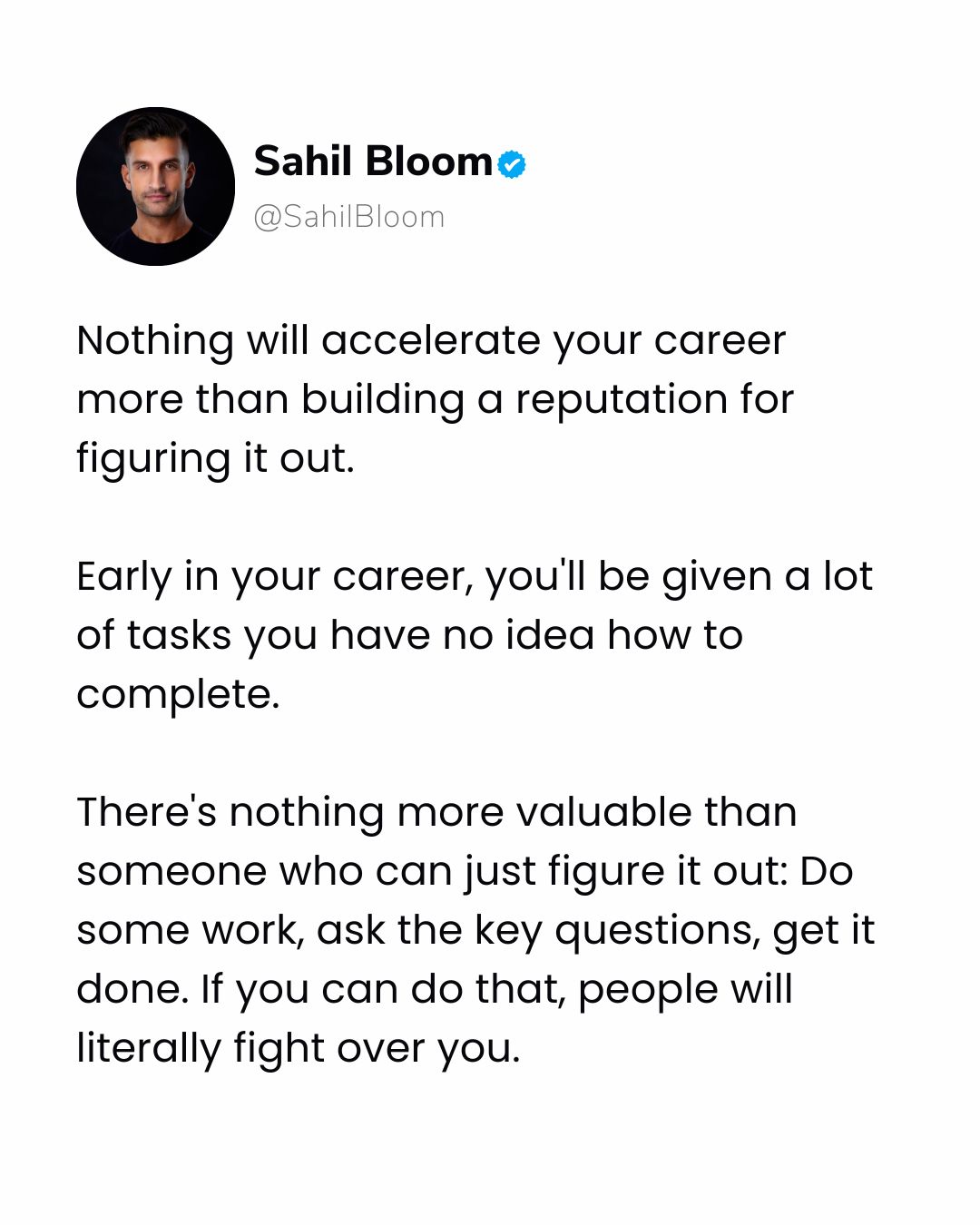
Your company doesn't need another strategist. They need someone who gets sh*t done. Nothing accelerates your career faster than building a reputation as someone who can figure things out. Early on,…

Most people will never change. The ones who will? They're doing this: Quiet reinvention. The reinvention found in a series of tiny decisions: A new habit. A different choice. A higher standard. N…

This took me 10 years to understand: Working out rewires your brain. It creates evidence that you have the power to take an action and achieve a desired outcome. That has ripple effects into every…

The 10 most common logical fallacies of life… (most people use these without even knowing it): Ad Hominem - Attack the person. Attempt to discredit the messenger so you don't have to face the messag…
9 unfair advantages successful people use (that nobody talks about): 1. Wear a rubber band on your wrist. Snap it when you do the bad habit you're breaking. 2. Ask intimidating people: "What are yo…
10.2 posts/week
Posts / Week
0.8 days
Days Between Posts
1
Total Posts Analyzed
HIGH
Posting Frequency
1478.6%
Avg Engagement Rate
STABLE
Performance Trend
280
Avg Length (Words)
MEDIUM
Depth Level
INTERMEDIATE
Expertise Level
7.5/10
Uniqueness Score
YES
Question Usage
0.5%
Response Rate
Writing style breakdown
Professional but highly conversational.
Clear, direct, and pragmatic with a motivational, self-improvement angle.
Strongly informative/persuasive: each piece is teaching a concept or framing a mindset.
Not poetic in the traditional sense, but rhythm-focused and highly crafted for cadence.
Tone is encouraging, empowering, and slightly authoritative (mentor/coach energy), but never harsh or condescending.
Medium-to-high energy, but calm rather than hyped.
Reflective and thoughtful, with moments of punchy intensity.
Emotion is controlled and channeled into clarity, not drama.
Rhetorical questions, especially to pivot sections or engage the reader directly.
Parallelism and repetition in short lines for emphasis (e.g., "One decision at a time. One day at a time. One percent at a time.").
Simple, memorable one-liners that summarize the lesson.
Named concepts/mental models ("85% Rule", "Law of Reversed Effort") to make ideas sticky.
Most people X. The ones who Y…
The world does this. But the real power is in that.
Asking the reader what they will do ("Which one will you try first?", "What tiny decision will you make today?").
Imperative suggestions framed as gentle but clear directives.
Heavy use of "you" (second person) to address the reader personally.
Occasional "I" to share personal experience or perspective.
We" used to create shared understanding or shared human condition ("We live in a world that worships the grind.").
Commands: Common and direct, but not aggressive. E.g., "Dial it back to 85%." "Bookmark this field guide."
Suggestions softening the edge: "Pick one area…" "Watch what happens." "The question is: What tiny decision will you make today?"
The writer positions himself as a knowledgeable guide who has tested ideas personally ("When I started applying… everything changed") rather than a distant lecturer.
Sign in to unlock the full writing analysis
Nail your LinkedIn strategy with ViralBrain.
Analyze and write in Sahil Bloom's style. Grow your LinkedIn to the next level.