People keep starting threads on Reddit about how I have sold out to Anthropic. I guess people have forgotten what it’s like to be genuinely enthralled by a product. I’m not sharing my experience b…

LinkedIn Content Strategy & Writing Style
Author, Speaker, Product Discovery Coach @ ProductTalk.org
3 people tracking this creator on Viral Brain
Teresa Torres positions herself as a rigorous discovery architect who bridges the gap between high-level product strategy and the technical realities of the AI era. Her content strategy centers on deconstructing complex build-versus-buy decisions and documenting the "just now possible" through deep-dive interviews with product teams. She is notable for her fierce intellectual independence, often rejecting mainstream SaaS tools in favor of bespoke, idiosyncratic systems that she builds herself to match her specific workflows. This creates a compelling intersection of product coaching and technical transparency, where she uses her own experiments with "vibe coding" and LLM architectures to teach practitioners how to navigate high-stakes innovation without losing sight of core user needs.
137.4K
12.7K
340
—
6.4
29
3
People keep starting threads on Reddit about how I have sold out to Anthropic. I guess people have forgotten what it’s like to be genuinely enthralled by a product. I’m not sharing my experience b…
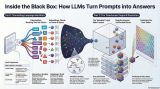
"If someone asked you to explain what actually happens when you type a prompt into Claude or ChatGPT, what would you say?" Ever wondered how large language models actually work beyond just "predictin…

I’m not spending the weekend installing Clawdbot/Moltbot. If you haven’t heard of it, Clawdbot (now Moltbot) is a persistent AI assistant that can do long running tasks without your constant supervi…
Continuous Discovery Habits turns 5 in 2026. And to celebrate, I'm hosting a year-long book club. Each month, I'll release an in-depth reading guide. It will include the chapters we'll be focusing o…
I finally figured out a reliable way to get Claude to call skills. I shared previously that no matter what I tried Claude wouldn't use skills unless I specifically told it to use the skills (in which…
It's funny to me how many companies who are working on task management tools or terminal replacement tools reached out after watching my How I AI episode to tell me that I'll love their tool. They c…
6.4 posts/week
Posts / Week
1.2 days
Days Between Posts
3
Total Posts Analyzed
HIGH
Posting Frequency
339.6%
Avg Engagement Rate
STABLE
Performance Trend
180
Avg Length (Words)
HIGH
Depth Level
ADVANCED
Expertise Level
0.78/10
Uniqueness Score
YES
Question Usage
0.35%
Response Rate
Writing style breakdown
<start of post>
I don’t think ‘vibe coding’ is the scary part.
I think the scary part is how quickly we stop noticing complexity when it ships in a friendly wrapper.
Last week I had three separate conversations where someone said some version of: “we can just build it now.”
And, sure. Sometimes you can.
But ‘can build’ and ‘should maintain’ are not the same sentence.
Here’s the thing I keep coming back to: the build vs. buy decision didn’t go away. AI just sped up the moment where you have to make it.
Because prototyping is cheaper.
Because demos are easier.
Because you can get to “looks like it works” in a weekend.
And then you wake up a month later with a tool that is now a dependency.
And nobody knows who owns the edge cases.
can we get something working?
can we keep it working?
can we make it safe and boring?
That last one is where most “quick builds” go to die.
A practical way to sanity-check yourself
Start with what happens when the model is wrong.
Not hypothetically wrong. Wrong in the exact way your users are least able to tolerate.
If the cost of being wrong is high, you don’t just need accuracy.
citations people actually click
clear boundaries for what the system won’t answer
an audit trail someone can explain to a stakeholder who is already unhappy
And yes, this applies outside healthcare.
Finance. Legal. Security. Internal tooling that touches payroll. Anything where “oops” becomes a meeting.
A second sanity-check: who owns the data shape?
exports that preserve meaning, not just rows
portability that doesn’t require re-learning your own history
versioning, because your workflow changes and you will want to go back
That’s when “just buy” gets weird too.
So what do I do?
Honestly, I’m slowing down.
I’m trying fewer tools.
I’m doing more small experiments.
I’m writing down what I’d have to maintain if this became real.
Sometimes the right move is to watch and see.
Not because you’re behind.
Because you’re making room for signal.
If you’re in the middle of one of these decisions right now, I’m recording an episode about it.
What we’ll cover
🔁 Why build vs. buy keeps resurfacing
🧪 How AI changes the cost of getting to a prototype (and why that can be misleading)
🔐 The maintenance cliff: evals, monitoring, regressions, and “who debugs this at 2am?”
💎 Data ownership and portability (what to ask vendors before you sign anything)
🧾 Treating the decision as discovery, not a debate
Spotify: https://example.com/spotify
Apple Podcast: https://example.com/apple
YouTube: https://example.com/youtube
And if you’ve built something you now regret maintaining, tell me what surprised you. Comments are open.
<end of post>
Sign in to unlock the full writing analysis
Nail your LinkedIn strategy with ViralBrain.
Analyze and write in Teresa Torres's style. Grow your LinkedIn to the next level.