
Don’t name your early stage teams after solutions. I see early stage teams all the time with names like: “AI Platform Team” “New Payments Product Team” “EV Charging Solution Team” “Customer 360…
261113 viral
Product Management9 months ago

LinkedIn Content Strategy & Writing Style
Co-Author of Testing Business Ideas | Keynote Speaker | Helping executives make evidence based decisions on high uncertainty bets
1 person tracking this creator on ViralBrain
David Bland positions himself as a high-stakes advisor who bridges the gap between corporate strategy and the messy reality of evidence-based decision making. His content strategy centers on de-risking innovation by exposing the "hidden assumptions" buried in traditional business artifacts like roadmaps and team structures. What makes him notable is his ability to translate abstract lean startup principles into pragmatic, tactical interventions for executives, such as his nuanced critique of team naming conventions to prevent solution bias. By intersecting rigorous experimentation with leadership psychology, Bland moves beyond simple product management advice to offer a sophisticated framework for managing high-uncertainty bets in the enterprise.
39.0K
8.4K
30
11.2
11
1
Don’t name your early stage teams after solutions. I see early stage teams all the time with names like: “AI Platform Team” “New Payments Product Team” “EV Charging Solution Team” “Customer 360…
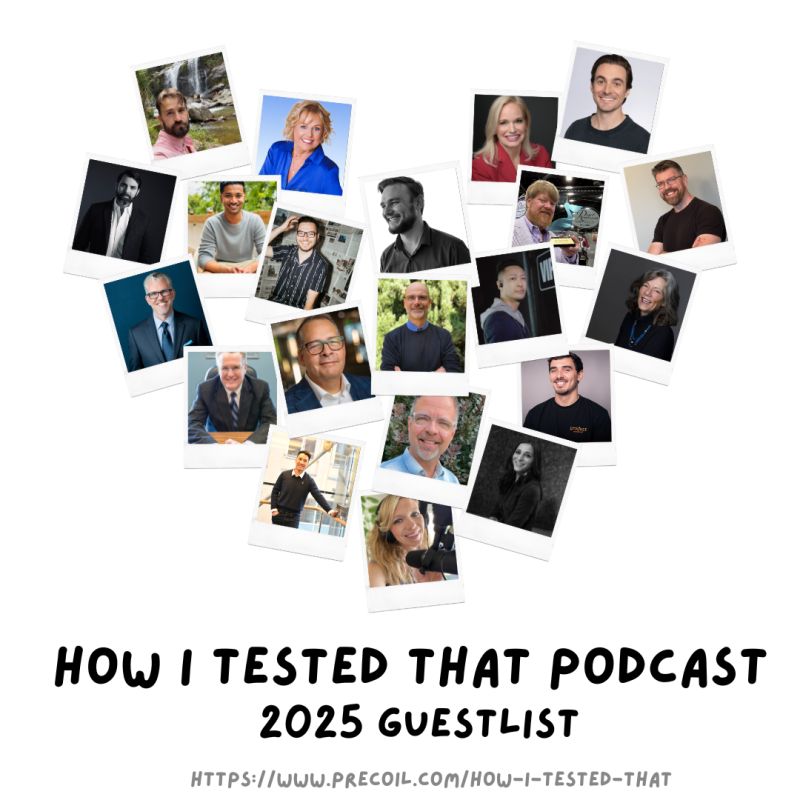
How I Tested That - 2025 Recap Thank you to everyone for making How I Tested That so successful in 2025. My goals for 🎙️ How I Tested That 🎙️ in 2025 were: 1. Hit 40 episodes ✔️ 2. Average 150 do…
Leaders will make 2 or 3 decisions in 2026 that will determine the future of the business. The problem with this is that the product roadmaps, business model canvases, and strategy decks behind these…
11.2 posts/week
Posts / Week
0.9 days
Days Between Posts
1
Total Posts Analyzed
HIGH
Posting Frequency
30.33%
Avg Engagement Rate
STABLE
Performance Trend
300
Avg Length (Words)
HIGH
Depth Level
ADVANCED
Expertise Level
8.5/10
Uniqueness Score
YES
Question Usage
0.4%
Response Rate
Writing style breakdown
Overall tone: professional, clear, and grounded, with a calm, reflective authority.
Conversational but not chatty; it feels like a seasoned expert speaking to peers, not like a hypey marketer.
Strongly informative and educational, occasionally promotional (e.g., workshop announcement) but with a restrained, evidence-focused vibe.
Direct and pragmatic rather than poetic. Very little decorative language; each sentence has a job.
Mid-formal: uses contractions (I’ll, I’m, didn’t) and natural spoken phrasing, but avoids slang and casual filler.
The voice is approachable, but it still clearly positions the author as an expert/coach/host.
Medium energy, steady and controlled.
Not rushed or breathless; the pacing and spacing create a measured feel.
Uses emphasis via structure (isolated lines, lists, examples) more than exclamation or dramatic punctuation.
Clear, declarative opening statements that work as a hook. Example pattern: statement of advice or observation as line 1.
‘Don’t name your early stage teams after solutions.’
‘Leaders will make 2 or 3 decisions in 2026 that will determine the future of the business.’
Concrete examples in lists to ground abstract points (team names, episode list, outcomes).
Contrast between ‘what people usually do’ vs ‘what works better’ (post 1 and 2).
Subtle narrative of progress or reflection (e.g., podcast recap and plans for 2026).
Rhetorical questions appear mainly at the end as engagement/CTA, not as a running device.
Minimal metaphor, almost zero figurative language. The writing is literal and specific.
Occasional light promotional framing (e.g., ‘To address this, I am hosting…’) but grounded in a clear problem and value.
First person singular: ‘I see…’, ‘I am hosting…’, ‘I’m reimagining…’
First person plural when discussing group outcomes: ‘we will cover’, ‘Our episodes in 2025 included’
‘What team naming conventions have worked for you?’
‘Who would you like to be on this podcast…?’
‘Reshare if the leaders you work with are carrying bets that feel too large…’
‘Comment or DM me and let me know!’
Suggestions are usually implied via explanation rather than explicitly phrased as ‘You should…’ or ‘Try this…’. The prescriptive part is embedded as a recommendation in the narrative:
‘Instead, the corporations I work with… use “project names” or “problem names”…’ (showing the preferred behavior by example, not direct command).
Sign in to unlock the full writing analysis
Free tools to help you write, score, and benchmark in the same style.
Other creators worth studying alongside David Bland.
Luciano Santos
Palestrante | Autor do livro Seja Egoísta com sua Carreira | Sócio-diretor na Fluxus | Mentor | @lucianoresponde | Pai da Olivia

Ravindu Deshan
Founder | AWS Certified Solutions Architect Associate | Full Stack Developer at CueCard and CueGrowth | Building Scalable AI | Content Creator
556 Viral Score

Akhila G
Making AI feel less complex | GenAI Trainer | Senior Software Engineer
187 Viral Score

Hannah Weng
AI autopilot for Shopify. Paid ads, SEO, AI visibility, CRO
290 Viral Score
Andrew Gyakobo
Computer Science Graduate from NJIT | Previous Research Assistant/Software Developer | Embedded developer | Full Stack Developer
ViralBrain plans, writes, and schedules your LinkedIn content, using official LinkedIn APIs so your account stays safe.
Write like David Bland.