
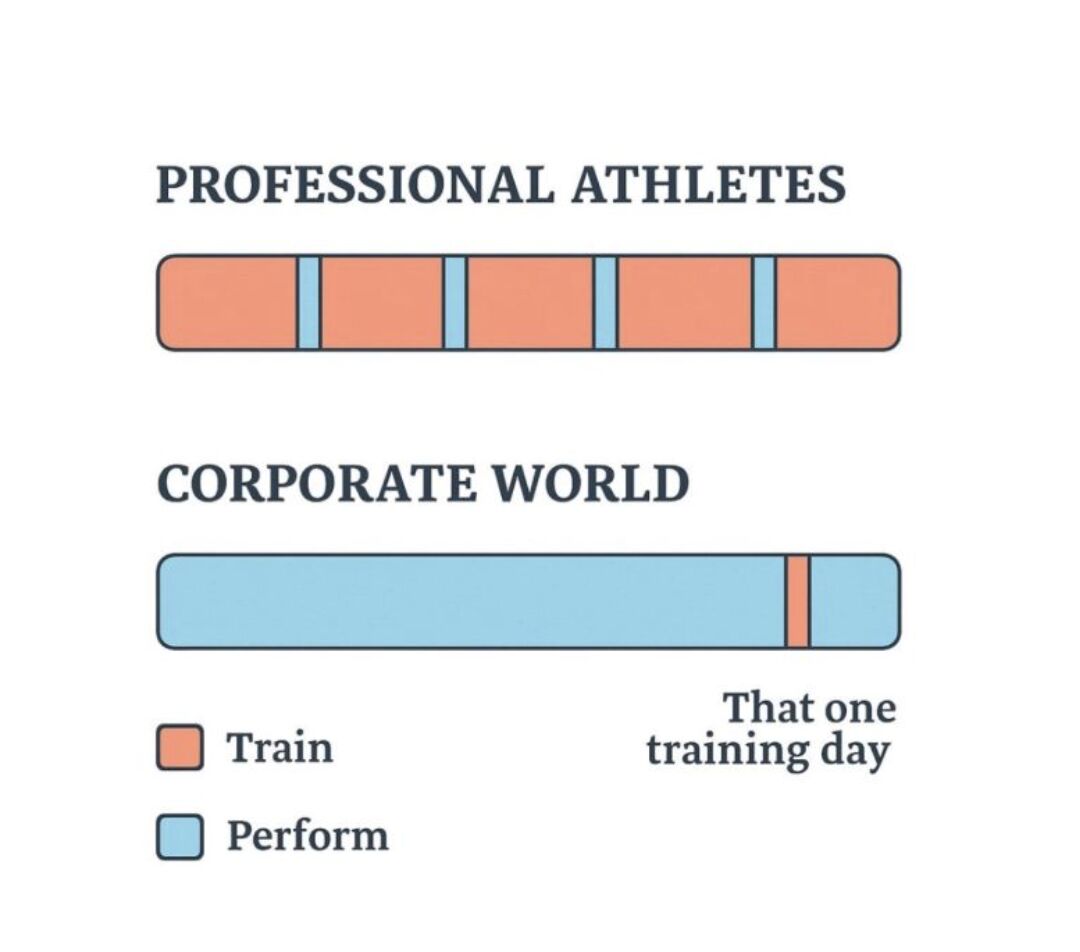
I saw this graphic making the rounds today, and my immediate reaction was: "This is wrong." In any high-performing function, you don't learn by sitting in a classroom for weeks. You learn by doing.…
472251330 viral
Leadership10 months ago

LinkedIn Content Strategy & Writing Style
Global Head of Talent Acquisition @ Glovo | Experienced Recruitment Leader | Talent100 2025 Winner
0 people tracking this creator on ViralBrain
Robbie Simpson positions himself as a pragmatic talent architect who bridges the gap between high-level corporate leadership and the gritty operational realities of recruitment. His content strategy centers on dismantling "vanity metrics" in favor of talent density, psychological safety, and radical transparency, often challenging long-held industry dogmas like the inherent value of referrals. He is notable for his founder-led approach to TA, urging leaders to treat networking as a permanent KPI rather than a reactive switch. By blending high-level executive strategy with low-cost AI utility, Simpson provides a unique intersection of sophisticated leadership philosophy and hands-on technical enablement that empowers teams to eliminate "hidden work" and focus on high-impact human connection.
22.3K
21.9K
117
1.6
64
1
I saw this graphic making the rounds today, and my immediate reaction was: "This is wrong." In any high-performing function, you don't learn by sitting in a classroom for weeks. You learn by doing.…
Integrating AI into your TA stack doesn't have to break the bank. We often think we need enterprise licenses for tools like Metaview or BrightHire to get started. While those tools are incredible and…
One of my favourite questions to ask leaders in interviews is this: "You have no current open headcount in your team, and we do not plan to add any more in the next 6 months. What would your recruitm…
How do you improve offer acceptance when you cannot offer higher salaries? A tactic I learned from a Hiring Manager of mine was to be radically transparent. She encouraged candidates to take referenc…
I've seen a number of C-Suite and Company pages celebrating TA recently. But they are only celebrating two things: The number of hires made ✅ The number of applications received ❌ Honestly? This i…
With the new releases from Gemini, I see a lot of "ChatGPT loyalists" moving over to the Google ecosystem. For the recruiters out there, there is one product that needs to be in your toolkit: Noteboo…
1.6 posts/week
Posts / Week
4.9 days
Days Between Posts
1
Total Posts Analyzed
MEDIUM
Posting Frequency
117%
Avg Engagement Rate
STABLE
Performance Trend
350
Avg Length (Words)
HIGH
Depth Level
ADVANCED
Expertise Level
8.5/10
Uniqueness Score
YES
Question Usage
0.3%
Response Rate
Writing style breakdown
Professional, reflective, and insight-driven with a distinctly “LinkedIn thought-leader” feel.
Conversational but not casual to the point of slangy; it balances accessibility with authority.
Strongly informative and analytical, often with a subtle persuasive edge (“we need to stop…”, “should we really be…”).
Tone is direct but not aggressive; critiques systems and habits rather than attacking people.
Feels like a senior operator/leader talking to peers and other leaders, not to beginners.
Medium, steady energy: calm, grounded, and serious but not dry.
Often starts with a sharp observation or concern (“Honestly? This is super concerning.”) but then moves into calm reasoning.
Emotion is more intellectual than performative; frustration or urgency is implied through logic rather than dramatics.
Uses concern, curiosity, and challenge as emotional drivers rather than inspiration or hype.
As opening hooks.
As pivots in the middle.
As closing reflection/CTAs.
Uses analogies and hypotheticals to reframe (e.g., comparing TA metrics to a Marketing Director’s lead-to-sales problem).
High volume with low conversion isn't a success story. It means your targeting is off.
People respect reality infinitely more than perfection.
Prefers concrete, real-world examples (COO conversation, Harry Stebbings’ routine, hiring manager tactic) over abstract theory.
Often builds to a subtle challenge or “ask” directed at leaders (“If we want leaders to act like Founders, should ‘Network Growth’ be a KPI we actually track?”).
Could you put on a calendar exactly what your team spends their time on…?
If you mapped your team’s week today, what hidden work would you find?
Own opinions and practices (“I’ve tried to fight this instinct…”, “I make a point of…”).
Create a sense of shared responsibility (“We need to stop incentivizing…”, “If we are building TA organisations…”).
Softer suggestions: “Consider…” is not explicit, but used via structures like “So, as we kick off 2026, don't just set OKRs. Re-write your manual.”
Commands are framed as challenges or recommendations rather than orders (“Be radically transparent about:”, “Training on the job, is still the best way to learn. But it only works if…”).
Sign in to unlock the full writing analysis
Free tools to help you write, score, and benchmark in the same style.
Other creators worth studying alongside Robbie Simpson.

Philip Hemme
Founder & CEO @ Flot.bio
111 Viral Score

Tanay Kothari
CEO at Wispr Flow | IOI Medalist | Forbes 30 under 30 | Stanford CS + AI
229 Viral Score

Jagdish Patel
AgTech Illustrator & Storyteller (Ex-Soil Scientist) | Product Infographics & Explainer Videos for Ag Brands | Soil Science Writer | Visuals for Sales & Product Communication
40 Viral Score

Ethan (Yudian) Zheng
Co-Founder@Jobright.ai | AI PhD | Ex-Twitter AI Lead
10 Viral Score

Gian Luca Malvicini
Agronomist (PhD) | Coffee & Perennial Fruit Crops | Regenerative Agriculture and IPM | Farmer Training | Applied Research | illycaffè
296 Viral Score

Dmitry Shapiro
CEO at MindStudio.ai - ex: Product @ Google, CTO @ MySpace, 3 x founder, Strategic Advisor, Angel Investor.
11 Viral Score
ViralBrain plans, writes, and schedules your LinkedIn content, using official LinkedIn APIs so your account stays safe.
Write like Robbie Simpson.