
Stop Asking “Which AI Model?” Do This Instead. People keep asking which AI model they should use. It’s the wrong question. And it’s partly the reason most AI projects fail. Work isn’t one big task.…

4773054 viral
AI10 months ago

LinkedIn Content Strategy & Writing Style
New Ways of Working AI Trainer | Accessible & Affordable AI for SMEs | Build Your Own AI Operating System
1 person tracking this creator on ViralBrain
Madison Bonovich positions herself as a pragmatic architect of the "AI Operating System," moving beyond simple prompt engineering to focus on organizational design for SMEs. Her content strategy centers on the transition from AI as a tool to AI as digital labor, frequently highlighting the "judgment gap" that separates senior strategic oversight from junior-level execution. She is notable for her focus on the "missing apprenticeship layer," arguing that companies must build new career on-ramps as AI absorbs entry-level tasks. By intersecting systems thinking with workforce development, Madison provides a sophisticated roadmap for leaders to transform scattered AI licenses into structured, data-backed workflows that prioritize human agency.
6.3K
5.1K
50
6.3
157
3
Stop Asking “Which AI Model?” Do This Instead. People keep asking which AI model they should use. It’s the wrong question. And it’s partly the reason most AI projects fail. Work isn’t one big task.…
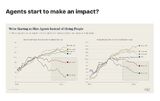
AI as Labor is reshaping entry-level work AI agents are starting to show up in employment data, And the early hit appears to be entry-level, computer-based work. When AI becomes cheap labor, the rea…
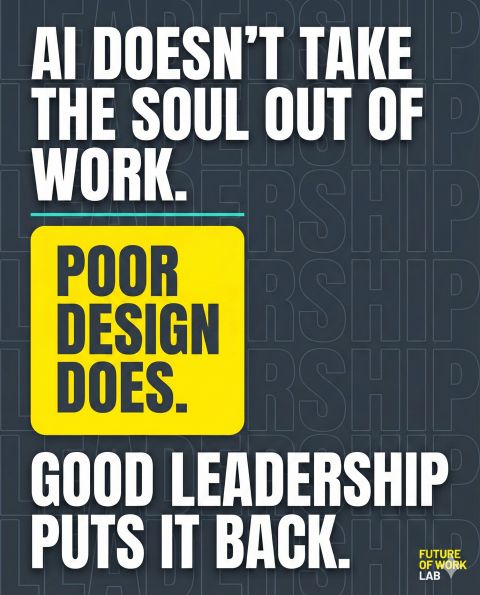
AI isn't killing the soul of work. Poor leadership is. Everyone's blaming the technology: "AI is making work feel hollow." "People are losing ownership." "Creativity is dying." But that's not wha…
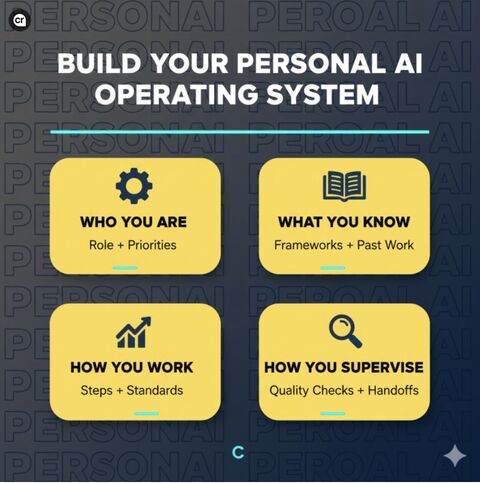
We're moving into the era of AI operating systems. Here are the two things you need to build one for your business. The companies getting ahead with AI aren't buying more tools. They're building op…

Your AI is not giving bad answers. Your data is lying to it. I watched a team spend three weeks building a beautiful AI workflow for client reporting. Automated end-to-end. Clean logic. Great demo.…

The problem isn’t AI capability. It’s that your company handed out licenses and called it “AI adoption.” I’ve watched this pattern repeat across dozens of organizations: → IT rolls out enterprise A…
6.3 posts/week
Posts / Week
1.3 days
Days Between Posts
3
Total Posts Analyzed
HIGH
Posting Frequency
0%
Avg Engagement Rate
STABLE
Performance Trend
350
Avg Length (Words)
HIGH
Depth Level
ADVANCED
Expertise Level
8.5/10
Uniqueness Score
YES
Question Usage
0.5%
Response Rate
Writing style breakdown
Professional, analytical, and informative with a clear business/organizational lens.
Conversational but not casual-sloppy: it feels like a sharp consultant talking to executives and operators.
Persuasive and advisory, not salesy; the “sales” element is subtle and back-loaded.
Strongly conceptual: introduces and names concepts (e.g., “AI as labor,” “AI operating system,” “judgment infrastructure,” “superagency,” “apprenticeship layer”).
Tone is serious, thoughtful, and grounded, with occasional controlled emotion (concern, urgency, optimism).
Style is structured and methodical, not free-flowing. Even when it feels conversational, it follows clear mental models and sequences.
Medium-to-high energy, but expressed through clarity and urgency rather than hype.
Emotion is often channeled into concern for people: juniors, employees, SMEs, workers affected by AI.
Uses contrast to create energy: “The problem isn’t X. It’s Y.” / “Not because…, Because…”
Conveys calm authority: “I’ve watched this pattern repeat across dozens of organizations.”
Rhetorical contrasts (“The problem isn’t AI capability. It’s that your company handed out licenses and called it ‘AI adoption.’”).
Framing moves (“Here’s what most CTOs are missing:”, “What smart companies will do next”).
Naming patterns (K-shaped economy, AI Operating System, judgment infrastructure).
Short, standalone statements for emphasis (e.g., “This is silent erosion.” “AI is becoming entry-level labor.”).
career on-ramp,” “ladder,” “pipeline,” “operating system,” “judgment infrastructure,” “execution vs. orchestration.
Asks focused questions at key moments (“Why?”, “How?”, “What’s a barrier AI could remove for you…?”).
Uses “you” and “your company” to pull the reader into responsibility or possibility.
First-person singular: “I’ve watched this pattern…”, “I’m Madison…”
First-person plural when referring to humanity/industry: “We’ve spent the last 3 years obsessing…”
Second-person: “If you’re treating AI as ‘the great equalizer,’ you’re designing for the wrong problem.”
Direct imperatives: “Stop treating AI like software you have to master. Treat it like labor you manage.”
Advisory suggestions framed as inevitabilities or smart moves: “The companies that will accelerate will invest in judgment development now…”
Often positions the reader as a leader or decision-maker responsible for systems and people.
Sign in to unlock the full writing analysis
Free tools to help you write, score, and benchmark in the same style.
Other creators worth studying alongside Madison Bonovich.

Markus Kuehnle
Data Scientist | I build and share ML/AI systems
314 Viral Score

Aurimas Griciūnas
Founder @ SwirlAI • UpSkilling the Next Generation of AI Talent • Author of SwirlAI Newsletter • Public Speaker
25 Viral Score

Sebastian Raschka, PhD
ML/AI research engineer. Author of Build a Large Language Model From Scratch (amzn.to/4fqvn0D) and Ahead of AI (magazine.sebastianraschka.com), on how LLMs work and the latest developments in the field.
118 Viral Score

Nicola Amadio
Top-paying tech careers in Europe | Remote life, taxes & relocation
18 Viral Score

Mark Hyman, MD
Co-Founder & Chief Medical Officer of Function Health
22 Viral Score

Siim Land
9x best-selling health and longevity author, anthropologist, keynote speaker, consultant - I help you reach top 1% health
242 Viral Score
ViralBrain plans, writes, and schedules your LinkedIn content, using official LinkedIn APIs so your account stays safe.
Write like Madison Bonovich.