🚨 [WATCH] Most people haven't realized it, but without proper legal oversight, AI glasses might already be supporting privacy harm and CRIMINAL activity: Last year, Alexander Klöpping, a Dutch journ…
4333911112 viral
AI Policy & Ethics10 months ago

LinkedIn Content Strategy & Writing Style
Co-founder of the AI, Tech & Privacy Academy (1,300+ participants), Author of Luiza’s Newsletter (87,000+ subscribers), Mother of 3
0 people tracking this creator on ViralBrain
Luiza Jarovsky positions herself as a high-authority guardian of digital ethics, bridging the gap between academic rigor and the fast-moving AI industry. Her content strategy centers on combative AI governance and privacy advocacy, where she frequently challenges "AI idolatry" and the perceived megalomania of big tech leaders through the lens of copyright law and human rights. She is notable for her refusal to participate in the typical tech-optimist echo chamber, instead using her PhD expertise to provide a sobering reality check on AI-generated culture and the necessity of strict regulation. By intersecting deep legal analysis with a mass-market newsletter reach, she successfully transforms complex regulatory shifts into urgent, high-stakes narratives for a global audience.
121.2K
27.6K
230
15.7
23
1
🚨 [WATCH] Most people haven't realized it, but without proper legal oversight, AI glasses might already be supporting privacy harm and CRIMINAL activity: Last year, Alexander Klöpping, a Dutch journ…
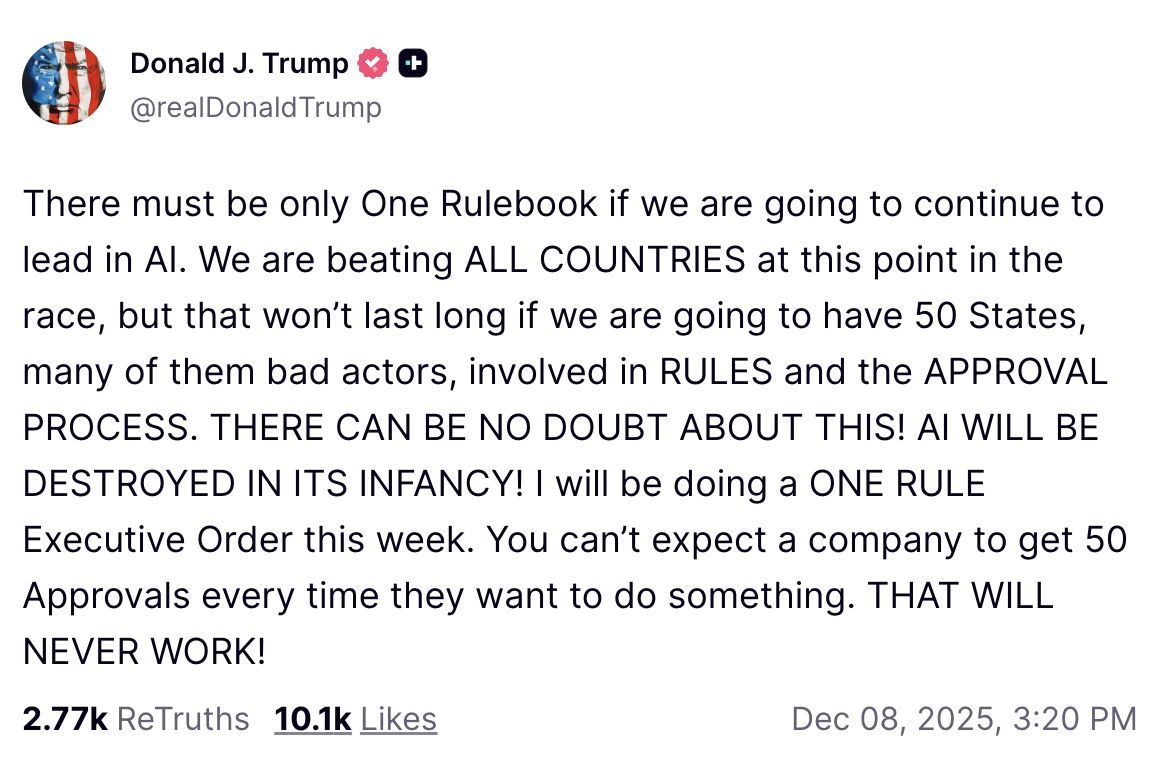
🚨 BREAKING: Trump says that there will be a new Executive Order on AI regulation this week. What to expect: According to the post below, it will be a "one rule" executive order, with the goal of red…
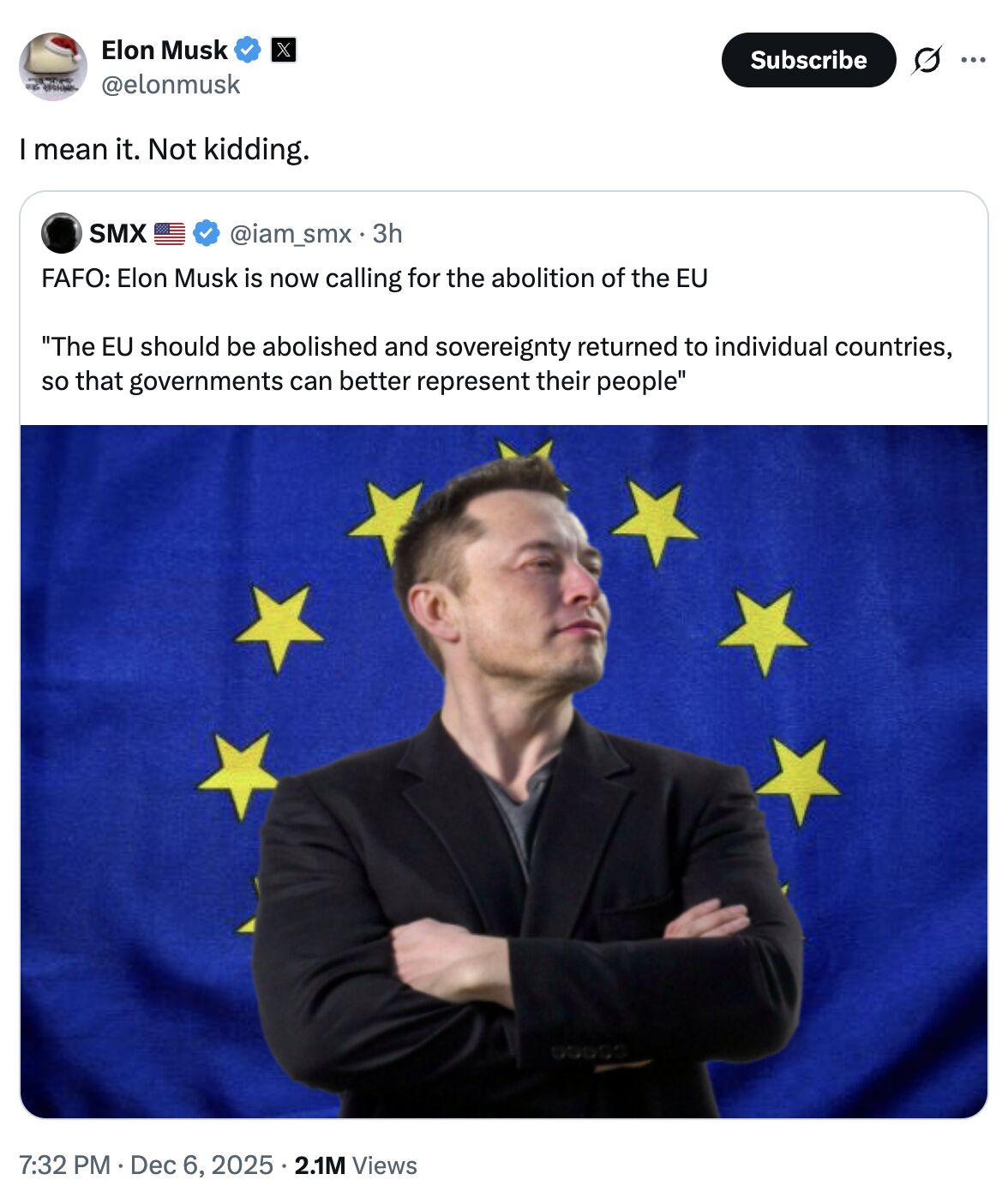
🚨 BREAKING: Musk calls for the abolition of the EU as a regional bloc after it imposed a 120 million Euro fine against X.
🚨 Have you heard of "vibe interviewing"? Most HR departments are likely UNPREPARED to deal with this type of AI practice. WATCH: Some people have suggested that this person should be hired simply fo…
🚨 If you are a lawyer, DPO, or privacy professional interested in the protection of fundamental rights, read this: We would like to hear your honest thoughts about the Digital Omnibus and the EU Co…

🚨 Real-time footage showing global efforts to regulate AI and tackle AI-related harm. WATCH:
15.7 posts/week
Posts / Week
0.5 days
Days Between Posts
1
Total Posts Analyzed
HIGH
Posting Frequency
0%
Avg Engagement Rate
STABLE
Performance Trend
200
Avg Length (Words)
HIGH
Depth Level
ADVANCED
Expertise Level
9/10
Uniqueness Score
YES
Question Usage
0.5%
Response Rate
Writing style breakdown
The style is professional, analytical, and didactic, with a strong focus on law, ethics, and public policy.
It blends accessible, conversational elements (questions, asides, emojis) with high-substance, expert commentary.
Tone is serious and socially conscious, often cautionary, but not alarmist or sensationalist.
The voice is authoritative but not arrogant: the author references their own writing and work (newsletter, training, cohorts) as a matter-of-fact credential, not as self-promotion for its own sake.
Overall: semi-formal to formal.
Vocabulary: educated but accessible; legal and policy jargon is used when necessary (e.g., “moratorium,” “fundamental rights,” “data breach notification,” “epistemic change”), but explanations are clear and grounded.
Contractions are used naturally (“I’ll,” “we’re,” “haven’t”), keeping the flow conversational.
No slang (except when quoting or critiquing, e.g., ‘hyped’) and no profanity.
Energy is moderate: engaged and urgent where needed, but not hyper.
Emotional focus: concern, caution, ethical seriousness, and long-term reflection.
The siren emoji (🚨) signals urgency at the beginning of posts, but the ensuing text is calm, reasoned, and structured, not breathless.
Optimism appears in a measured way (“cautiously optimistic”), often after outlining serious risks.
Framing questions at the start (“Have you heard…?”, “In your opinion, what will be…?”).
Short evaluative or summarizing sentences (“I’ll keep you posted.” / “Most haven’t realized it, but…”).
Parenthetical asides for nuance or self-correction (“(I’ll have to disagree here, as ethics and transparency matter).” / “(It came sooner than I expected).”).
Repetition for emphasis (“from books to social media posts, from songs to movies…”).
Contrast structures (“However,” “but,” “in many ways,” “despite all the odds…”).
They often define the stakes in broad, human terms (what it means to be human, culture, long-term consequences) after starting from a concrete example or news item.
Primary person: first person singular (“I see,” “I would say,” “I have been writing”) plus inclusive “we” in collective contexts (“we might want to collectively slow down,” “we want to understand…”).
Reader is addressed in second person (“If you are a lawyer… read this,” “Make sure to share this video,” “What can you do now?”).
Direct: “Read this,” “Answer the survey,” “Share and invite colleagues.”
Softened with explanations and context: reasons are almost always given for why the reader should do something.
The voice assumes the reader is intelligent, ethically concerned, and capable of nuanced thought. No condescension or oversimplification.
Sign in to unlock the full writing analysis
Free tools to help you write, score, and benchmark in the same style.
Other creators worth studying alongside Luiza Jarovsky, PhD.
ViralBrain plans, writes, and schedules your LinkedIn content, using official LinkedIn APIs so your account stays safe.
Write like Luiza Jarovsky, PhD.