
2026 Workplace Predictions: What’s IN and What’s OUT I always enjoy reading workplace predictions from different perspectives—each brings a unique lens shaped by their expertise. In my view, Gensler…
70118 viral
Future of Work10 months ago

LinkedIn Content Strategy & Writing Style
Service Product Development and Management | Workplace Experience | Sustainability | Diversity, Inclusion & Mobility
1 person tracking this creator on ViralBrain
Sascha Muckenhaupt positions himself as a sophisticated architect of workplace hospitality, bridging the gap between corporate facility management and high-end service design. His content strategy centers on the "hotelification" and "retailification" of the office, moving beyond static occupancy metrics to advocate for experience-based measurement and human-centric nudges. He is notable for his ability to translate abstract luxury service models—like those of Apple or Rosewood Hotels—into actionable operational playbooks for the modern hybrid environment. By exploring the intersection of behavioral design and operational transparency, Sascha provides a roadmap for transforming sterile corporate "checkpoints" into vibrant, inclusive destinations that prioritize emotional connection over mere physical presence.
815
794
7
1.5
92
1
2026 Workplace Predictions: What’s IN and What’s OUT I always enjoy reading workplace predictions from different perspectives—each brings a unique lens shaped by their expertise. In my view, Gensler…
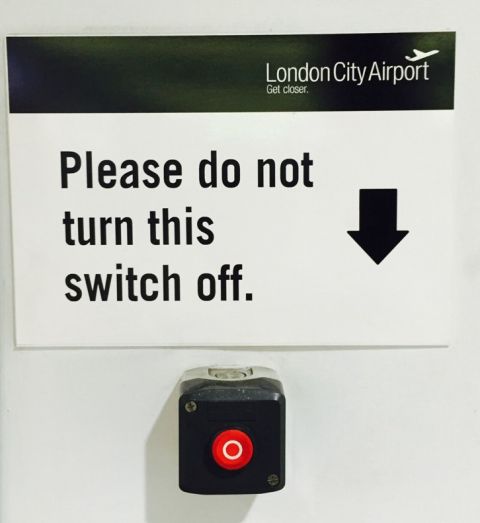
How do we encourage the right behaviors in shared workplaces—without sounding like the rule police? In many workplaces I see signs like: 🛑 “Don’t speak loudly.” 🛑 “Don’t leave food in the fridge ov…
How about converting your office into a coworking space? What if companies turned their underused office space into revenue-generating coworking hubs—not open to everyone, but curated for partners, c…

If your workplace was a hotel—what kind of hotel would it be? I’ve written before about homeification vs. hotelification of workplaces. While I don’t believe ‚hotelification‘ fully captures where wo…
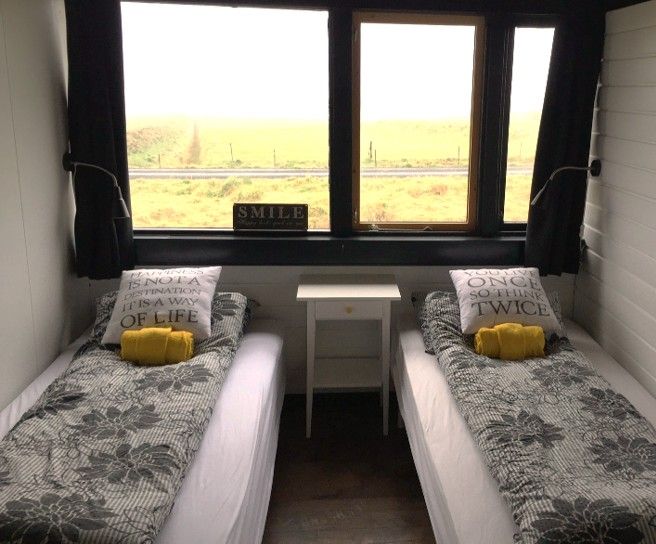
Rethinking the Welcome: From Fortress to Hospitality Walk into most corporate receptions and what do you see? A big desk. A big screen. Someone typing away, processing your data. It feels less like…

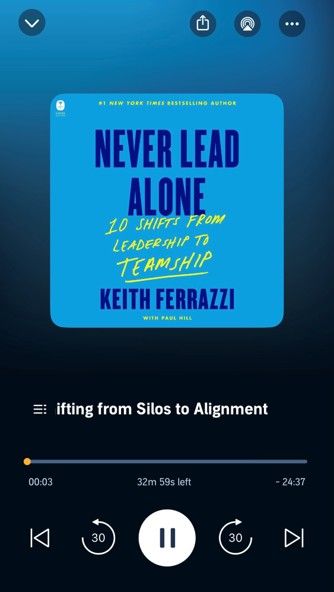
Never Lead Alone - A great principle for Workplace Teams I’m not usually a fan of leadership books. Too often, the principles they share feel detached from reality to me. In my experience, I’ve rare…
1.5 posts/week
Posts / Week
5.2 days
Days Between Posts
1
Total Posts Analyzed
MEDIUM
Posting Frequency
6.9%
Avg Engagement Rate
STABLE
Performance Trend
220
Avg Length (Words)
HIGH
Depth Level
ADVANCED
Expertise Level
0.74/10
Uniqueness Score
YES
Question Usage
0.05%
Response Rate
Writing style breakdown
The style is professional yet warm, clearly positioned for LinkedIn / thought-leadership in the workplace and hospitality space.
It is conversational and accessible, but not casual in a slangy way. The writer balances expertise with humility.
The writing is primarily informative and persuasive, with a reflective, slightly inspirational tone.
It is structured and methodical rather than free-flowing. Posts follow a clear logic and visual structure.
There is a subtle storytelling element, but the focus is on ideas, frameworks, and learnings rather than long narratives.
Mid-energy: calm, steady, and thoughtful rather than hyped or dramatic.
Optimistic and constructive: challenges are framed as solvable; the emphasis is on opportunities and better ways of doing things.
Emotion appears through empathy and human-centered language (“destinations people love,” “feel valued,” “deeply human”), not through overt sentimentality.
Frequent use of rhetorical questions, often to open a post or transition between ideas.
Heavy use of contrasts and polarity (IN vs OUT, fortress vs hospitality, hotel types vs each other, do vs don’t).
Repetition of key thematic phrases around experience, hospitality, destinations, human connection, and co-creation.
Direct audience engagement, but mostly through prompting reflection rather than direct instruction (“So instead of… let’s ask ourselves:”).
Use of named examples and brands (Apple, LEGO, Hamleys, Gensler, hotels) to ground abstract ideas.
Occasional short, standalone “moral” lines near the end beginning with “Because…” to tie the post to a larger principle.
Mix of first-person singular (“I’m currently working with…”, “What resonated most with me:”) and inclusive “we” (“How do we encourage…”, “So how to go further?”).
Second-person “you” appears more in questions and prompts than in commands (“If your workplace was a hotel—what kind of hotel would it be?”, “Here’s one thing you shouldn’t skip”).
Softer guidance: “Consider the diversity…”, “So instead of chasing… let’s ask ourselves:”
When direct, still framed as suggestions or “ways to start”: “Here are a few alternative ideas:”, “3 ways to start:”
The voice feels like a peer expert sharing insights, not an authority lecturing the reader.
Sign in to unlock the full writing analysis
Free tools to help you write, score, and benchmark in the same style.
Other creators worth studying alongside Sascha Muckenhaupt.
ViralBrain plans, writes, and schedules your LinkedIn content, using official LinkedIn APIs so your account stays safe.
Write like Sascha Muckenhaupt.


