
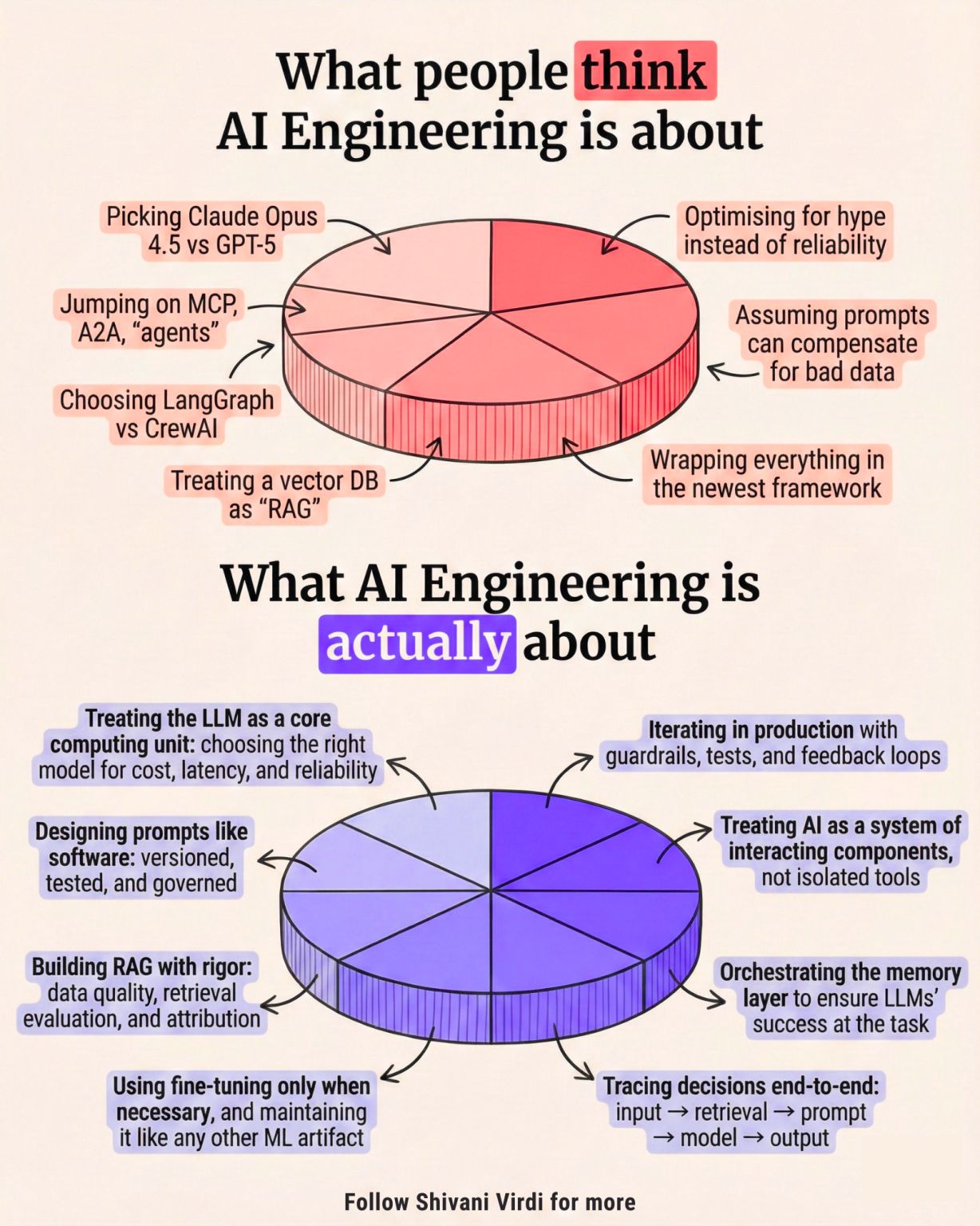
Everyone wants to be an AI Engineer. But only a few understand what it actually takes to be one What people think AI engineering about: • Picking Claude Opus 4.5 vs GPT-5 • Jumping on MCP, A2A, “…
18855127 viral
AI Engineering9 months ago
LinkedIn Content Strategy & Writing Style
AI Engineering | Founder @ NeoSage | ex-Microsoft • AWS • Adobe | Teaching 70K+ How to Build Production-Grade GenAI Systems
2 people tracking this creator on ViralBrain
Shivani Virdi positions herself as a high-authority architect for the "production-grade" GenAI era, leveraging her elite pedigree at Microsoft, AWS, and Adobe to bridge the gap between experimental models and reliable systems. Her content strategy centers on the technical infrastructure of agentic AI, moving past surface-level prompting to provide deep-dives into memory stacks, security harnesses, and the nuances of vectorless RAG. She is notable for her "builder-first" pragmatism, often debunking academic hype in favor of practical intuition and open-source tooling that engineers can deploy immediately. By intersecting founder-led transparency with high-level engineering education, she creates a unique value proposition where she doesn't just teach AI concepts but defines the architectural standards for reliability and safety in autonomous systems.
0
0
431
33
3
Everyone wants to be an AI Engineer. But only a few understand what it actually takes to be one What people think AI engineering about: • Picking Claude Opus 4.5 vs GPT-5 • Jumping on MCP, A2A, “…
I'm about to close something I spent 6 months building. . . The Engineer's RAG Accelerator. 45 engineers from Microsoft, Amazon, Shopify, Revolut, Visa, Cisco, Autodesk just enrolled We're down to t…

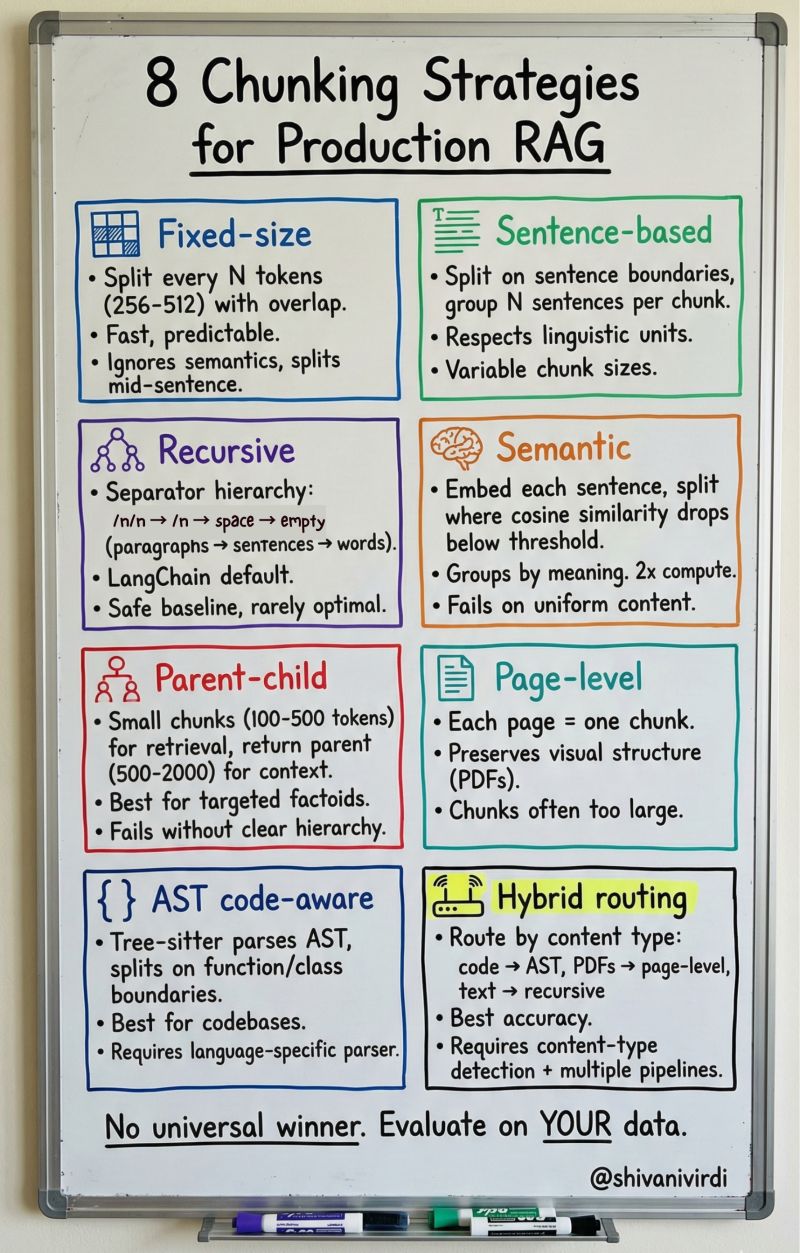
I tested 7 chunking strategies on production RAG. Here's what failed and what actually won: → Fixed-size: Fast but dumb. Splits sentences in half. Prototype only. → Recursive: The safe default. 80%…
If I had to bet on one skill in AI as an engineer… I'd go for RAG. And these are the resources I'd pick first to self-learn this in 2026. Why RAG? Read this https://lnkd.in/geW3Xw_P → 1 paper: https…
Thrilled to announce that Engineers from Microsoft, Revolut, Shopify, Visa, and Cisco just enrolled in my AI Engineering cohort. ... 35 experienced engineers in 3 days. Here's where they're coming f…
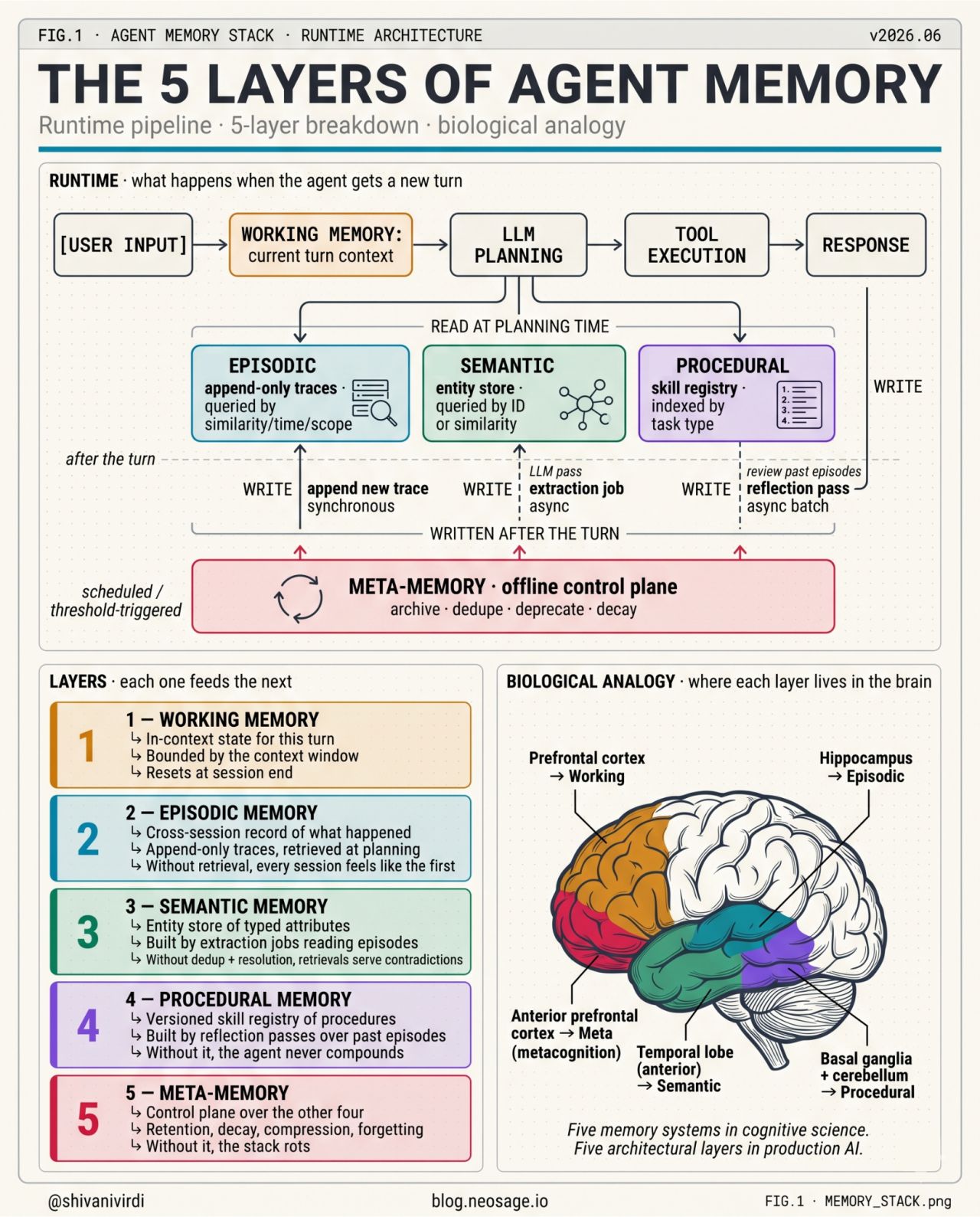
Everyone talks about context engineering. No one shows you the memory stack underneath it. Here are the 5 layers of agent memory. 𝟭. 𝗪𝗼𝗿𝗸𝗶𝗻𝗴 𝗠𝗲𝗺𝗼𝗿𝘆 ↳ In-context state for this turn. Con…
3.0 posts/week
Posts / Week
3
Total Posts Analyzed
MEDIUM
Posting Frequency
431%
Avg Engagement Rate
STABLE
Performance Trend
1200
Avg Length (Words)
HIGH
Depth Level
ADVANCED
Expertise Level
0.85/10
Uniqueness Score
NO
Question Usage
0.25%
Response Rate
Writing style breakdown
The author writes with the clinical precision of a systems engineer and the punchy delivery of a high-stakes copywriter. The voice is authoritative, technical, and deeply structured, designed to cut through 'hype' with 'mechanics.' It is a professional-informative style that leans heavily into being direct and persuasive by using logic as the primary weapon.
The writing is methodical and modular. It feels less like a narrative and more like a technical blueprint or a stack trace. The author avoids flowery language in favor of 'engineering-first' terminology (e.g., 'compaction strategies,' 'semantic search,' 'reasoning layer,' 'inverted the stack'). It is high-energy but controlled—the speed comes from short, declarative sentences that stack on top of each other to build an undeniable argument.
The 'Not X, but Y' Framework: The author frequently begins by debunking common misconceptions to establish authority (e.g., 'AI agent security isn't guardrails... It's reasoning').
Logical Stacking: Each point builds on the previous one, often using a 'Without X, Y happens' structure to create a sense of urgency or technical necessity.
Direct Audience Engagement: The author speaks directly to 'builders' and 'engineers,' using second-person ('Your AI agent,' 'You've moved the breach') to place the reader inside the technical problem.
Command-Based Guidance: Suggestions are framed as architectural requirements rather than soft advice ('Sandbox it,' 'Grade severity,' 'Define the contract').
The tone is 'urgent-intellectual.' It creates a feeling that the reader is currently doing something wrong or incomplete ('The uncomfortable truth,' 'No one shows you') and provides the structured salvation.
---
Sign in to unlock the full writing analysis
Free tools to help you write, score, and benchmark in the same style.
Other creators worth studying alongside Shivani Virdi.

Nick Vinckier
I talk about (luxury) retail, growth & innovation • VP Corporate Innovation • Co-founder @ SOL3MATES • Board Member • Vogue Business Top 100 • Keynote Speaker
17 Viral Score

Jonathan Ayodele
Cybersecurity Architect | Cloud Security Engineer. I help organisations secure their cloud infrastructure. Az 500 | SC100 | Sec+ | ISO. 27001 Lead Implementer | CISSP (In View)
Max Starkov
Hospitality & Travel Technologist and Digital Strategist

Ben Broca
Founder @ Polsia. AI that runs your company

Felix Schlenther
Founder AI FIRST I Building AI-First Teams for profitable Growth

Lewis Walker ➲
Get the top 1% of agentic/gen AI (View my newsletter)
ViralBrain plans, writes, and schedules your LinkedIn content, using official LinkedIn APIs so your account stays safe.
Write like Shivani Virdi.