
A hiring manager posted that she's 200 resumes into an open role and it's "nothing but AI slop." Same openers, fabricated tech stacks, claims that collapse with a ten second LinkedIn check. She got a…

17245612 viral
Hiring & Recruiting10 months ago

LinkedIn Content Strategy & Writing Style
Founder & CEO of Gem ($150M Accel, Greylock, ICONIQ, Sapphire, Meritech, YC) | Author of startuphiring101.com
0 people tracking this creator on ViralBrain
Steve Bartel positions himself as a systems-thinking architect of talent, moving beyond generic leadership advice to treat hiring as a rigorous engineering and data problem. His content strategy centers on deconstructing the mechanics of elite scale—referencing the "Bar Raiser" frameworks of Amazon or the laptop-based testing at Stripe—to provide a blueprint for high-signal recruitment in an era of AI-generated noise. He is notable for his "founder-operator" transparency, often bridging the gap between high-level venture-backed growth and the granular, unglamorous reality of fraud detection and interview calibration. By intersecting recruiting technology with organizational psychology, Bartel transforms hiring from a subjective "culture fit" exercise into a measurable, scalable competitive advantage.
32.0K
18.2K
118
3.2
46
1
A hiring manager posted that she's 200 resumes into an open role and it's "nothing but AI slop." Same openers, fabricated tech stacks, claims that collapse with a ten second LinkedIn check. She got a…
With applicant fraud, spam, and scammers on the rise, I had this wacky idea. I don’t know if it would work, but I’m curious if anyone’s tried this… Most of the fraud / spam / cheating is a lot easier…
Got to co-host a fun dinner at the Prospect in SF with CodeSignal last week A wonderful blend of familiar faces and new folks. It was refreshing to have real, in-the-room conversations about what’s t…

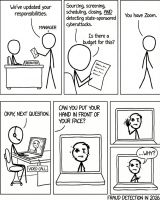
Recruiters are now expected to be fraud detectors. But most haven't been given the tools to do it. Prime example: Fortune reported on a startup founder who caught a deepfake candidate mid-interview.…
Stripe co-founder John Collison said "No batch of 10 people will ever have as much influence on the company as those first 10." Most founders think he's talking about culture. He is. But there's a se…

You're about to hire someone brilliant who can't take feedback. You just don't know it yet. Dylan Field was 23. Two years into building Figma. No product launched yet. Product genius. Management disa…

3.2 posts/week
Posts / Week
2.4 days
Days Between Posts
1
Total Posts Analyzed
MEDIUM
Posting Frequency
3%
Avg Engagement Rate
STABLE
Performance Trend
300
Avg Length (Words)
HIGH
Depth Level
ADVANCED
Expertise Level
0.8/10
Uniqueness Score
YES
Question Usage
0.5%
Response Rate
Writing style breakdown
Tone is professional but highly conversational, with a strong teaching / explanatory bent.
It is direct, analytical, and grounded in operators’ reality (founders, hiring managers, recruiters).
Thoughtful LinkedIn thought-leadership
Crisp product / ops memo
Short-form narrative business writing
Not poetic; instead: precise, concrete, and example-heavy.
Very low fluff; each sentence typically carries a discrete idea.
Mid-formal: uses standard grammar and syntax with frequent contractions (“we're”, “can't”, “doesn't”).
Comfortable with colloquial phrases (“wacky idea”, “kind of ok”, “two weird people working on an idea”) but always in a professional context.
Occasionally uses slang shorthand like “bc” for “because” and emojis in lighter posts, but sparingly.
Moderately high energy without hype.
Posts move quickly, with ideas delivered in short, intentional bursts.
Built around tension and release: set up a problem or misconception, then flip it with a crisp reframing or lesson.
Contrast and reversal: “Not because X. Because Y.” / “Most founders think… He is. But…”
Short, aphoristic sentences: “Brilliance without coachability is a ceiling.”
Parallelism and rhythm in lists: “More interviews, more process, more alignment meetings. More motion. Less clarity.”
Data/stats to anchor arguments (percentages, counts, time costs).
Concrete company examples (Amazon, Stripe, Figma, Spanx) and named individuals.
To set up a problem or hypothetical (“What would you do?”)
As a soft CTA at the end (“Interesting idea? Horrible idea? Anyone try this?”)
Storytelling is used as a vehicle for a concept, not for its own sake.
Lesson-oriented: many posts are structured to arrive at a single clear insight or “lesson” line.
First-person singular (“I run a recruiting technology company…”, “I had this wacky idea.”)
First-person plural (“At Gem, we're trying…”, “we implemented this at Dropbox…”)
Second-person direct (“Next time you're hiring anyone, ask one question:” / “If you haven't done the job, you can't spec the job.”)
Reader is treated as a peer operator (founder, hiring leader, recruiter) capable of nuance.
Do the job until you can describe it.
Then hire someone who's better than you at it.
Candidates: …
Employers: …
Smart, calm operator who has “seen the movie” and is explaining what actually works, through crisp stories, data, and simple mental models.
Confident but not loud; authoritative without being preachy.
Always trying to reduce complexity into 1–3 memorable, practical takeaways.
Sign in to unlock the full writing analysis
Free tools to help you write, score, and benchmark in the same style.
Other creators worth studying alongside Steve Bartel.

Adriano Herdman
Talent Solutions for Technology businesses
66 Viral Score

Hung Lee
More signal, less noise, with Recruiting Brainfood
4 Viral Score

Cindi Howson
Chief Data & AI Strategy Officer at ThoughtSpot, Host of award winning The Data Chief podcast, Corinium Global 100 CDAO, Software Report Top 25 Data & AI Exec
17 Viral Score

Bill McDermott
Chairman and CEO at ServiceNow
42 Viral Score

Wade Foster
Co-founder & CEO at Zapier, YC & Mizzou Alum
32 Viral Score

Scott Brinker
Martech Analyst & Advisor | Ex-HubSpot VP Platform Ecosystem | “Godfather of Martech” – AdAge
29 Viral Score
ViralBrain plans, writes, and schedules your LinkedIn content, using official LinkedIn APIs so your account stays safe.
Write like Steve Bartel.