New Anthropic research: Natural Language Autoencoders. Models like Claude talk in words but think in numbers. The numbers—called activations—encode Claude’s thoughts, but not in a language we can rea…

LinkedIn Content Strategy & Writing Style
🎓 AI Automation Educator & Founder
1 person tracking this creator on ViralBrain
Solomon positions himself as an AI automation educator and founder who helps everyday users move beyond prompts into durable, agentic systems. His content centers on Claude Code, Agentic OS design, n8n, memory, skills, observability, and practical workflows, often using vivid proof points like recovering 112 GB through a terminal agent or rebuilding Hermes. What distinguishes him is his systems-level lens: he teaches not just what tools can do, but how to make them maintainable, auditable, and scalable. His work also blends technical education with product-led community building, turning challenges, free trials, and n8n ecosystem updates into accessible on-ramps for global builders.
10.3K
2.8K
115
131
26
New Anthropic research: Natural Language Autoencoders. Models like Claude talk in words but think in numbers. The numbers—called activations—encode Claude’s thoughts, but not in a language we can rea…
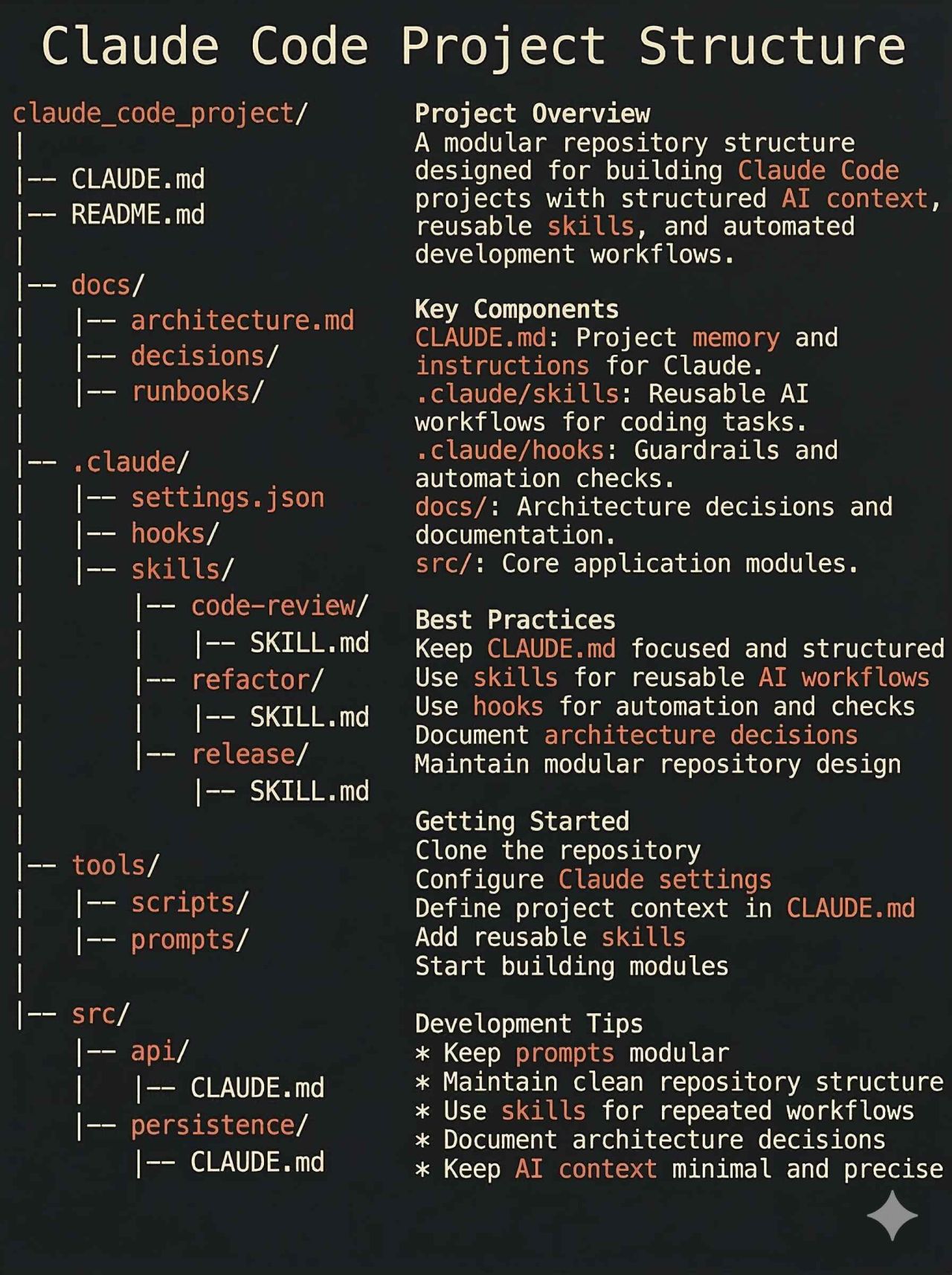
Here's how to get the most of your Claude MD file Here are 8 hands-on insights for building Claude Code projects the right way: P.S. We've got a free Claude Code fundamentals course here: https://ln…

If you like the n8n execution view, just wait until you see n8n's new traces 👇 Starting in 2.22.0, n8n natively supports OpenTelemetry for workflow and node tracing After setting just two environme…
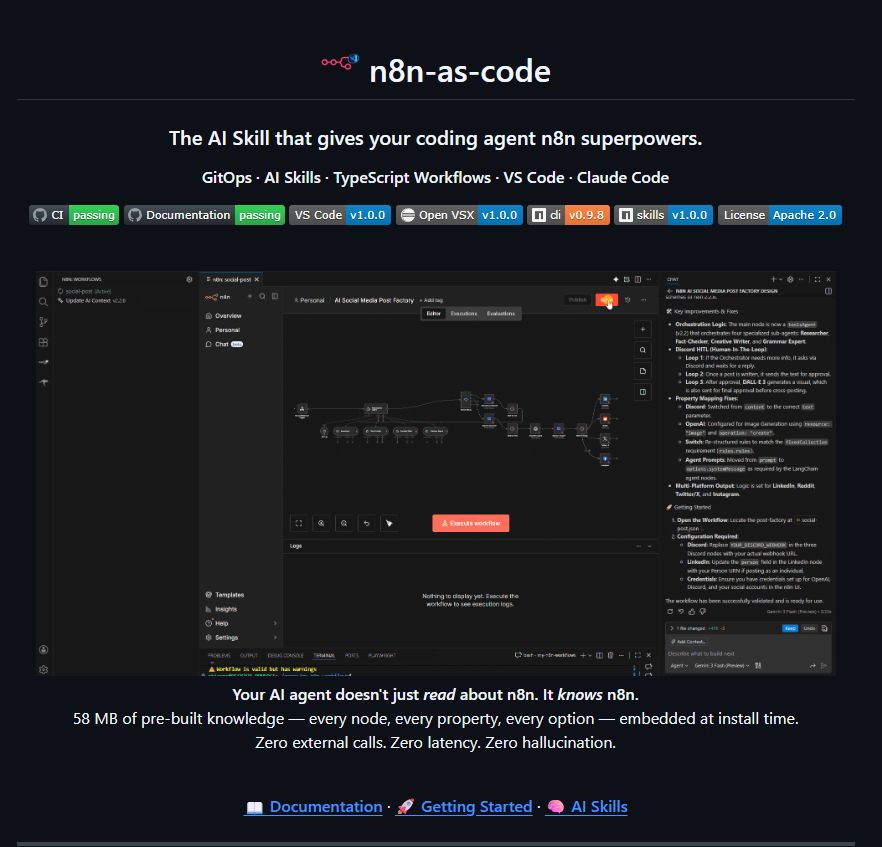
n8n-as-code just solved a major problem for coding agents building n8n workflows. Tools like Claude Code, Antigravity and Codex, often hallucinate n8n configurations because they were never given the…

Some people left n8n for Claude Code because it was faster to build. Then they started rebuilding observability, debugging, and workflow history... and realized n8n already had it and came back to n8n…
Track your AI Token Usage and estimate costs in n8n Ever tried to track token usage from your AI Agents? It’s not easy. When you connect many tools, it can get messy. That’s why I built this n8n tem…

1.4 posts/week
Posts / Week
26
Total Posts Analyzed
MEDIUM
Posting Frequency
115.43%
Avg Engagement Rate
STABLE
Performance Trend
185
Avg Length (Words)
HIGH
Depth Level
ADVANCED
Expertise Level
87/10
Uniqueness Score
YES
Question Usage
0%
Response Rate
Writing style breakdown
<start of post>
Most people use AI agents to finish one task.
Then they open a new chat and start explaining everything again.
The project.
The files.
The preferred format.
The decisions they already made.
That works for quick experiments.
But it becomes expensive when the work repeats every week.
So I built a small operating system around the agent.
Not a complicated platform.
A simple system that gives the agent the context, tools and memory it needs to do useful work without starting from zero every time.
𝗧𝗛𝗘 𝗣𝗥𝗢𝗕𝗟𝗘𝗠
A powerful model still has no idea how your business works unless you give it the right context.
Which files are important
How you want tasks completed
Which decisions have already been made
What should require your approval
So every new task becomes another round of instructions.
And when the instructions are incomplete, the output becomes inconsistent.
𝗧𝗛𝗘 𝗦𝗬𝗦𝗧𝗘𝗠
A clear project structure
Reusable skills for common workflows
Memory with limits and summaries
Separate context for different clients
Approval rules for risky actions
This changes the interaction completely.
Instead of asking the agent to figure everything out again, you give it a reliable environment to operate inside.
The tool is still important.
But the system around the tool is the biggest advantage.
𝗧𝗛𝗘 𝗥𝗘𝗦𝗨𝗟𝗧
The agent can research a topic, organize the findings, update the right files and prepare the next action.
Without needing a 20-minute explanation every time.
It can also tell you when it is missing information.
That matters more than pretending the agent always knows what to do.
Because a useful system should make uncertainty visible before it creates a problem.
This is the difference between using AI for isolated tasks and building an AI assistant that improves over time.
You don’t need to be a developer to start.
You need a clear workflow, a few reusable instructions and a way to keep important context available.
We’re sharing the full system and showing how to build it step by step.
Get access here 👉 https://example.com/agentic-system
Less repeating yourself.
More useful work.
A system that gets better every week.
Drop any questions in the comments 👇
<end of post>
Sign in to unlock the full writing analysis
Free tools to help you write, score, and benchmark in the same style.
Other creators worth studying alongside Solomon Salo.

Addy Osmani
Director, Google Cloud AI. Best-selling Author. Speaker. AI, DX, UX. I want to see you win.
39 Viral Score

Pietro Montaldo
I build and share AI tools and playbooks actually useful for non-techies | DM for custom trainings or join my next AI-agent building course on Maven
416 Viral Score
John Crickett
Building AI and building with AI
27 Viral Score

Jonny Longden
Chief Growth Officer @ Speero | Growth Experimentation Systems & Engineering | Product & Digital Innovation Leader
20 Viral Score
Sumit Gupta
CTO & Co-Founder at DoubleLoop (acquired by Mixpanel)
618 Viral Score

Ariel Cohen
Founder @ The Voice Box | Founder-to-founder LinkedIn pipeline coaching for B2B founders | Built $100K in 90 days
470 Viral Score
ViralBrain plans, writes, and schedules your LinkedIn content, using official LinkedIn APIs so your account stays safe.
Write like Solomon Salo.