Anthropic Moves Into Legal Tech For years people have wondered if the big AI players would ever target legal tech. Well, now they have. LLM giant Anthropic has launched new capabilities for its agenti…

11819621 viral
Legal Tech AI5 months ago

LinkedIn Content Strategy & Writing Style
Founder, Artificial Lawyer
1 person tracking this creator on ViralBrain
Richard Tromans positions himself as the premier investigative filter for the legal technology sector, operating at the intersection of market intelligence and structural evolution. His content strategy centers on the rise of "NewMod" law firms and the industrialization of legal AI, moving beyond mere software updates to analyze how capital and data workflows are fundamentally reshaping the profession. He is notable for his ability to translate complex venture capital moves and technical model limitations into a cohesive narrative of institutional change, often using creative storytelling and historical parallels to contextualize the "AI-first" shift. By blending high-level reporting on billion-dollar valuations with a philosophical focus on technological liberation and professional independence, Tromans establishes himself as both a critical watchdog and a strategic visionary for the future of law.
0
0
32
—
—
26
4
Anthropic Moves Into Legal Tech For years people have wondered if the big AI players would ever target legal tech. Well, now they have. LLM giant Anthropic has launched new capabilities for its agenti…
Harvey to co-invest in other legal tech companies alongside TLTF. The targets will be legal tech startups across the ecosystem, with the goal of ‘backing founders who make the legal industry more ac…

Never thought I'd write these words: Legora To Sponsor Swedish Golfer After two serious AL stories, here’s something more light-hearted. In what must be a world-first, Legora has announced a long-term…

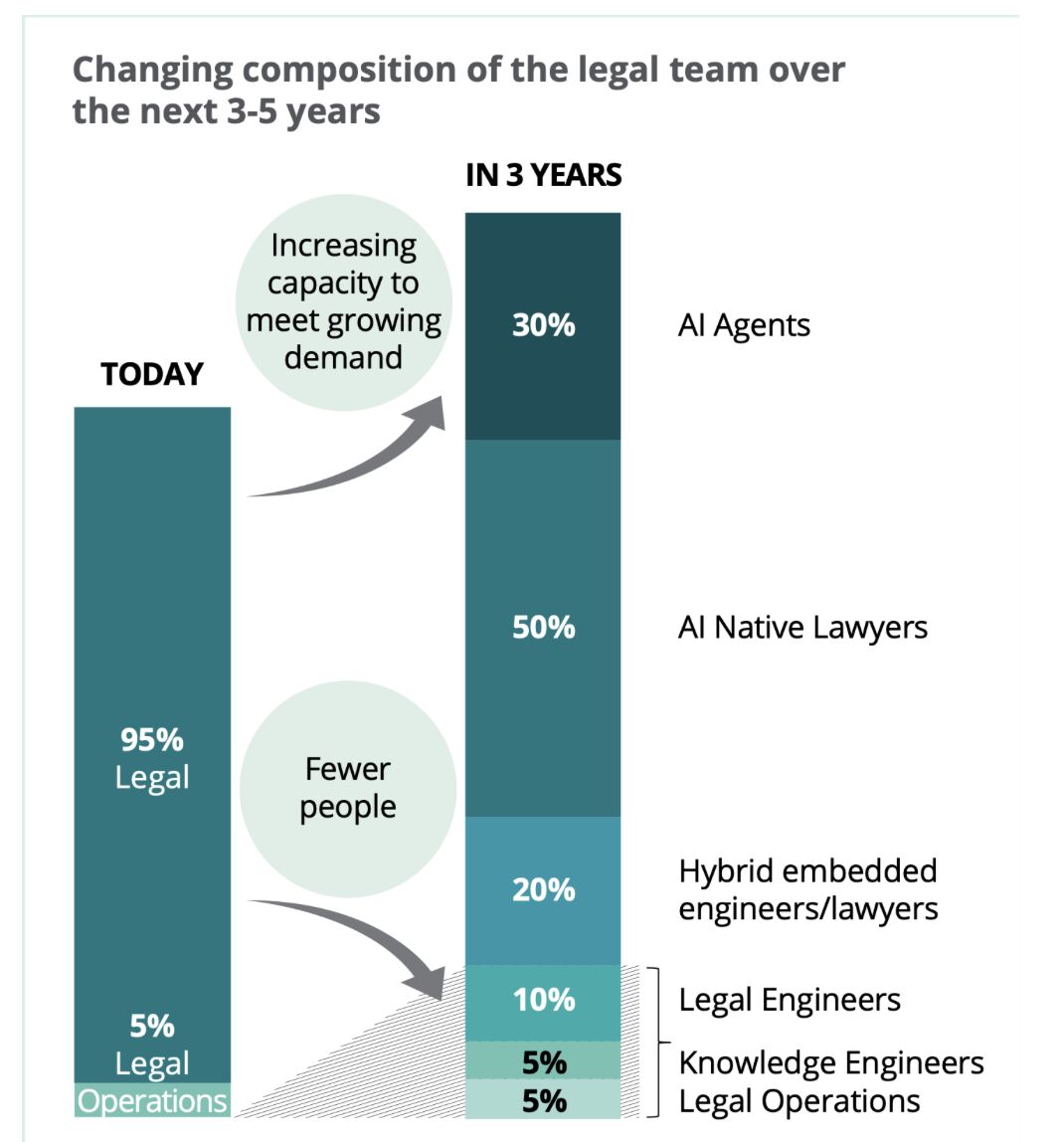
‘AI Agents Will Handle 30% of Inhouse Work’ – Deloitte A market analysis by Deloitte Legal suggests that in the next three to five years AI agents could handle 30% of the work within corporate legal t…
Spellbook Launches ‘CLM Killer’ ACM Spellbook has launched Autonomous Contract Management (ACM) for inhouse teams, the biggest expansion of its offering since it got going in 2022 – see AL In-depth In…

Legal AI Vendors Go Extreme Low-Ball For Market Supremacy Legal AI companies are resorting to ‘brutal’ low-ball tactics in order to win customers as the battle for market share becomes increasingly in…

10.0 posts/week
Posts / Week
4
Total Posts Analyzed
HIGH
Posting Frequency
32.2%
Avg Engagement Rate
STABLE
Performance Trend
350
Avg Length (Words)
HIGH
Depth Level
ADVANCED
Expertise Level
0.85/10
Uniqueness Score
YES
Question Usage
0.4%
Response Rate
Writing style breakdown
<start of post>
Is the billable hour finally dying? Or is AI just giving it a new lease of life? 🤔
A new report from the 'Legal AI Institute' suggests that while efficiency is up 30%, total billable hours haven't dropped. Why? Because lawyers are simply doing more high-value work in the same amount of time.
It’s the 'Jevons Paradox' applied to law firms. The more efficient we become, the more of the service we consume. 🚀
> LINK: https://lnkd.in/eExampleURL
Tune in tomorrow for a deeper dive into the data.
#legaltech #AI #billablehour #innovation
<end of post>
Sign in to unlock the full writing analysis
Free tools to help you write, score, and benchmark in the same style.
Other creators worth studying alongside Richard Tromans.

Samantha McKenna
Founder @ #samsales l Sales + Cadences + Executive Branding on LinkedIn l Ex-LinkedIn l Keynote Speaker l 13 Sales Records l Early Stage Investor l Overly Enthusiastic l Swiss Dual Citizen l Creator, Show Me You Know Me®
14 Viral Score

Natalie (Corporate Natalie)
2023 LinkedIn Top Voice | Content Creator | CEO of Work-From-Home Jokes | Advisor | Brand Consultant
29 Viral Score

Alan Ruchtein
CEOs: Broken pipeline & poor-performing sales reps? I will fix both for you in <60 days. You’ll hate how fast it works. | Modern Seller Program Founder
64 Viral Score

Alexander Zharkov 🌻
Helping Senior & Middle+ developers land $5k-7.5k offers in CIS & Europe | CEO @ Hopeffer | 142 offers landed by January 1, 2026 🏆 | Ex-Lead Software Engineer on JavaScript
67 Viral Score

Ravishankar Yadav
Driving Accurate Finance Operations | Senior Accounts Executive @ Powerweave Software Services Pvt Ltd | Accounts Payable | Payroll | Vendor Payments | TDS & GST
1,424 Viral Score

Abhishek Verma
Accounting, GST Compliance, Tax preparation, TDS Returns,Tally ERP, Zoho Books, Excel, MIS Reports
1,944 Viral Score
ViralBrain plans, writes, and schedules your LinkedIn content — using official LinkedIn APIs so your account stays safe.
Write like Richard Tromans.