Products
Discover HeroesFind top LinkedIn creators in your niche.Post CreatorAI-powered composer with your tone and style.Trending PostsSee what's going viral on LinkedIn right now.
Use Cases
Repurpose ContentTurn YouTube, blogs, and articles into LinkedIn posts.Carousel GeneratorCreate swipeable LinkedIn carousels with AI.30-Day Auto CalendarPlan and auto-publish a month of posts.LinkedIn MCP ServerPost to LinkedIn from Claude, Codex and OpenClaw.For AgenciesRun your clients' LinkedIn content in one place.
Tools
Text FormatterBold, italic, and Unicode styles for posts.Hashtag GeneratorFind the best hashtags for your content.Engagement CalculatorMeasure your post performance instantly.Hook GeneratorAI hooks that stop the scroll.Post PreviewSee exactly how your post will look.Content CalendarPlan and schedule your LinkedIn content.Browse all 90+ free tools
Resources
Free Tools90+ LinkedIn tools, no signup required.Templates100 ready-to-use LinkedIn post templates.GuidesStep-by-step LinkedIn growth playbooks.CollectionsCurated tool sets by role and goal.CompareViralBrain vs. other LinkedIn tools.BlogLinkedIn growth tips and strategies.
Pricing
LoginStart 7 Days Trial
Back to Discover Heroes
Prabhata Kumar Maharana

Prabhata Kumar Maharana

LinkedIn Content Strategy & Writing Style

Senior Software Engineer | 10+ Years | .NET & Cloud | Exploring AI & ML

India
33 Viral ScoreView on LinkedIn

1 person tracking this creator on ViralBrain

Warm Analysis

Prabhata positions himself as a pragmatic architectural guide for senior engineers, moving beyond basic coding to master the high-stakes world of cloud infrastructure and system design. His content strategy centers on deconstructing complex trade-offs, specifically within the AWS ecosystem and microservices architecture, by using relatable analogies like the human body to explain SOLID principles. He is notable for his "anti-hype" stance, frequently challenging industry trends like micro front-ends or premature Kubernetes adoption in favor of operational stability and cost-efficiency. His work represents a sharp intersection of hands-on engineering and strategic oversight, where he treats infrastructure as a design problem rather than a configuration task, helping his audience navigate the gap between theoretical cloud certifications and the messy realities of production outages.

Performance Overview

Followers

692

Connections

627

Avg. Engagement

2

Engagement Rate

Posts/Week

16.7

Viral Score

33

Posts Analyzed

2

Top Posts by Engagement

AWS Interview Questions (That Most Engineers Get Wrong) Most engineers don’t fail AWS interviews because they lack knowledge. They fail because of these mistakes 👇 ❌ Treating S3 like a database…

40116 viral
Cloud Computing6 months ago
View on LinkedIn

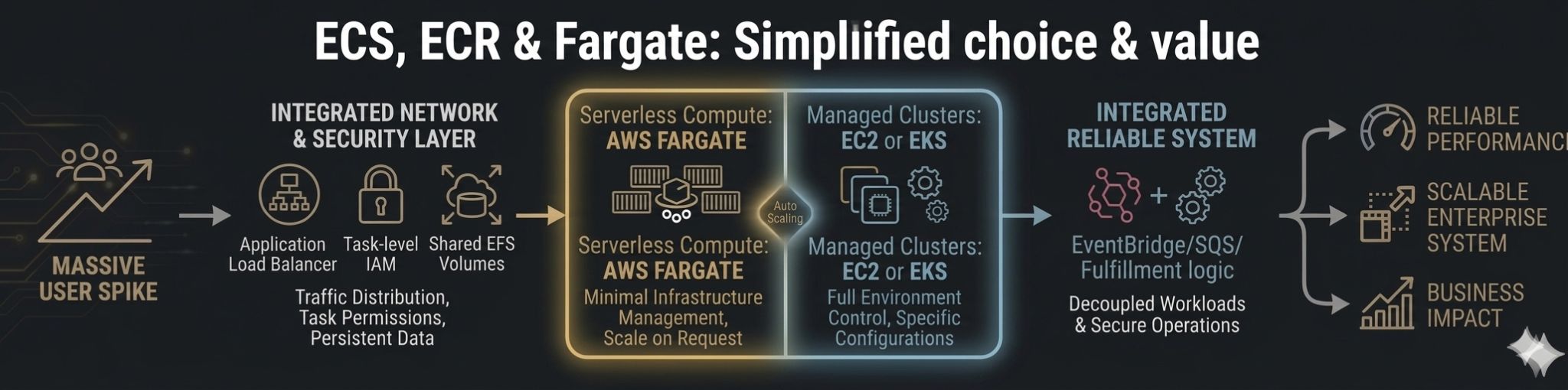
⚠️ Misconception. Most engineers don’t struggle with Docker. They struggle with using it in production. That’s where things break. Containers are easy. Production is not. Running them on Amazon…
LinkedIn post image: ⚠️ Misconception.
5006 viral
Cloud Engineering6 months ago
View on LinkedIn

❌ Stop choosing wrong. Beanstalk vs ECS vs EKS — explained simply Most engineers don’t get this wrong because of lack of knowledge. They get it wrong because they don’t understand the trade-offs.…

5006 viral
Cloud Architecture6 months ago
View on LinkedIn

40% cost reduction “I reduced my AWS bill by 40%… without touching a single EC2 instance.” No infra change. No code optimization. Just one layer most teams ignore: Amazon CloudFront --- Here’s th…

LinkedIn post image: 40% cost reduction
3004 viral
Cloud Cost Optimization6 months ago
View on LinkedIn

🚨 We almost broke production… because of a single line in AWS CloudFormation. Not a code bug. Not a scaling issue. 👉 A template mistake. That’s when it clicked: CloudFormation doesn’t fail… Design…

2003 viral
Infrastructure as Code6 months ago
View on LinkedIn

AWS certifications are a trap for your memory. You don't need more badges. You need a mental map that survives a production outage. I spent 10 days rebuilding my mental map from scratch. Here is the…

LinkedIn post image: AWS certifications are a trap for your memory.
2003 viral
AWS Cloud Learning6 months ago
View on LinkedIn

Posting Patterns & Frequency

16.7 posts/week

Posts / Week

0.5 days

Days Between Posts

2

Total Posts Analyzed

HIGH

Posting Frequency

Timezone: Asia/Kolkata

Best Performing Days

SundaySaturday

Best Performing Times To Post

08:00–09:0013:00–14:00

Topics & Content Focus

Primary Topics

AWS architecture decision-making (trade-offs, service selection, avoiding premature complexity)Infrastructure-as-Code risk management (CloudFormation safety, rollback behavior, resource protection)Anti-overengineering narratives in system design (when “scalable” patterns hurt product and teams)Interview-to-real-world translation (common AWS misconceptions vs production-grade thinking)

Secondary Themes

Container orchestration choice architecture (Beanstalk vs ECS/Fargate vs EKS/Kubernetes)Frontend modularity pitfalls (micro front-ends vs unified UI experience)Clean code & design principles as applied mental models (SOLID simplified via analogy)Operational resilience basics (data retention, coupling risks, debugging boundaries)

Industry Focus

AWS-centric cloud engineering for product teamsDevOps / Platform Engineering with Infrastructure-as-CodeSystem design education for early-to-mid career software engineersB2B SaaS/product engineering architecture (scalability vs UX consistency)

Content Categories

Trade-off explainers and decision frameworksFailure-mode education (silent failures, production risks, rollback traps)Checklists / “mistakes engineers make” postsPrinciple-based teaching (rules of thumb, mental models, analogies)Career-oriented content (interview framing, leveling up thinking)

Performance Insights

2.4%

Avg Engagement Rate

STABLE

Performance Trend

Best Performing Topics

AWS service selection trade-offs (Beanstalk vs ECS vs EKS)Interview-style mistake checklists (AWS misconceptions)Anti-overengineering guidance (avoid Kubernetes too early)

Virality Signals

“Repost to help someone…” built-in share triggerContrarian takes against trendy defaults (micro front-ends, early Kubernetes)High-skim list formats that travel well as screenshotsCareer/interview framing increases saving/sharing intent (even if comments stay low)

Structure & Quality

250

Avg Length (Words)

MEDIUM

Depth Level

INTERMEDIATE

Expertise Level

0.63/10

Uniqueness Score

Common Hooks

Contrarian framing that challenges a popular default (e.g., “Stop choosing wrong”, “overused pattern”)Near-miss / incident-style opener to manufacture stakes (“we almost broke production…”)Skill-gap reframing (“Most engineers don’t fail because… they fail because…”)“Explained simply” promise + clear payoffQuestion-led opener to invite judgment (“…but are they really?”)

Common Endings

Rule-of-thumb summary / distilled principleAudience question to prompt comments (often “what would you pick / what’s the worst…”)Repost + Follow call-to-actionHashtag cluster for discovery“Final truth / closing insight” sign-off

Value Delivery Methods

Turns tool knowledge into decision heuristics (when to use what, and why)Surfaces failure modes that aren’t obvious from docs (silent UX fragmentation, rollback side-effects)Provides concrete guardrails (DeletionPolicy, protection features, coupling warnings)Compresses complex topics into teachable frameworks (simplicity/balance/control)

Formatting Style

Skimmable micro-paragraphs with frequent line breaksNumbered lists and labeled sectionsHeavy use of symbols for emphasis (⚠️ ❌ ✅ 🔥 👉)Bold-ish emphasis via capitalization and short headline linesProblem → consequences → rule-of-thumb resolution structure

Audience & Tone

YES

Question Usage

0%

Response Rate

Detected Tone

Mentor-architect energy (teaches judgment, not features)Direct and corrective (anti-pattern calling-out without being abrasive)Pragmatic, production-minded realismSkimmable, punchy educator voiceRelatable expert with occasional light humorsemi-formalsecond-person

Interaction Style

Broadcast teaching with discussion promptsComment-bait questions focused on personal experience and preferencesCommunity positioning through “avoid these mistakes” mentorship framing

Community Building Signals

Consistent “Follow for real-world insights” identity loopRecurring “most engineers…” in-group/out-group framingDay-based series tagging to encourage habitual following

Writing Style Patterns

Content Strategy

Hook: Contrarian framing that challenges a popular default (e.g., Tone: semi-formalCTA: Direct engagement question (experience-based promp

Writing style breakdown

<start of post>

The 'Senior' Developer Trap.

Most engineers think seniority is about knowing more tools.

It’s not.

👉 It’s about knowing what to remove.

I recently reviewed a 'modern' architecture

12 Microservices

3 Different databases

K8s for a 100-user app

Shared state everywhere

The result?

❌ 400ms latency

❌ $2k monthly bill

❌ 2 days to deploy a button change

That’s when it clicked

Complexity is a debt you pay in speed.

Here is the 'Senior' checklist for simplification 👇

🔹 1. The 'Do we need it?' Test

If you can't explain why a tool is there without using the word 'scalable'...

👉 You probably don't need it yet.

🔹 2. Boring Technology

Use the tools you know.

Innovation should be in the product, not the infra.

👉 Stable > Shiny.

🔹 3. Monolith First

Start simple.

Split when the pain of coordination is higher than the pain of deployment.

💡 The Insight

Junior devs build systems that work.

Senior devs build systems that can be maintained by someone else.

Most systems don't fail because of 'old' tech.

They fail because of 'new' complexity.

If you had to delete one service from your stack today

👉 Which one would it be?

♻️ Repost to save a dev from overengineering

📌 Follow for real-world architecture truths

#SoftwareEngineering #SystemDesign #Programming #CloudComputing #CleanCode

<end of post>

1. OVERALL WRITING STYLE & VOICE
1. The 'Myth: Buster' Hook: Starting with a common misconception or a dramatic failure (e.g., 'We almost broke production...').
1. The Disruptive Hook (1: 3 lines): A bold claim, a failure story, or a direct contradiction of a popular opinion.

Sign in to unlock the full writing analysis

Apply Prabhata Kumar Maharana's patterns to your posts

Free tools to help you write, score, and benchmark in the same style.

LinkedIn Hook Generator

Generate scroll-stopping hooks in the same style top creators use.

Open tool

LinkedIn Post Scorer

Score your draft against viral post patterns before you publish.

Open tool

LinkedIn Engagement Calculator

Benchmark your engagement rate against creators in your niche.

Open tool

More LinkedIn creators to learn from

Discover all

Other creators worth studying alongside Prabhata Kumar Maharana.

Noam Nisand

Noam Nisand

content is the new sales

79 Viral Score

Brian LaManna

Brian LaManna

AE @ Gong | Closed Won 🦙 | 7x President’s Club

41 Viral Score

Dan Benoni

Dan Benoni

Co-Founder @ Growth.Design

224 Viral Score

Lazar Jovanovic

Lazar Jovanovic

Professional Vibe Coding Engineer at Lovable | L5: Diamond Certified

169 Viral Score

Reinier van Eijk

Reinier van Eijk

+60% actief AI-gebruik in je team, binnen 3 maanden

59 Viral Score

Marc Lou

Marc Lou

Solopreneur shipping startups like a madman | $94,799/month

16 Viral Score

€1 trial · 7 days

Automate your LinkedIn for 30 days

ViralBrain plans, writes, and schedules your LinkedIn content, using official LinkedIn APIs so your account stays safe.

  • Official LinkedIn APIs, no risk of ban
  • You approve every post before it goes live
  • Cancel anytime
Start €1 trial€39 Pro or €69 Premium · cancel anytime

30-day plan

On track
1
2
3
4
5
6
7
8
9
10
11
12
13
14
15
16
17
18
19
20
21
22
23
24
25
26
27
28
13 posts queued · auto-publishing
€1 · 7-day trial

Write like Prabhata Kumar Maharana and auto-post for 30 days.

ViralBrain learns their voice and publishes for you.

Try it free

Write like Prabhata Kumar Maharana.

Try it free

Discover more LinkedIn creators · ViralBrain

Other LinkedIn creators

  • Gary Marcus
  • Tas Bober
  • Martin Reichetseder
  • Sheriff Shahen
  • Josep Cuatrecasas
  • Juan Pablo Rocha Becerra
  • Célestine T.
  • Eva De Mol Ph.D
  • Reuven Cohen
  • Theodora Lau
  • Harry Stebbings
  • Felix Haas
  • Alexandre Kantjas
  • Prateek Joshi