Products
Discover HeroesFind top LinkedIn creators in your niche.Post CreatorAI-powered composer with your tone and style.Trending PostsSee what's going viral on LinkedIn right now.
Use Cases
Repurpose ContentTurn YouTube, blogs, and articles into LinkedIn posts.Carousel GeneratorCreate swipeable LinkedIn carousels with AI.30-Day Auto CalendarPlan and auto-publish a month of posts.LinkedIn MCP ServerPost to LinkedIn from Claude, Codex and OpenClaw.For AgenciesRun your clients' LinkedIn content in one place.
Tools
Text FormatterBold, italic, and Unicode styles for posts.Hashtag GeneratorFind the best hashtags for your content.Engagement CalculatorMeasure your post performance instantly.Hook GeneratorAI hooks that stop the scroll.Post PreviewSee exactly how your post will look.Content CalendarPlan and schedule your LinkedIn content.Browse all 90+ free tools
Resources
Free Tools90+ LinkedIn tools, no signup required.Templates100 ready-to-use LinkedIn post templates.GuidesStep-by-step LinkedIn growth playbooks.CollectionsCurated tool sets by role and goal.CompareViralBrain vs. other LinkedIn tools.BlogLinkedIn growth tips and strategies.
Pricing
LoginStart 7 Days Trial
Back to Discover Heroes
Michael Lee

Michael Lee

LinkedIn Content Strategy & Writing Style

CRO | Data & AI | Scaling $1M-$100M B2B Companies With AI | Turning Lean Teams Into High-Output Engines with Agents + Systems | Top 2% worldwide

United States
341 Viral ScoreView on LinkedIn

1 person tracking this creator on ViralBrain

Warm Analysis

Michael Lee positions himself as a high-level architect of the AI era, bridging the gap between executive revenue strategy and the technical mechanics of agentic systems. His content strategy centers on deconstructing complex market shifts—such as the rise of "reverse acqui-hires" and the transition from prompt engineering to flow engineering—to provide a playbook for operational scale. What makes Michael notable is his ability to treat AI not as a novelty tool, but as a fundamental restructuring of the corporate org chart and venture capital landscape. He excels at the intersection of macroeconomic analysis and technical execution, offering a sophisticated perspective that helps B2B leaders navigate a world where companies are increasingly built as "bait" for giants or run by digital agentic teams.

Performance Overview

Followers

20.1K

Connections

11.6K

Avg. Engagement

486

Engagement Rate

Posts/Week

7.0

Viral Score

341

Posts Analyzed

1

Top Posts by Engagement

Prompt engineering is dead. And 99% of people are still learning yesterday’s skill. Two years ago, everyone became a prompt wizard. “Act as a Senior VP…” “Think step by step…” We thought magic phra…

LinkedIn post image: Prompt engineering is dead.
1.0K378171100 viral
AI10 months ago
View on LinkedIn

Netflix didn’t buy Warner Bros. They bought the future of AI-generated video. Everyone thinks this is a streaming deal. The real story is buried in the data architecture. Warner Bros isn’t just a st…
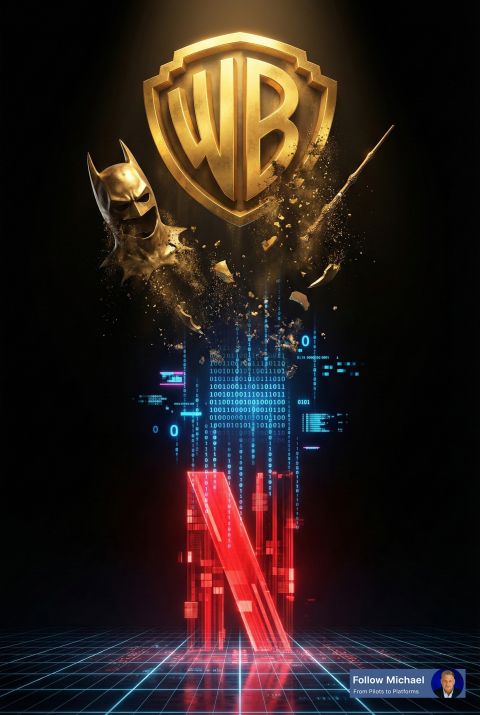
LinkedIn post image: Netflix didn’t buy Warner Bros.
160631727 viral
AI10 months ago
View on LinkedIn

Silicon Valley just discovered a new way to eliminate competition. And it is completely legal. Nvidia did not buy Groq for $20B. They did something far more strategic. They hired the CEO. Licensed…

LinkedIn post image: Silicon Valley just discovered a new way to eliminate competition.
4229922 viral
AI Industry10 months ago
View on LinkedIn

Stop pitching funds based on their Brand. Start pitching them based on their Vintage. Most founders ignore this. It costs them months of wasted meetings. Here’s the part almost nobody explains: 𝗩…

LinkedIn post image: Stop pitching funds based on their Brand.
3331510 viral
Startup Fundraising10 months ago
View on LinkedIn

Posting Patterns & Frequency

7.0 posts/week

Posts / Week

1.3 days

Days Between Posts

1

Total Posts Analyzed

HIGH

Posting Frequency

Timezone: UTC

Best Performing Days

MondayFriday

Best Performing Times To Post

14:00

Topics & Content Focus

Primary Topics

Power dynamics and consolidation strategies in the AI ecosystem (reverse acqui-hires, data moats, regulatory arbitrage)AI-native company building and exit pathways for founders in a platform-dominated marketAgentic / workflow-centric AI implementation and the shift from prompts to managing AI ‘teams’Venture capital deployment mechanics and fundraising strategy in the AI-heavy cycleData architectures and content libraries as strategic AI training assets (especially in media & entertainment)

Secondary Themes

Antitrust avoidance and regulatory workarounds by tech giantsFounder psychology and the changing nature of ‘independence’ in startupsCapital velocity, fund vintages, and how macro funding cycles hit early-stage foundersAutomation of creative workflows (pre-viz, editing, personalization) via AIFuture-of-work skills: from ‘prompt engineering’ to ‘flow/agent management’

Industry Focus

AI-first startups and founders (especially infrastructure and agentic workflows)Venture capital and early-stage fundraising strategyBig Tech platform strategy (Microsoft, Google, Nvidia, Netflix)Media and entertainment companies as AI data and model platforms

Content Categories

Strategic market and power-structure analysisFounder & fundraising playbooks in the AI eraAI workflow and capability design (agentic architectures, flow engineering)Deal and acquisition deconstruction (what the market ‘thinks’ vs what’s actually being bought)Macro-trend forecasting and implications for operators

Performance Insights

STABLE

Performance Trend

Best Performing Topics

Agentic / workflow-centric AI and the death of prompt engineeringStrategic reinterpretation of major tech/media deals as AI and data plays

Virality Signals

Strong contrarian hook that flips a widely held belief (“Prompt engineering is dead”, “This isn’t a streaming deal.”)Clear naming of new eras or concepts (e.g., “Reverse Acqui Hire”, “flow engineering”, “infinite studio”)Use of concrete benchmarks or financial figures to legitimize big claims (deal values, benchmark scores, VC percentages)Cinematic metaphors and vivid imagery that make abstract shifts feel tangible (“The Library of Alexandria isn’t burning. It’s being fed into a scanner.”)Framing posts around how ‘the game has changed’, implicitly threatening obsolescence for those who don’t adapt

Structure & Quality

300

Avg Length (Words)

HIGH

Depth Level

ADVANCED

Expertise Level

0.88/10

Uniqueness Score

Common Hooks

Blunt contrarian declarations that kill a sacred cow (e.g., “X is dead”, “Everyone thinks this is Y. It’s actually Z.”)Reframing a headline event as something deeper and hidden (“Everyone thinks this is a streaming deal. The real story is buried in the data architecture.”)Revealing a ‘new era’ or named pattern (“Welcome to the Reverse Acqui Hire era.”)Leaning on an authority or dataset to reset beliefs (“Andrew Ng shared data that changes everything.”)

Common Endings

Multi-action CTAs: “Save 💾 ➞ React 👍 ➞ Share ♻️ ➞ Follow”Open-ended, provocative questions to spark comments (“Are you on the menu?”, “Did Netflix just buy Hollywood’s AI future?”)Future-looking predictions or warnings that leave the reader with unresolved tensionReinforcing the shift in ‘the game’ and implicitly inviting alignment with the new rules

Value Delivery Methods

Reframes headline news into underlying power and data-architecture narrativesProvides mental models and named patterns that help readers reason about the AI/VC landscapeTranslates complex capital-market mechanics (vintages, deployment cycles, exits) into operator-friendly playbooksHighlights actionable strategic shifts (e.g., pitch funds by vintage, design flows instead of prompts)Connects micro-tactics (agent workflows) to macro consequences (who wins in AI)

Formatting Style

Short, 1–2 sentence paragraphs with heavy line breaks for rhythmSection headers in all-caps with bold styling (e.g., “𝗧𝗛𝗘 𝗣𝗟𝗔𝗬𝗕𝗢𝗢𝗞”, “𝗧𝗛𝗘 𝗦𝗛𝗜𝗙𝗧”, “𝗧𝗛𝗘 𝗥𝗘𝗔𝗟𝗜𝗧𝗬”)Bullet lists and stepwise breakdowns (numbered flows, checklists, arrow lists)Contrast blocks (Old Way vs New Way, Prompt vs Flow, Brand vs Vintage)Use of emojis as structural markers (arrows, flags, save/share icons) rather than for humor

Audience & Tone

YES

Question Usage

0.6%

Response Rate

Detected Tone

Analytical and contrarian strategistMacro-systems thinker focused on power and incentivesOperator-oriented futurist translating frontier trends into playsSmart-casual, mixing crisp data with vivid metaphorssemi-formalsecond-person

Interaction Style

Debate-inviting and slightly confrontational, prompting readers to react or challenge assumptionsEducative but not didactic, treating the audience as competent operators who need better maps, not basicsIdentity-affirming for ambitious founders, VCs, and AI practitioners who see themselves as early to the ‘new game’Occasional use of rhetorical questions to turn analysis into a conversation starter rather than a monologue

Community Building Signals

Consistent end-of-post CTAs that habituate saving, sharing, and following, reinforcing a content-led communityUse of ‘we’ language around shifts in AI and work, building a sense of collective transitionFraming readers as players in a high-stakes game (founders, managers of agentic AI, capital allocators) to create a shared in-group identityPrompting opinion and speculation on big moves (e.g., Netflix–Warner), encouraging threaded discussions

Writing Style Patterns

Content Strategy

Hook: Blunt contrarian declarations that kill a sacred cow (e.g., Tone: semi-formalCTA: Direct multi-step CTAs (save, like, share, follow)

Writing style breakdown

Core characteristics

Highly professional but accessible; sounds like a sharp operator in tech/VC.

Tone is analytical, contrarian, and slightly dramatic.

Very punchy and persuasive, with a strong explanatory layer (informative + opinionated).

Feels like “LinkedIn / X thought-leadership for smart insiders,” not generic content marketing.

Formality

Midway between formal and conversational.

Grammar is mostly standard, but structure is intentionally stylized (fragments, short lines).

Vocabulary is precise, business/tech-native (deployment clock, antitrust, agentic, velocity, model-first, org chart).

Emotional tone & energy

High-intensity but controlled; urgency without shouting.

Energetic, forward-driving: every line feels like it’s pushing the idea forward.

Often uses “brutal reality” framing – sober, not hyperbolic, but still dramatic.

- Strong, contrarian hook in the very first line

Silicon Valley just discovered a new way to eliminate competition.
Prompt engineering is dead.
Stop pitching funds based on their Brand.
Netflix didn’t buy Warner Bros.

Rapid reframing of conventional narratives (e.g., “This isn’t about streaming; it’s about AI training data.”).

Frequent pattern of “Old Way vs New Way” or “Perception vs Reality.”

Frequent use of labeled sections with stylized headings (𝗧𝗛𝗘 𝗦𝗛𝗜𝗙𝗧, 𝗧𝗛𝗘 𝗣𝗟𝗔𝗬𝗕𝗢𝗢𝗞, 𝗧𝗵𝗲 𝗦𝘁𝗿𝗮𝘁𝗲𝗴𝘆).

- Heavy reliance on structural parallelism

They hired the CEO. / Licensed the IP. / Hollowed the company.
VCs get paid. / Founders get hired. / Innovation gets absorbed into the machine.

Uses data or named sources to anchor authority (Andrew Ng, PitchBook, concrete percentages).

- Rhetorical questions to close loops or provoke thought

Are we creating a wave of Zombie Unicorns?
who can.” (intentionally unpunctuated question-like line)
Did Netflix just buy Hollywood's AI future?

Addressing the reader

Mostly second-person plural/implicit: talks to “you” but not in a casual buddy tone.

- Uses direct commands for persuasion

Stop pitching funds based on their Brand.
Stop learning how to prompt. / Start learning how to manage.
Don’t pitch funds that deployed their capital 18 months ago.

Mix of declaratives and imperatives; almost no hedging (rare “almost nobody explains,” “we thought… we were wrong” but not “maybe,” “sort of”).

2. STRUCTURAL FLOW & LOGICAL PROGRESSION
3. SPACING, LINE BREAKS & VISUAL FLOW
4. SENTENCE CONSTRUCTION & PACING

Sign in to unlock the full writing analysis

Apply Michael Lee's patterns to your posts

Free tools to help you write, score, and benchmark in the same style.

LinkedIn Hook Generator

Generate scroll-stopping hooks in the same style top creators use.

Open tool

LinkedIn Post Scorer

Score your draft against viral post patterns before you publish.

Open tool

LinkedIn Engagement Calculator

Benchmark your engagement rate against creators in your niche.

Open tool

More LinkedIn creators to learn from

Discover all

Other creators worth studying alongside Michael Lee.

Tim Keen

Tim Keen

I get agencies more ideal clients | 1x exit | GTM strategy & coaching

79 Viral Score

82 Viral Score

Sanskar Kandoi

Sanskar Kandoi

Chartered Accountant • Delhi University • MA (Economics) • CFA(Level1) • Investment Banking • RVGian

49 Viral Score

Nandini Agrawal

Nandini Agrawal

Guinness Book of World Records | GIC (Private Equity) | BCG | Dr. | CA - AIR 1 | TEDx | ACCA (AIR 1, AWR 7&9)

29 Viral Score

Hung Lee

Hung Lee

More signal, less noise. Follow for conversation and content on Hiring, Talent Acquisition, HR, recruitment technology, Org Culture & Future of Work. Daily posts, all human

10 Viral Score

Brendan Foody

Brendan Foody

CEO @ Mercor | Thiel Fellow

79 Viral Score

€1 trial · 7 days

Automate your LinkedIn for 30 days

ViralBrain plans, writes, and schedules your LinkedIn content, using official LinkedIn APIs so your account stays safe.

  • Official LinkedIn APIs, no risk of ban
  • You approve every post before it goes live
  • Cancel anytime
Start €1 trial€39 Pro or €69 Premium · cancel anytime

30-day plan

On track
1
2
3
4
5
6
7
8
9
10
11
12
13
14
15
16
17
18
19
20
21
22
23
24
25
26
27
28
13 posts queued · auto-publishing
€1 · 7-day trial

Write like Michael Lee and auto-post for 30 days.

ViralBrain learns their voice and publishes for you.

Try it free

Write like Michael Lee.

Try it free

Discover more LinkedIn creators · ViralBrain

Other LinkedIn creators

  • John Wilson
  • Amelia Sordell
  • Pauline Daspre
  • Stephanie Holman, M.Ed 🦄
  • Kim Wilkes
  • Amy Miller
  • Leo Harrison
  • Maria Ferraro
  • Cy Wakeman
  • Katie McNab 💙
  • Brad Jacobs
  • Hanlie Van der Vyver
  • Enrique Rubio
  • Michael Quinn