
Some personal news - today is somehow my last day at Carta. What an absolutely surreal experience. I joined just over 5 years ago with the fuzziest of mandates: go explore this private markets data,…
3.6K766538 viral
Career Update4 months ago

LinkedIn Content Strategy & Writing Style
Head of Insights @ OpenRouter | Data Storyteller
0 people tracking this creator on ViralBrain
Peter Walker positions himself as a data storyteller for the AI economy, translating OpenRouter’s usage data into clear narratives about models, agents, pricing, and demand. His content pairs sharp visual interpretation - from Anthropic’s revenue curve to election-night data center backlash - with grounded analysis of venture capital, infrastructure, and market incentives. What distinguishes him is his willingness to move beyond industry hype, examining metrics like cache rates, retention, token volumes, and effective pricing while acknowledging competing arguments. He also brings a refreshing editorial edge, connecting technical insights with cultural judgment around AI slop, reputation, and the gap between San Francisco enthusiasm and public sentiment.
178.6K
13.2K
365
29
25
Some personal news - today is somehow my last day at Carta. What an absolutely surreal experience. I joined just over 5 years ago with the fuzziest of mandates: go explore this private markets data,…
New paper finds that 88% of VC-backed founders receive zero exit value. Far from being a “holy moly” situation, this is actually kinda obvious! If anything, I suspect this is actually an underestima…
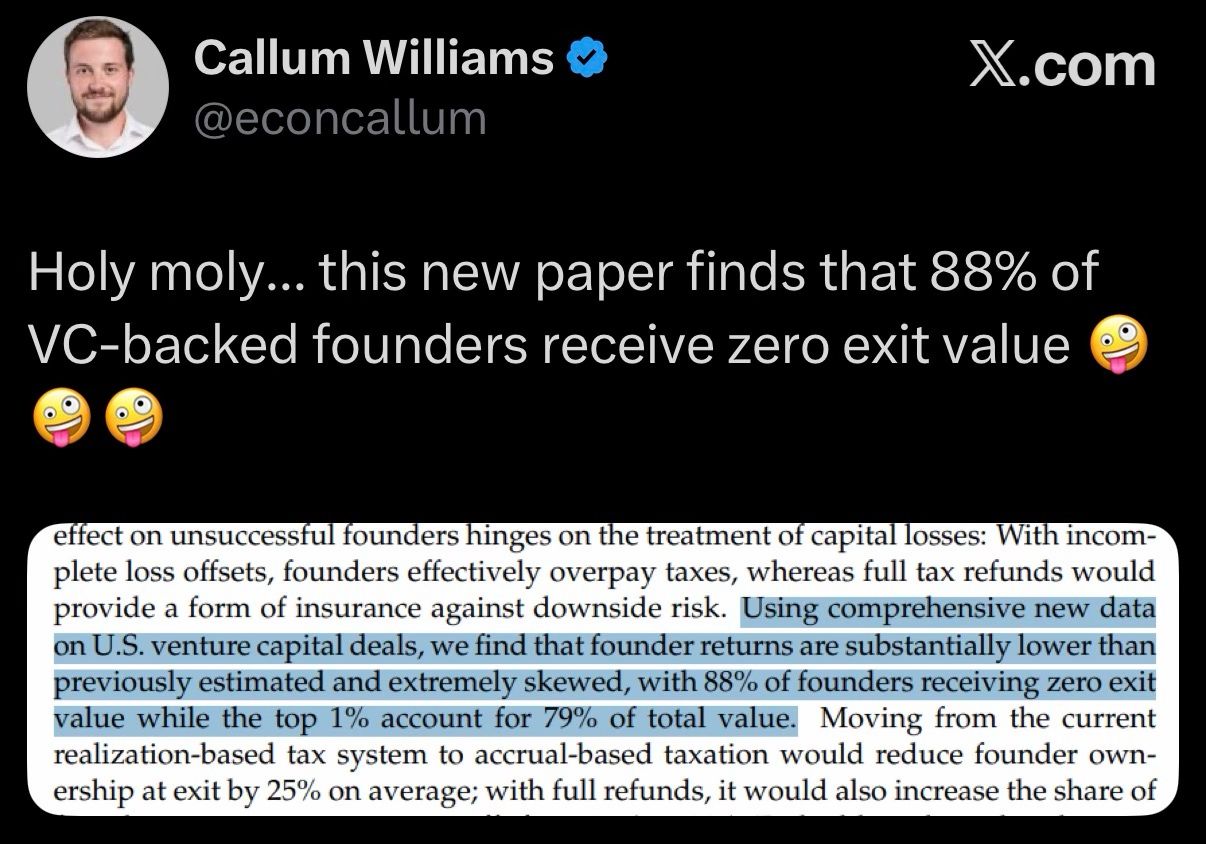
Honestly can’t believe I didn’t chart this phenomenon myself. Hats off to Olivia Moore for getting there first. It’s an absolute epidemic!

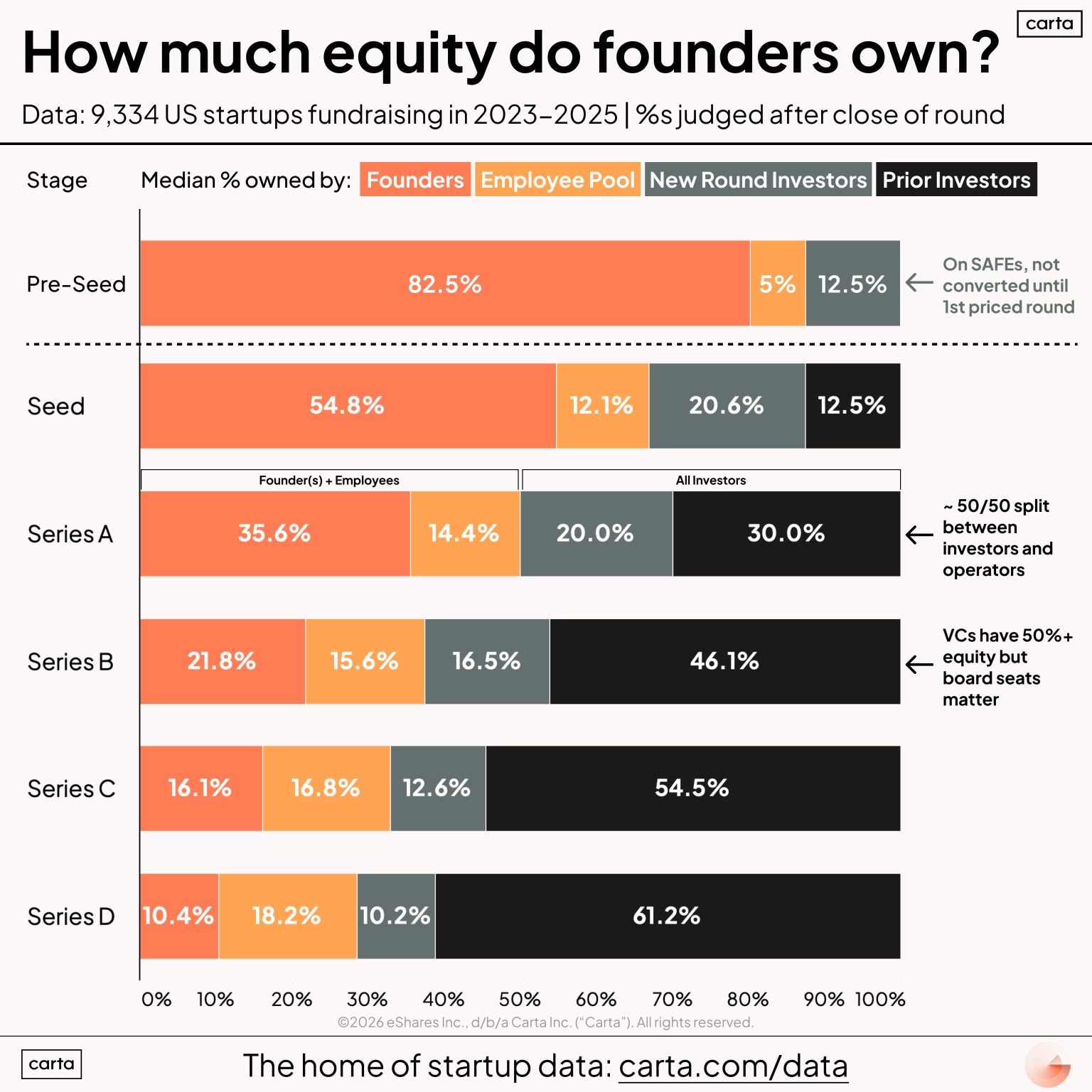
Raising venture capital is HIGHLY dilutive. If you're a founder, how much of your own company will you retain over time? Let's break it down. All data from US startups on Carta (9,000+ in this study)…
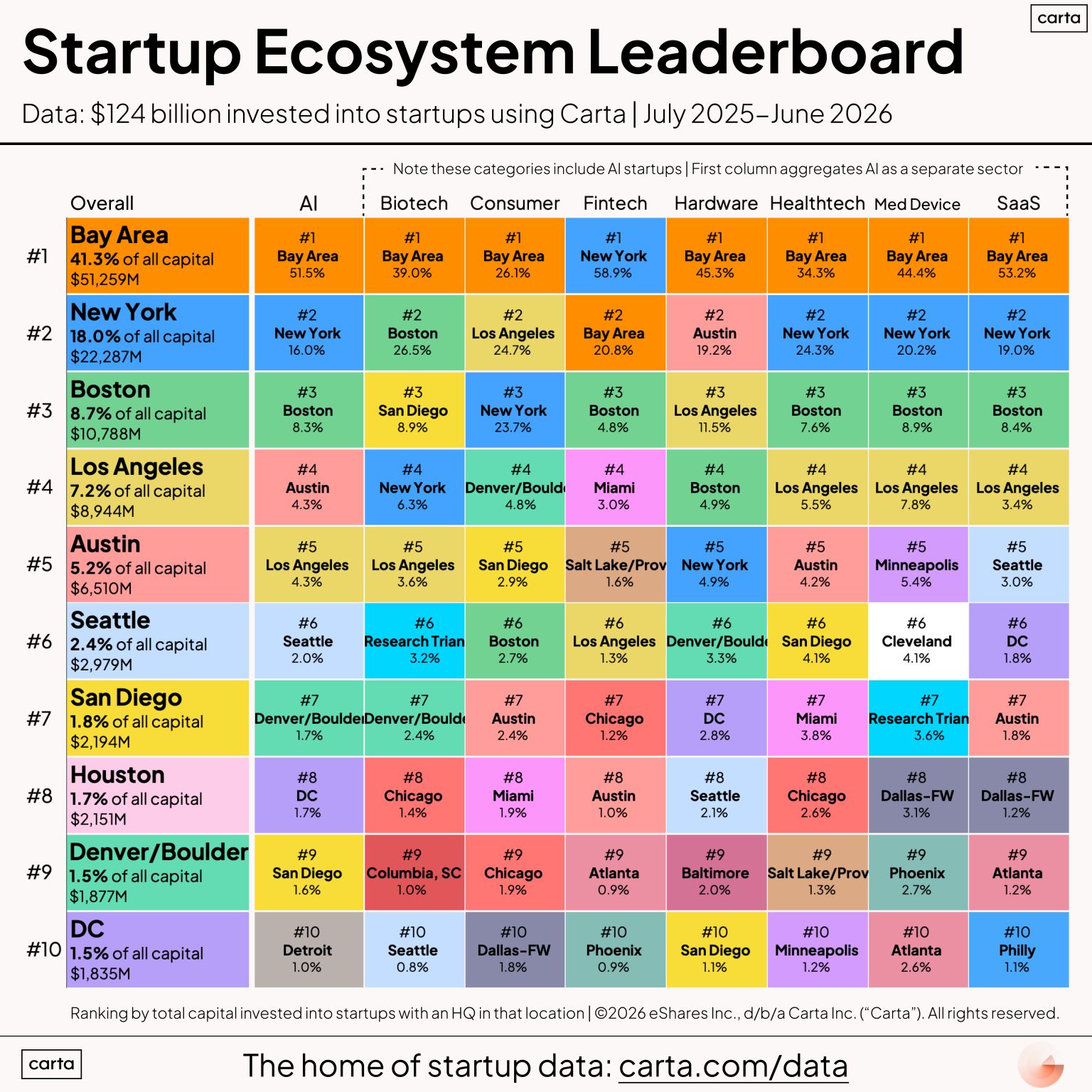
Does your city make the startup top 10? Okay, maybe not overall (this is based on dollars raised, so that's pretty tough to break into for smaller ecosystems). But how about in a specific vertical?…
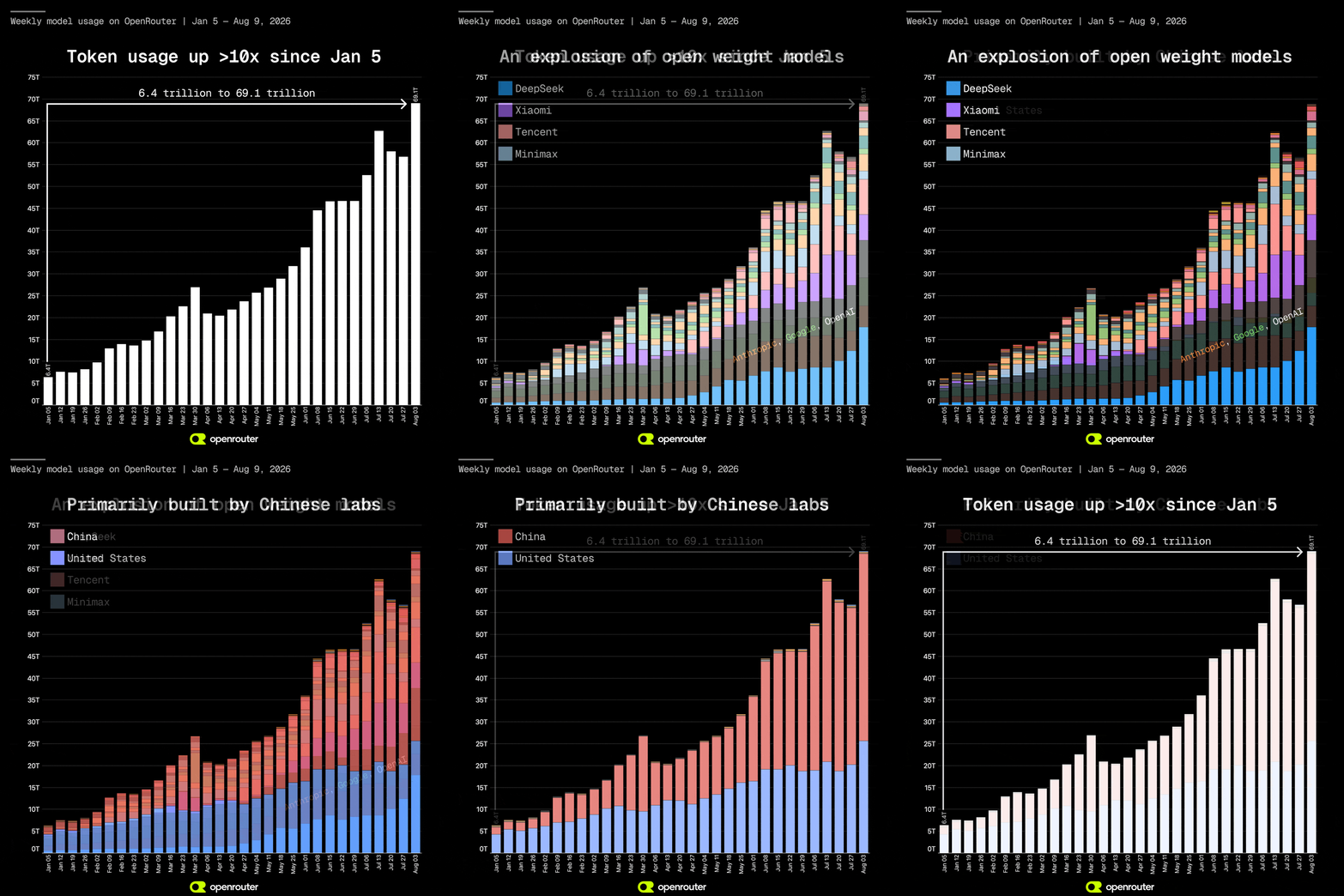
A basic recap of the AI story in 2026: 1. There has been an explosion of tokens as models have gotten more capable and agents are working autonomously (or nearly so). 2. As token usage has increa…
0.0 posts/week
Posts / Week
25
Total Posts Analyzed
HIGH
Posting Frequency
0%
Avg Engagement Rate
STABLE
Performance Trend
0
Avg Length (Words)
HIGH
Depth Level
ADVANCED
Expertise Level
86/10
Uniqueness Score
YES
Question Usage
0%
Response Rate
Writing style breakdown
<start of post>
The next phase of AI economics is going to be decided by boring metrics.
Not benchmark scores. Not launch-day vibes. The stuff buried inside the usage data.
Cache rate, retention, task completion, token growth, effective price per token. These are the metrics that tell you whether the market is actually getting better or just getting louder.
And cache rate in particular is wildly underappreciated.
If an agent re-reads the same system instructions and conversation history hundreds of times, the cost profile looks very different from a human asking one question and leaving.
That means model quality is only part of the equation. The other part is how efficiently the system uses what it has already processed.
The interesting thing is that the entire inference ecosystem is quietly optimizing around this.
Agents are generating more cached tokens, infrastructure is getting better at serving them, and the effective cost of long-running workflows keeps falling.
So you can have token demand going up while the price per token is going down and still see total spend rise materially.
That is the part people miss when they say falling prices must be bad for the market.
Sometimes falling prices are exactly what unlocks the next wave of usage.
Of course, there are limits.
Demand for intelligence may be infinite in the abstract but not for every individual task. A company can only automate a particular workflow so many times before it becomes intelligence saturated and the price declines start to matter more.
And the mismatch between infrastructure commitments and actual demand could still create a very ugly cycle if supply gets too far ahead.
Both things can be true.
The market can be structurally expanding and temporarily overbuilding at the same time.
For reference, we went from the first 1 trillion token week to 10 trillion in roughly 50 weeks.
10T --> 100T in 28 weeks.
100T --> 1 quadrillion in...well, we shall see.
The numbers are not proof that every AI company wins. They are proof that people keep finding new reasons to use intelligence when the price falls.
Pretty cool to watch.
<end of post>
Sign in to unlock the full writing analysis
Free tools to help you write, score, and benchmark in the same style.
Other creators worth studying alongside Peter Walker.

Vedika Bhaia
Founder at Social Capital Inc.
27 Viral Score

Palaniappan Chidambaram
Founder at Unison Group | AI and Data
127 Viral Score

Danyil Kurka
AI Solution Architect
22 Viral Score

André Lindenberg
Agents, Graphs, Ontologies
51 Viral Score

Milan Jovanović
Practical .NET and Software Architecture Tips | Microsoft MVP
14 Viral Score

Rand Fishkin
Cofounder of SparkToro, Alertmouse, & Snackbar Studio. Author of Lost & Founder. Feminist. I love underdogs, cooking, & helping people do better marketing
21 Viral Score
ViralBrain plans, writes, and schedules your LinkedIn content, using official LinkedIn APIs so your account stays safe.
Write like Peter Walker.