
I finally got around to doing something I've been wanting to do for a long time: I launched a Substack 🥳 This will be my 'safe space' for ranting about all things SEO and AI Search, when I have a l…
741733729 viral
SEO & AI Search9 months ago

LinkedIn Content Strategy & Writing Style
Founder of Algorythmic | VP, SEO & AI Search at Amsive
2 people tracking this creator on ViralBrain
Lily Ray positions herself as the definitive bridge between legacy SEO and the AI-driven search era, acting as a high-level strategist who decodes Google’s shifting technical landscape for both practitioners and stakeholders. Her content strategy centers on a "skeptical optimist" lens, where she balances the excitement of new AI integrations in Google Workspace with data-backed warnings against programmatic AI content scaling. She is notable for her ability to transform dense technical updates from events like Google I/O into actionable business intelligence, specifically highlighting the threat of "traffic killers" versus the opportunity for improved conversion rates. Her work represents a sophisticated intersection of forensic data analysis and market commentary, often using her own monitoring of hundreds of domains to debunk "AI-first SEO" hacks while advocating for a non-commodity, people-first approach to search visibility.
0
0
881
9.7
44
3
I finally got around to doing something I've been wanting to do for a long time: I launched a Substack 🥳 This will be my 'safe space' for ranting about all things SEO and AI Search, when I have a l…
It begins: ChatGPT will officially begin to show ads on its free and ‘Go’ tiers. The last statistic I saw indicated that ~95%+ of ChatGPT users were using free plans (if someone has an update to this…
This is a great new study by Ethan Smith, Graphite and Similarweb that confirms a lot of the data I've been sharing in my talks and articles over the last year: despite the rapid growth of AI search,…
I think some marketers forgot (or maybe didn't know in the first place?) that Google has specific guidance for how to write good reviews. This documentation originated from Google's Product Reviews u…
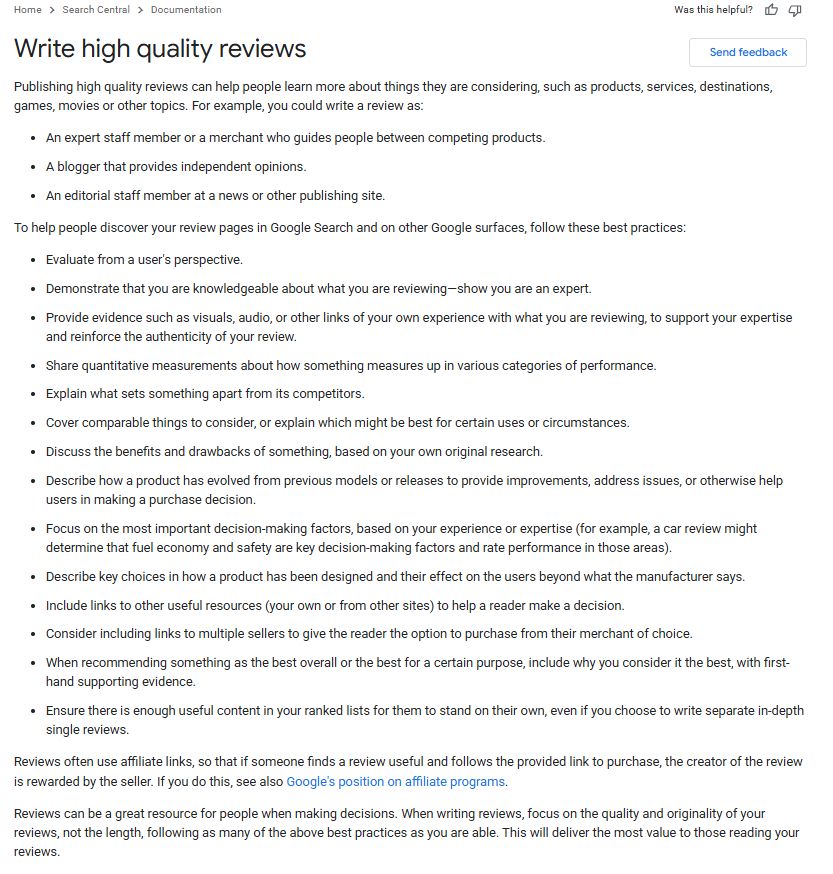
Wow, talk about throwing everything at the wall and seeing what sticks 😅 Their site got hit by the March '25 core update, then the June '25 core update, then the August/September Spam Update, follo…

Just thinking out loud… What happens when the AI companies (inevitably) encounter spam and attempts at SEO/GEO manipulation in the markdown files targeted to bots? What happens when the .md files n…
9.7 posts/week
Posts / Week
0.8 days
Days Between Posts
3
Total Posts Analyzed
HIGH
Posting Frequency
880.5%
Avg Engagement Rate
STABLE
Performance Trend
1150
Avg Length (Words)
HIGH
Depth Level
ADVANCED
Expertise Level
0.85/10
Uniqueness Score
YES
Question Usage
0.8%
Response Rate
Writing style breakdown
The author writes with a professional, authoritative, yet highly accessible voice that bridges the gap between technical SEO analysis and business strategy. The core characteristics are informative, direct, and cautiously analytical. It is the voice of a 'practitioner-observer'—someone who is actively testing theories and reporting findings to a professional community.
The emotional tone is measured and objective. Even when discussing 'alarming' data or 'traffic killers,' the author maintains a calm, high-energy pace that feels like a news briefing rather than a frantic warning. It is structured and methodical, often using data points or specific product updates as the foundation for broader industry predictions.
The use of 'My take:' or 'AKA,' to pivot from reporting to analysis.
Frequent use of parenthetical asides to add personal flavor or quick predictions (e.g., '(I imagine this will be another big traffic killer)').
Rhetorical questions to frame a problem ('Can scaling AI content be risky for SEO?').
A mix of professional terminology ('programmatic UGC', 'AEO/GEO') with conversational idioms ('breathe a small sigh of relief', 'buried in a 4-year-old email').
The author primarily uses the first-person ('I') to establish credibility and the second-person ('you') to engage the reader's professional interests. Suggestions are usually framed as observations ('I think many businesses can...') rather than aggressive commands, though 'Check out' is a common direct CTA.
Sign in to unlock the full writing analysis
Free tools to help you write, score, and benchmark in the same style.
Other creators worth studying alongside Lily Ray.

Kasey Brown
Applications are now OPEN to work with me. Just DM me “Class 5” • Your Personal Brand is Your Retirement Plan • I help experts build content system that print $ • Forbes 30 U 30 • ex-Stripe, Accenture, Goldman Sachs
86 Viral Score
Domitille de Saint-Exupéry
CMO @lemlist | Follow for real B2B Marketing insights from the tech trenches
215 Viral Score

Dharmesh Shah
Founder and CTO at HubSpot. Helping millions grow better.
3 Viral Score

Phuong Nguyen
Accélérateur SQL | Maîtriser le SQL et répondre à 90% des offres dans la Data | Data Analyst Freelance
53 Viral Score

Dylan Arnaud
Data Analyst | J’aide les entreprises à piloter leur activité et leur rentabilité en concevant des tableaux de bord sur mesure | Power BI & Fabric | ⭐ 5/5 Malt
71 Viral Score

Benjamin Ejzenberg
Transformez vos Excel chronophages en dashboards automatisés → Automatisation avec Power BI | Récupérez +20 modules gratuits ICI ⬇
23 Viral Score
ViralBrain plans, writes, and schedules your LinkedIn content, using official LinkedIn APIs so your account stays safe.
Write like Lily Ray.