
2025 was the year I stopped waiting for permission. Here's what happened when I went all in: 𝗔𝘄𝗮𝗿𝗱𝘀 & 𝗥𝗲𝗰𝗼𝗴𝗻𝗶𝘁𝗶𝗼𝗻 🏆 Front's Leadership Excellence Award 🏆 2x The Stevie® Awards Wi…

12645054 viral
Career Growth10 months ago

LinkedIn Content Strategy & Writing Style
Sr. Director of Support @Front | Co-Founder @CraftCX | 2025 Customer Support Leader of the Year
1 person tracking this creator on ViralBrain
Kenji Hayward positions himself as a high-stakes practitioner who views support as a strategic engine rather than a cost center. His content strategy centers on the tactical intersection of AI-driven efficiency and human-centric leadership, often using his role at Front to provide a "behind-the-scenes" look at scaling world-class operations. What makes Kenji notable is his radical transparency regarding the cost of high-performance, openly discussing the personal trade-offs of the "hustle" while maintaining a relentless focus on elevating the entire CX profession. This creates a compelling intersection of executive-level operational playbooks and vulnerable career advocacy, establishing him as a leader who prioritizes community amplification as much as his own technical authority.
5.6K
4.7K
63
4.6
175
2
2025 was the year I stopped waiting for permission. Here's what happened when I went all in: 𝗔𝘄𝗮𝗿𝗱𝘀 & 𝗥𝗲𝗰𝗼𝗴𝗻𝗶𝘁𝗶𝗼𝗻 🏆 Front's Leadership Excellence Award 🏆 2x The Stevie® Awards Wi…
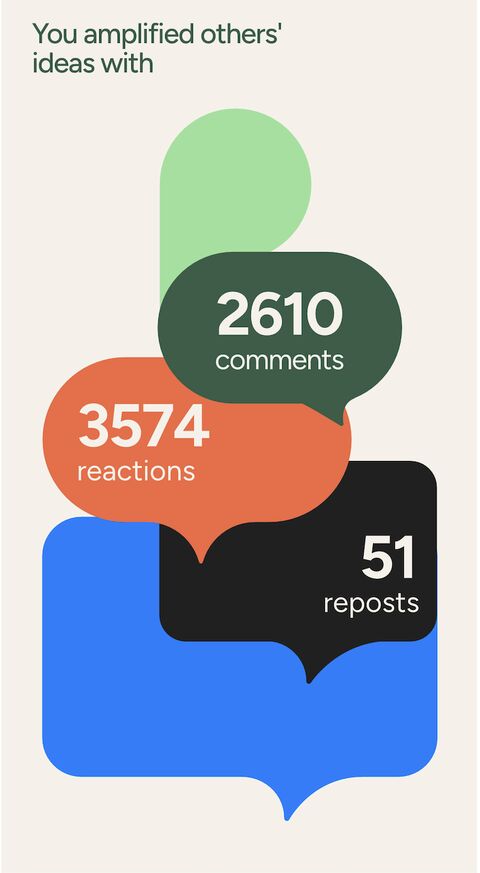
My favorite stat from LinkedIn's #YearInReview? How much I amplified others' ideas. Time to double down. Every Wednesday in 2026, I'm going dark on my own content. While everyone else is broadcastin…
I woke up at 4am every single day this year. Not for my job. For everything I wanted to build outside of it. Here's what it cost me. Skipped the gym for months. Worked through weekends...not always…

Support teams deserve a real break. Here's how we make it happen. 🎄 Front's offices close from Christmas to New Year's. Most of my team gets a full rest week. But just because you're on holiday does…
Steal the 10 skills that make you indispensable in 2026. 💎 I analyzed top performers at companies known for exceptional talent. The highest paid performers aren't just technical or just strategic.…

This is exactly what we need more of. Susana de Sousa is doing the real work here: sharing practical, honest lessons on modern support workflows and AI without the fluff or gatekeeping. If you’re a…
4.6 posts/week
Posts / Week
1.7 days
Days Between Posts
2
Total Posts Analyzed
HIGH
Posting Frequency
63%
Avg Engagement Rate
STABLE
Performance Trend
200
Avg Length (Words)
HIGH
Depth Level
ADVANCED
Expertise Level
8/10
Uniqueness Score
YES
Question Usage
0.4%
Response Rate
Writing style breakdown
Professional, polished, but human and conversational.
Strongly informative and strategic, with a reflective, sometimes vulnerable tone.
Persuasive without being salesy; credibility is built via specifics and track record, not hype.
Motivational in a grounded way: “you can do this, but here’s what it really costs.”
Feels like an experienced operator speaking to peers and up-and-comers in CX/support.
Hybrid: structurally professional (clear logic, correct grammar) with a casual, approachable surface (contractions, emojis, rhetorical questions, occasional slang like “okay this made my day”).
Never stiff; never sloppy. Think “high-performing leader talking in a LinkedIn post, not in a formal report.”
Medium-high energy: posts are concise, dynamic, and forward-moving, but not frantic.
Emotionally grounded: mixes pride, gratitude, realism, and humility.
Personal/reflective posts (e.g., 4am, year-in-review) have a contemplative and honest tone, acknowledging trade-offs and costs.
Tactical posts (skills, playbooks) are confident, matter-of-fact, and focused on clarity and usefulness.
Rhetorical questions (“So was it worth it?” / “Which skill are you tackling first?”).
Parallel structures (“Not for the title or the paycheck. For the people — both the ones I met on the road and the ones waiting for me at home.”).
Contrast and reversals (“LinkedIn would call that a failed year. But here’s what 4am bought me:”).
Short, punchy standalone sentences for emphasis (“The trade-offs were real though.” / “My body kept score even when I pretended it didn't.”).
Refrains and thematic statements (“Support is the strategy.” / “Support teams deserve rest.”).
Storytelling is used as a setup, then the narrative is distilled into explicit lessons or lists.
Direct audience engagement: “Steal the 10 skills…”, “I’m gifting you 5 lessons”, “What did you refuse to sacrifice?”
First-person singular (“I woke up at 4am…”, “I analyzed…”, “I negotiated with leadership…”).
Second-person direct address (“So that you can be confident that…”, “Stop trying to build the biggest team. Start building the most impactful one.”).
Occasional inclusive “we” to create alignment (“Support professionals know this better than anyone — we make others successful first.”).
Direct: “Steal the 10 skills…”, “Kill vanity metrics.”, “Stop trying to build the biggest team.”
Softer framing: “Here’s how we make it happen.”, “Highly recommend following along…”
Questions are often used as pivots (“So was it worth it?”, “Why Wednesdays?”) and as CTAs at the end.
Sign in to unlock the full writing analysis
Free tools to help you write, score, and benchmark in the same style.
Other creators worth studying alongside Kenji Hayward.

Josep Cuatrecasas
Ayudamos a despachos de abogados en Puebla a atraer mejores clientes, automatizar operaciones y posicionarse como la autoridad digital en su área de práctica. | CEO en NEBU Studio
154 Viral Score

Juan Pablo Rocha Becerra
MSc Artificial Intelligence | Global Business Student @TETR | Founder · AI-Powered Web Design · D2C · Dropshipping
142 Viral Score
Célestine T.
Data Analyst who speaks Business | I help small and medium-sized businesses turn their data into profitable decisions | Ex-banking (11 years) | Founder of Synteya Partners | “Changer de Code” podcast 📊💻
37 Viral Score
Eva De Mol Ph.D
Venture Capital Investor / Scientist / LinkedIn Top Voice
48 Viral Score

Reuven Cohen
♾️ Agentic Engineer / aiCTO / Coach
18 Viral Score

Theodora Lau
American Banker Top 20 Most Influential Women in Fintech | 3x Book Author | Founder — Unconventional Ventures | One Vision Podcast | Keynote Speaker | Dell Pro Precision Ambassador | Banking on AI (2025) | Top Voice
28 Viral Score
ViralBrain plans, writes, and schedules your LinkedIn content, using official LinkedIn APIs so your account stays safe.
Write like Kenji Hayward.