
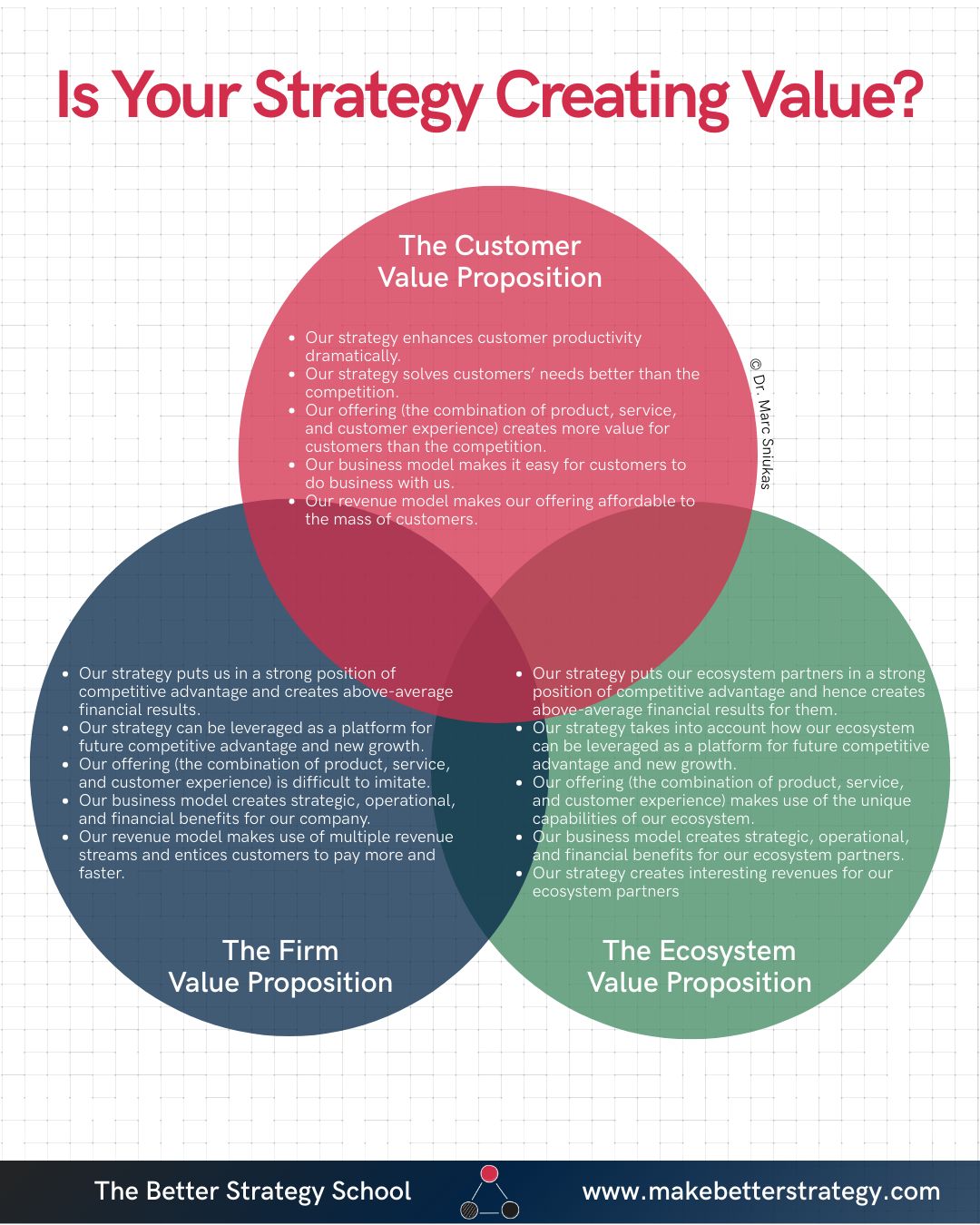
The customer is not the center of strategy. Most leaders I meet believe this is heresy. But the observation keeps recurring in practice. When strategy is reduced to customer value alone, the firm s…
335586114 viral
Business Strategy8 months ago

LinkedIn Content Strategy & Writing Style
Founder, The Better Strategy School → Where strategy becomes a leadership capability. 20+ years of global strategy work, helping leadership teams make better strategy.
0 people tracking this creator on ViralBrain
Dr. Marc Sniukas positions himself as a high-level practitioner-educator who bridges the gap between academic theory and the messy reality of the C-suite. His content strategy centers on demystifying strategy as a leadership capability rather than a static document, frequently using "reversal" angles to argue that execution failures are actually symptoms of poor strategic design. He is notable for his commitment to radical transparency, often giving away decades of intellectual property for free to prove his value proposition of ruthless clarity over complex frameworks. By intersecting deep consulting expertise with a mission to "delete noise," he helps leaders move from reactive motion to intentional trade-offs, making him a vital voice for those looking to transform strategy from a seasonal event into a lived organizational practice.
77.1K
13.7K
226
2.7
37
1
The customer is not the center of strategy. Most leaders I meet believe this is heresy. But the observation keeps recurring in practice. When strategy is reduced to customer value alone, the firm s…
Most strategy conversations fail before they begin. The failure is not in the analysis or the execution. It is in the confusion about which question is being answered. Leaders gather in rooms and sp…

"We don't have time for strategy." I hear this often. Usually from capable leaders running at full capacity. The statement itself reveals the problem. Strategy isn't a project to be scheduled. It'…
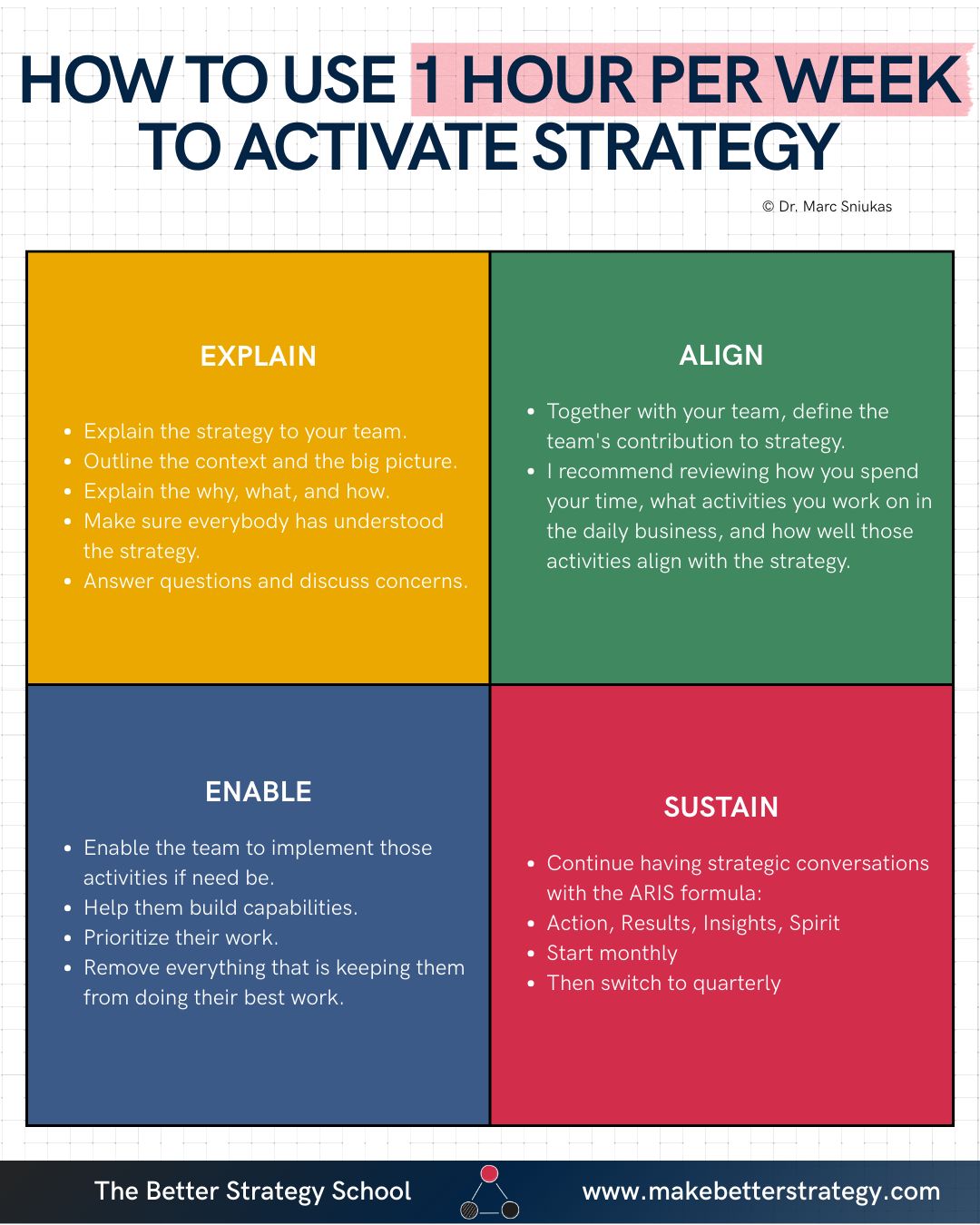
Strategy, strategic thinking, and strategic leadership are not the same thing. Most people use them interchangeably. That conflation is where a lot of organizational confusion quietly begins. 1️⃣ S…
I'm giving away 30 years of strategy. I turned fifty last week, and I've spent the last thirty years —my entire career— learning about strategy and helping leaders make better strategy. That's been…

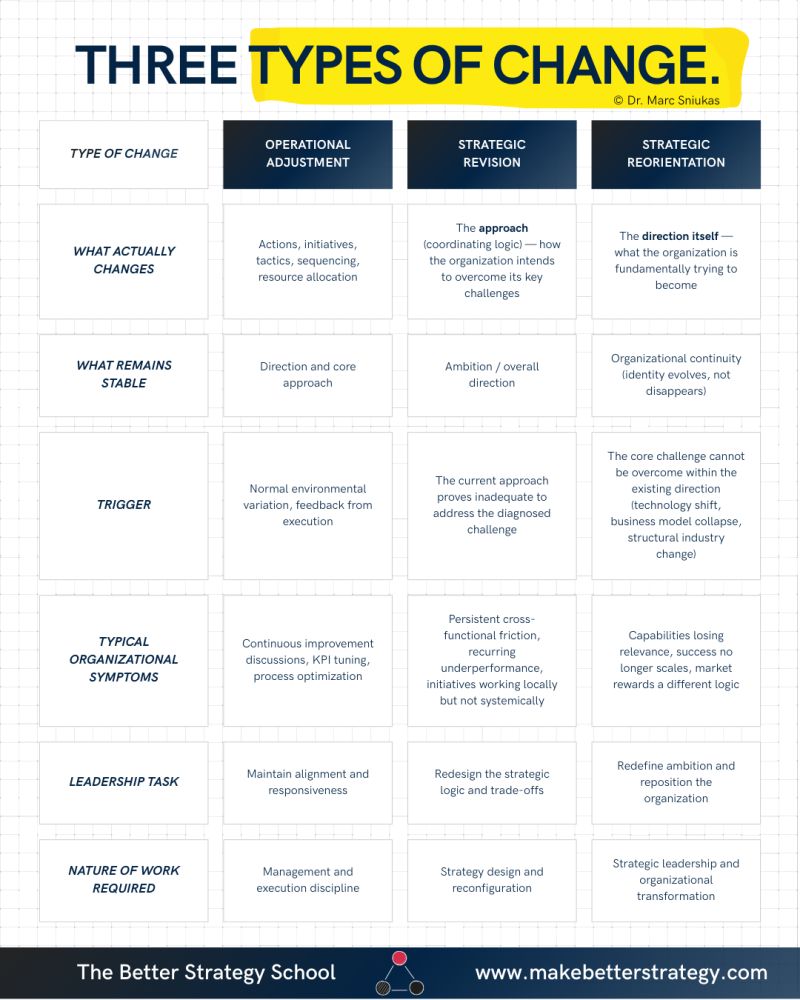
Most organizations confuse changing direction with changing course. They are not the same thing. In practice, strategy involves three distinct types of movement — and conflating them is one of the m…
2.7 posts/week
Posts / Week
2.9 days
Days Between Posts
1
Total Posts Analyzed
HIGH
Posting Frequency
225.5%
Avg Engagement Rate
STABLE
Performance Trend
320
Avg Length (Words)
HIGH
Depth Level
ADVANCED
Expertise Level
0.86/10
Uniqueness Score
YES
Question Usage
0.3%
Response Rate
Writing style breakdown
<start of post>
Most leaders treat strategy as a destination.
They spend months defining the "where,"
mapping out the five-year horizon,
and polishing the vision statement
until it shines with corporate consensus.
But strategy is not a place you arrive at.
It is a capacity you build.
In my work with global leadership teams,
The document is perfect.
The organization is paralyzed.
1️⃣ The Clarity Gap: People know the goals, but they don't understand the logic that makes those goals achievable.
2️⃣ The Capability Gap: The strategy requires the organization to be something it currently is not, without a plan to bridge the difference.
3️⃣ The Choice Gap: Leadership has decided what to do, but they haven't had the courage to decide what to stop doing.
What often goes unnoticed is that the third gap is the most lethal.
Strategy is, at its core, the art of deletion.
If your "strategic priorities" list has more than five items, you don't have a strategy. You have a to-do list that you've labeled "strategic" to make it feel important.
Real strategy forces the uncomfortable conversation.
It demands trade-offs that hurt.
It creates a "Not-to-do" list that is longer than the "To-do" list.
When you refuse to choose, you delegate the strategy to the front line.
The employees are the ones who eventually have to decide which of your twenty "priorities" actually gets their attention today.
That isn't leadership. That's abdication.
Strategic leadership is about providing the coherence that allows everyone else to act with confidence.
It is about reducing the noise so the signal can be heard.
👉 I've put together a guide on how to run a "Strategy Deletion Session" with your team.
You can download it here: https://lnkd.in/example
(No email required. Just the tool.)
The work of strategy is not to add.
The work of strategy is to subtract.
Until only the essential remains.
<end of post>
Sign in to unlock the full writing analysis
Free tools to help you write, score, and benchmark in the same style.
Other creators worth studying alongside Dr. Marc Sniukas.

Elena Verna
Growth at Lovable
116 Viral Score

Michael Jackson 🦡
Venture Capitalist
27 Viral Score

Codie A. Sanchez
Investing millions in Main St businesses & teaching you how to own the rest | HoldCo, VC, Founder | NYT best-selling author
44 Viral Score
Walid Boulanouar
hire claude code operator to run your company
30 Viral Score

Laurent Brouat
🧠 Je décode le marché du recrutement | Fondateur Les Talents Narratifs | Newsletter, Guides & Événements | Retrouvez mes analyses du recrutement sur LA newsletter 👇👇
55 Viral Score

Diane Massé
Talent Acquisition Specialist
193 Viral Score
ViralBrain plans, writes, and schedules your LinkedIn content, using official LinkedIn APIs so your account stays safe.
Write like Dr. Marc Sniukas.