
Yesterday, I turned 36. Last year, I wrote that getting fired was the best thing that ever happened to me. It forced me to finally build the business I had been thinking about for years. Outbound K…

10789011 viral
Outbound Sales3 months ago

LinkedIn Content Strategy & Writing Style
Building outbound systems for GTM teams | GTM Engineer for outbound teams | Advisor | Solopreneur
0 people tracking this creator on ViralBrain
Elric positions himself as a GTM engineer for outbound teams, combining advisory work with hands-on system building for solopreneurs and revenue organizations. His content centers on diagnosing pipeline bottlenecks and turning outbound into an integrated operating system, spanning cold calls, email, LinkedIn, trade shows, account planning, data hygiene, coaching, and capacity constraints. He stands out by replacing simplistic activity advice with measurable conversion points, realistic selling-day math, and practical workflows such as AI call simulations and event-based prospecting. The distinctive intersection is strategic diagnosis plus operational detail: he connects executive-level pipeline decisions to the exact systems reps use to create meetings.
44.1K
27.6K
19
6
29
Yesterday, I turned 36. Last year, I wrote that getting fired was the best thing that ever happened to me. It forced me to finally build the business I had been thinking about for years. Outbound K…
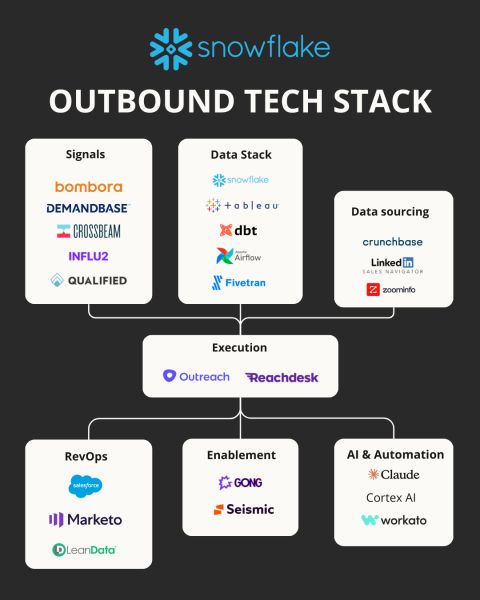
Snowflake crossed $4.47B ARR. Here’s the outbound tech stack behind their growth, supporting 300 SDRs, broken down by function ⬇️ 1) Signals Spot accounts showing intent, engagement, or inbound bu…
The Outbound Paradox: While “everyone” talks about replacing SDRs with AI, the best teams are doing the opposite, investing more in talent and outperforming their competitors. Want to see exactly ho…

Last year I broke down how Owner's BDR team was sourcing $72K in new closed-won ARR per rep, every month. At the time that felt like the ceiling. This year they're at $120K per rep. That's $1.44M a ye…
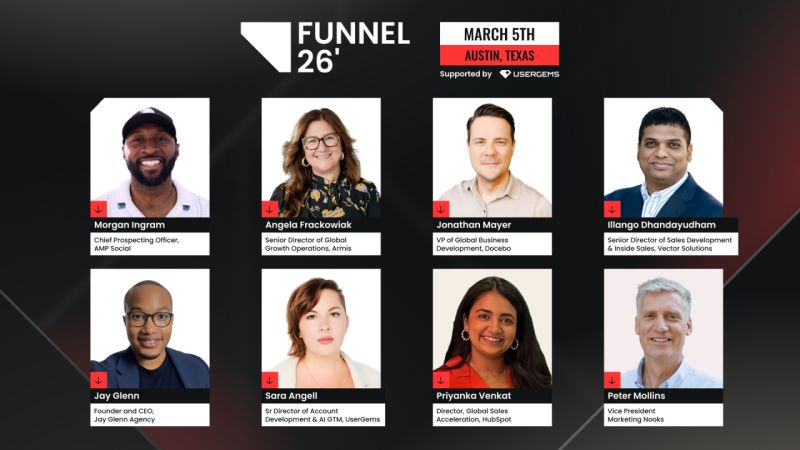
One day. Five sessions. Every one built for SDR leaders who own outcomes. That's Funnel 26, March 5 in Austin. My friends: Dale Thorn, David Wilkins, and Anastasia Chihai put this together for 2nd…
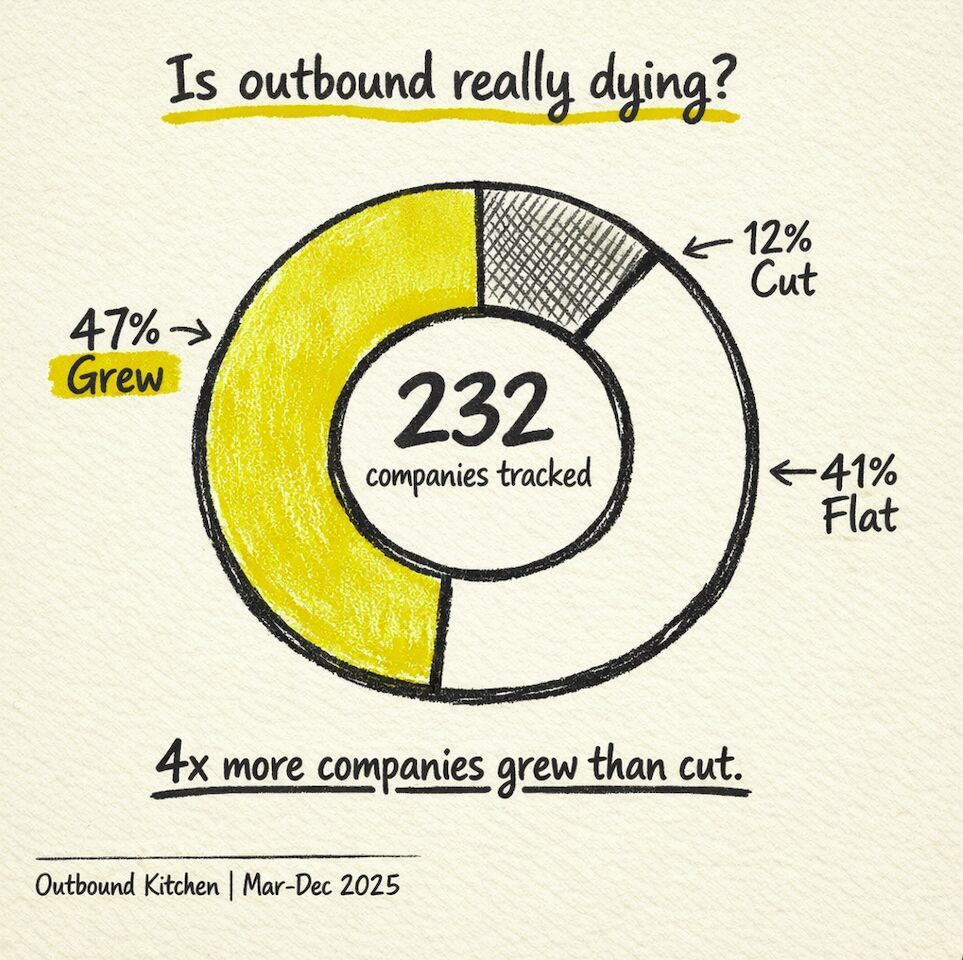
If you only read LinkedIn, you'd think outbound is dead. AI is replacing SDRs. Cold calling is dead. Email is dead. I tracked 232 companies starting in March 2025. I looked at global SDR headcount…
0.6 posts/week
Posts / Week
29
Total Posts Analyzed
LOW
Posting Frequency
18.75%
Avg Engagement Rate
STABLE
Performance Trend
1100
Avg Length (Words)
HIGH
Depth Level
ADVANCED
Expertise Level
8/10
Uniqueness Score
YES
Question Usage
0%
Response Rate
Writing style breakdown
The writing is professional, direct, analytical, and commercially practical. It is written for operators, sales leaders, marketers, and revenue teams, but it avoids corporate jargon and inflated business language. The author explains complex outbound and pipeline problems in ordinary vocabulary, using short declarative sentences and concrete operational examples.
The central voice is that of an experienced practitioner diagnosing a system. The author does not sound like a motivational speaker, a formal academic, or a highly conversational storyteller. The tone is confident without being theatrical. Claims are usually presented as observations from experience rather than as abstract theory.
'And I keep seeing the same three mistakes:'
'It's a good question. But it's the wrong first question.'
'The first move isn't deciding who prospects. It's understanding what's actually limiting your pipeline.'
These sentences establish a recurring pattern: acknowledge a familiar problem, challenge the obvious interpretation, and replace it with a more precise diagnosis.
'You know all of this in October.'
'So why build a plan that needs December to perform like October?'
'What would you add to the cold calling system?'
The reader is treated as a knowledgeable professional who may nevertheless be making a structural mistake. The voice does not lecture from a distance. It pulls the reader into a practical decision.
'This year I've helped customers prepare for 8 trade shows.'
'Last year, a podcast host asked which tool had helped my team plan Q4.'
'I broke the full diagnosis down in this week's newsletter.'
First person is used selectively. It establishes credibility, but the author does not make the post primarily autobiographical.
The emotional energy is controlled and moderately high. The writing creates urgency through contrast, consequences, and compressed sentences rather than exclamation marks. There is almost no emotional overstatement. The author makes a problem feel important by showing how an apparently reasonable action can worsen it:
'If your BDRs aren't producing, hiring more just makes the problem more expensive.'
The voice uses rhetorical questions often, but they are functional rather than ornamental. Questions introduce a problem, expose a flawed assumption, or invite a response:
'So why build a plan that needs December to perform like October?'
'What would you add to the cold calling system?'
'But they're not just telling reps to “pick up the phone” and smile and dial.'
'Any of those could be right. But how would you know which one?'
'The first move isn't deciding who prospects.'
The prose is especially recognizable through its preference for operational reframing. Instead of discussing broad concepts such as growth, alignment, or efficiency, the author names the exact sequence, bottleneck, workload, behavior, or conversion point involved.
The writing is methodical but not rigid. It moves quickly because most paragraphs contain one idea, often expressed in one or two sentences. The style feels spontaneous at the sentence level but highly deliberate at the structural level.
Opening with a specific fact, observation, or question.
Naming a recurring mistake or assumption.
Using short standalone paragraphs for emphasis.
Replacing vague explanations with a system or sequence.
Using contrast words such as 'but', 'instead', 'so', and 'because'.
Providing specific numbers, roles, stages, or examples.
Ending with a newsletter invitation or an open question.
Using repetition as a logical device rather than as poetic ornament.
The author rarely uses metaphor. The few figurative expressions are ordinary business phrases such as 'fill pipe', 'the number of days you can count on drops', or 'build the muscle in chunks'. The dominant mode is concrete explanation.
Sign in to unlock the full writing analysis
Free tools to help you write, score, and benchmark in the same style.
Other creators worth studying alongside Elric Legloire.

Kevin Naughton
Ex-Google Software Engineer | Try Ferryman (FREE) 👇
9 Viral Score

Jess Ramos
⚡️ Data Science & AI Content Creator w/ 500K+ followers | Developer Advocate & Solopreneur | LinkedIn Learning Instructor | Big Data Energy⚡️ | helping you leverage tech & AI
15 Viral Score

Morgan Young
LinkedIn Top Voice, Gen Z • Keynote Speaker • Founder @ Hyphenate Media • LinkedIn Learning Instructor (16K+ Learners) • prev @ Disney, Shopify • SXSW Speaker 2026
16 Viral Score

Khizer Abbas
Growing newsletter with Paid Ads | 2M+ subs driven | Follow to learn about AI
73 Viral Score

Faiq Zafar
LSE | Superhuman AI | xYahooFinance | xNestle
1,952 Viral Score

Dmitrii Vastianov
Co-founder at Banktopus | Antler | B2B Fintech
162 Viral Score
ViralBrain plans, writes, and schedules your LinkedIn content, using official LinkedIn APIs so your account stays safe.
Write like Elric Legloire.