
Today I'm open-sourcing my B2B sales call script. I teach this at Harvard, and some variant of this has brought 40+ startups to $1M+ ARR and beyond. It has also helped established businesses remove a…
23044910 viral
B2B Sales7 months ago

LinkedIn Content Strategy & Writing Style
Founder + Advisor | Fellow @ Harvard Innovation Labs | Founder @ Restack | Operating Partner @ Grix VC | HBS, ex-McK
1 person tracking this creator on ViralBrain
Rob Snyder positions himself as a high-stakes startup architect and contrarian philosopher who bridges the gap between Ivy League academic rigor and the messy reality of early-stage growth. His content strategy centers on dismantling "push theory"-the common but flawed belief that sales is about convincing-and replacing it with a rigorous model of "pull" based on buyer intent. He is notable for his ability to translate complex McKinsey-style structural thinking into tactical, open-sourced playbooks for founders struggling with the "abyss" of pre-product-market fit. By intersecting behavioral psychology with B2B sales mechanics, Snyder offers a unique value proposition: he doesn't just provide a better script, but a fundamental "conceptual model" that helps founders diagnose why their business is failing to scale.
48.6K
27.1K
147
3.9
39
2
Today I'm open-sourcing my B2B sales call script. I teach this at Harvard, and some variant of this has brought 40+ startups to $1M+ ARR and beyond. It has also helped established businesses remove a…
"Sales is a lot of rejection" is a common belief that, I think, is wrong. If you experience the feeling of rejection, you're probably thinking about sales backwards. (And you're likely to avoid sales…
My favorite red flags in startups' sales calls: 1- Founder: "That's a lot of helpful context" This is what the founder says when the prospect has provided minutes of irrelevant info, usually because…
Over the past few years, I've spent most of my waking hours making a bunch of startups take off. In doing this, I have watched roughly 5,000 recorded sales calls. The main thing that prevents startups…
A huge source of cofounder conflict: Technical cofounder: “Can’t you just sell what we built?” GTM cofounder: “Can’t you just build what they want?” Both cofounders are wrong, of course. Both have…
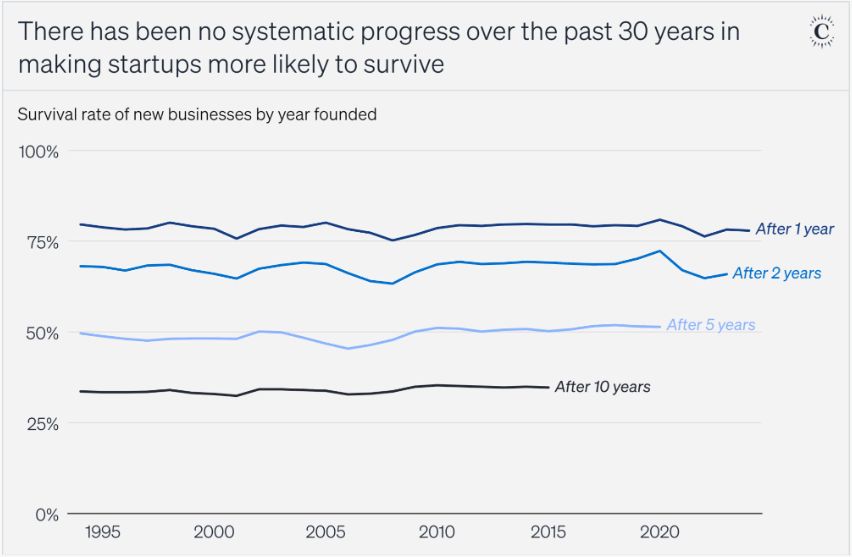
"There has been no systematic progress over the past 30 years in making startups more likely to survive." There is no shortage of startup methodologies on offer. When you try to follow one of them, i…
3.9 posts/week
Posts / Week
2 days
Days Between Posts
2
Total Posts Analyzed
HIGH
Posting Frequency
146.5555555555555%
Avg Engagement Rate
STABLE
Performance Trend
230
Avg Length (Words)
HIGH
Depth Level
ADVANCED
Expertise Level
0.86/10
Uniqueness Score
YES
Question Usage
0.35%
Response Rate
Writing style breakdown
<start of post>
Most founders treat their marketing like a megaphone. They think if they just shout their "unique value proposition" loud enough, the right people will eventually turn around and look.
This is why your LinkedIn ads are failing. This is why your cold emails are getting deleted.
The megaphone approach is built on a flawed theory: "If I describe my product well enough, I will create desire."
This leads to the "Feature Pile-On." You add more bullet points to your landing page. You make your demo videos flashier. You spend three weeks tweaking your "messaging" to be more punchy.
The irony: The more you try to create desire, the more you signal that your product doesn't actually solve a specific, urgent problem.
Instead, you need to realize that desire isn't created; it's tapped into. People don't buy because of your megaphone. They buy because they are already running toward a destination and you are the only one holding the map.
1 - You stop talking about your features and start talking about the "Blocked Path."
2 - Your marketing becomes a diagnostic tool that helps the buyer understand their own problem better.
3 - You stop feeling like a "salesperson" and start feeling like a guide.
I've used this exact shift to help 15+ pre-seed startups find their first 10 design partners without spending a dollar on ads.
I'm putting together a breakdown of the "Blocked Path" framework this Friday. Comment "MAP" below and I'll send you the link when it's live!
<end of post>
Sign in to unlock the full writing analysis
Free tools to help you write, score, and benchmark in the same style.
Other creators worth studying alongside Rob Snyder.
Ruben de Boer
I help organizations scale experimentation into evidence-based decision-making | 15+ years · 50+ brands · 25k+ students · 🏆 International Awards

Mark Ritson
Founder MiniMBA

Brankele Frank
Winnaar De Slimste Mens | Author of Over de kop | Columnist FD | Neurobiologist | Podcast-host Let’s Go Mental | Presenter, Public Speaker

Brené Brown
University of Houston + University of Texas at Austin | Researcher. Storyteller. Courage-builder.

Joshua Brown
CEO at Ritholtz Wealth Management

Joey Liu
Head of Partnerships | The Rundown AI
685 Viral Score
ViralBrain plans, writes, and schedules your LinkedIn content, using official LinkedIn APIs so your account stays safe.
Write like Rob Snyder.