
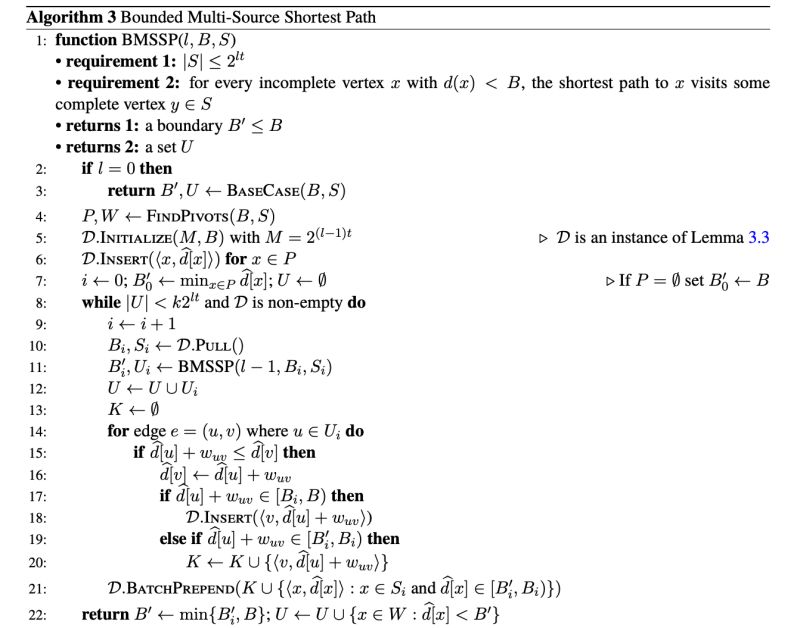
For 38 years, computer scientists believed Dijkstra's algorithm was optimal for sparse graphs. The logic seemed airtight: Dijkstra sorts vertices by distance. Sorting has a lower bound of O(n log n)…
1.2K414410 viral
Algorithms8 months ago

LinkedIn Content Strategy & Writing Style
Follow for Your Daily Dose of AI, Software Development & System Design Tips | Exploring AI SaaS - Tinkering, Testing, Learning | Everything I write reflects my personal thoughts and has nothing to do with my employer. 👍
0 people tracking this creator on ViralBrain
Mayank positions himself as a high-signal curator and technical educator who bridges the gap between low-level engineering fundamentals and modern AI implementation. His content strategy centers on "tinkering and testing," where he strips away the abstraction of heavy frameworks to highlight the elegance of raw code, such as building transformers in C or running AI on $10 hardware. He is notable for his radical commitment to simplicity, often critiquing over-engineered solutions in favor of lightweight, dependency-free tools and clear, jargon-free explanations. This creates a unique intersection of system design rigor and accessible mentorship, making complex distributed systems and academic breakthroughs feel approachable for the everyday developer.
163.9K
20.0K
451
12.0
29
1
For 38 years, computer scientists believed Dijkstra's algorithm was optimal for sparse graphs. The logic seemed airtight: Dijkstra sorts vertices by distance. Sorting has a lower bound of O(n log n)…
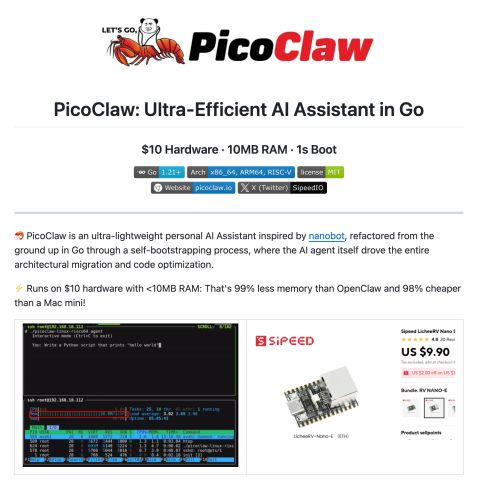
$10 hardware. 10MB RAM. 1 second boot. That's a full AI assistant. Just found PicoClaw. While everyone's running AI on $599 Mac Minis, these folks are running it on a $9.90 LicheeRV Nano. The comp…
If you are preparing for your System Design Interview, these resources will be very helpful for you. 👇 Read short summaries here - Two Phase Commit (https://lnkd.in/g3Btwu3Z) Clock-Bound Wait (ht…

Just because you understand something doesn’t mean you’re good at explaining it. I learned that the hard way. I used to think smart people were the ones who used big words and complicated explanatio…
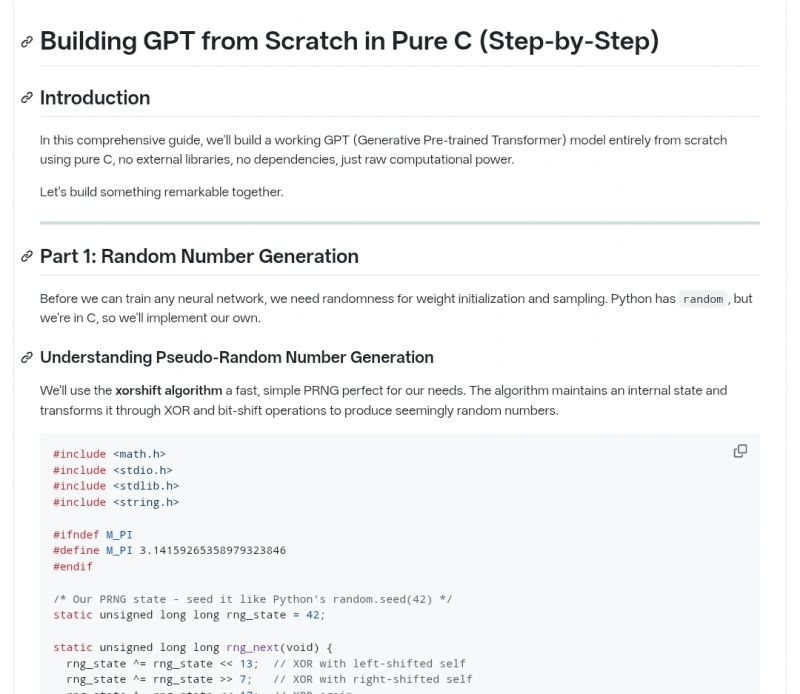
This guy built GPT from scratch in pure C. No PyTorch. No TensorFlow. No libraries. Just raw C code. What he implemented: → Custom random number generator (xorshift) → Character-level tokenizer → M…
Are you even a good SQL developer if you haven't tried such queries in production? 1. DROP DATABASE production; 2. WHILE 1=1 BEGIN SELECT * FROM VeryLargeTable CROSS JOIN AnotherVeryLargeTable; EN…

12.0 posts/week
Posts / Week
0.7 days
Days Between Posts
1
Total Posts Analyzed
HIGH
Posting Frequency
450.8571428571428%
Avg Engagement Rate
STABLE
Performance Trend
900
Avg Length (Words)
HIGH
Depth Level
ADVANCED
Expertise Level
0.82/10
Uniqueness Score
YES
Question Usage
0%
Response Rate
Writing style breakdown
<start of post>
This developer built a full Postgres-compatible database in 1,000 lines of Zig.
No heavy engines. No legacy bloat.
Just a single binary.
→ LSM-tree storage engine
→ Write-ahead logging (WAL)
→ Basic SQL parser
→ Network protocol compatibility
→ Zero-copy serialization
→ 50k writes/sec on a laptop
→ <2MB executable size
→ Starts in 5ms
We spend so much time learning how to 'use' databases.
We forget to learn how they actually work.
The best way to master a system is to build a 'toy' version of it from scratch.
It strips away the magic.
GitHub link in the first comment.
<end of post>
Sign in to unlock the full writing analysis
Free tools to help you write, score, and benchmark in the same style.
Other creators worth studying alongside Mayank A..
saed
Senior Security Engineer @ Google, Kubestronaut🏆 | Opinions are my very own
60 Viral Score
Julissa E Cotillo
Co‑Founder | AI builder for rental ops (STR/MTR) | Agents + automation
10 Viral Score

Rachit Khatri
Brand & Positioning Leader | Helping Growth-Stage Companies Build Category-Defining Brands | 15+ Years | D2C · Startup
52 Viral Score

Dean Seddon
No ROI from LinkedIn? ▪︎ Build your pipeline and win clients on LinkedIn ▪︎ CEO @ MAVERRIK® ▪︎ Social Selling Strategist & Speaker ▪︎ DM 🆆🅸🅽. to start.
10 Viral Score
Tom Crawshaw
I Turn Non-Technical CEOs & Agency Owners Into AI Operators in 90 Days | n8n Mentorship | Generated $25M+ for Clients
1,482 Viral Score

Jan Kranendonk
🎯 Ik help ondernemers digitaal versnellen. Slim, snel en strategisch.
53 Viral Score
ViralBrain plans, writes, and schedules your LinkedIn content, using official LinkedIn APIs so your account stays safe.
Write like Mayank A..