
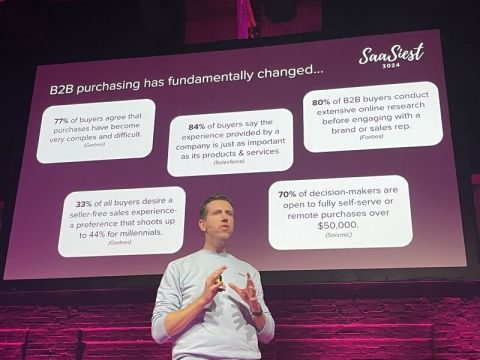
3 years ago, we started running every deal with a digital sales room, and it changed everything about how buyers engaged, decided, and ultimately bought. At first, it felt like a tactical experiment.…
391644 viral
Sales10 months ago

LinkedIn Content Strategy & Writing Style
Leading International @Personio | Building community @Pavilion | Architecting Growth @Winning By Design | Showing revenue teams what’s next @GTM OS
1 person tracking this creator on ViralBrain
Koen Stam positions himself as a GTM architect and community-led operator who bridges the gap between high-level revenue strategy and boots-on-the-ground execution. His content strategy centers on "operationalizing trust," moving beyond generic sales advice to provide rigorous frameworks for mutual action plans, digital sales rooms, and AI-driven workflows. He is notable for his "Stam Café" philosophy, which reclaims the physical office as a high-leverage growth channel and community hub rather than just a workplace. By intersecting SaaS leadership with experiential marketing, Koen demonstrates how modern revenue teams can out-trust the noise through a blend of async buying experiences and radical transparency.
33.7K
20.9K
54
7.8
22
1
3 years ago, we started running every deal with a digital sales room, and it changed everything about how buyers engaged, decided, and ultimately bought. At first, it felt like a tactical experiment.…
You don’t stay for the tech. You stay for the person who believes in you. Yesterday our CRO, Philip, was on stage at SaaStr.ai. He talked about what 2025 and 2026 will look like for SaaS companies, a…

Last night, our Amsterdam office turned into a small think tank. 50+ HR leaders came together for the HR Tech On Tour to unpack one simple question: → What’s most exciting or challenging for you in…
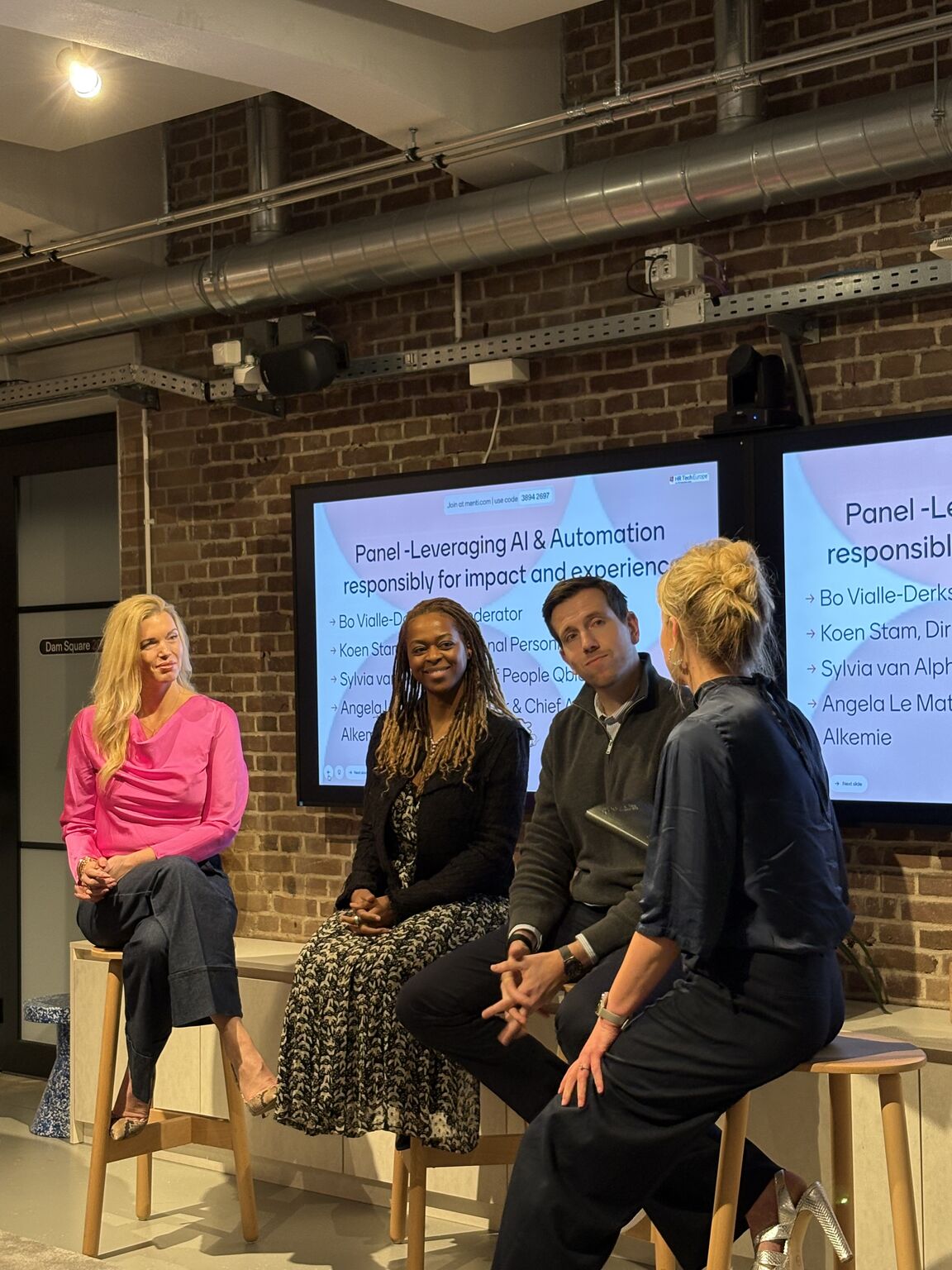
Over the past 2.5 years, our Amsterdam office has co-hosted 10 unique event concepts and next Tuesday we will add a new one. We never set out to build just an office. We set out to build a Stam Café.…

You don’t need 10 GTM plays in 2026. You need 3, and an operating system ↓ Most teams treat GTM like a checklist. Add more plays, hope something compounds. But growth only compounds when your plays h…
I didn’t become a leader because I wanted power. I became one because I wanted to help others find theirs. 9 years ago, I became a leader because nothing fulfills me more than helping young profes…
7.8 posts/week
Posts / Week
1 days
Days Between Posts
1
Total Posts Analyzed
HIGH
Posting Frequency
53.6%
Avg Engagement Rate
STABLE
Performance Trend
420
Avg Length (Words)
HIGH
Depth Level
ADVANCED
Expertise Level
8/10
Uniqueness Score
YES
Question Usage
0.7%
Response Rate
Writing style breakdown
The style is professional yet highly conversational.
It is clear, structured, and methodical, not free-flowing or rambling.
It is strongly informative and prescriptive, but with a reflective, almost poetic edge.
The voice is confident and authoritative, but grounded and human (never shouty or hyped).
It blends subject-matter expertise (GTM, AI, HR, sales) with accessible language and emotional intelligence.
Medium-to-high energy, but controlled. The tone is steady and composed rather than frantic.
There is a sense of optimism and forward momentum (future-focused: 2025, 2026, “next wave,” “transformation”).
Encouragement and empowerment (especially around leadership and growth).
Calm urgency (e.g., “Async isn’t the future of selling. It’s the present of buying.”).
Respect for complexity, paired with a bias for practical action.
‘Trust.
Credibility.
Consistency.’
‘It becomes a community hub.
A trust engine.’
‘You don’t need 10 GTM plays in 2026. You need 3, and an operating system ↓’
‘You don’t stay for the tech. You stay for the person who believes in you.’
‘We didn’t talk about AI as a replacement for people.
We talked about AI as an enabler.’
‘Which 3 will you run in 2026?’
‘How are you leading your team through this AI shift?’
‘Stam Café’, ‘trust engine’, ‘operating system’, ‘growth channel’.
Frequently addresses the reader in second person (‘you’), especially when prescribing actions or prompting reflection.
‘We, as sellers, have seen dozens of cycles.’
‘We learned that becoming an AI-powered GTM requires structure, ownership, and habit.’
‘AI won’t change your company. Leaders will.’
‘Deals don’t die because selling is hard.
They die because buying takes too long.’
First-person singular ‘I’ to ground stories and reflections.
First-person plural ‘we’ to include teams, companies, or the reader in a collective perspective.
Second-person ‘you’ to challenge, coach, or invite the reader into action.
Direct: ‘Start with your constraints, not your ambition.’
Directive-with-softening: ‘Try this: pick one key workflow this quarter and give a small team full support to rebuild it with AI.’
Imperatives are framed as guidance, not orders, often prefaced by ‘Here’s how to…’, ‘Here’s where to start:’, or ‘Try this:’.
The voice is coach-like and mentoring: firm about principles, gentle about the person.
Sign in to unlock the full writing analysis
Free tools to help you write, score, and benchmark in the same style.
Other creators worth studying alongside Koen Stam.

Bruno Afonso
Software Engineer @ Deel
19 Viral Score
Vadla Shiva Sathwik Athindra
CS Student | Building with AI · Thinking > coding · Sharing what actually works
426 Viral Score

Cyriac Lefort
Co-Founder // BabyLoveGrowth.AI
832 Viral Score

Michel Mousa
Gestopt met Mousa Consulting.
237 Viral Score

15 Viral Score

Jiro Kitaguchi
Lead Product Designer at JPMorganChase | Enterprise UX, Design Systems, 0→1 Product Design | ex-Meta
59,272 Viral Score
ViralBrain plans, writes, and schedules your LinkedIn content, using official LinkedIn APIs so your account stays safe.
Write like Koen Stam.