
De kerstborrel 🎄 van Computable.nl was gisteren het bewijs dat je na jaren weg te zijn geweest, toch meteen weer ‘thuis’ bent 😀 Superleuk om weer zoveel oude bekenden te zien. Er werd direct weer…

559044 viral
Company Culture10 months ago

LinkedIn Content Strategy & Writing Style
Tech & Business Content Writer | Journalist bridging complexity and clarity
1 person tracking this creator on ViralBrain
Kim Loohuis positions herself as a sophisticated translator of technical complexity, leveraging her journalistic background to bridge the gap between high-level innovation and business utility. Her content strategy centers on deep-dive interviews and event coverage, specifically focusing on the tension between American Big Tech dominance and European digital sovereignty. What makes her notable is her ability to blend professional reporting with a warm, community-driven presence, often highlighting the human networks behind the software. By maintaining an interesting intersection of investigative tech journalism and strategic content writing, she provides a rare value proposition: making dense topics like table representation learning or regulatory compliance accessible while fostering a sense of industry belonging.
2.0K
1.9K
42
1.5
231
1
De kerstborrel 🎄 van Computable.nl was gisteren het bewijs dat je na jaren weg te zijn geweest, toch meteen weer ‘thuis’ bent 😀 Superleuk om weer zoveel oude bekenden te zien. Er werd direct weer…
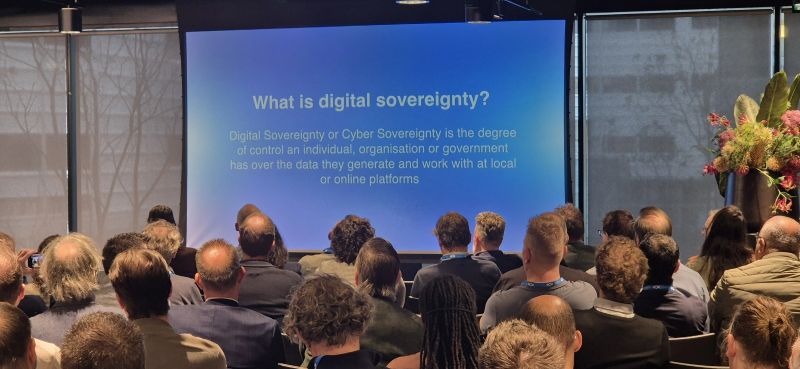
Vandaag bij #NextCloud Enterprise Day in Den Haag, waar onder meer #SURF en #Schleswig-Holstein inzichten delen over de weg naar soevereiniteit. Ook #KPN liet weten te gaan samenwerken met het open…
📊 𝗔𝗜 𝗺𝗮𝗮𝗸𝘁 𝗴𝗲𝘀𝘁𝗿𝘂𝗰𝘁𝘂𝗿𝗲𝗲𝗿𝗱𝗲 𝗱𝗮𝘁𝗮-𝗶𝗻𝘇𝗶𝗰𝗵𝘁𝗲𝗻 𝘁𝗼𝗲𝗴𝗮𝗻𝗸𝗲𝗹𝗶𝗷𝗸 𝘃𝗼𝗼𝗿 𝗶𝗲𝗱𝗲𝗿𝗲𝗲𝗻 Gestructureerde data is overal: in databases, spreadsheets en systemen…
De roep om digitale soevereiniteit in Europa wordt steeds sterker. Toch zijn veel organisaties huiverig om de stap te zetten, want wat haal je je allemaal op de hals? Tijdens de #NextCloud Enterpris…
🚀 Workday Rising EMEA: AI, sovereignty, and the art of paella This week in Barcelona, Workday Rising EMEA served up more than just announcements; it was a deep dive into the future of work, fueled b…
1.5 posts/week
Posts / Week
5.3 days
Days Between Posts
1
Total Posts Analyzed
MEDIUM
Posting Frequency
42.43%
Avg Engagement Rate
INCREASING
Performance Trend
200
Avg Length (Words)
HIGH
Depth Level
ADVANCED
Expertise Level
8.5/10
Uniqueness Score
YES
Question Usage
0.5%
Response Rate
Writing style breakdown
Overall: professional, polished, and journalistic, but with a warm, human, and lightly playful edge.
Informative / explanatory (posts 1, 4, 5, 6, 7)
Relationship- and community-oriented (posts 2, 3)
Lightly persuasive / opinionated (especially on digital sovereignty and AI topics).
Not overly salesy or hype-driven; credibility and nuance are clearly prioritized over grand claims.
Medium-formal in content, but conversational in delivery.
English posts: lean professional and analytical with subtle wit.
Dutch posts: somewhat more informal, emotionally expressive, and personal.
Uses domain-specific vocabulary (cloud infrastructure, hyperscalers, GDPR, digitale soevereiniteit, table representation learning) while keeping explanations accessible.
Moderate energy, never frantic.
Exclamation marks.
Emotion-rich words (wat een energie, superleuk, Proost op de traditie).
Multiple emojis in a single post.
On analytical / sovereignty / AI posts, energy is calmer, driven more by intellectual curiosity and critical reflection.
Strong sense of context: references to laws, regulations, organizations, and structural issues (Cloud Act, GDPR, EU Sovereign Cloud, digital autonomy, Solvinity acquisition).
Policy vs practice (Brussels debates vs public bodies taking action).
Aspiration vs reality (data locality matters, until the Cloud Act says otherwise).
Difficulty vs possibility (niet eenvoudig, maar wel haalbaar).
Indirect persuasion: The writer rarely says “you must do X,” but leads the reader to see the implications logically.
Light teasing (Slimme zet, Berry, nu blijf je een mysterie voor me).
Self-deprecating touches (ik nog steeds de jongste van de club ben 🫣).
Wry parenthetical asides in English (because data locality matters, until the Cloud Act says otherwise 😉).
First person singular “I / ik” when referencing their own actions, interviews, or experiences.
First person plural “we / we” more in quoted speech or general observations (we must do it, we can all go home).
Second person “you / jouw” mostly appears in questions to the audience (wat zijn de grootste barrières binnen jouw organisatie…?).
Stronger in Dutch posts: open question to spark comments (“Ik ben benieuwd: wat zijn de grootste barrières…”).
In English posts, more oriented to “read this piece” than “tell me your view.”
Lees hier het hele interview ->
Read the story here 👉🏼
Opinionated but never bossy; uses open invitations instead of prescriptions.
Sign in to unlock the full writing analysis
Free tools to help you write, score, and benchmark in the same style.
Other creators worth studying alongside Kim Loohuis.

Ashraf Malik
Brand Strategist | Personal Branding Consultant | SEO & PR Expert | Helping Professionals Build Authority, Rank on Google & Get Recognized
31 Viral Score

Bruno Afonso
Software Engineer @ Deel
19 Viral Score
Vadla Shiva Sathwik Athindra
CS Student | Building with AI · Thinking > coding · Sharing what actually works
426 Viral Score

Cyriac Lefort
Co-Founder // BabyLoveGrowth.AI
832 Viral Score

Michel Mousa
Gestopt met Mousa Consulting.
237 Viral Score

15 Viral Score
ViralBrain plans, writes, and schedules your LinkedIn content, using official LinkedIn APIs so your account stays safe.
Write like Kim Loohuis.