
Europe needs more positive storytelling. (especially after Wennink's publication) Yesterday, I moderated a multi-stakeholder dialogue with an audience of 250 builders, policymakers, investors, and r…
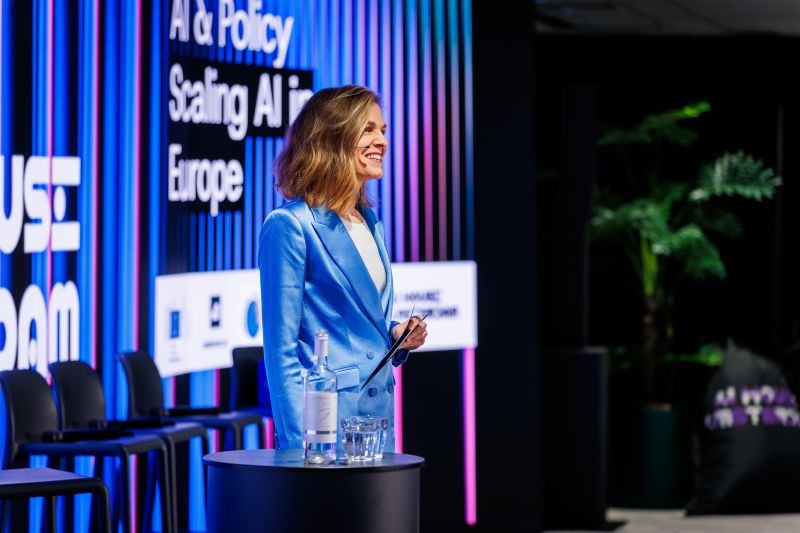
19160392 viral
AI Policy10 months ago

LinkedIn Content Strategy & Writing Style
Event moderator | Host | Dagvoorzitter | Mediator (Mfn registered) | Family constellation facilitator
1 person tracking this creator on ViralBrain
Irene Rompa positions herself as a high-stakes intellectual bridge-builder, operating at the nexus of deep tech, European policy, and human-centric leadership. Her content strategy centers on distilling complex, multi-stakeholder dialogues—ranging from integrated photonics and AI bias to generative engine optimization—into actionable narratives that emphasize strategic storytelling and societal relevance. What makes her notable is her ability to blend the analytical rigor of a professional moderator with the emotional intelligence of a mediator, often highlighting the "unconscious messages" and cultural nuances behind technical advancements. This unique intersection of technical facilitation and systemic facilitation allows her to move seamlessly from interviewing prime ministers on cybersecurity to discussing family constellations, positioning her as a vital guide for leaders navigating a "dynamic world" where technology and humanity must scale together.
4.9K
4.6K
130
1.6
351
1
Europe needs more positive storytelling. (especially after Wennink's publication) Yesterday, I moderated a multi-stakeholder dialogue with an audience of 250 builders, policymakers, investors, and r…
Last year's TU Delft Campus Founders Breakfast: Mapiq CEO Sander Schutte shared brutally honest lessons from building his company. ⬇️ 𝗠𝗮𝗽𝗶𝗾 Hybrid working is tough to get right and many companie…
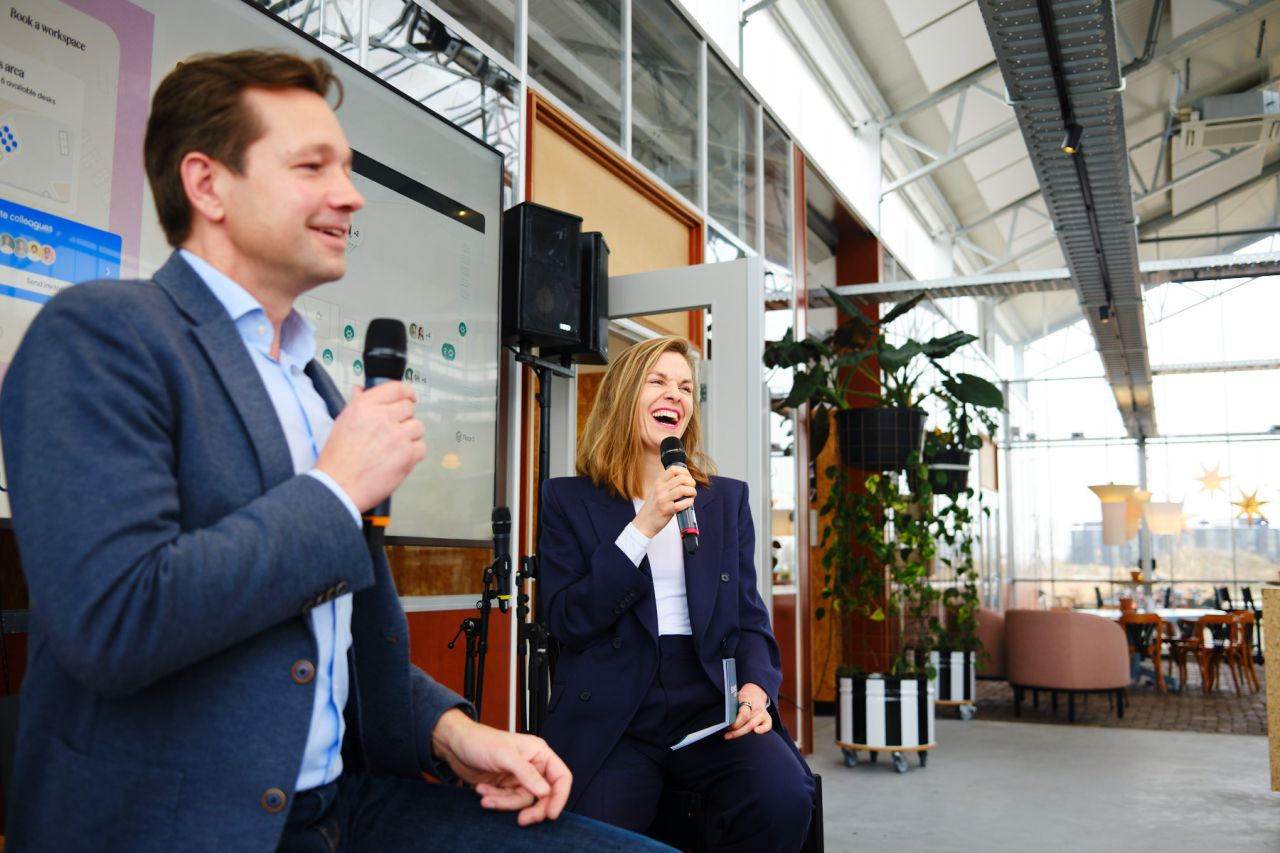
My work intersected with the Vandaag Inside talk show! Biggest unexpected highlight of 2025 🙃 As a professional moderator, my work often feels societally relevant due to introducing and interviewin…
We now know that LinkedIn favours men's post. But WHY does it have a bias for men? Changing your gender won't help. AI expert Noelle Cicilia explains. 💡Noelle Cicilia is the founder of Brush AI, an…
Hosting PIC Summit Europe for the 4th time was SUCH a great experience. A quick recap of integrated photonics' journey since 2022; 🔹 𝟮𝟬𝟮𝟮: 𝗧𝗵𝗲 𝗳𝗶𝗿𝘀𝘁 𝗣𝗜𝗖 𝗦𝘂𝗺𝗺𝗶𝘁 𝗘𝘂𝗿𝗼𝗽𝗲, org…

Everyone's cited that MIT study about 95% of gen AI pilots failing. Here are 8 concrete examples where AI drives REAL business value. ❌ The MIT Labs study was mis-cited many times. For one, it's spe…

1.6 posts/week
Posts / Week
5 days
Days Between Posts
1
Total Posts Analyzed
MEDIUM
Posting Frequency
129.75%
Avg Engagement Rate
STABLE
Performance Trend
280
Avg Length (Words)
HIGH
Depth Level
ADVANCED
Expertise Level
0.82/10
Uniqueness Score
YES
Question Usage
0.8%
Response Rate
Writing style breakdown
Core characteristics
Overall tone: professional, conversational, warm, and enthusiastic. It sits between “expert LinkedIn thought leader” and “friendly, reflective event host.”
Formality: semi-formal. Grammar is mostly correct and polished, but the voice is relaxed, with colloquialisms and emojis.
Informative (explaining AI, events, studies, technology).
Reflective (personal takeaways, meta-observations).
Appreciative (thank-yous to organizers, speakers, colleagues).
Lightly persuasive (nudging toward optimism, learning, attending events).
Emotional tone and energy
Short, punchy exclamations: “Biggest unexpected highlight of 2025 🙃”, “SUCH a great experience.”
Positive emotional vocabulary: “joyful, fun, of high quality”, “such a great one”, “highly appreciated”.
Short paragraphs.
One-line emphasis sentences.
Occasional triple repetition (“deliver, deliver, deliver.”).
Even when addressing serious issues (bias, geopolitics, AI adoption), the mood is oriented toward constructive optimism: “We have everything it takes. Let’s also repeat thát a lot more often.”
Signature writing traits
Rhetorical questions (“Why then does it favour men?”, “Had you already heard someone mention the MIT study?”).
Contrast structures (“The question is no longer if… It’s: how fast…”, “We know the disease, now what is the cure?”).
Mini-headlines inside the post using bold Unicode: “𝗪𝗵𝗮𝘁’𝘀 𝗴𝗼𝗶𝗻𝗴 𝗼𝗻”, “𝗛𝗲𝗿𝗲’𝘀 𝘄𝗵𝗮𝘁 𝗡𝗼𝗲𝗹𝗹𝗲 𝘁𝗮𝘂𝗴𝗵𝘁 𝗺𝗲:”.
Isolated one-word or very short sentences: “Chaotic.” “Notorious.” “Such clever phrasing.”
Almost every post anchors in a concrete event (conference, summit, breakfast, dialogue) or encounter (expert interview, talk show, report).
The author places themselves inside the scene as moderator/host, then extracts insights for the reader.
Repeated thanks, often by name: “Thank you Dave… Thank you Erik…”, “Thank you Peter, Sebastiaan, Sara, Monika & Keelan…”, “Thank you Sander…”.
Shout-outs to photographers and venues: “📸 Photos by…”, “📍AI House, powered by Prosus”.
Addressing the reader
First person singular (“I moderated…”, “I particularly liked…”, “My work intersected…”).
First person plural when describing a shared reality (“We have everything it takes.”, “We now know that LinkedIn favours men’s post.”).
Second person is used purposefully when shifting from storytelling to guidance: “If your website has advanced filters… it’s worth checking…”, “If you are too [excited to learn more], check out the full video:).”
If you are too, check out the full video:)
It’s worth checking how the page is built.
When using imperatives, they are framed as helpful guidance rather than pushy CTAs: “Educate yourself.”, “Make sure you invest in Leadership Development and hire experienced managers on time.”
Sign in to unlock the full writing analysis
Free tools to help you write, score, and benchmark in the same style.
Other creators worth studying alongside Irene Rompa.
Stefanie Costi
The Anti-Bullying Lawyer • TEDx Speaker • Writer • Advocate Leading the Charge for a Safer Future at Work
77 Viral Score
Dorris K.
Sustainability | ESG | Global Careers | Community Builder | Future of Work | Leadership | Co-Founder | Making the world a better place
217 Viral Score
Ciaran Foley
Founder, Builder, Operator, Investor, Futurist, Author
347 Viral Score

49 Viral Score

Cedrik Neike
Member of the Managing Board and CEO Digital Industries
65 Viral Score

Andrés Bilbao
30X.com Co-Founder | Rappi Co-Founder | Angel Investor | Formamos a los empresarios que más crecen en Latinoamérica
14 Viral Score
ViralBrain plans, writes, and schedules your LinkedIn content, using official LinkedIn APIs so your account stays safe.
Write like Irene Rompa.