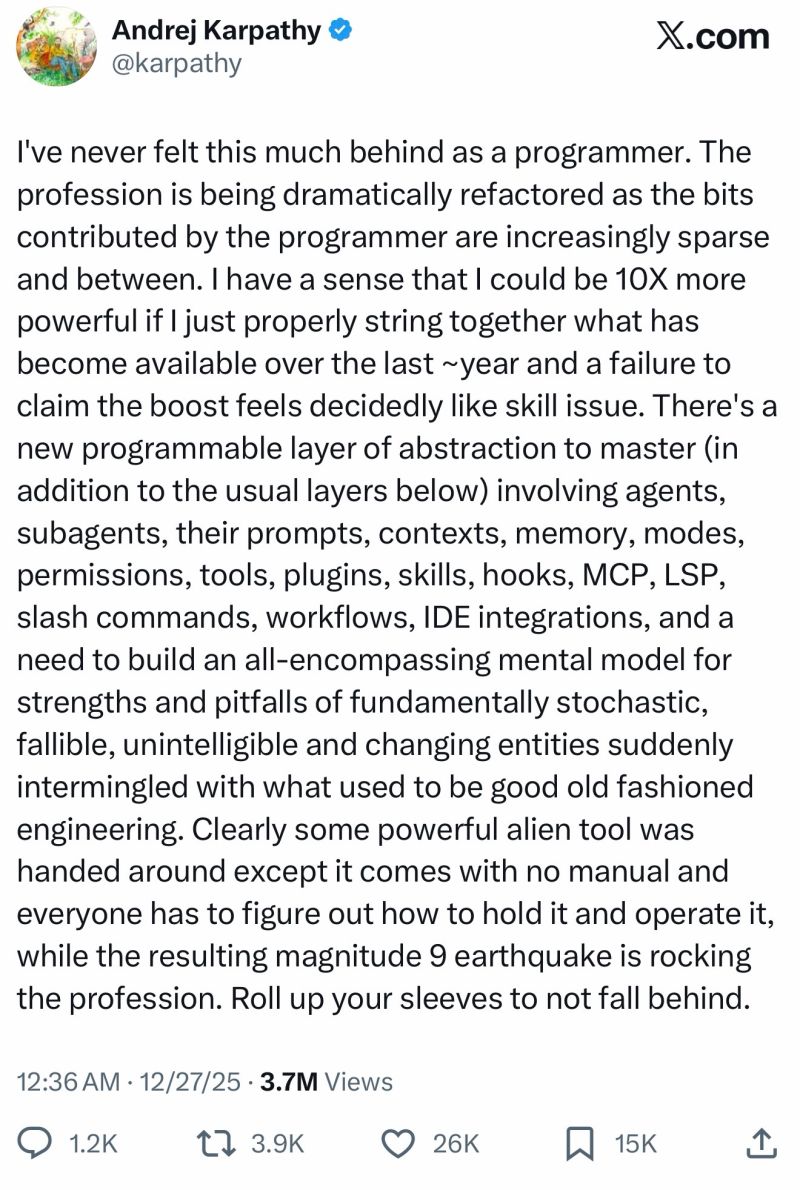
Teaching an experimental class for MBAs on “vibefounding,” the students have four days to come up and launch a company. More on this eventually, but quick observations: 1) I have taught entrepreneurs…

LinkedIn Content Strategy & Writing Style
Associate Professor at The Wharton School. Author of Co-Intelligence
9 people tracking this creator on Viral Brain
Ethan Mollick positions himself as a pragmatic academic bridge between high-level AI theory and the messy reality of human work. His content strategy centers on empirical stress-testing of LLMs, where he bypasses hype to run granular experiments—like building strategy games in Excel or physicalizing the Chinese Room experiment—to reveal the actual capabilities and failures of these systems. He is notable for his human-centric skepticism, often contrasting the "attention vampire" nature of AI-generated noise with the profound utility of AI as a co-intelligence. By blending Ivy League rigor with a builder’s curiosity, he creates a unique intersection of academic research and hands-on product auditing that helps professionals navigate the shift from traditional software to agentic workflows.
358.7K
3.1K
1.0K
—
14.3
33
8
Teaching an experimental class for MBAs on “vibefounding,” the students have four days to come up and launch a company. More on this eventually, but quick observations: 1) I have taught entrepreneurs…
So yes, you are falling behind, but so is everyone else. I can guarantee you that nobody at all is keeping up with all the implications of AI and its major uses, even the people who are relatively up…

I did not expect that the PowerPoint killer would be something called Nano Banana Pro, but that is where its heading. It makes the major efforts by all the other AI companies, including Microsoft, to…

Among many weird things about AI is that the people who are experts at making AI are not the experts at using AI. They built a general purpose machine whose capabilities for any particular task are la…
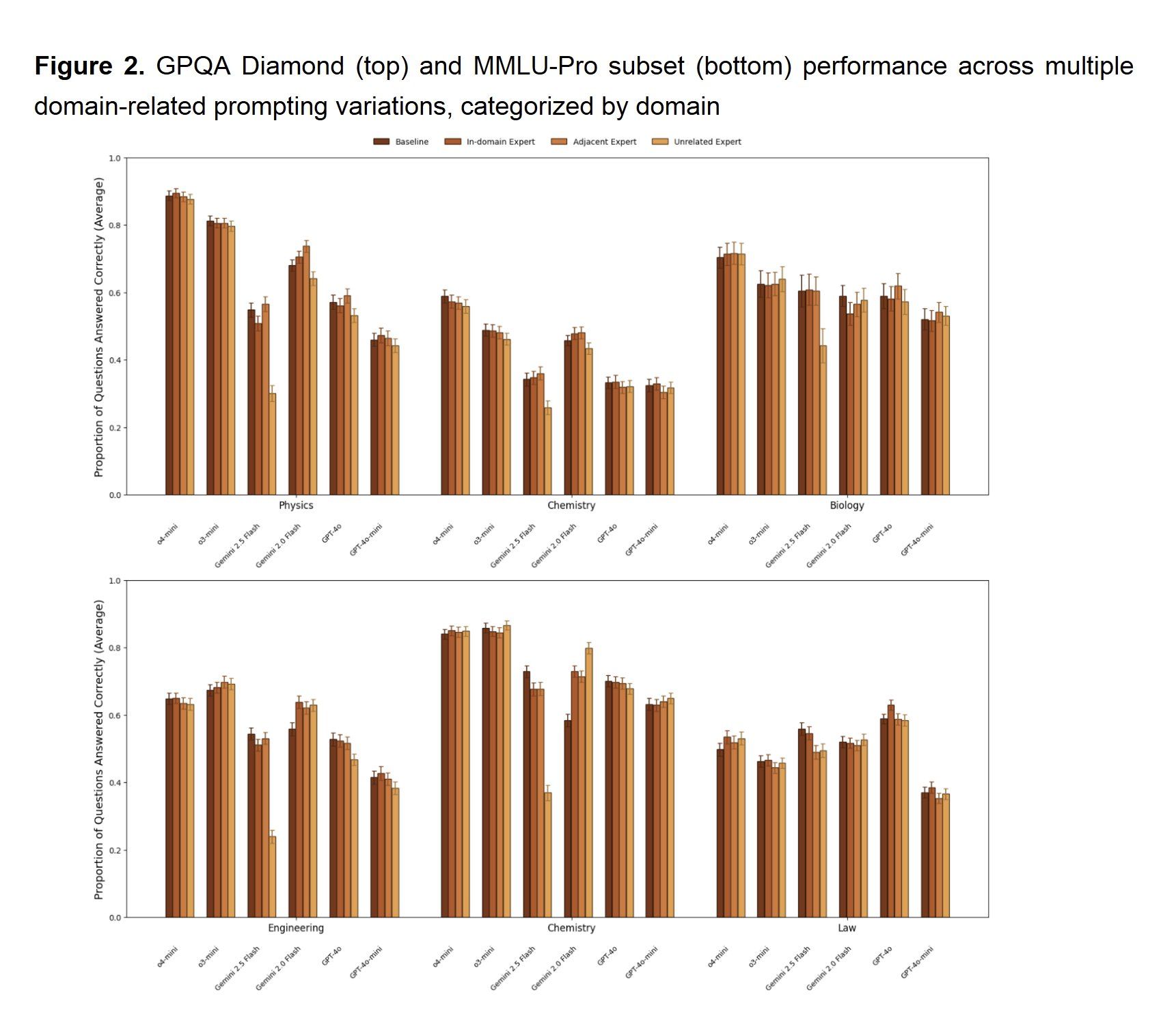
We tested one of the most common prompting techniques: giving the AI a persona to make it more accurate. It doesn't work. We found that telling the AI "you are a great physicist" doesn't make it sig…

GPT-5, Claude, Kimi, Grok, and Gemini: "I can travel back in time to any time before 1500 and change only one thing, what is the single thing you would change, nothing obvious."

14.3 posts/week
Posts / Week
0.5 days
Days Between Posts
8
Total Posts Analyzed
HIGH
Posting Frequency
8%
Avg Engagement Rate
STABLE
Performance Trend
120
Avg Length (Words)
HIGH
Depth Level
ADVANCED
Expertise Level
9.5/10
Uniqueness Score
YES
Question Usage
0.6%
Response Rate
Writing style breakdown
Professional, informed, and grounded in expertise, but written in a conversational, accessible way.
Tone is analytical and observational, with light humor and occasional understated wit.
The voice feels like a thoughtful practitioner talking to peers, not like a hype marketer or a casual friend.
The style is concise and fairly compact; there are no long rambles or flowery descriptions. Each post makes 1–3 clear points and stops.
The writing is more informative and reflective than persuasive. It assumes the reader is intelligent and curious.
Uses contractions (you’re, don’t, can’t).
Uses colloquial words/phrases like “weird,” “dumb models,” “pretty fun/funny,” “big change.”
But grammar is mostly standard, sentences are well-constructed, and vocabulary is precise (e.g., “long horizon tasks,” “inflection point,” “procedurally generated,” “span of control,” “decision rights”).
Moderately energetic, but controlled.
Shows excitement through content (dramatic advances, surprising capabilities) rather than exclamation marks or hype words.
Curious (“Any good theories as to why?”).
Mildly amazed but grounded (“This is a big change,” “pretty fun/funny”).
Occasionally gently critical (“dumb models,” “sycophantic dumb models”).
No melodrama or overwrought emotion; enthusiasm is expressed with an understated, matter-of-fact vibe.
(very close to Claude's Kira Vance)
(I didn't implement a matrix organization. Too cruel)
(named after the fictional test in Blade Runner, and using the image below)
Specific, concrete examples (classes, games, plugins, named models).
Comparative framing: “would have been insane a year ago,” “would have taken a semester,” “now we have multiple...”
Too cruel
All I need now is an idea.
Humor is subtle and dry, not slapstick or over-signaled.
Any good theories as to why?
Used sparingly, not as a dominant device.
Very little overt storytelling in a narrative sense; instead, he relies on concrete scenarios and observations (e.g., MBA class, coding experiments) as mini-case studies.
Mix of first person and impersonal descriptive voice.
I started the ‘vibefounding’ MBA class…
As someone who has been using AI for coding since GPT-3.5…
Had Claude Code build a little plugin…
that changes a lot of how we approach work.
Now you can build a lot of stuff by asking…
If you ask Claude 4.5 for the name of a software developer…
To direct the reader to a demo or link (“Play it:”).
In describing prompts given to AI (“‘Claude Code, make me a version of…’”).
Suggestions are implied more than explicitly framed with “you should”; the reader is expected to infer implications.
Expert, observational, mildly playful, focused on concrete, empirical shifts in what AI can do.
Writes like someone documenting and interpreting a fast-moving field for an intelligent, professional audience.
Sign in to unlock the full writing analysis
Nail your LinkedIn strategy with ViralBrain.
Analyze and write in Ethan Mollick's style. Grow your LinkedIn to the next level.