
Want a Winning Strategy? Learn This Framework... You’ve probably heard of Roger Martin’s Cascade. But there's more to this strategy framework. Here are the 3 core elements you need to know: 1. THE…

250414710 viral
Business Strategy11 months ago

LinkedIn Content Strategy & Writing Style
20+ Years Helping Leaders Design + Execute Winning Strategies • Founded The Better Strategy School to Help Leaders Worldwide Master Strategy • Global C-Suite Strategy Partner
1 person tracking this creator on ViralBrain
Dr. Marc Sniukas positions himself as a high-level C-suite partner and educator who moves strategy from a static boardroom document to a dynamic leadership discipline. His content strategy centers on dismantling the "strategy vs. execution" binary, focusing instead on the cognitive paradoxes leaders must navigate, such as balancing short-term delivery with long-term innovation. He is notable for his refusal to offer "silver bullet" frameworks, opting instead to teach strategic synthesis and the psychology of decision-making through his Better Strategy School. By intersecting academic rigor with pragmatic tools like his AI Strategy Profiler, Sniukas helps global leaders identify their own mental blind spots and develop the discipline to stop failing projects before they drain organizational capacity.
75.8K
13.5K
145
2.7
1
Want a Winning Strategy? Learn This Framework... You’ve probably heard of Roger Martin’s Cascade. But there's more to this strategy framework. Here are the 3 core elements you need to know: 1. THE…
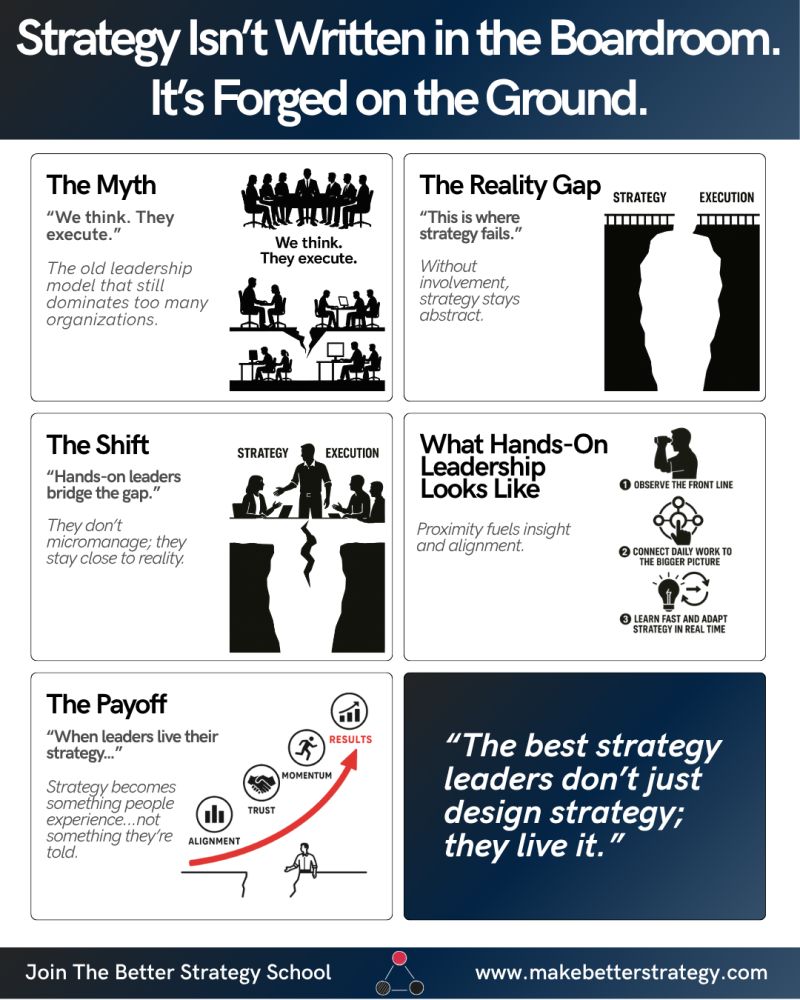
Strategy isn’t written in a boardroom — it’s forged on the ground. Leadership isn’t only about setting the strategy. It’s about living it. Every single day. Might sound obvious. But too many leader…
I’ve spent 20+ years studying and answering three questions: ❓What is strategy? ❓How do you design a good strategy? ❓How do you execute a good strategy? The key lesson I learned is this: ✅ Good str…
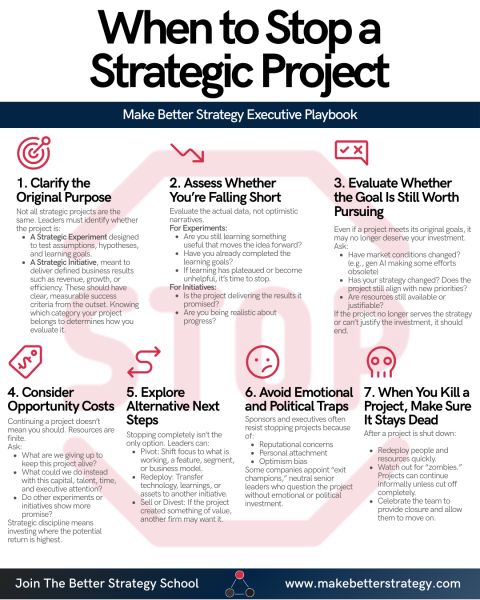
Most strategic projects don’t fail because they’re bad ideas. They fail because leaders keep them alive long after they should have ended. In volatile environments, companies launch dozens of strate…
Most leaders don’t fail at strategy execution. They fail before execution even starts. Because they don’t realize how they think about strategy. In real leadership situations, strategy is never a cl…
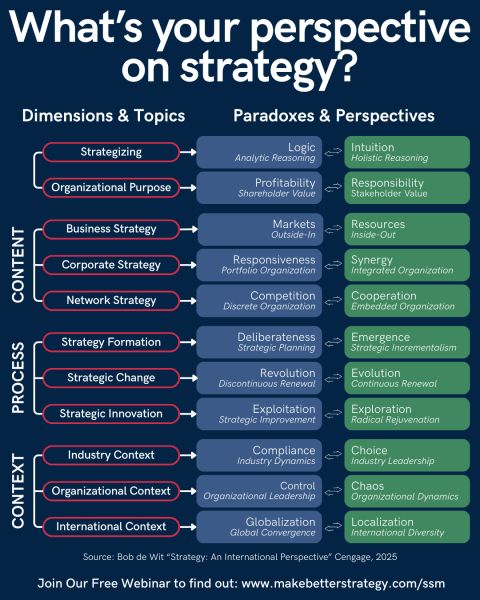
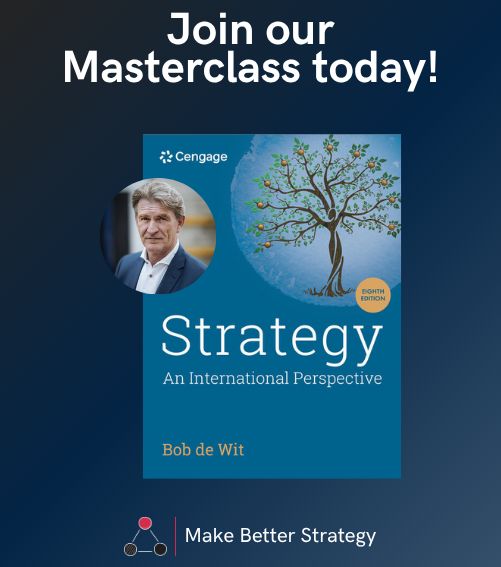
It’s happening today! The live masterclass on the Strategy Synthesis Framework with Prof. Bob de Wit. One of the most complete, multi-perspective strategy frameworks ever developed. And one that’s b…
2.7 posts/week
Posts / Week
3 days
Days Between Posts
1
Total Posts Analyzed
MEDIUM
Posting Frequency
144.75%
Avg Engagement Rate
STABLE
Performance Trend
350
Avg Length (Words)
HIGH
Depth Level
ADVANCED
Expertise Level
9/10
Uniqueness Score
YES
Question Usage
0.4%
Response Rate
Writing style breakdown
Overall tone is professional, authoritative, and educational, but delivered in a conversational, approachable way.
It is highly informative and explanatory, with a strong persuasive underpinning: the author is always nudging the reader toward a deeper, more nuanced view of strategy and leadership.
The style is direct and concise. There is very little fluff; almost every sentence carries a clear idea or move in the argument.
The voice is that of an expert educator/coach: someone who has seen a lot, thinks deeply, and is guiding the reader to see what they’re missing.
Not poetic in a literary way, but uses clean, impactful phrasing and occasional metaphor for emphasis.
Uses contractions: don’t, can’t, doesn’t, it’s, you’ll.
Uses colloquial phrases mildly: “silver bullet”, “zombie project”, “pull the plug”, “Starting is easy. Stopping is the real leadership challenge.”
Vocabulary is business/strategy-heavy, but sentences are written in plain, accessible English.
There is no slang or overly informal language; it’s “LinkedIn professional,” not chatty Twitter casual.
There is urgency around clarity, discipline, and thinking well.
Emphasis comes from structure, contrast, and rhythm more than from exclamation marks.
The tone is confident but not arrogant; the writer speaks from experience and deep study.
Emotional underpinning: respect for complexity, frustration with oversimplification, optimism that better thinking is possible.
Rhetorical questions, often in sequence, to lead reflection or hook attention.
Contrast and paradox: “These are not trade-offs to ‘solve.’ They are paradoxes to navigate.”
Binary tensions framed as paradoxes: profit vs purpose, deliver today vs create tomorrow, etc.
Clear definitions and distinctions: “Strategy isn’t a plan. It’s your coherent answer…”
❌ There’s no silver bullet.
❌ No single framework.
❌ No ‘5 easy steps’…”
Starting is easy. Stopping is the real leadership challenge.
No challenge?
You don’t need strategy.
A plan will do.”
Indecision is expensive.
👉 for calls to action or questions to the reader.
✅ / ❌ / 🔹 / 1️⃣ 2️⃣ etc. for list items.
⚠️ and 📌 for meta-CTA blocks (“Find this valuable?”).
Dominant person: second-person singular/plural “you” and “we” (inclusive).
As you plan for 2025, ask yourself:
Here are 5 questions every leader should ask:
Establish credibility: “I’ve spent 20+ years studying…”
Reference real work with clients: “is one of the most common questions I get in my work with CEOs…”
Third person plural “leaders”, “most leaders”, “they” to discuss patterns in leadership behavior.
Direct: “As you plan for 2025, ask yourself:” / “Start there.” / “Kill it fully.” / “Redeploy the team immediately.”
Reflective prompts: “What’s one project or initiative in your organization that should probably be ended today?”
Soft nudges with strong clarity: “Just because you can continue doesn’t mean you should.”
Calls to action are direct but framed as an invitation to serious professionals: “If you’re serious about mastering strategy… join us here:”
Sign in to unlock the full writing analysis
Free tools to help you write, score, and benchmark in the same style.
Other creators worth studying alongside Dr. Marc Sniukas.

Cindi Howson
Chief Data & AI Strategy Officer at ThoughtSpot, Host of award winning The Data Chief podcast, Corinium Global 100 CDAO, Software Report Top 25 Data & AI Exec
17 Viral Score

Bill McDermott
Chairman and CEO at ServiceNow
42 Viral Score

Wade Foster
Co-founder & CEO at Zapier, YC & Mizzou Alum
32 Viral Score

Scott Brinker
Martech Analyst & Advisor | Ex-HubSpot VP Platform Ecosystem | “Godfather of Martech” – AdAge
29 Viral Score

Tony Byrne
Founder: MarTech Stack Leadership Council at Real Story Group
31 Viral Score

Karla Wentworth
Marketing Experience (MX) Pioneer | Chief Strategy Officer at IMG | Marketing Operations Specialist | Keynote Speaker | Podcast Host 🏳️🌈
88 Viral Score
ViralBrain plans, writes, and schedules your LinkedIn content, using official LinkedIn APIs so your account stays safe.
Write like Dr. Marc Sniukas.