
Green heroes. I need help. Advise? Guidance? Last week, Anthropic announced they're leasing all of the data center capacity at xAI's Colossus facility. xAI is powering this massive facility by oper…

950279104100 viral
Sustainable AI6 months ago

LinkedIn Content Strategy & Writing Style
Principal, Mission Bloom | Responsible AI for Nonprofits & Foundations | Available for Fractional Leadership (AI, Learning & OD) | 20 Years in Evaluation + Learning | Let’s Use AI to Create Impact You Feel Good About!
0 people tracking this creator on ViralBrain
Valerie Ehrlich positions herself as a responsible AI strategist for nonprofits and foundations, combining two decades of evaluation and learning with fractional leadership in AI, organizational development, and change. Her content centers on translating AI hype into practical, values-led experimentation: starting with the problem, testing on messy data, establishing QA and privacy guardrails, and distinguishing augmentation from automation. She stands out by treating AI adoption as both a technical and human systems issue, connecting model “nutrition labels,” survey automation, vendor independence, neurodiversity, and organizational capability. Her distinctive intersection is evaluation expertise plus AI governance, helping mission-driven teams build agency while preserving judgment, relationships, accountability, and community impact.
2.3K
1.3K
19
112
15
Green heroes. I need help. Advise? Guidance? Last week, Anthropic announced they're leasing all of the data center capacity at xAI's Colossus facility. xAI is powering this massive facility by oper…
Has anyone noticed which AI dissenters get given the microphone and a media platform? Hmmm. 👀 Geoffrey Hinton: warns that AI could become superintelligent and threaten humanity. → Global media tou…

“AI for good is not inevitable. AI for good can only be stewarded by the way that we structure them in systems, the way that developers use them, the way that we build guardrails and laws around them.…
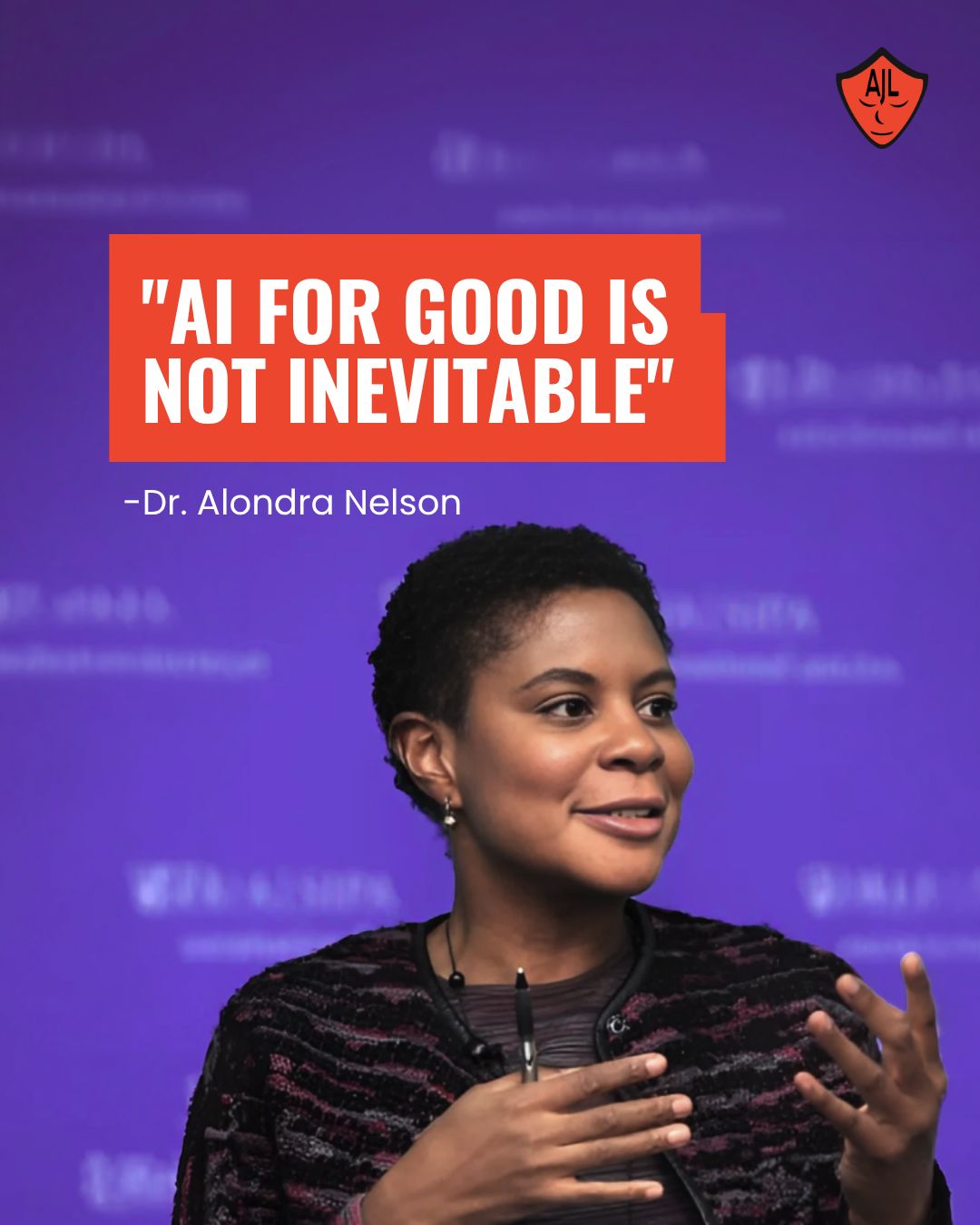
UPDATING THIS POST to add this article, which is such a thorough and well-thought-out exploration of the larger risks. Thank you, Soribel F. for tagging me! And thank you, Elijah Appelson, for writing…
Advanced AI could lead to an extreme concentration of power in the coming years. We think this may be one of the world’s most important and neglected problems, and this week we’re launching a request…
Great news. You can be excited about AI and still question the massive natural resource consumption and carbon emissions of current data center expansion. It’s is 💯 possible to expand genAI solution…

7.0 posts/week
Posts / Week
15
Total Posts Analyzed
HIGH
Posting Frequency
18.8%
Avg Engagement Rate
DECREASING
Performance Trend
260
Avg Length (Words)
HIGH
Depth Level
ADVANCED
Expertise Level
86/10
Uniqueness Score
YES
Question Usage
0%
Response Rate
Writing style breakdown
The author’s voice is conversational, practical, reflective, and strongly audience-facing. It combines the accessibility of a social-media post with the analytical habits of a consultant, educator, and sector practitioner. The writing is not formally academic, even when it discusses complex subjects such as AI governance, evaluation methodology, privacy, organizational change, or algorithmic bias. Instead, technical and strategic ideas are translated into everyday language, concrete questions, personal observations, and recognizable workplace situations.
The dominant tone is thoughtful optimism with built-in skepticism. The author is interested in possibility, but rarely presents technology as inherently beneficial. Nearly every positive claim is balanced by a question about implementation, accountability, maintenance, equity, privacy, sustainability, or human judgment. This creates a voice that is enthusiastic without being promotional and cautious without becoming alarmist.
The author frequently speaks in the first person, especially when describing professional experience, personal reactions, or evolving opinions. Examples include 'One thing I say a lot in my AI work', 'And I got to help!', 'My approach is to be open', and 'Personally, I'm really excited to look at this side of AI.' The first person establishes credibility through proximity rather than authority. The author does not simply announce conclusions; they show how they arrived at them.
The second person is used regularly to create direct engagement: 'What do you think?', 'What support do you need?', 'Where would you put a speed bump in your own AI use?', and 'What's a core problem you're hoping AI could help with?' These questions are not rhetorical decorations. They invite readers to apply the idea to their own organization, process, or work.
The author favors plain, concrete verbs over abstract institutional language. They write 'start with the problem, not with the tool', 'Who maintains it two years from now?', 'What happens to our data?', and 'Where final decision power will always rest.' The language is accessible but not simplistic.
A recurring stylistic trait is the pairing of concepts: 'Augment' not 'Automate'; 'Support' but not 'Replace'; 'individual and organizational AI agency'; 'judgment, critical thinking, relationships'; 'speed bumps and curb ramps'. These pairings clarify distinctions and give the posts memorable conceptual handles.
The voice often moves between warmth and precision. A post may contain 'This course is an absolute gem' or 'This is SO COOL!' and then shift into careful discussion of privacy settings, data handling, or governance. Emotional reactions are accepted as part of the argument rather than separated from it.
The author also uses mild self-deprecation and informal imperfection. 'Ok...but what does that look like in practice?', 'her and her team's expertise', and 'where a bumps and ramps belongs' create an unpolished, human texture. The writing sounds like a real practitioner thinking aloud, not like a corporate communications department.
The overall energy is moderate to high, but not frantic. Short openings create immediacy, while longer middle paragraphs allow the author to reason through nuance. The posts are usually structured and purposeful, but the transitions retain a spontaneous, conversational quality. The author often sounds as though they are extending a live discussion rather than delivering a finished essay.
Sign in to unlock the full writing analysis
Free tools to help you write, score, and benchmark in the same style.
Other creators worth studying alongside Valerie Ehrlich, PhD.

Shashank Sharma
Anti-Fragile Human, Thinker, Storyteller, Founder and Marketer | Bittersweet, but unabashedly myself :)
58 Viral Score

Anmol Garg
Standup Comedian | Corporate Babaji
73 Viral Score

Austin Belcak
I Teach People How To Land Amazing Jobs Without Applying Online // Ready To Land A Great Role 2x Faster (With A $44K+ Raise)? Head To 👉 CultivatedCulture.com/Coaching
2 Viral Score

Aditya Kulkarni
paperplane - vacation savings club | Previously Founder-CEO, Stoa | 12 years tinkering around
11 Viral Score

Dharmesh BA 🕵🏽♂️
Building a consumer intelligence lab for India | The India Notes 🇮🇳 | 1990 Research Labs
40 Viral Score

Deepak Singh
AI Builder | Author - Tech Simplified for PMs and Founders
7 Viral Score
ViralBrain plans, writes, and schedules your LinkedIn content, using official LinkedIn APIs so your account stays safe.
Write like Valerie Ehrlich, PhD.