
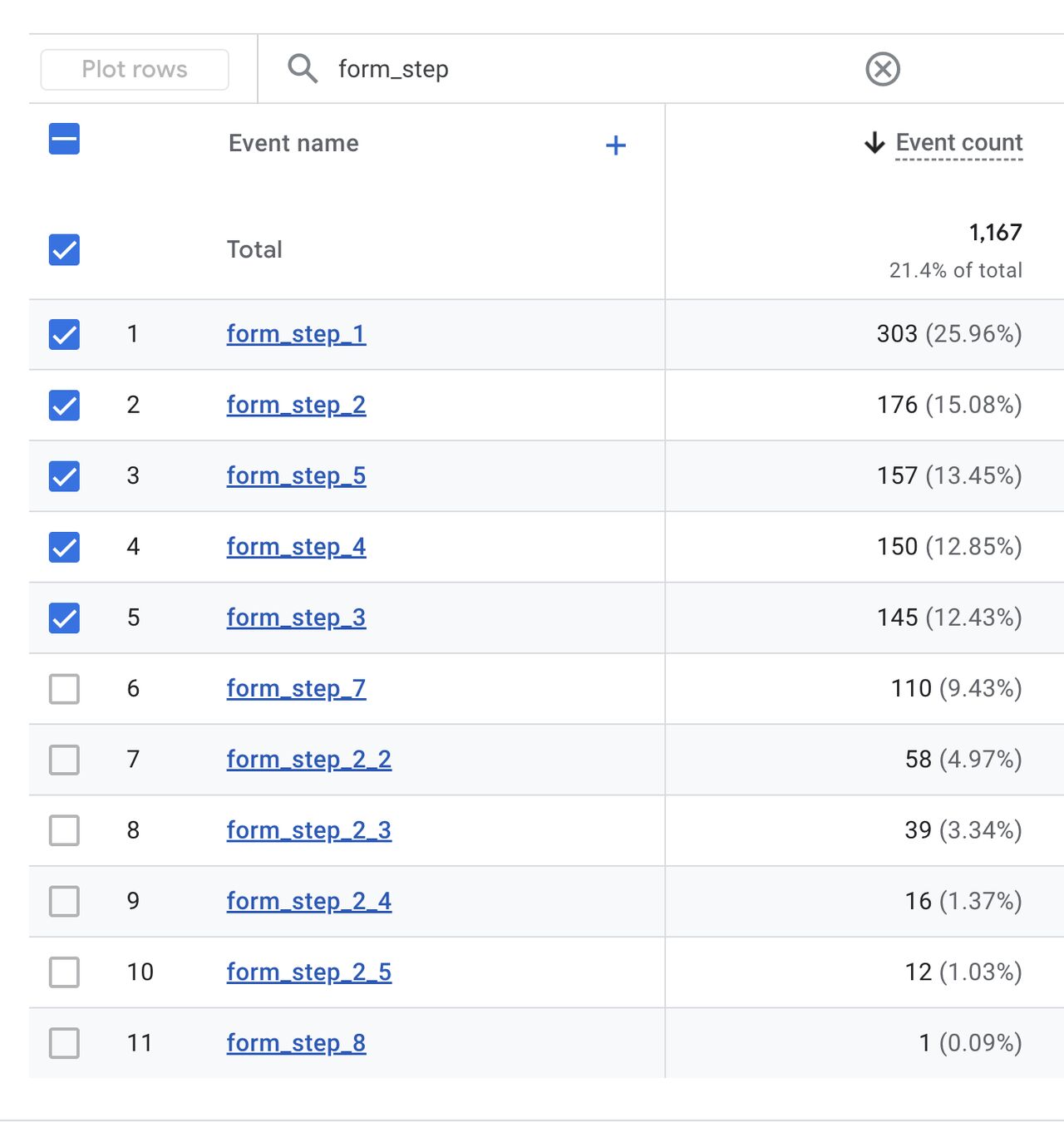
It's the most simple way to setup events in GA4, yet almost no one does it this way... ...THIS is why people say "GA4 sucks" = their implementation sucks. We did a launch for a client recently and…
5845039 viral
Web Analytics10 months ago

LinkedIn Content Strategy & Writing Style
Conversion-Obsessed Marketer Driving Incremental Revenue Through Paid Advertising | 9+ Years Experience | AI Operations Builder
0 people tracking this creator on ViralBrain
Ryan Levander positions himself as a high-stakes performance architect who bridges the gap between structured marketing systems and aggressive revenue growth. His content strategy centers on debunking industry "mirages" like end-to-end tracking and full-funnel logic, replacing them with a value proposition of research-informed experimentation and agentic AI workflows. What makes him notable is his refusal to play the role of a traditional agency; instead, he operates as a fractional growth owner who de-risks client investments by testing strategies with his own capital first. This intersection of technical measurement skills and philosophical skepticism toward marketing buzzwords allows him to offer a rare blend of operational transparency and conversion-obsessed pragmatism.
6.1K
5.2K
21
1.9
60
1
It's the most simple way to setup events in GA4, yet almost no one does it this way... ...THIS is why people say "GA4 sucks" = their implementation sucks. We did a launch for a client recently and…
Some aspects about AI are pretty black and white IMO. Superhuman Mail using AI to search 94,779 emails in seconds = GOOD. Nano Banana + MakeUGC + Veo3 to create fake people influencing others to b…

Buzzwords executives love that are 100% a mirage in Marketing today: - "Full Funnel" (When is the last time, or was there ever a time, you bought something in an "orderly fashion" throughout a clea…
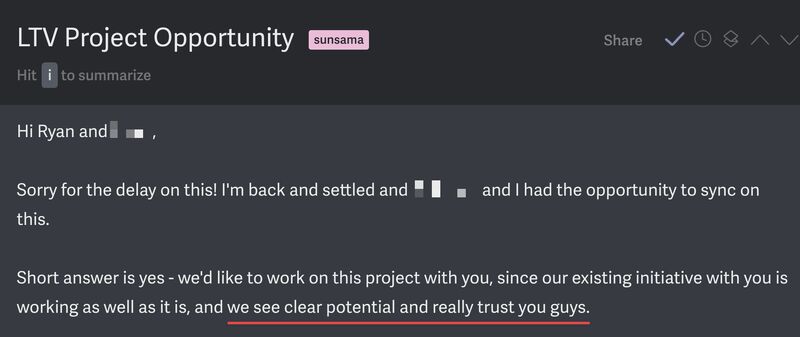
One of the best compliments you can ever get from a client: "We really trust you guys" Trust and agency usually aren't words reserved for the same sentence. The reality is my business partner and…
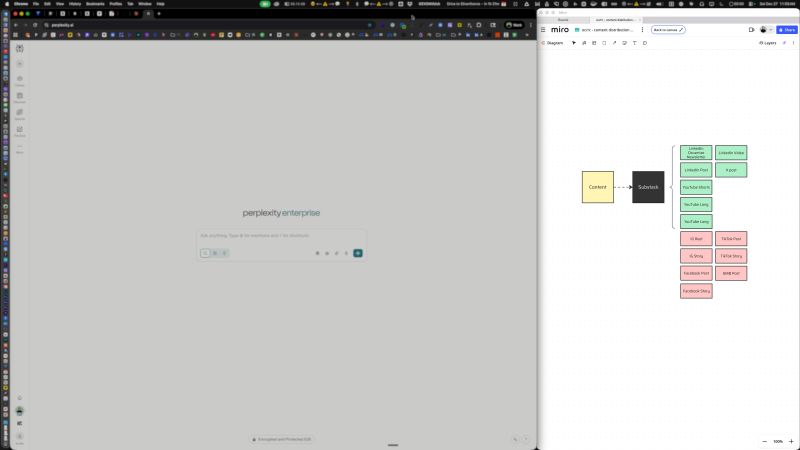
I would say above all, I’m a process guy. Structured Marketing is my game. I have Miro on the side of my screen constantly (I’ve even mapped a mouse button on my Logitech MX4 Master to open up the ap…
1.9 posts/week
Posts / Week
4 days
Days Between Posts
1
Total Posts Analyzed
MEDIUM
Posting Frequency
21.11111111111111%
Avg Engagement Rate
STABLE
Performance Trend
140
Avg Length (Words)
HIGH
Depth Level
ADVANCED
Expertise Level
0.78/10
Uniqueness Score
YES
Question Usage
0.4%
Response Rate
Writing style breakdown
The author’s voice is professional and opinionated, with a “field operator” feel: someone actively working in performance marketing, analytics, and ad platforms, writing from the trenches rather than from theory. The tone is direct, evaluative, and diagnostic. They frequently label things as “GOOD / NOT GOOD,” “mirage,” “waste of time,” “the reality is,” etc., which creates a clear stance and a strong signal-to-noise ratio. The style is conversational but not casual in a friendly-chat way; it’s conversational in a “talking to peers in the industry” way—compressed, pragmatic, and slightly combative toward sloppy thinking.
Mid-formal. Vocabulary is specialized (GA4, Looker Studio, CDP, edge tagging, controlled experiment, incremental lift, top line revenue, Andromeda), but sentence construction stays simple. The author isn’t trying to sound academic; they’re trying to sound accurate and unimpressed by fluff.
Medium-to-high energy with bursts of intensity. The author uses strong judgments, short standalone lines, and occasional ALL CAPS to spike emphasis. There’s also a recurring undertone of amusement or disbelief at industry nonsense (example: “And my personal favorite to laugh at ‘Funnel Leaks’”).
Binary moral/utility framing: “= GOOD.” “= NOT GOOD.” (post 1)
Mirage” as a repeated theme (post 2 hashtag, post 3 framing).
Parenthetical mini-essays: long, explanatory asides inside parentheses that feel like the author talking faster, adding nuance, or anticipating objections (post 3 is dominated by this).
Rhetorical questions used as a wedge: “When is the last time…” “Are you in the business of…” “Why are we so confident?” (posts 3, 8, 5)
Declarative finality: “Period.” (post 4)
Technical credibility cues: time stamps, exact numbers, tool names, dates (94,779 emails; “December 1st, 2024”; “well over 10,000 hours”).
Mostly second-person “you” appears in explanatory or corrective moments (post 4: “when you try…”, post 9: “you don’t have to…”). First-person appears when building authority or telling operating context (post 5 and 7: “I’m a process guy,” “my business partner and I…”). Commands are present but not overly “salesy”; they appear as directives embedded inside suggestions (post 3: “Add this to your weekly reporting…”). Overall, the author writes as a peer advisor: confident, slightly blunt, and impatient with buzzwords.
Sign in to unlock the full writing analysis
Free tools to help you write, score, and benchmark in the same style.
Other creators worth studying alongside Ryan Levander.
Maurits Martijn
Journalist bij De Correspondent | Nieuwsbrief: corr.es/maurits
337 Viral Score

Allie K. Miller
#1 Most Followed Voice in AI Business (2M) | Former Amazon, IBM | Fortune 500 AI and Startup Advisor, Public Speaker | @alliekmiller on Instagram, X, TikTok | AI-First Course with 200K+ students - Link in Bio
7 Viral Score

Simon Bernhard
Co-Founder of Mimo Hospitality I Building enduring hospitality concepts & brands with ambitious clients I Hotellerie Suisse trusted Consultant.
182 Viral Score
Will Guidara
NYT Bestselling Author: Unreasonable Hospitality; Host: The Welcome Conference; Co-Producer: The Bear; Speaking Inquiries: contact@vaynerspeakers.com
150 Viral Score

Frederic Brunner
I Help Insurers To Achieve Faster Claims Processing By Automating Coverage Checks | CEO @ AI Swiss Knife
74 Viral Score

Ned Lowe
We help you build with Fractional Tech Leaders and Offshore Delivery Teams
97 Viral Score
ViralBrain plans, writes, and schedules your LinkedIn content, using official LinkedIn APIs so your account stays safe.
Write like Ryan Levander.