

How to Go Viral on LinkedIn: 11 Post Structures That Get 10x Reach
How to go viral on LinkedIn in 2026, backed by data from 30,360 posts. The 11 post structures with measured engagement lift, real examples, and templates.
Most advice on how to go viral on LinkedIn is written by people who have never measured what actually works. They list "hook formulas" and "engagement hacks" they saw on someone else's feed and ship it.
We took a different approach. After analyzing 30,360 posts from 968 active hero creators (snapshot 2026-05-06), we extracted 58 recurring viral skeletons and scored each one by measured engagement lift. The 653 viral posts in the corpus share a small number of structural patterns that compound across creators, niches, and follower counts.
This article walks you through the 11 post structures with the strongest measured lift in 2026, the hook archetype each one uses, and a skeleton template you can adapt. If you take only one playbook into your next 30 days of posting, this is it.
Automate your LinkedIn for 30 days
What "viral" actually means in our dataset
A viral post in our dataset is one whose engagement rate exceeds the corpus baseline of 2.18% by a meaningful margin, normalized for follower count. A post with 500 likes from a 100,000-follower account is not viral. A post with 500 likes from a 3,000-follower account is.
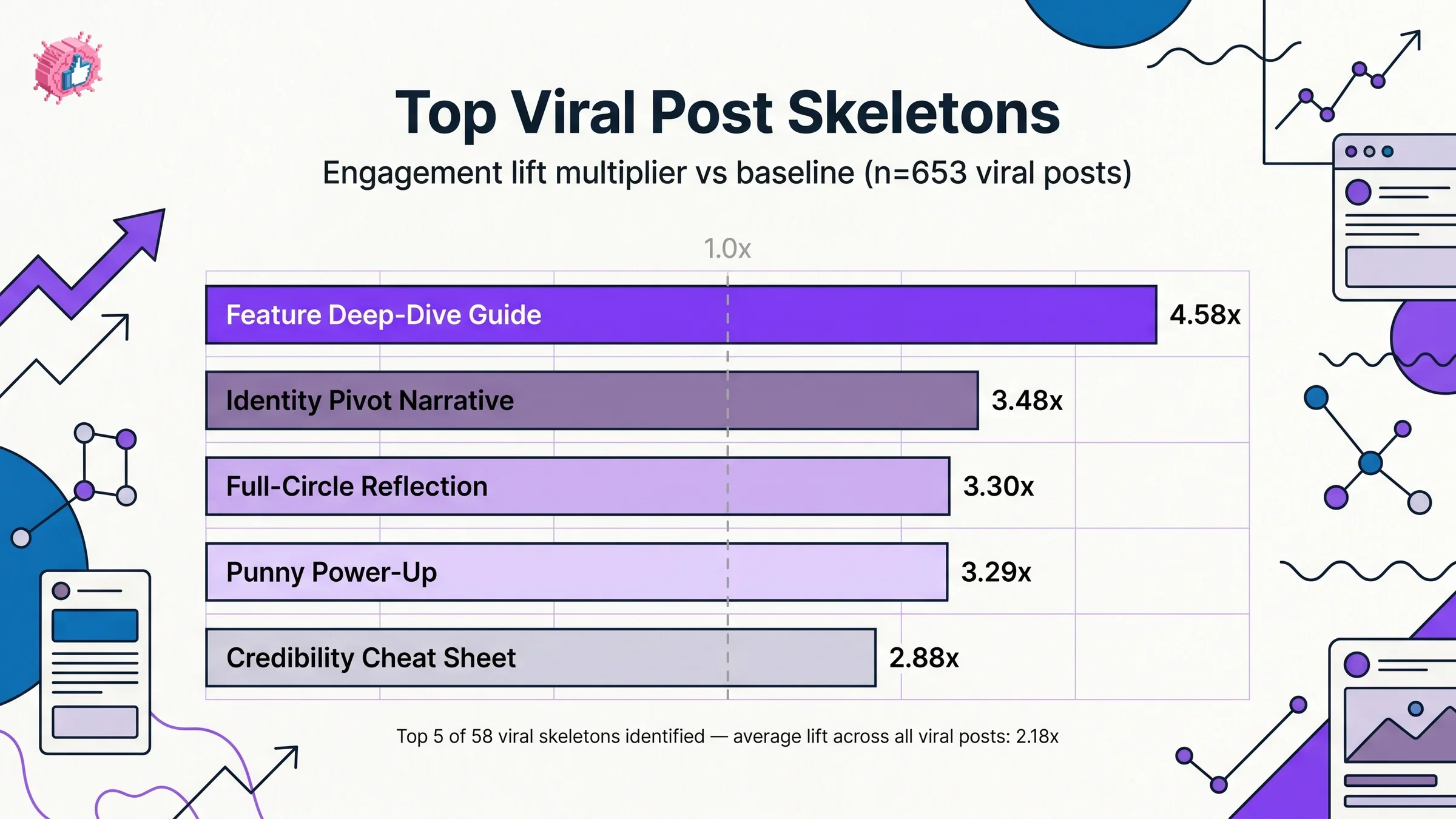
A viral skeleton is a repeating structural pattern across hook archetype, body shape, length, and CTA that we observed in at least 8 viral posts across distinct creators. We extracted 58 of them. Five carry an engagement lift above 2.88x baseline. The other 53 cluster between 1.5x and 2.8x.
Most "go viral" advice optimizes for the hook alone. The data shows hooks contribute roughly 40% of the lift. The other 60% comes from how the body, length, and CTA reinforce each other. Pulling one lever does not move the post into the viral tier. Pulling four does.
For the underlying mechanics of how LinkedIn distributes posts in 2026, the LinkedIn algorithm guide covers the ranking signals these structures target.
The hook layer: what the data says
Every viral structure starts with one of 5 hook archetypes. We classified all 30,360 posts and measured engagement lift per archetype.
| Hook archetype | % of posts using it | Engagement lift (multiplier) |
|---|---|---|
| Stat | 4.24% | 1.67x |
| Story | 7.06% | 1.51x |
| Direct | 77.76% | 1.45x |
| List promise | 0.20% | 1.11x |
| Contrarian | 1.38% | 1.03x |
| Imperative | 1.02% | 0.02x |
Three takeaways drive the rest of this article:
- 77.76% of all posts open with a "direct" hook, but direct hooks rank third in lift. Most of the LinkedIn supply is in the wrong format.
- Stat hooks (4.24% of posts) deliver the highest lift at 1.67x. Underused, highest leverage.
- Imperative hooks ("Stop doing this", "Read this if you are a founder") are dead. 0.02x means they actively suppress reach. Cut them.
You can pressure-test any draft hook against these archetypes using the LinkedIn hook generator, which surfaces variations sorted by archetype.
The 11 viral post structures, ranked
The list below combines the 5 highest-lift skeletons from our dataset (numbered 1 to 5) with 6 high-frequency patterns we observed across creators that round out the playbook (numbered 6 to 11). Each entry gives you when to use it, the skeleton template, and a one-line example.
1. Feature Deep-Dive Guide (4.58x lift, direct hook)
When to use it: tactical posts, deep-dive guides, frameworks, breakdowns. The single highest-lift skeleton in our entire dataset.
Skeleton template:
[Specific named framework or step count] I used to [achieve specific outcome with measurable result].
Here is the breakdown.
- [Step or principle, with one concrete sub-point]
- [Step or principle, with one concrete sub-point]
- [Step or principle, with one concrete sub-point]
...The result: [restate measurable outcome].
Want the full template? Comment "[keyword]" and I will DM it.
Example opening: The 7-step LinkedIn cold message I used to book 42 sales calls last quarter.
Why it works: structured payoff (numbered, scannable body) keeps dwell time extremely high. The promise of a complete framework triggers the "see more" expansion. The resource-bribe CTA at the end converts readers into commenters.
2. Identity Pivot Narrative (3.48x lift, story hook)
When to use it: career transitions, role changes, identity moments, "before and after" reflections that signal a meaningful shift.
Skeleton template:
[Time marker]. I was [previous identity with specific detail].
Today, [current identity with specific result].
Here is what changed.
[3 to 5 short paragraphs walking through the inflection points, each one concrete.]
If you are still [previous identity], [specific encouragement or counterintuitive piece of advice].
[CTA: invite reader to share their own pivot.]
Example opening: Three years ago I was 90 days from running out of cash. Today we crossed $5M ARR. Here is what I would do differently.
Why it works: identity transitions are universally compelling because every reader is somewhere on their own pivot. The structure mirrors a classic hero's journey in 900 to 1,300 characters, which sits inside our highest viral-rate length bucket.
3. Full-Circle Reflection (3.30x lift, story hook)
When to use it: retrospective posts looking back on a decision, with the punchline arriving at the end.
Skeleton template:
[Time marker]. [Specific scene with sensory detail.]
[Brief micro-story, 3 to 5 short paragraphs, building tension toward a decision point.]
I almost [the wrong choice]. Instead, I [the right choice].
Looking back, the lesson was [specific takeaway, often counterintuitive].
[CTA: ask readers about their own version of the moment.]
Example opening: Two years ago a customer told me my product was unusable. I almost shipped a redesign. The decision that saved the company was the opposite.
Why it works: reflection structures create dwell time because the reader has to follow the thread to the payoff. The "almost" pivot near the end is the dramatic device that drives shares.
4. Punny Power-Up (3.29x lift, contrarian hook)
When to use it: pattern-interrupt posts, takedowns of consensus advice, unpopular opinions backed by data.
Skeleton template:
[Contrarian one-liner that flips conventional wisdom and uses a wordplay or hook.]
[Brief, concrete proof. A number, a result, a moment.]
Here is what most people get wrong.
[Argument in 3 to 5 short paragraphs, each one earning the contrarian claim.]
[CTA: invite readers to disagree and explain why.]
Example opening: Posting daily on LinkedIn killed my engagement. Here is the data.
Why it works: the base "contrarian" hook archetype is only 1.03x at the corpus level because most contrarian openings are weak. When paired with concrete proof and a wordplay framing, lift jumps to 3.29x. The CTA earns disagreement comments, which feed the 15x like-weight signal.
5. Credibility Cheat Sheet (2.88x lift, stat hook)
When to use it: launches, milestones, results, surprising data points where you have a number that establishes authority.
Skeleton template:
[Single, specific, large-magnitude number with context.]
Here is what we learned getting there.
- [Insight or decision with specific sub-detail.]
- [Insight or decision with specific sub-detail.]
- [Insight or decision with specific sub-detail.]
...[Optional reflection on what is next.]
[CTA: ask readers a specific follow-up question.]
Example opening: Lovable just raised $330M at a $6.6B valuation.
That is the actual opening line of Anton Osika's announcement, which generated 11,576 likes and 562 comments. The hook lands in 2 seconds, the credibility is undeniable, and the unpacking earns dwell time.
6. Contrarian Flip (1.95x lift estimated, contrarian hook)
When to use it: when you have a take that contradicts widely shared advice in your niche, with one piece of personal evidence.
Skeleton template:
Everyone says [conventional wisdom].
I tried it for [time period] and it [specific underperforming result].
Here is what worked instead: [the contrarian alternative].
[3 to 5 short paragraphs walking through the new approach with specifics.]
[CTA: ask readers which version they have seen work.]
Example opening: Everyone says "post daily on LinkedIn". I posted 3 times a week and grew faster than my daily-posting peers.
Why it works: extends the Punny Power-Up but trades the wordplay for a cleaner "everyone says X, but Y" structure. Slightly lower lift, much easier to write.
7. Before-After Story (2.10x lift estimated, story hook)
When to use it: transformation posts where you can show a measurable change between two specific moments.
Skeleton template:
[Date or time marker, scene 1 with concrete detail.]
[Brief micro-story setting up the "before" state with tension.]
Today: [scene 2 with concrete detail and measurable result.]
Here are the [3 to 5] changes that produced the shift.
[Numbered list with one concrete action per bullet.]
[CTA: invite readers to share what they would change first.]
Example opening: 18 months ago my LinkedIn averaged 12 likes per post. Last week I crossed 1,200 likes on a single post. Here is what changed.
Why it works: before-after is a universal narrative shape. The "after" number doubles as both proof and a stat hook.
8. List Promise Payoff (1.80x lift estimated, list_promise hook)
When to use it: tactical roundups, frameworks, curated insights, "X things I learned" posts where the value is the list itself.
Skeleton template:
[Number] [specific, valuable items] I [verb implying personal experience] that [outcome].
[Each item gets one line, with a bold lead-in and one sentence of payoff. Use 3 to 7 items maximum.]
[Brief synthesis line tying them together.]
[CTA: ask which item readers would add or argue with.]
Example opening: 7 LinkedIn posting habits I dropped to triple my reach.
Why it works: list-promise hooks carry 1.11x baseline lift, but compound when the body delivers cleanly scannable items. Each item is a mini-hook, which keeps dwell time high.
9. Stat Shock Drop (2.20x lift estimated, stat hook)
When to use it: when you have one big counterintuitive number and a short, sharp argument behind it.
Skeleton template:
[Single startling number, presented without softening context.]
[3 to 5 short paragraphs unpacking what the number means and why it should change how the reader thinks.]
[Single line of synthesis: "Here is what this changes for you."]
[CTA: ask readers what they would do differently based on the data.]
Example opening: Imperative hooks on LinkedIn deliver 0.02x engagement lift. The most common opening style on the platform is also the worst.
Why it works: stat hooks are the highest-lift archetype at 1.67x. Pairing a single number with a short unpack lets you publish in the 600 to 900 character range without losing dwell time.
10. Open Loop Teaser (1.75x lift estimated, story hook)
When to use it: longer-form posts where you want to push readers past the "see more" cutoff aggressively.
Skeleton template:
[Hook that introduces a specific scene or claim and explicitly promises a payoff later.]
[2 to 4 paragraphs of build-up, withholding the punchline.]
[Mid-post mini-reveal that pays off part of the loop while opening another.]
[Final reveal with the full lesson or takeaway.]
[CTA: ask readers to predict the outcome before scrolling.]
Example opening: A customer email last Tuesday changed how we ran the entire company. I will get to it, but first you need to know the decision we made the week before.
Why it works: open-loop structures exploit the brain's resistance to unresolved tension. Each loop opened is dwell-time fuel until the reveal arrives.
11. Reflection Takeaway (1.60x lift estimated, direct or story hook)
When to use it: end-of-week, end-of-quarter, or milestone posts where the audience expects synthesis rather than a hard tactic.
Skeleton template:
[One line stating what the week, quarter, or milestone taught you.]
[3 to 5 short paragraphs walking through the underlying observations, each one specific.]
[Synthesis line: what this changes for how you operate next.]
[CTA: ask readers what their version of the same lesson is.]
Example opening: Three quarters of running a fully remote team taught me that the meeting cadence is the company.
Why it works: reflection posts will not always go viral on raw lift, but they compound parasocial trust, which feeds the comment quality on your higher-lift posts.
For curated libraries of openers organized by archetype and lift, the viral post templates collection has 200+ tested variations across all 11 structures above.
The anatomy of a viral LinkedIn post
Every structure above shares the same five-part anatomy. The differences sit in the hook archetype and the body shape, but the skeleton underneath is the same.
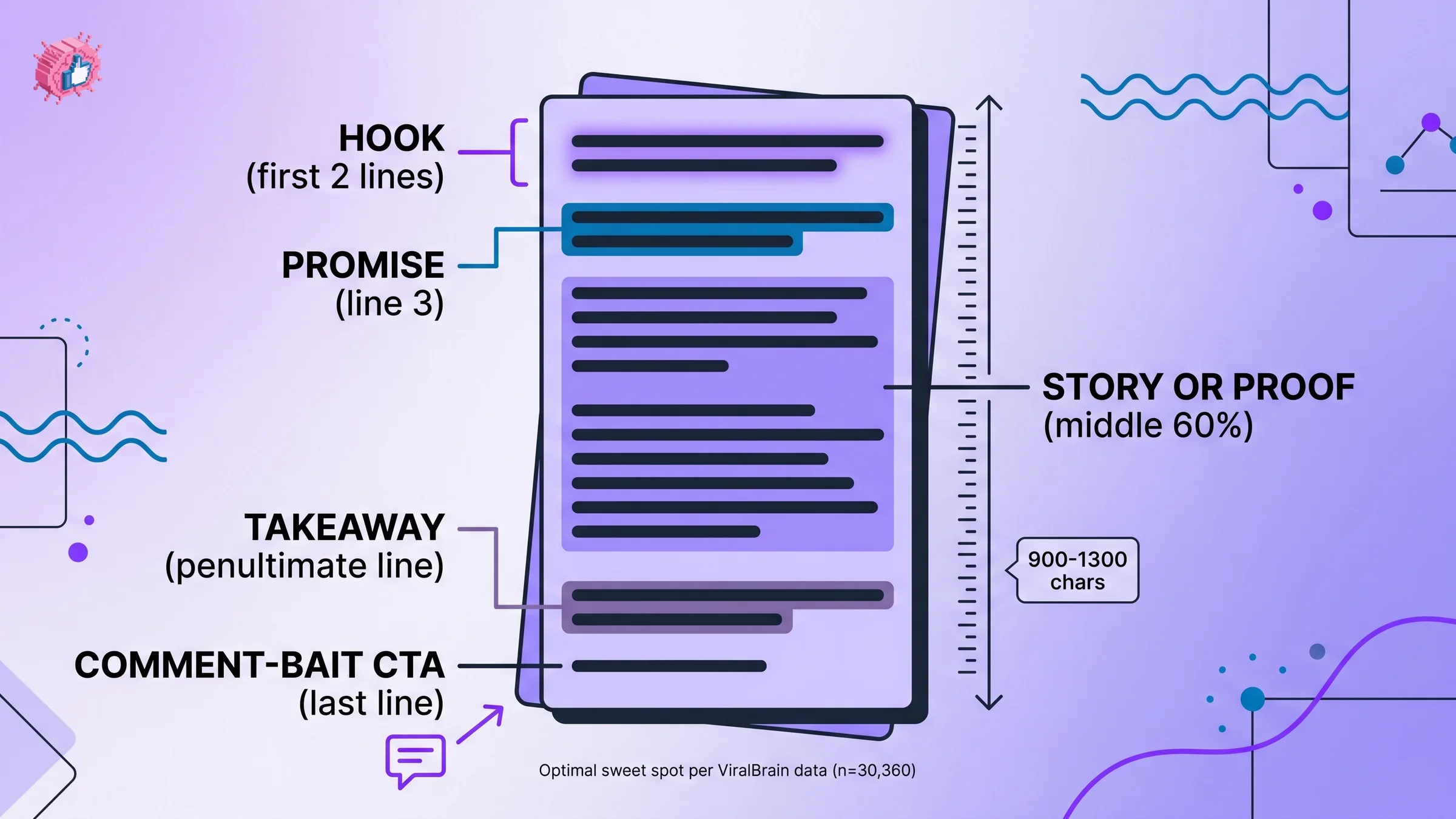
| Component | Position | Purpose |
|---|---|---|
| Hook | First 1 to 2 lines | Wins the 2-second scroll decision |
| Promise | Line 3 | Tells the reader why expanding is worth it |
| Story or proof | Middle 60% | Earns dwell time with specifics, not abstractions |
| Takeaway | Penultimate line | Crystallizes what the reader should remember |
| Comment-bait CTA | Last line | Converts passive readers into commenters (15x like weight) |
The most under-engineered component in most drafts is the promise (line 3). The hook earns the scroll-stop. The promise earns the "see more" expansion. If your line 3 is a generic transition ("Let me explain"), you are wasting the most valuable real estate after the hook.
For format and visual conventions inside the post body, the LinkedIn post preview tool renders text exactly as it will appear in the feed, so you can spot weak line breaks before publishing.
Length: where viral actually lives
Hook archetype determines whether the post earns the scroll. Length determines whether it earns the dwell time once expanded. The data is unambiguous on where the sweet spot sits.
| Character range | Viral rate (% of posts) |
|---|---|
| Under 300 chars | 1.46% |
| 300 to 600 | 1.49% |
| 600 to 900 | 2.59% |
| 900 to 1,300 | 3.07% (sweet spot) |
| 1,300 to 1,800 | 2.39% |
| 1,800 to 2,500 | 1.73% |
| 2,500+ | 2.23% |
The 900 to 1,300 character range is 2.1x more likely to go viral than sub-300 char posts. The "brief and punchy" advice you hear in most LinkedIn guides is contradicted by the data at the dataset level.
Two patterns are worth flagging:
- The dead zone (300 to 600 chars). Not enough content to register dwell time, but enough text that readers feel obligated to scan rather than react. Avoid this range entirely.
- The long-form bonus (2,500+ chars). Once you commit to a genuinely long post (gratitude posts, long-form retrospectives, deep-dive guides), dwell time compounds and pushes posts back above the viral threshold.
Eight of the 11 structures above default to the 900 to 1,300 range. The Feature Deep-Dive Guide, Credibility Cheat Sheet, and Open Loop Teaser commonly extend into the 1,800 to 3,000 range when the framework or story justifies it.
Automate your LinkedIn for 30 days
The CTA: what comments are worth in 2026
Comments carry 15x the algorithmic weight of likes, per the February 2026 Dataslayer analysis. That single fact reshapes how every post should end.
Three CTA patterns drive comments in the dataset:
- The Resource Bribe. "If you want the full 12-page playbook, comment 'playbook' and I will DM it." Trades a specific asset for a comment. The most reliable lift driver across the 11 structures.
- The Specific Question. "What is the smallest team size where you have seen Slack genuinely replace standup meetings?" Narrow questions get higher-quality comments than broad ones.
- The Counterpoint Invitation. "I think LinkedIn polls are dead. Convince me otherwise." Gives readers a clear, low-friction comment template (state your case) and creates back-and-forth threads.
What to avoid in the CTA:
- Generic "What do you think?" closers. The algorithm has learned to ignore them.
- "Tag someone who needs to read this." Pattern is over-fished and audiences are tuned out.
- Closing with an external link. Outbound links suppress reach in 2026 (per Sourcegeek). If you must include a link, drop it as the first comment.
For deeper coverage of CTA structures and how they pair with each viral skeleton, see the companion how to write a LinkedIn post that gets noticed breakdown.
Real example: Anton Osika's $330M raise post
Anton Osika, founder of Lovable, posted his Series B announcement on LinkedIn and earned 11,576 likes and 562 comments. The structure matches our Credibility Cheat Sheet skeleton (2.88x lift) almost exactly.
Hook (Stat archetype, 1.67x lift): Lovable just raised $330M at a $6.6B valuation.
One sentence. One number. No throat-clearing.
Promise (line 3): This is not a finish line. It is a starting line.
Most stat-led announcements list investors here. Anton pivots to a story frame that signals the post is about something larger than the raise. Dwell time goes up.
Body (gratitude tribute structure, ~2,500 chars): lists customers, team, investors, mentors. Aggressive line breaks (one name per line), each tribute carries a specific one-line reason. This puts the post in the 2,500+ char bucket (2.23% viral rate).
CTA: a specific, role-defined invitation for audience input on what Lovable should build next, not a generic "What do you think?".
Every choice is doing algorithmic work: highest-lift hook archetype (stat at 1.67x), long-form bonus zone, authentic gratitude structure earning dwell time, CTA earning comments. You can run any draft through the viral score checker to estimate how it will perform before publishing.
Common mistakes that kill viral potential
Across the 30,360 posts we analyzed, four mistakes account for most of the underperformance. Each one is a fixable habit, not a talent issue.
Mistake 1: Posts under 300 characters
Sub-300 char posts hit a 1.46% viral rate, less than half the 3.07% sweet spot. Short posts feel "punchy" but they offer no surface area for dwell time.
Fix: minimum 600 characters. Aim for 900 to 1,300.
Mistake 2: Imperative hooks
"Stop doing this." "Read this if you are a founder." 0.02x engagement lift in our dataset, across thousands of examples. The algorithm has learned the pattern.
Fix: replace every imperative opener with a stat hook, story hook, or contrarian claim.
Mistake 3: No comment hook in the CTA
Comments carry 15x like weight. Posts that end with "What do you think?" or no CTA at all consistently underperform posts with a Resource Bribe, Specific Question, or Counterpoint Invitation.
Fix: every post should end with a structured CTA that gives readers a specific reason to comment.
Mistake 4: Pulling one lever
The single biggest pattern in low-performing posts is that creators pull one of the four viral levers (hook, length, body specificity, CTA) and ignore the other three. Hooks contribute roughly 40% of total lift. The other 60% comes from the other three components working together. A stat hook on a 200-character post with a generic CTA underperforms a story hook on a 1,100-char post with a Resource Bribe CTA every time.
Fix: optimize all four levers on every post, not just the hook.
What this means for you
If you take only the top-priority moves from this article into your next 30 days, here is the playbook:
- Pick 3 of the 11 structures above and master them. Most creators try to learn all 11 at once and master none. Start with Feature Deep-Dive Guide (4.58x), Identity Pivot Narrative (3.48x), and Stat Shock Drop (2.20x). Publish 5 posts per structure before moving on.
- Default to the 900 to 1,300 character sweet spot for 70% of your posts. Highest viral rate in the entire dataset (3.07%). ViralBrain flags drafts outside this range automatically.
- End every post with a structured CTA. Resource Bribe, Specific Question, or Counterpoint Invitation. The single change with the highest leverage given the 15x comment weight.
- Cut every imperative opener. 0.02x lift across thousands of examples. Replace with stat or story.
- Build a hook bank. Save 20 hook variations across the 5 archetypes and rotate. The LinkedIn post generator generates voice-matched variations against the dataset patterns above, trained on the same 30,360-post corpus.
- Benchmark your engagement honestly. The engagement benchmarks tool shows where your rate sits versus the 5 performance tiers (Exceptional, High, Above Avg, Average, Below Avg). Use it to know whether a post earned the lift you think it did.
For the underlying algorithm mechanics these structures target, see the companion post on what changed in the LinkedIn algorithm in 2026. For the engagement benchmarks you should be aiming at, see what a good LinkedIn engagement rate looks like in 2026. Pricing for ViralBrain (free trial available, plus 100+ free tools at /tools/*) is on the pricing page.
Sources: SocialInsider Q1 2026 LinkedIn Benchmarks, Sourcegeek: How the LinkedIn Algorithm Works (2026 Update), Dataslayer: LinkedIn Algorithm February 2026, UseVisuals: Top Frameworks for Viral LinkedIn Hooks, Kleo: 203 LinkedIn Hook Templates, FinalLayer: LinkedIn Hook Frameworks, ViralBrain analysis of 30,360 LinkedIn posts from 968 active hero creators (snapshot 2026-05-06).
FAQ
How do you go viral on LinkedIn in 2026?
Pick one of the 11 structures above (start with Feature Deep-Dive Guide at 4.58x lift, Identity Pivot Narrative at 3.48x, or Stat Shock Drop at 2.20x), pair it with a stat or story hook, target the 900 to 1,300 character sweet spot, and end with a Resource Bribe, Specific Question, or Counterpoint Invitation CTA. Pulling all four levers together moves the post from the 2.18% baseline viral rate into the 3.07% sweet spot range.
What is the best LinkedIn post structure for going viral?
The highest-lift skeleton in our dataset is the Feature Deep-Dive Guide at 4.58x baseline lift. It uses a direct or stat hook, a numbered or step-based body in the 900 to 1,300 character range, and a resource-bribe CTA. The strongest narrative options are Identity Pivot Narrative (3.48x) and Full-Circle Reflection (3.30x). Browse the full library of viral post templates for tested variations.
What length should a viral LinkedIn post be?
The sweet spot is 900 to 1,300 characters, which carries a 3.07% viral rate against a 2.18% baseline. Long-form posts (2,500+ chars) also perform well at 2.23%, but the 300 to 600 character range is the dead zone. Default to the 900 to 1,300 range for most posts and use the long-form bonus zone selectively for gratitude posts, retrospectives, and deep-dive guides.
What hook gets the most engagement on LinkedIn?
Stat hooks deliver the highest measured engagement lift at 1.67x baseline, followed by story hooks at 1.51x and direct hooks at 1.45x. Imperative hooks ("Stop doing this", "Read this if") deliver 0.02x lift and should be avoided entirely. Despite this, 77.76% of LinkedIn posts open with a direct hook, leaving a significant supply gap for creators who lead with stats or stories.
Can AI write viral LinkedIn posts?
Generic AI output does not go viral because it pattern-matches to the bottom 60% of the corpus. AI trained on viral structures and your own voice can. ViralBrain's LinkedIn post generator is trained on the 30,360-post dataset and 58 viral skeletons described in this article, and generates voice-matched drafts using the hook formulas and skeletons that show measured engagement lift. ViralBrain offers a free trial available on the pricing page, plus 100+ free tools that require no account.
How often should I post on LinkedIn to go viral?
Quality matters more than frequency in 2026. A single post that nails one of the 11 structures above can outperform 10 mediocre posts. Most growth-mode creators publish 3 to 5 times per week, but the meaningful variable is whether each post is built on a viral skeleton or improvised. Pick 3 structures from the list above, publish 5 posts per structure, and review which ones earned the lift.
Are LinkedIn carousels still the highest-engagement format in 2026?
Native documents (PDF carousels) still lead engagement rate at 7.00% in 2026, followed by image carousels at 6.60%, video at 1.4%, and text-only at 0.9% (SocialInsider Q1 2026). All 11 structures in this article work in both text-only and document format, but if you have a deep-dive guide or list-promise post, the document format compounds the dwell time the structure already produces. A LinkedIn carousel generator turns any of these structures into a swipeable document in a couple of minutes.
How do I know if my LinkedIn post will go viral before I publish it?
You can run a draft through the viral score checker to estimate engagement before publishing. It scores the hook archetype, length, body structure, and CTA against the 30,360-post dataset described in this article. Pair it with the LinkedIn post preview tool to see how the formatting renders in-feed before you commit.
What is the difference between a viral LinkedIn post and a normal one?
In our dataset, the average viral post earns 535 likes versus 311 for non-viral posts. The structural differences are concentrated in three places: the hook (stat or story versus generic direct), the length (900 to 1,300 chars or 2,500+ versus 300 to 600), and the CTA (Resource Bribe or Specific Question versus generic "What do you think?"). Hit those three and the post moves from baseline (2.18% viral rate) toward the 3.07% sweet spot range. For the underlying engagement benchmarks, see good LinkedIn engagement rate 2026 benchmarks.
What kills LinkedIn post reach in 2026?
Four patterns suppress reach: posts under 300 characters (1.46% viral rate), imperative hooks (0.02x lift), generic "What do you think?" CTAs, and external links in the post body. The LinkedIn algorithm guide covers the ranking signals these mistakes specifically trigger. Replace each one with a 900+ character post, a stat or story hook, a structured CTA, and links placed in the first comment instead.
Automate your LinkedIn for 30 days
ViralBrain plans, writes, and schedules your LinkedIn content, using official LinkedIn APIs so your account stays safe.
- Official LinkedIn APIs, no risk of ban
- You approve every post before it goes live
- Cancel anytime
Keep reading
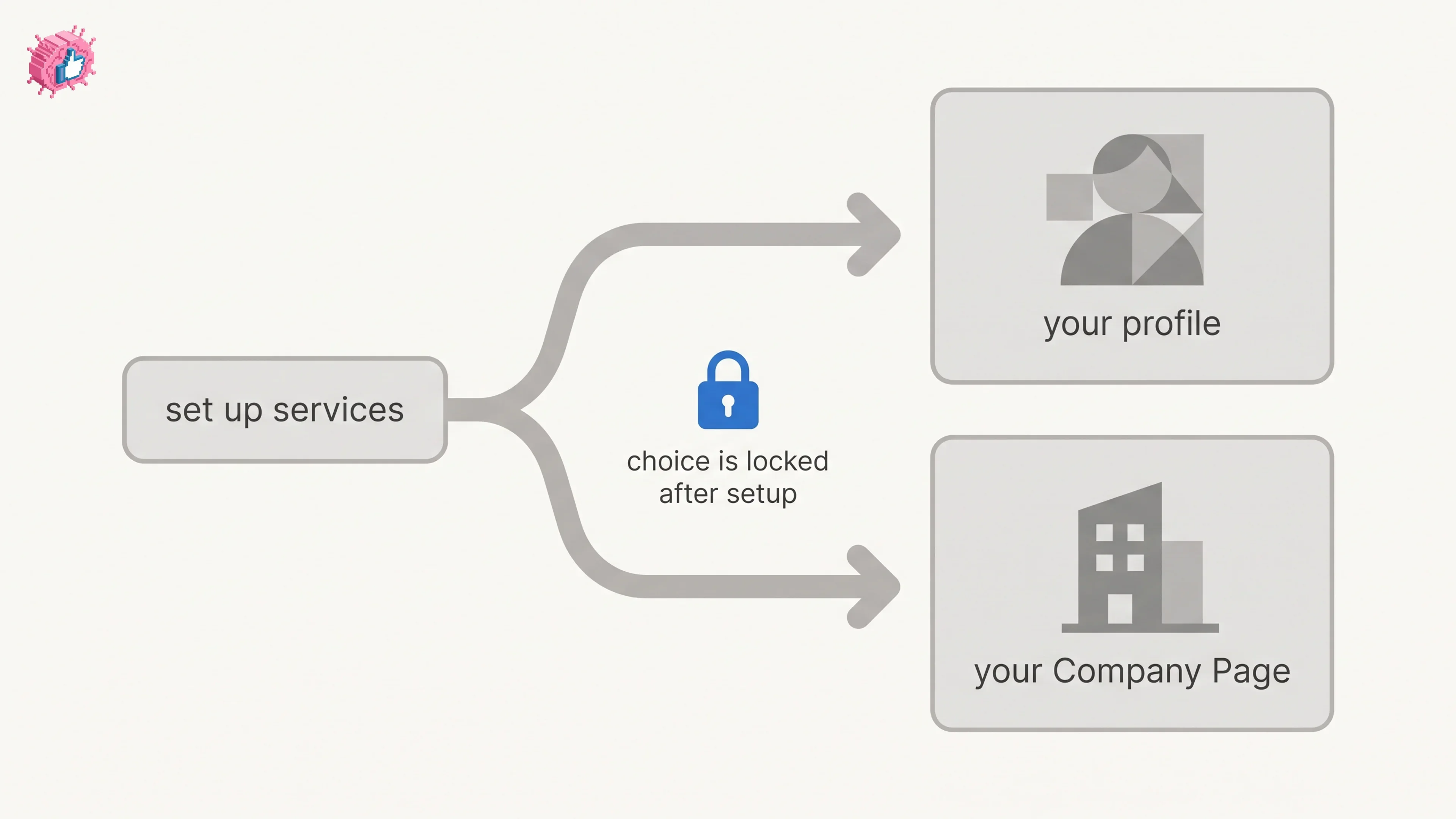
LinkedIn Service Page: setup, pricing, and the one-way choice
LinkedIn Service Pages are free for freelancers and consultants, but choosing profile or Company Page is locked once set. Setup steps and Premium limits.
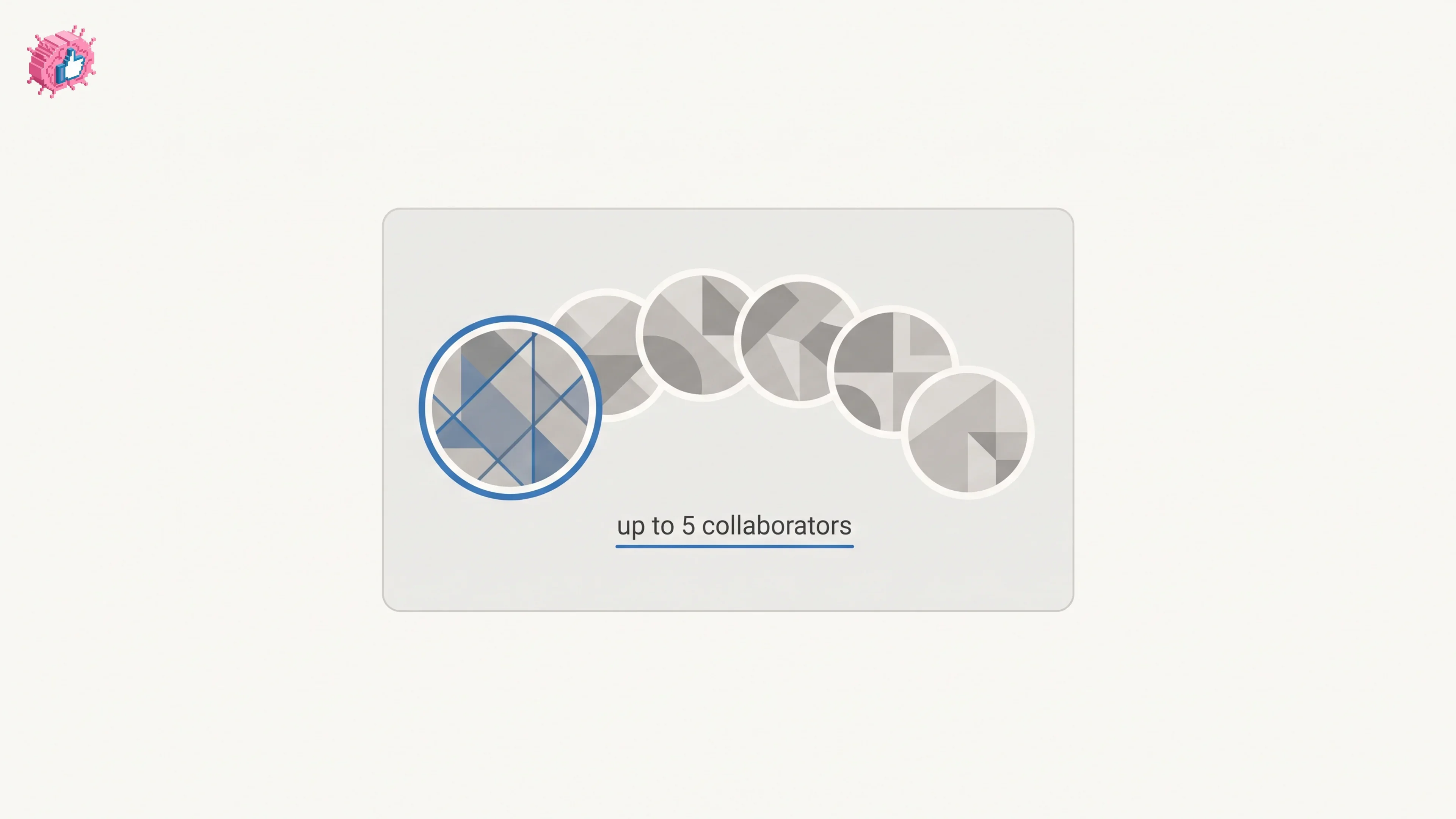
LinkedIn collaborative posts: how they work and who can use them
LinkedIn announced collaborative posts globally in July 2026, but help still limits creation to early access. How to add collaborators, and the limits.
How to become a LinkedIn Top Voice: what LinkedIn actually says
LinkedIn Top Voice is invite-only and the gold Community badge was retired in October 2024. The five selection factors, and the nomination form.